Let me run the numbers first.
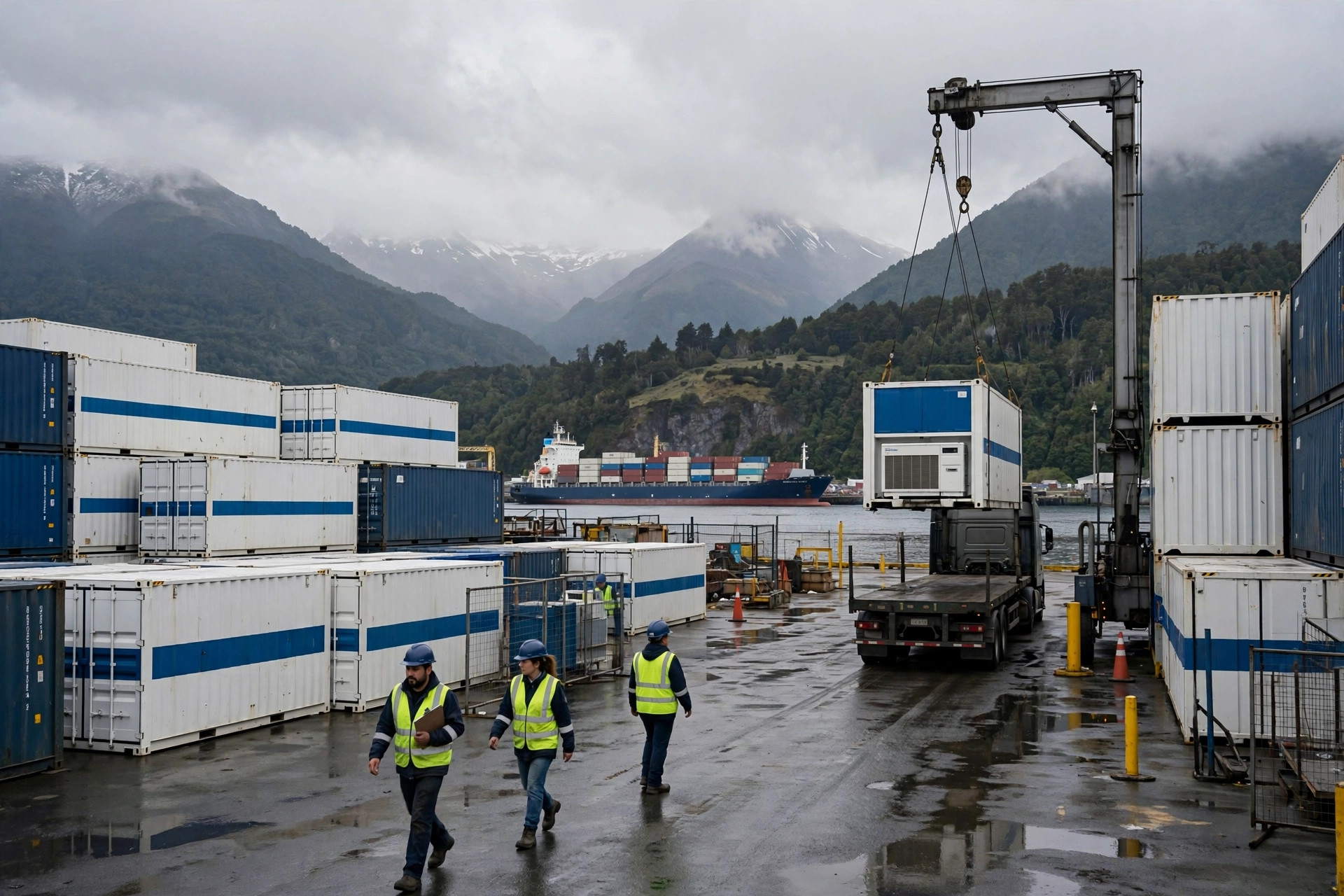
In October 2025, Ecuador exported 116,109 metric tons of shrimp in a single month, up 35% year on year (industry analysis, ainvest). A 40-foot reefer container holds roughly 27 tons of frozen shrimp cartons — the box's rated payload says so, and frozen shrimp is dense cargo that hits the weight limit before the volume limit. That means 116,109 tons equals about 4,300 containers — an average of 139 boxes a day moving from farm pond to port, the daily rhythm of ecuador shrimp export frozen cold chain warehouse logistics.
Now the bigger number. For full-year 2025, Ecuador shipped roughly 1.37 million tons worth $8.2 billion (seafood price reporting agency UCN), which works out to about $6,000 per ton. At 27 tons a box, one container carries a little over $160,000 of shrimp. That is a full-year average — HOSO, HLSO and peeled grades price differently — but the order of magnitude holds: one box, $160,000.
One more data point for context: in the first eight months of 2025, shrimp overtook oil as Ecuador's top export product for the first time (transoceanica.com.ec citing official data: $5.56 billion in shrimp, up 18.6%, versus $5.26 billion in oil). A product that survives on refrigeration became the country's export backbone. This cold chain cannot afford to break.
So here is the warehouse logistics ledger of Ecuador's frozen shrimp export cold chain, pond to port. Four links, every one of them burning money — and the most expensive link is probably not the one you think.
The Frozen Shrimp Export Cold Chain in Four Links: Where the Money Goes
The chain, taken apart:
| Link | What happens | Where the money goes | Numbers you can check |
|---|---|---|---|
| 1. Pond to plant | Trucking after harvest, racing spoilage | Reefer trucks, the time window | One Ecuadorian processor publicly describes skipping the 3–4 hour Guayaquil haul and processing near the farms to protect freshness (Frigolandia) |
| 2. Grading and freezing | Size grading, IQF or block freezing | Freezer depreciation, electricity, grading labor | Pacific white shrimp dominates; export grades are HOSO (head-on shell-on), HLSO (headless shell-on) and peeled, sized by count per pound (seafood trade data platform Tridge) |
| 3. Glazing and packing | Ice glaze after freezing, a barrier against oxidation | Glaze water, packaging — and net-weight declaration risk | Industry practice: 10–20% glaze (food-processing reference food-safety.com); technically 5–15% is enough protection (seafood company MARR); glaze excluded from net weight (US FDA, EU Regulation 1169/2011) |
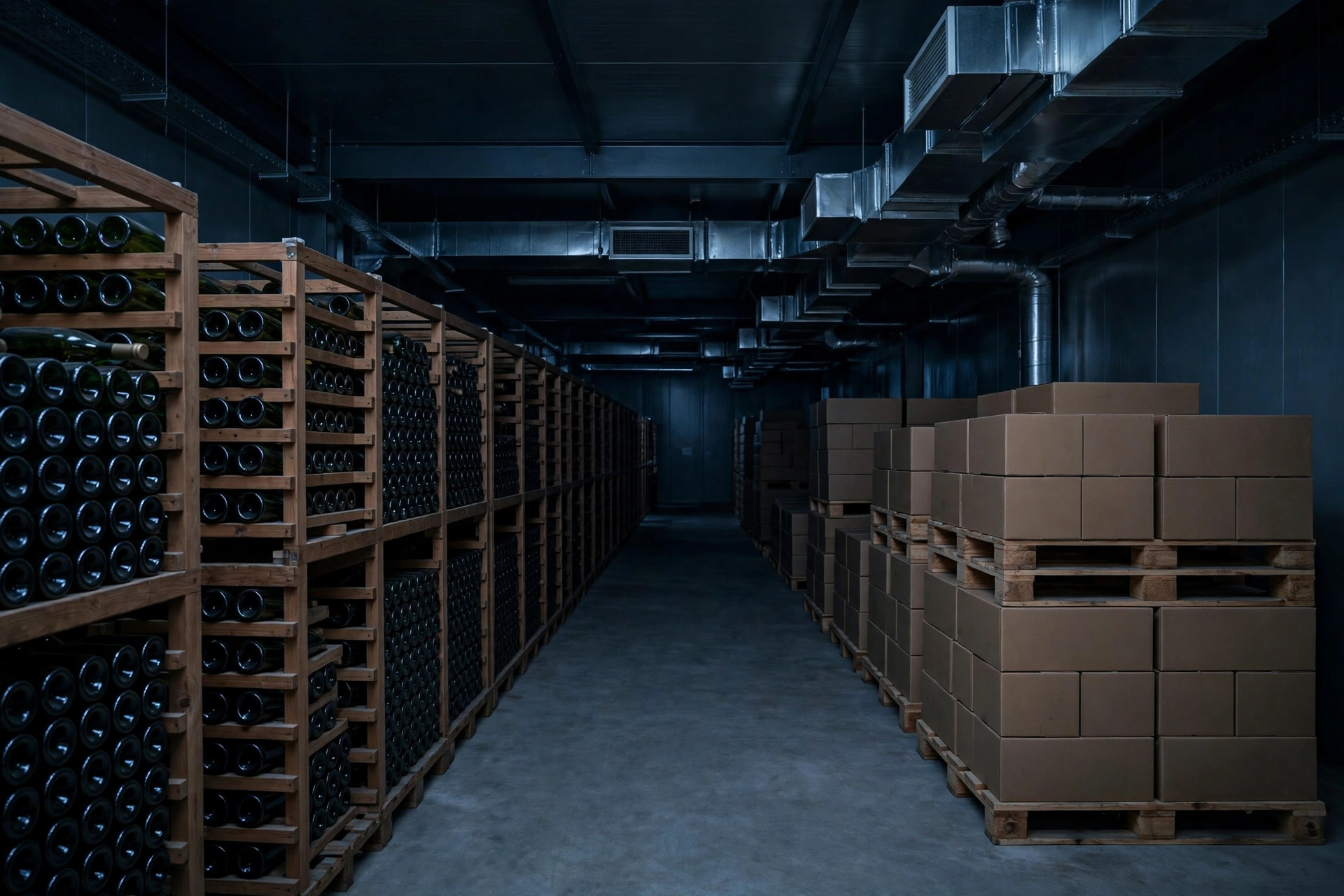
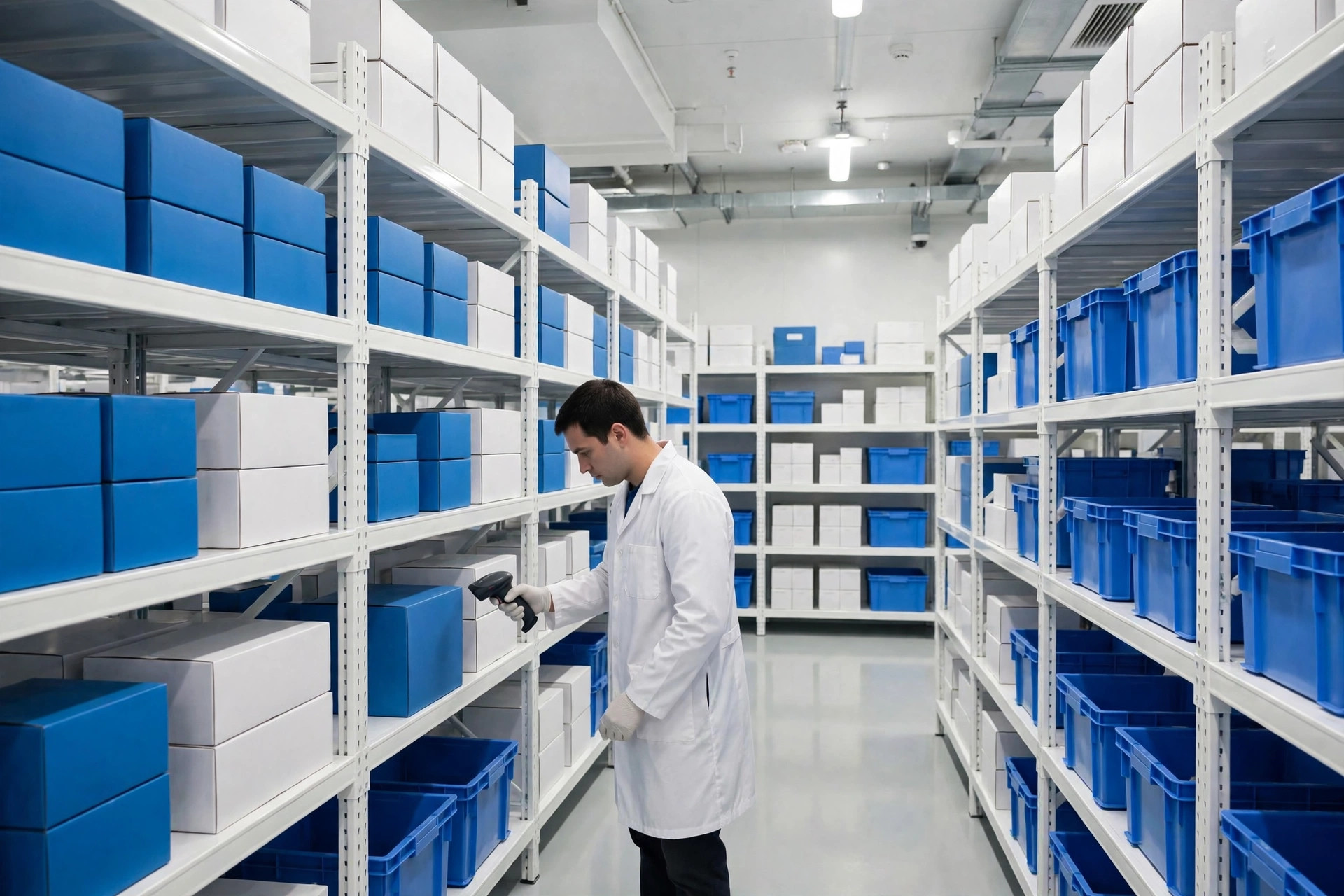
| 4. Cold storage and export | -18°C warehousing, reefer shipment to destination | Cold-store ton-days, reefer freight, reefer plugs at port | About 27 tons per 40ft reefer (container specs); Posorja port container throughput up 87% in 2024 to nearly 1 million TEU (DP World, via ainvest); ASC launched its new Farm Standard on 7 May 2025 (ASC) |
Here is how I read this table. Link 1 spends money on time — in that 3–4 hour trucking window, every degree the shrimp warms up shortens shelf life. Link 2 spends it on equipment — a blast-freezing tunnel is heavy capex, and depreciation per ton is fixed, so higher utilization is pure gain. Link 3 spends it on the scale — glaze rate is the only link in the whole chain where "more coating means more sellable weight," and also the only one that can land you a fine. Link 4 spends it on waiting — cold-store ton-days, reefer plugs, vessel schedules; every hour of waiting burns cash.
Links 1 and 4 are time ledgers: the cost of a break. Links 2 and 3 are weight ledgers: the cost of glaze. Three levers below, calculated one by one.

Three Levers That Actually Save Money in Ecuador's Shrimp Cold Chain Warehousing
Lever one: glaze rate — stop doing accounting tricks with water
Glaze is a protective layer, not a weight filler. But the temptation to add an extra coat is real.
Look at inspection data: a January 2025 study of the Southern California retail market (aquaculturemag) tested 100 frozen shrimp samples. Average glaze was 16.58%; 33 samples fell in the recommended 15–20% band, 28 exceeded 20% — and the over-glazed ones were overwhelmingly also short-weighted. Excess glaze and short weight travel together. That is not a coincidence.
Do the math: on a 27-ton box, moving glaze from 12% to 22% adds 2.7 tons of "weight" on paper. At $6,000 a ton, that is $16,000. Looks like profit. Except in the United States, counting glaze toward net weight is illegal — the Federal Food, Drug, and Cosmetic Act treats it as adulteration (cited by seafood sourcing watchdog seafoodsourcing.org). In the EU, Regulation 1169/2011 requires the label to show net weight excluding glaze. Over-spec glaze is not margin. It is a rejection letter, or a fine.
The counter-intuitive call: around 12% glaze protects the product and stays clear of every regulation; every kilo above 20% is risk, not revenue. Whether the money was well spent, the scale will tell you.
Lever two: the break — the most expensive link of the four
Most people costing a cold chain start with electricity. I start differently: what does one break cost?
One temperature excursion, and the full $160,000 of cargo value in that box goes to zero. Now compare the cost of prevention: a temperature logger on the container door, a pre-cooling check before stuffing, the ton-day cost of -18°C storage — spread across a box, each is a rounding error against cargo value. Electricity is expensive but certain and budgetable; a break is random and wipes you out in one shot. The budget should tilt toward preventing the random, not trimming the certain.
Here is a real lesson. In one two-month stretch, the Chinese market rejected more than 350 lots — about 7,000 tons — of Ecuadorian shrimp over excess sodium metabisulfite residues, the anti-melanosis (black spot) treatment applied during processing (industry analysis, shrimpinsights). Melanosis control is a processing-link problem, but the lesson generalizes: one uncontrolled point anywhere in the quality chain, and the coldest, most unbroken logistics in the world still ends with cargo stuck at port, uncleared. The cold chain ledger and the quality ledger are the same book.
Lever three: the processing-depth trade-off, plus cube utilization
HOSO whole shrimp means the fewest process steps and the fewest break points. Peeled shrimp commands a higher price per ton, but every extra step adds one more temperature fluctuation risk and one more day in the cycle. Deeper processing sells dearer per ton while raising both quality-control difficulty and break probability in lockstep. The question is not which grade is "premium" — it is whether your quality control can handle it. If it cannot, the deep-processing premium will not cover a single rejection.
Cube utilization is the underrated number. Twenty-seven tons is the weight ceiling; carton stowage still has to respect volume. An under-stuffed box makes unit freight instantly more expensive. At 139 boxes a day in peak season, one ton short per box wastes 139 tons of capacity a month. Freight has to be priced at actual rates, but the direction is right: stuffing efficiency is pure profit, at zero added cost.
Specs, Ports, and Certification: Three Moving Parts
First, the language of specs. HOSO, HLSO, peeled, count grading — this is the vocabulary of negotiation with buyers. Write the grade and the maximum glaze rate into the contract, and nine out of ten disputes never happen.
Second, the port. Posorja deep-water port grew container throughput 87% in 2024 to nearly 1 million TEU, and DP World is investing in cold chain infrastructure there. In peak season, whether you can get a box with a working reefer plug on time decides whether your shrimp waits for the vessel at -18°C or at ambient temperature. Port choice is becoming part of cold chain cost.
Third, certification. The ASC Farm Standard launched on 7 May 2025 in Barcelona (ASC), with a two-year transition window. Without certification, the doors of major European buyers do not open — not a bonus, an entry ticket.
Closing: Three Conclusions You Can Calculate
- Calculate your per-box cargo value first: 27 tons times your contract price per ton. One break costs exactly that. Compare it against your annual temperature-control spend — if the spend is a rounding error next to cargo value, stop cutting it and keep investing.
- Lock glaze at 10–15%: enough protection, clear of every regulation. Every kilo above 20% is risk, not revenue.
- Put the plant as close to the ponds as possible: the 3–4 hour trucking window should be shortened wherever it can be. Processors have already voted with their actions — processing near origin means every kilometer skipped is freshness kept.
Whether the money was well spent — run these three calculations and you will have your own answer.
By Lao Zhou, Logistics Cost Analyst