I'll tell you something I've noticed in fifteen years behind the wheel: the places I delivered hazmat to most were the same handful of warehouse towns in Southern California — Ontario, Fontana, Chino. Paint, solvents, adhesives, industrial cleaners. I'd roll up with forty-some drums on the dock, and here's the strange thing I kept seeing: at hazmat receiving, the driver is the nervous one and the warehouse isn't. Count the drums, sign the papers, push them inside, done. Whether the packaging is right and the paperwork matches? Nobody looks.
Let me tell you two true stories from the road, and you'll see why these three checks are non-negotiable.
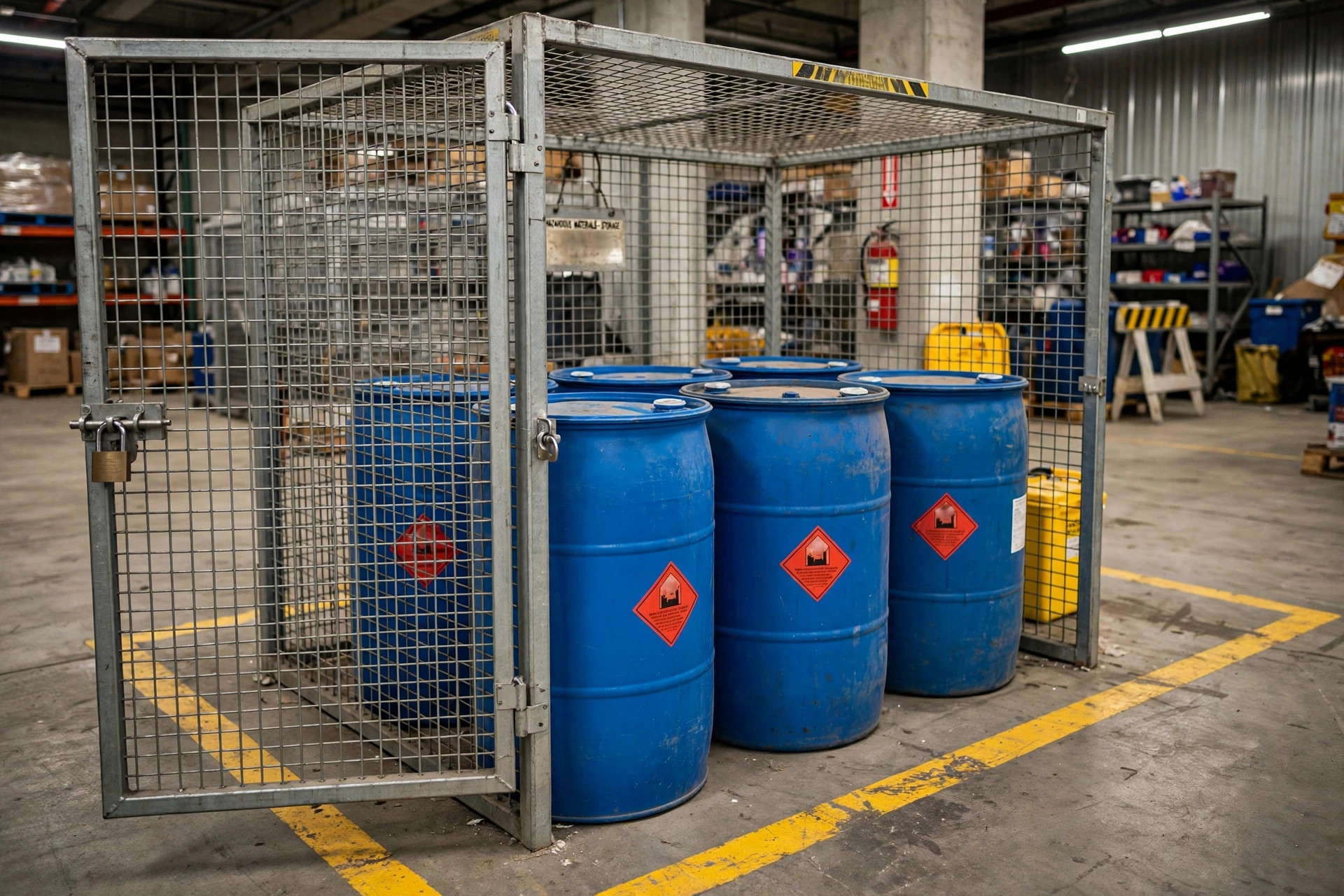
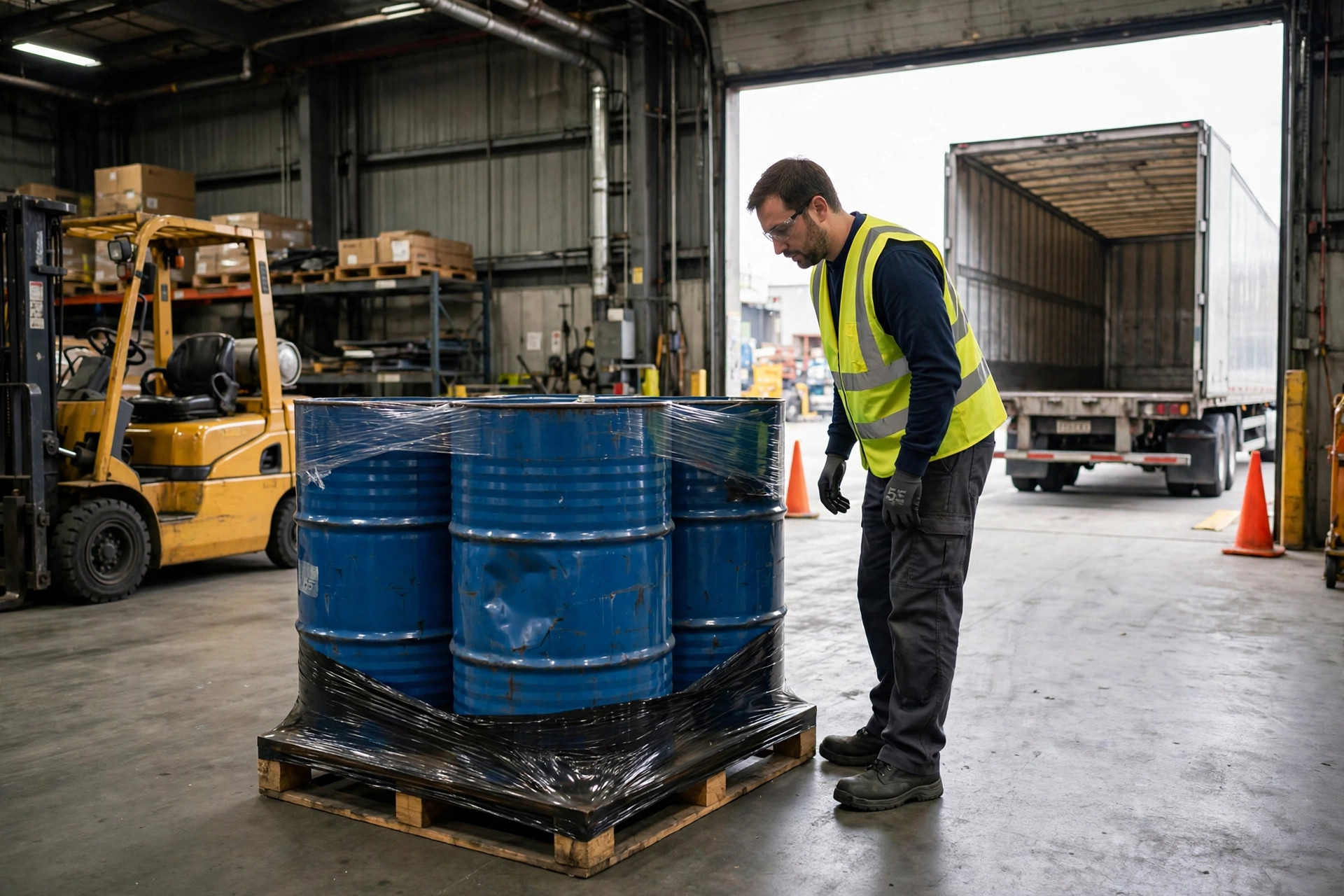
One fall morning in 2024, I pulled into a 3PL in Ontario with 12 pallets — 48 drums of industrial cleaner. The receiving kid was fast with the forklift. Counted, handed me the papers, and started pushing pallets toward the racks. Out of the corner of my eye I caught something on the outer pallet: one drum with a bulged side, the UN marking half rubbed off. "Brother, hold that one off," I said. "It's bulging." He waved me off: "Sign first, we'll deal with it later." I pulled him aside and said, listen — if that drum weeps, it contaminates the whole pallet, and now your entire pallet is quarantined. Is that what you call receiving? We set that drum aside in the isolation area and photographed everything. The shipper later confirmed the lid gasket had aged out. Two more hot days and it would have started leaking for real.
Here's what that tells you: hazmat inbound inspection isn't about counting. It's about packaging and paperwork. Get the count wrong and you lose money. Get the packaging or the paperwork wrong and somebody gets hurt — or the DOT comes knocking. Under 49 CFR 107.329, a hazmat violation can draw up to $102,348 per violation per day, and up to $238,809 if it causes death, serious injury, or major property damage. The driver fears the fine. The warehouse should fear it more — once that freight is inside your building, the liability is yours.
The second story stung more. A chemical warehouse in Fontana — full truckload, 20 pallets. The receiving supervisor went drum by drum with the shipping papers, then pointed at the drum markings: "Driver, I can't take this load." The papers said Packing Group II. The drums were marked Z, rated for Packing Group III only. X covers I, II, and III. Y covers II and III. Z covers III only. Putting PG II liquid in a Z drum is like hitching a pony to a freight wagon — nothing happened on the road, but that was luck. I deadheaded home and burned the fuel, and I didn't blame that supervisor one bit. The shipper later admitted someone grabbed the wrong drums staging the load.
So here's what I tell every warehouse friend about hazmat inbound inspection: three checks — the UN packaging mark, the label, and the SDS. Pass all three before you sign. Fail any one, and it's isolate, photograph, call.
Hazmat inbound inspection, check one: reading the UN mark
Every drum, box, or can holding hazmat carries a UN specification marking. It looks like gibberish, but every segment means something:
UN 1A1/X1.8/300/23/USA/xxxx
Broken down in plain English: 1A1 is the packaging type — 1 means drum, A means steel, 1 means tight head (small opening). A 1A2 is an open-head steel drum; a 1H1 a tight-head plastic drum. X is the performance level: X is tested for Packing Groups I, II, and III; Y for II and III; Z for III only. X is the toughest, Z the lightest. For liquids, 1.8 is the specific gravity the drum was tested at — your liquid's specific gravity must not exceed it. 300 is the hydrostatic test pressure in kilopascals. 23 is the last two digits of the year of manufacture, USA is the country of manufacture, followed by the manufacturer's code.
Solids read differently: 1A2/Y400/S means 400 kg maximum gross mass, S for solids.
At receiving, check three things. First, the X/Y/Z rating must cover the packing group on the shipping papers — the papers will say PG I, II, or III, and the match is instant. Second, for liquids check the specific gravity number, for solids the gross mass — don't exceed them. Third, check the age of the drum. Plastic drums (codes starting 1H) also carry the month of manufacture, and plastic gets brittle with age. Marking worn off or illegible? That's an automatic fail. Don't go soft on this.
Check two: the label — it only counts if it matches
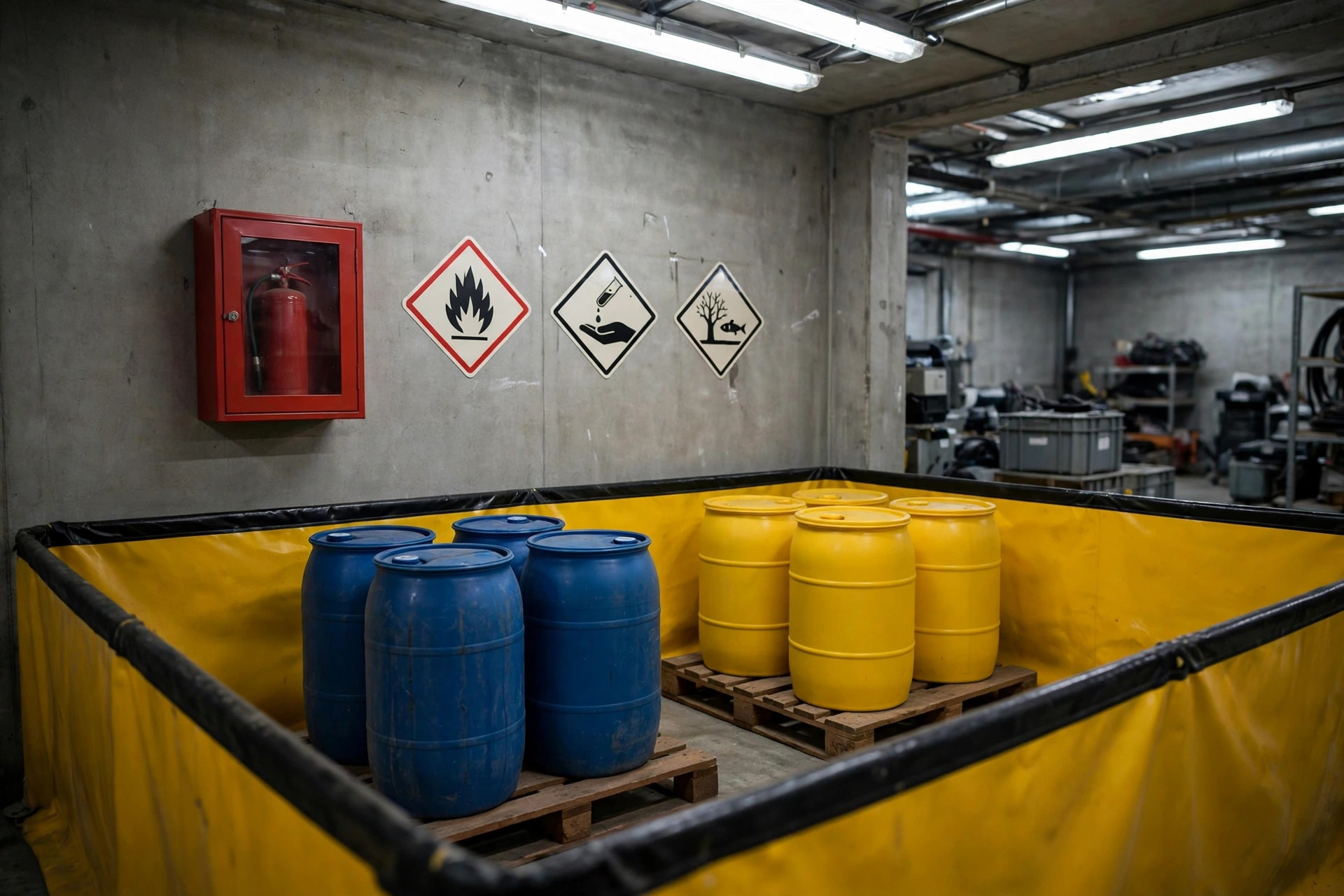
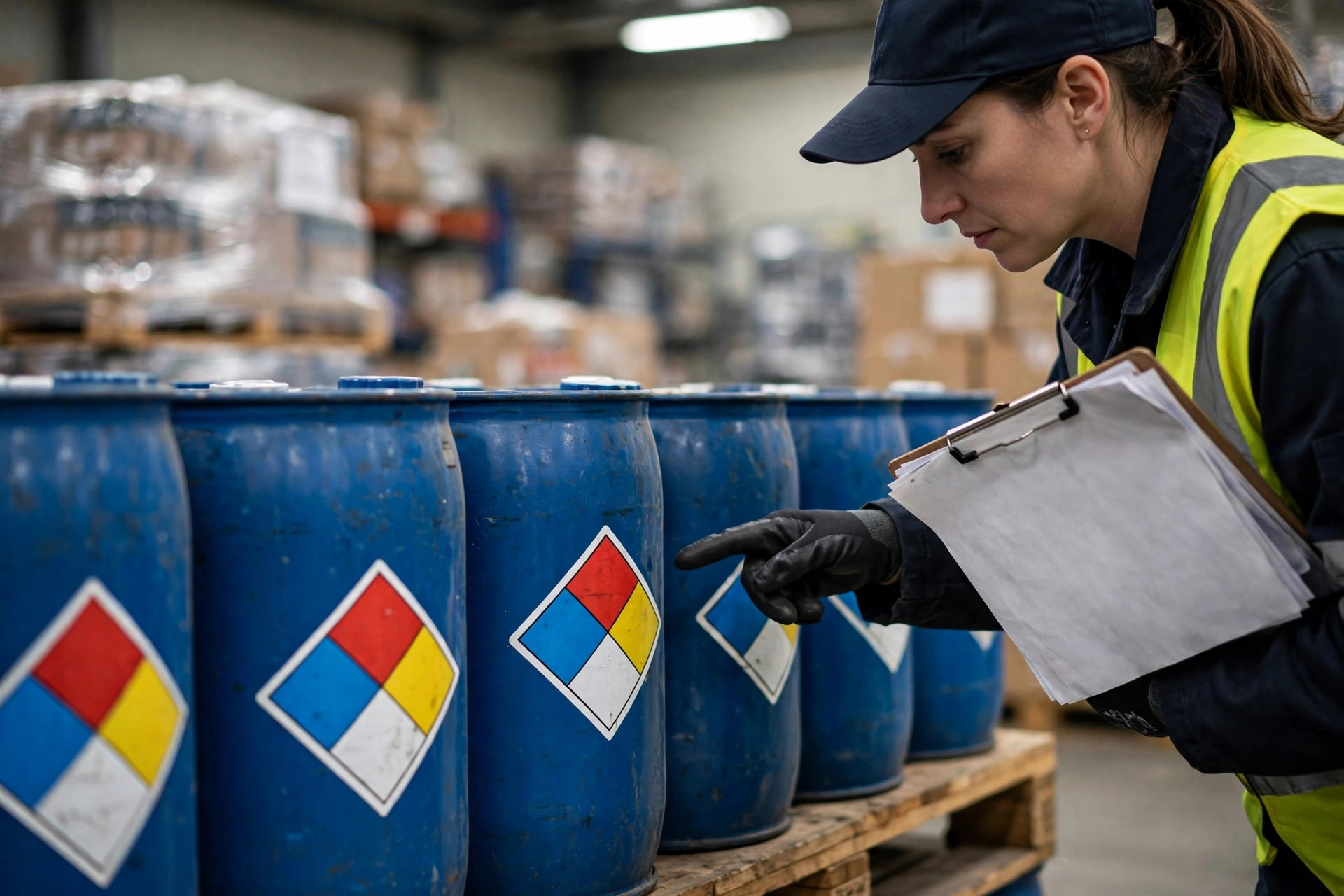
A GHS label has six required elements: product identifier, signal word (Danger or Warning), hazard statements, pictograms, precautionary statements, and supplier information. At receiving, just do three matches: the product name on the label against the proper shipping name on the papers; the UN number on the label against the UN number on the papers; the pictograms and hazard statements against Section 2 of the SDS.
The most common failures I see: labels faded by sun or washed out by rain, old labels where the product name differs from the papers by a single word. One word off is still off — the DOT works on exact matches. I once watched a driver and a warehouse argue all afternoon because the papers said flammable liquid and the drums wore corrosive pictograms. The shipper had to relabel before anyone would sign. A wrong label is worse than no label, because it lies to the person handling it.
Hazmat inbound inspection, check three: the SDS — of 16 sections, receiving needs four
OSHA's Hazard Communication standard (29 CFR 1910.1200) requires every SDS to carry 16 sections in a fixed order — from Section 1 (Identification) through Section 16 (Other information, including the revision date).
Sixteen sections sounds like homework, but at receiving you only need four. Section 1 — product identification — against the label and the papers. Section 2 — hazards — against the pictograms. Section 14 — transport information — UN number, proper shipping name, hazard class, and packing group, line by line against the shipping papers; the single most useful section for anyone at the dock. Section 7 — storage requirements — whether this freight can sit next to what's already in your building. Glance at Section 16 for the revision date. An SDS untouched for years goes back to the supplier for a fresh copy.
Here's the counterintuitive part: most warehouses file the SDS in a binder and never open it, just to have something to show an inspector. But when something actually goes wrong — a drum starts leaking — the first thing a worker reaches for is Section 4 (first aid) and Section 6 (spill response). The SDS isn't for the inspector. It's life insurance for the crew on the floor. Skipping the SDS at receiving is like locking the life insurance in a drawer.
The triple-check list: tape this to your receiving office wall
| What to check | How | If it fails |
|---|---|---|
| UN packaging mark | Read the X/Y/Z rating, specific gravity or gross mass, year of manufacture; marking complete and legible | Isolate, photograph, reject — or wait for written confirmation from the shipper |
| Label | Product name and UN number match the papers; pictograms match SDS Section 2; label intact | Damaged or mismatched label means rejection until relabeled |
| SDS | Sections 1, 2, and 14 match the papers and labels; Section 7 for storage requirements; Section 16 for revision date | Missing or outdated SDS — hold receiving and request a current copy from the supplier |
| Shipping papers | Proper shipping name, UN number, hazard class, packing group, quantity — line by line | Paperwork and freight don't match? Isolate first, sort it out second |
And here's the trade-off worth doing the math on. People ask me: X-rated drums have the toughest test standard, so shouldn't we just buy X for everything? That's not how the money works. X drums cost the most, and if your freight is PG III year-round, running X drums is like taking a semi truck to buy groceries. But at receiving, the rating can only go up, never down. X holding PG III freight is fine. Z holding PG II freight is not. The shipper saves pennies; the warehouse carries the risk. Bad trade.
Old drivers' saying: the careful ones make it home. In hazmat, there are no small incidents. The triple check looks like a hassle — ten extra minutes a load — but it can save you a six-figure fine, and it might save somebody's breadwinner. Marks, labels, SDS — pass all three before you sign. Everything else is secondary.
By Shifu Zhao, Trucking Veteran (15 yrs)