A friend selling small appliances in Ecuador asked me how to enter the Guayaquil warehouse market with only a dozen cubic meters of goods, and I laughed, because that is exactly the math small warehouse owners do every day. Big companies talk about strategy. We talk about what one container costs to unload, what one truck run costs, and what each extra day in storage eats from the margin. Guayaquil is Ecuador's Pacific gateway, the port where much of the country's imported cargo comes ashore before it fans out to Quito, Cuenca, and the coastal cities. If you want to sell into Ecuador, you will pass through Guayaquil sooner or later. The question is not whether to pass through, but where you step in, and what that step costs you.
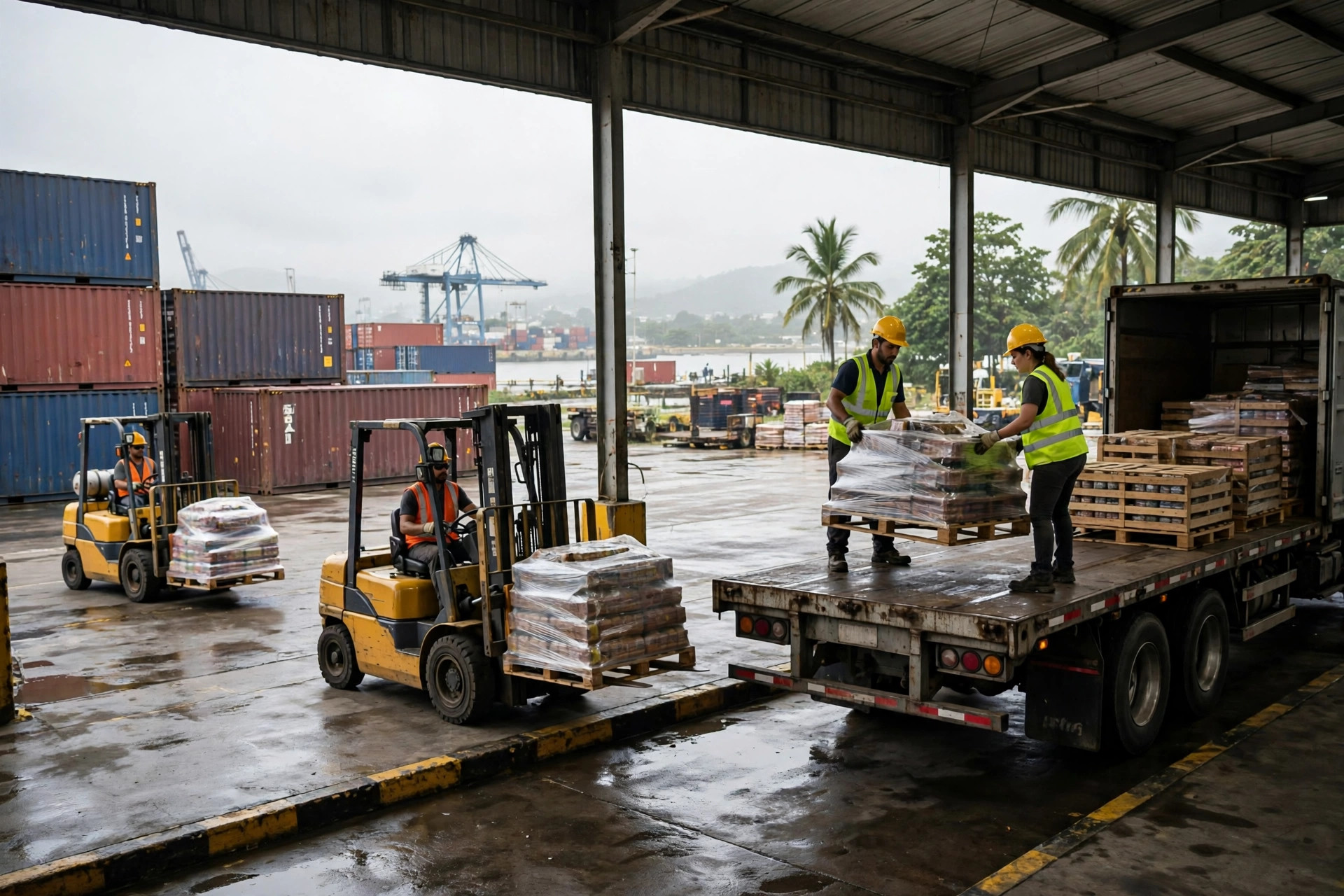
Let me start with his shipment, because it shows the trap clearly. He had two small containers arrive in the summer, one of fan parts and one of power strips, neither large enough to fill a warehouse bay on its own. At first he wanted a warehouse right by the port, thinking that closeness would mean fast pickup. The quote stopped him cold. Port-area warehouses tend to come with a larger minimum footprint, and unloading and short-haul trucking are often charged separately, so a small volume cannot spread those fixed costs thin. Worse, the port was busy that week, and getting a pickup slot meant waiting in line. His containers arrived, but arrival did not mean movement. Paperwork, inspection, and queuing each took their turn, and the cargo sat for three extra days while a truck made one wasted trip. Whatever he saved on the short drive from the port, he paid back in waiting time and extra handling.
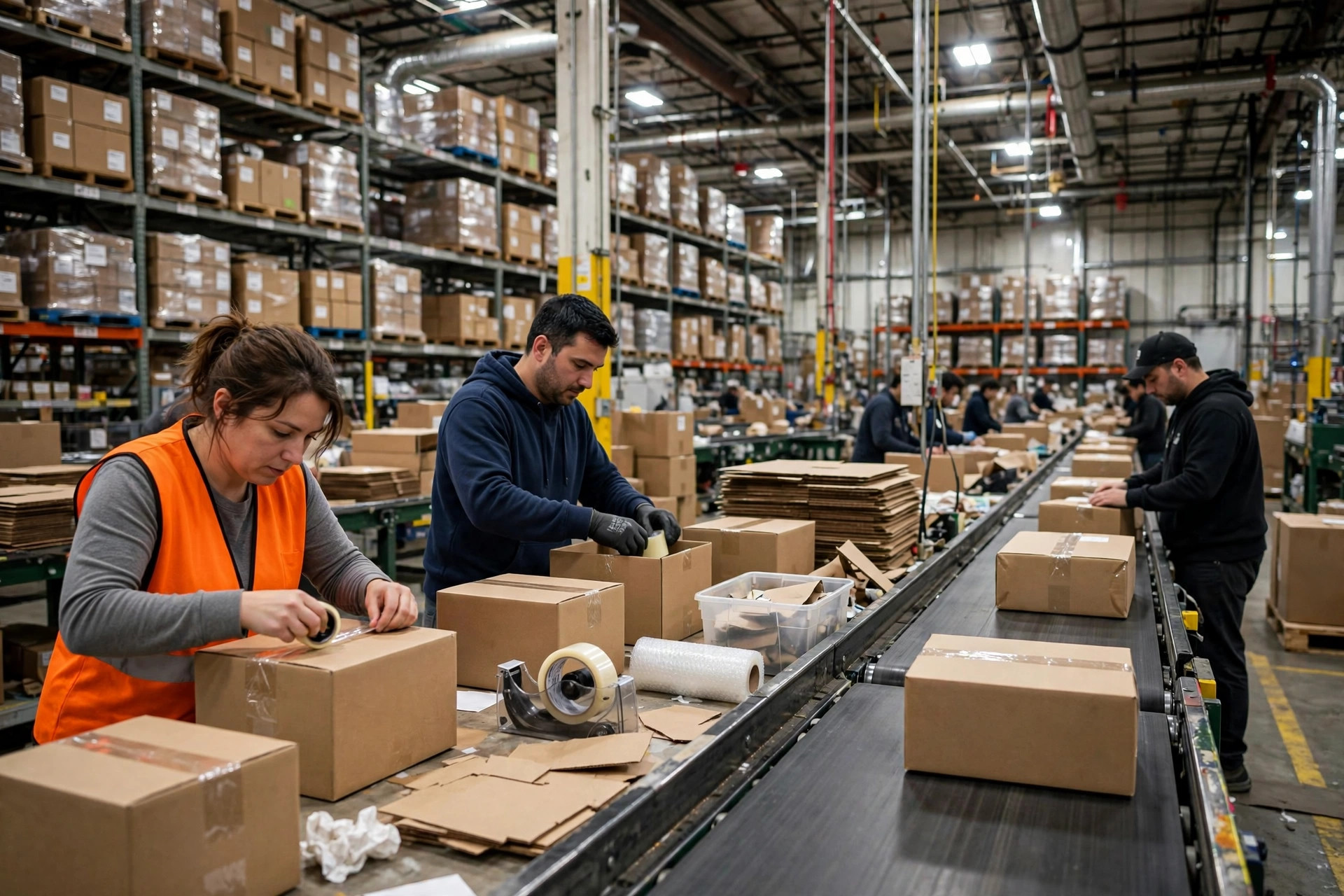
A second peer of mine took the opposite route, and his story is the reason I keep telling small sellers not to copy big warehouses. He sells small home goods in even smaller lots than I do, and he skipped the port area entirely. Instead he joined a shared warehouse on the outskirts of Guayaquil, where several small sellers split one site, sharing forklifts, a packing bench, and a warehouse keeper who speaks Spanish with the drivers. His cargo still came through the port, but a forwarder consolidated it onto a truck to the suburban warehouse, and he paid for the pallet positions he actually used rather than renting a whole bay. When he needed to replenish Quito, the shared site happened to have a consolidated route going that way, and he rode along for less than hiring a truck alone. His lesson was blunt: push fixed costs down first, and worry about looking impressive later.
The Guayaquil warehouse market by the port: what you are really paying for
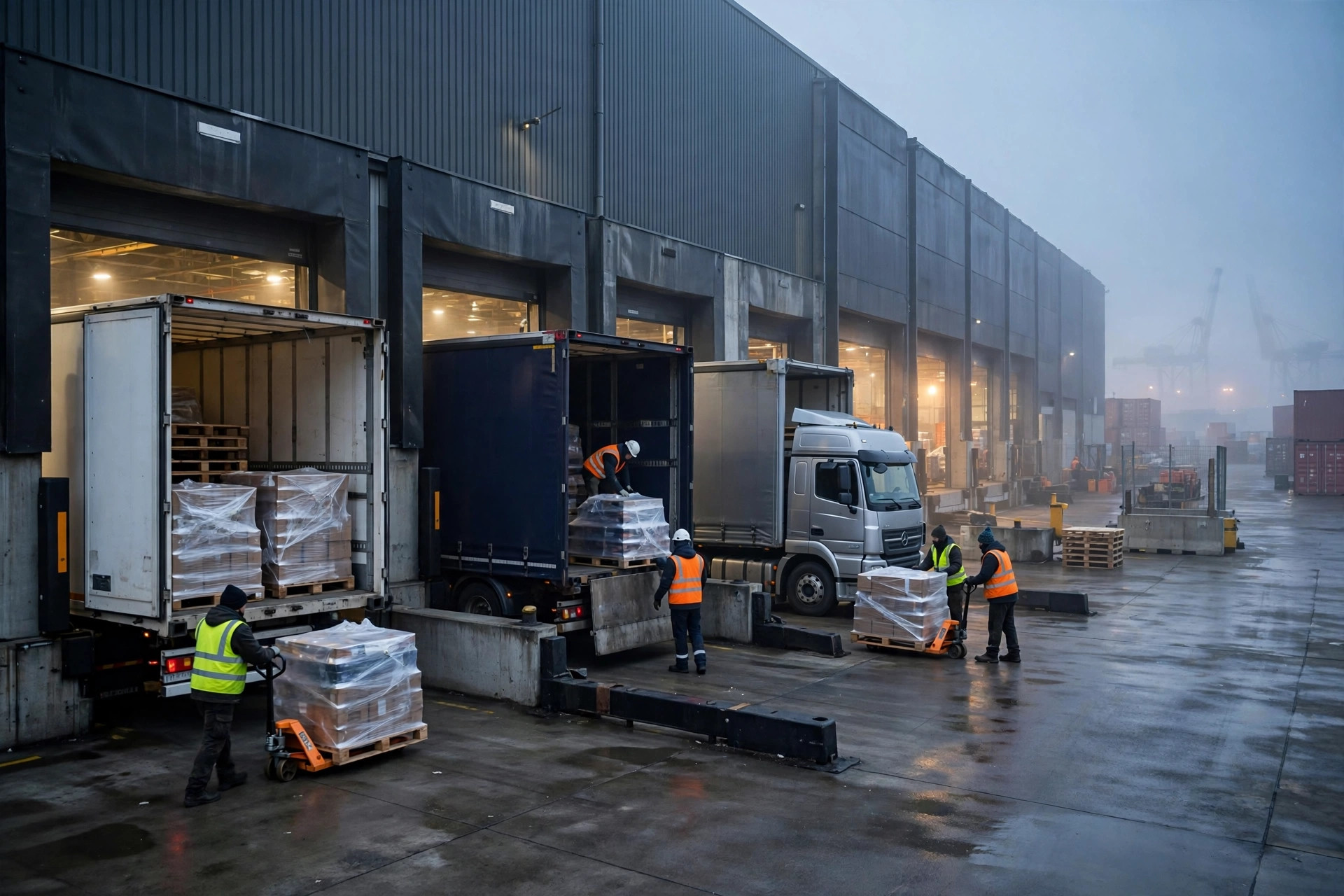
A port-side warehouse does not only charge rent. It charges you for a rhythm set by the port itself. With small volume, you are rarely first in line for unloading crews, because the big full-container jobs go first, and your small job waits behind them. Port warehouses are also built for fast in-and-out. The longer your goods sit, the more the cost structure turns against you, with short hauls, waiting time, and overtime handling stacking up one item at a time. That does not make port warehouses bad. If your cargo is large, frequent, and needs to move inland the moment it lands, closeness is real money saved, with fewer truck miles and less handling risk. The test is simple: does your cargo need to move immediately, and is it big enough to justify that speed?
My own rule is plain, and I have kept it for years. Until my volume can reliably fill a rented bay, I do not sign a whole port-area warehouse. It is not that the port warehouse is wrong, it is that we small operators cannot afford to burn money on fixed costs. Every dollar locked into rent is a dollar taken from the next shipment. I would rather keep that money in inventory and cash flow than spend it on looking close to the port.
The Guayaquil warehouse market in the suburbs and inland nodes
Suburban warehouses and inland distribution points run on a different calculation. A suburban site adds one more truck leg from the port, so transport costs a little more, but the rental threshold is lower. You can often negotiate by pallet position, by month, or by actual use, which fits sellers whose volume swings and whose product mix is messy. An inland node, for example somewhere along the road toward Quito, puts you closer to inland customers and speeds up replenishment, but it also means a longer first leg. If the port jams, the inland node is the place that runs out first. None of these locations is universally better. The right one depends on your volume and where your customers actually live.
I use an illustrative table to force myself to answer honestly before I sign anything. The figures below are scenario examples, not market quotes, and real terms should be checked against current local policies and quotations:
| Location choice | Best for | Fixed-cost feel | Biggest risk |
|---|---|---|---|
| Port-area warehouse | Large volume, immediate distribution | High, large minimum footprint | Queuing, separately charged short haul |
| Suburban Guayaquil warehouse | Small lots, mixed products, uneven volume | Lower, negotiable by pallet | Extra truck leg, need for consolidation |
| Inland distribution point | Many inland customers, fast replenishment | Varies by route, flexible | Port delay becomes an inland stockout |
Here is the counter-intuitive part that surprises most newcomers. People assume that being closer to the port always saves money. For small lots, it is often the reverse. The transport saved on that short leg is frequently smaller than the high minimum rent and the waiting cost, so a site a little farther away, a little slower, can leave you with a cheaper total bill. Saving money is not about saving one line item. It is about saving the total.
Seasonality and port congestion belong in the same calculation. Ecuador's imports and consumer demand have busy and quiet seasons, and before a holiday peak, everyone rushes cargo through the port at once. Pickup and delivery slow down, and the queuing cost of a port warehouse gets magnified. In that moment, a suburban warehouse becomes a buffer: pull the cargo out early, hold it outside the port zone, and distribute after the peak passes, on your own rhythm. In the quiet season the logic flips a little, because consolidated suburban routes run less often, and a single shipment can cost more. Run two seasonal versions of the calculation, one for the peak and one for the lull.
How a Small Warehouse Survives in Guayaquil: Consolidation, Sharing, and Seasons
In practice, my checklist for fellow small operators is short, because each item comes from a mistake I have already paid for. First, if your volume is small, negotiate consolidation and shared trucking before you negotiate a whole lease. Consolidate to the port, consolidate to the warehouse, and split fixed costs before you commit to them. Second, when you visit a warehouse, ask three questions: can you charge by pallet position, can you rent short-term or month by month, and can you help consolidate a route to Quito or Cuenca? If two of those get a vague answer, walk away. Third, leave slack in your port timeline, because local procedures should be checked against the latest official requirements rather than last shipment's experience. Half a day to a full day of buffer is cheaper than a missed delivery. Fourth, before the peak season, move part of your stock to a suburban buffer instead of leaving everything in the port zone, so congestion does not leave you with nothing to ship. Fifth, review the numbers monthly, with freight, rent, waiting time, and damage recorded separately, so the line that spikes one month is the line you fix the next.
In the end, Guayaquil does not offer one way in. Big warehouses have their way, direct port operations and whole-bay fast turnover, because they have the capital to support it. Our capital is thin, so we have to spend it where it counts: share a little, consolidate a little, move half a beat slower but steadier. If goods reach customers on time, if the numbers add up, and if there is still money for the next shipment, that is a working business. Small warehouses have their own way of living. We do not compete with big companies on appearances. We compete on who lasts longer, and whose numbers can take a beating.
By Xiao Ma, Small Warehouse Owner