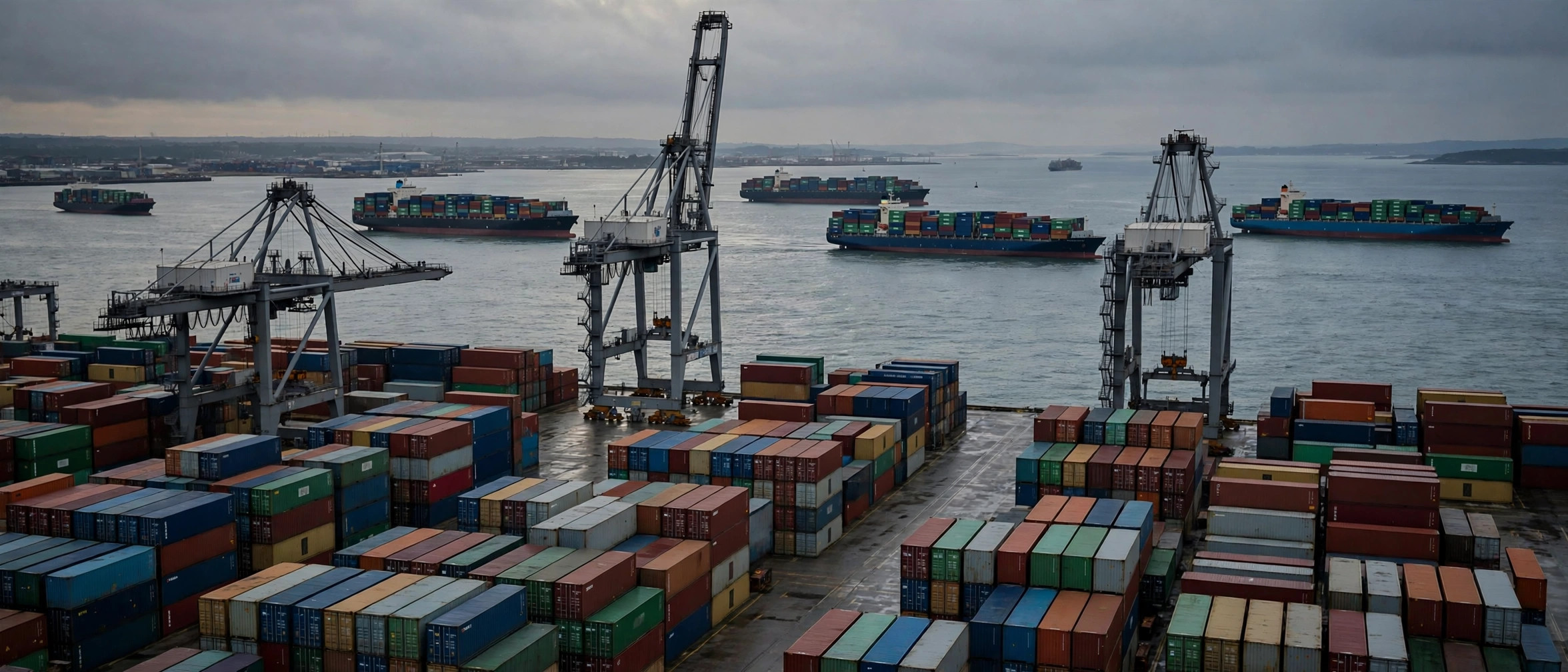
The call came at 8:40 on a Tuesday morning. I had barely sat down.
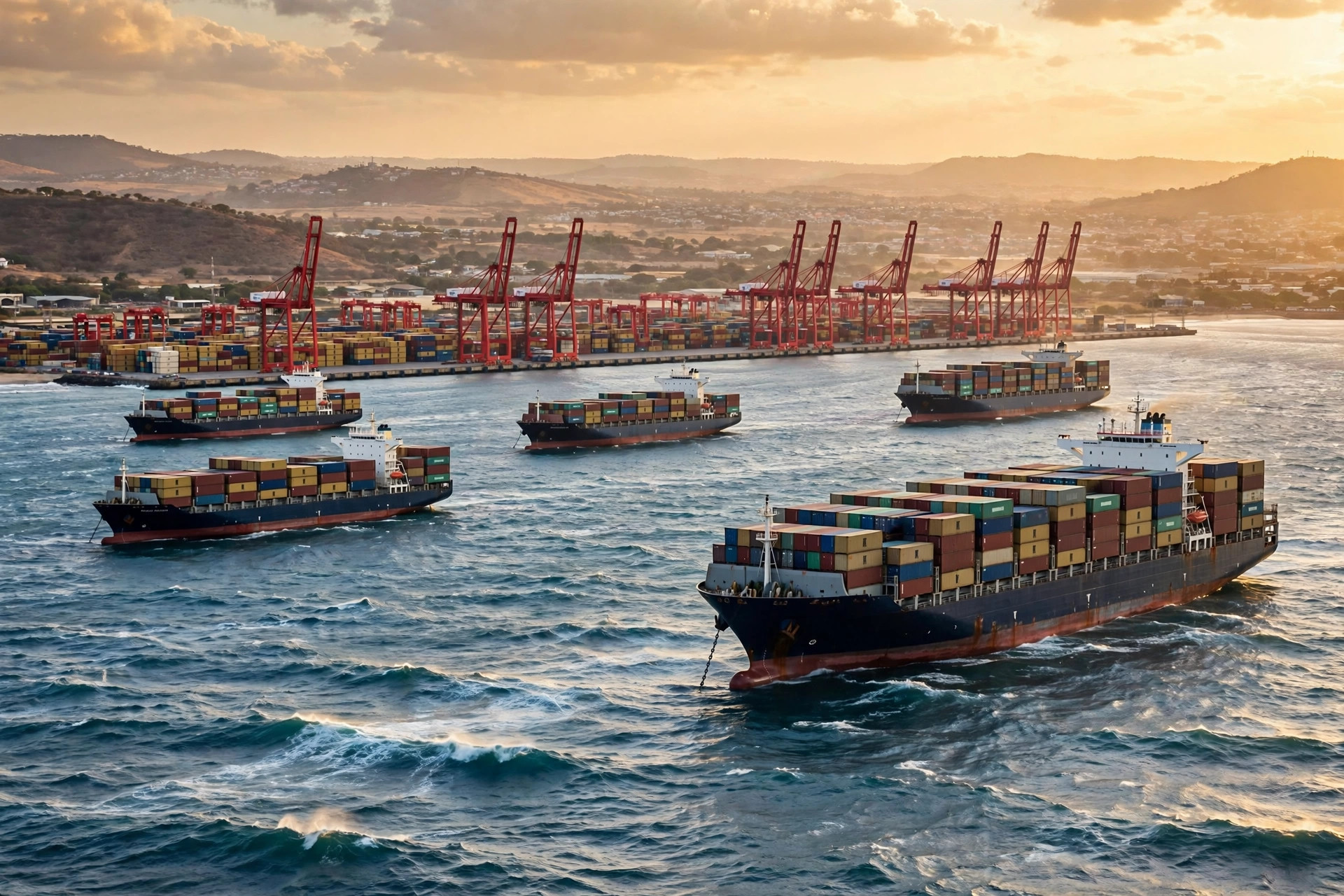
"Mike, your boxes are still at anchorage. Portcast just dropped the numbers — median wait at Tema is 4.56 days this week. Last week it was 3.17."
I looked at the inbound schedule on the whiteboard and shifted everything two days right. Another morning rearranged by a port.
Let me be straight with you: port congestion is nothing new for West African importers. What's new about this Tema round is how the money hits — surcharges landed before the ships did. CMA CGM: a congestion surcharge of $400 per TEU. Hapag-Lloyd went further: $250 per TEU on reefers, with reefer plug utilization at Tema hitting 100%. Your reefer box can berth and still have nowhere to plug in.
This isn't a news recap. It's about how the warehouse side absorbs it — buffer-stock days, off-dock staging, and the congestion clause your contract needs. This is how we run it in our warehouse.
Three Numbers a Warehouse Manager Watches at Tema
Here is the hard data, sources attached.
First: Portcast's port congestion tracker. Week of October 4, 2026 at Tema, Ghana: 4.56 days, versus 3.17 the week before — up nearly a day and a half, over forty percent.
Second: CMA CGM's official notice, a congestion surcharge of $400 per TEU. A 40-footer is 2 TEU — $800 gone before your cargo reaches the gate.
Third: Hapag-Lloyd's notice, $250 per TEU on reefers, plugs at 100%. The nastiest number of the three. Full plugs mean reefer boxes sit unpowered in the yard. Vaccines, frozen food, pharmaceuticals — one temperature excursion and the box is a write-off.
Why should a warehouse manager care about port numbers? Because the port's bill always lands on the warehouse's desk. A day and a half more at anchorage shifts your whole inbound plan; surcharges rewrite your cost sheet; a reefer box with no power is the first landmine in receiving.
How Many Days of Buffer? A Formula and Three Lines
When a port clogs, the warehouse manager gets the first call: "How many days of safety stock?" Ours is three lines on a whiteboard. Anyone can read it.
Line one, everyday safety stock: average inbound lead time plus 3 days. Customs, box pickup, short-haul — 3 days of slack covers a normal week.
Line two, the congestion line: scale up with the median wait, in real time. Tema's median wait went from 3.17 to 4.56 days, so we moved safety stock from plus-3 to plus-5. Simple logic: one more day at the port means one more day your stock must last. We re-check Portcast weekly. No gut feelings.
Line three, the red line: critical SKUs never drop below 14 days. Reefer goods, best sellers, high-margin products get a 14-day floor. Cross it and purchasing fires an expedite automatically.
Run the math and it sells itself. Say you import 100 TEU a month at $20,000 cargo value per TEU — round example numbers, not gospel. Two extra days of safety stock ties up roughly 100 × 20,000 × 2/30, about $133,000 of working capital. At 8% annualized, that's around $10,600 a year in carrying cost.
Now price the congestion: $400/TEU on 100 TEU is $40,000 in one shot, demurrage not included. Two extra days of inventory cost a fraction of what a clogged port extracts from you.
Here's the counterintuitive call: when the port clogs, most people think "order less, wait it out." Wrong. Do the opposite — stock up at the front warehouse. The congestion is in transportation, not demand. Your customers won't delay orders because Tema is congested.
Off-Dock Yards: The Cheapest "Second Front" in a Port Crisis
The boxes finally get released. Where next — straight to the main warehouse, or an off-dock yard first?
Our standing rule during congestion: off-dock first, never straight to the main warehouse. Three reasons.
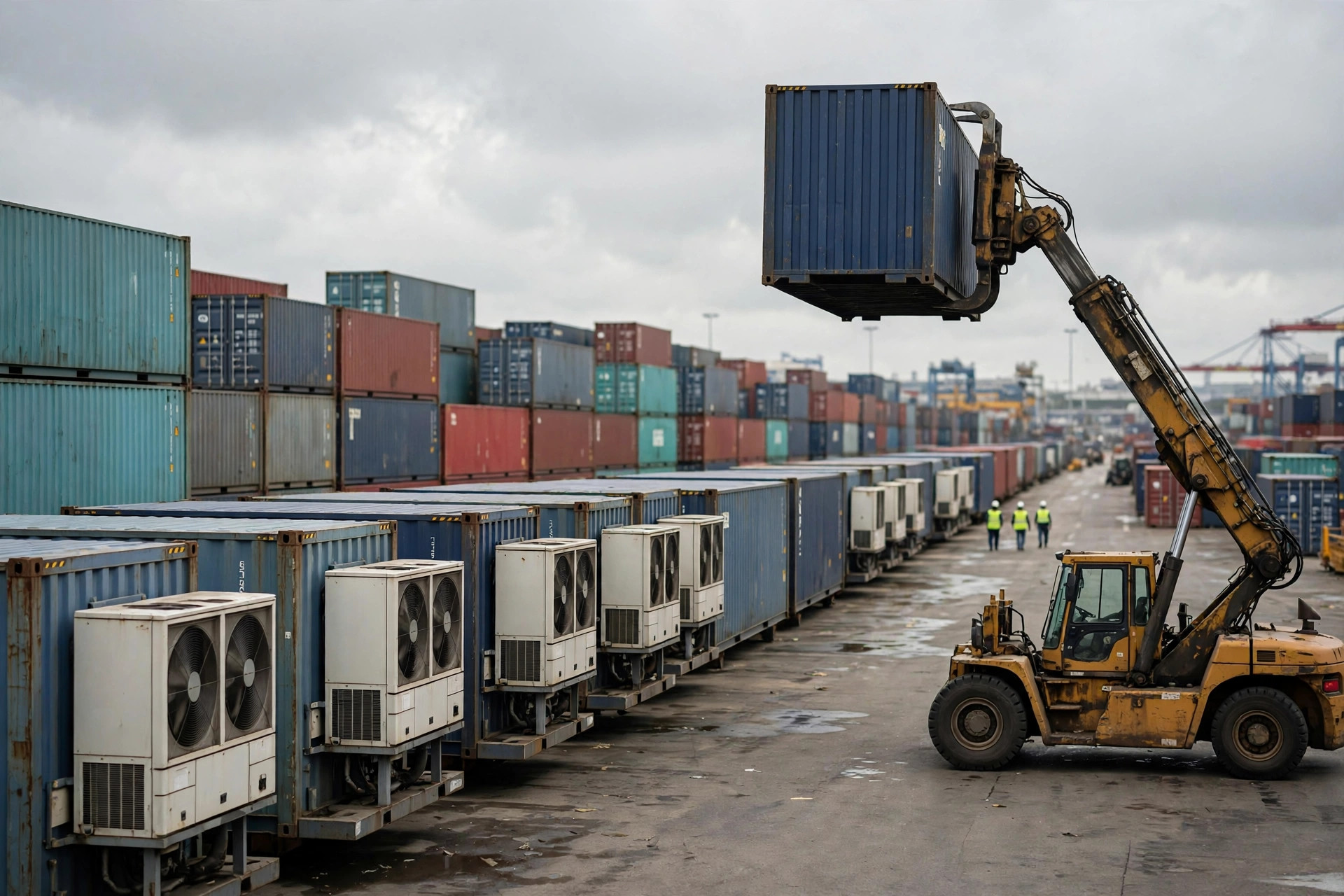
One, the port's free storage window is only 3 to 5 days (check the latest carrier and terminal notices — policies change). After that, yard fees burn fast. An off-dock yard typically costs a third to a half of port storage. Every extra day inside the port is money on fire.
Two, the off-dock yard sits close to the port, so the trucking loop is short. Ship berths, box releases, truck pulls it out. Get it out first, schedule main-warehouse receiving later.
Three, decongestion. When the port clogs, every importer's cargo lands in the same week. Your main warehouse's docks, forklifts, and receiving crew are staffed for a normal rhythm — triple the volume breaks it. The off-dock yard is the shock absorber.
The comparison:
- Boxes sit at the port: highest demurrage and storage, slowest, reefers possibly unpowered. Worst option.
- Pull out to an off-dock yard: cheap storage, fast release, one extra short-haul move. Best option.
- Straight to the main warehouse: looks cheapest, but the dock queue slows everything, and once the dock backs up, receiving quality collapses. Riskiest.
The verdict is fixed: in a port crisis, "pull it out to off-dock" always wins. One extra trucking leg looks like a cost; it saves you the big three — port storage, demurrage, and cargo loss.
One more honest word: sign the off-dock framework agreement when the port is flowing, not when it's clogged. We keep standing agreements with two off-dock yards — no usage, no payment, activated within 48 hours of a congestion trigger. Negotiate during a crisis and they'll name their price. No leverage.
Reefers Are the Scariest Part: When the Plugs Are Full
That Hapag-Lloyd number — 100% reefer plug utilization — is the most dangerous part of this Tema round.
A real story. Late last year, a frozen-seafood client had six reefer boxes stuck 9 days at a West African port. Not enough plugs, so the line stacked the boxes in an unpowered area on insulation alone. Day seven, one compressor alarmed: -18°C climbed to -9°C. Twelve tons, one box, total write-off. The client told me later that one box was worth three years of his warehouse rent.
A reefer box at a congested port is a ticking bomb. Our emergency playbook is four lines, written into the SOP:
- Ask about plugs at booking, not at arrival. Get the forwarder to confirm reefer plug availability at destination in writing when the booking is confirmed. No confirmation, change carrier or sailing.
- Your own temperature loggers, every box. Independent loggers — yours, not the line's — with cloud data. If it goes wrong, you have evidence for the claim.
- A power-up protocol with the off-dock yard. Reefers must be on power within 2 hours of reaching the off-dock yard; the yard must have backup generators. In the framework agreement.
- Buy the insurance separately. For reefer cargo, confirm the temperature-excursion clause on its own. Plenty of standard policies don't cover slow temperature drift. Ask before you buy.
Put a Congestion Clause in the Contract
When the port clogs, who pays for what between the warehouse and the importer?
Our experience: add a congestion clause to the warehousing contract that locks down three things in advance.
First, the definition of congestion. Spell out the trigger — say, the destination port's median wait exceeding X days for two consecutive weeks, or a carrier publishing a congestion surcharge. Never write "severe congestion." That's a lawsuit waiting to happen.
Second, who pays for what. Write the split down. Our way: the client absorbs carrier and terminal surcharges — it's their cargo; the warehouse absorbs extra costs from its own receiving delays — that's our responsibility. Clear lines, no arguments.
Third, emergency authority. Once triggered, the warehouse can activate the off-dock yard and run night shifts directly, billed at agreed rates — no waiting for a sign-off each time. During a crisis, time is money.
We added this clause to our contract template in 2024. Before that, every port crisis meant three days of sales arguing with the client. After that, the trigger hits and it executes automatically. Contracts are the roof you fix on a sunny day. Don't wait for the rain.
One Reminder for Fellow Operators
Tema's numbers are on the table: 4.56-day median wait (Portcast, week of October 4, 2026), $400/TEU congestion surcharge (CMA CGM notice), $250/TEU reefer surcharge with plugs at 100% (Hapag-Lloyd notice).
My reminder is one line: port congestion isn't a port problem — it's your inventory and contract problem. You can't move the ships at anchorage. But four things are yours to change: buffer days, the off-dock agreement, the congestion clause, and whether the reefer plan has ever been drilled.
All four can be decided in a meeting tonight. Don't wait for the next clog.
By Chen Feng, Warehouse Operations Manager