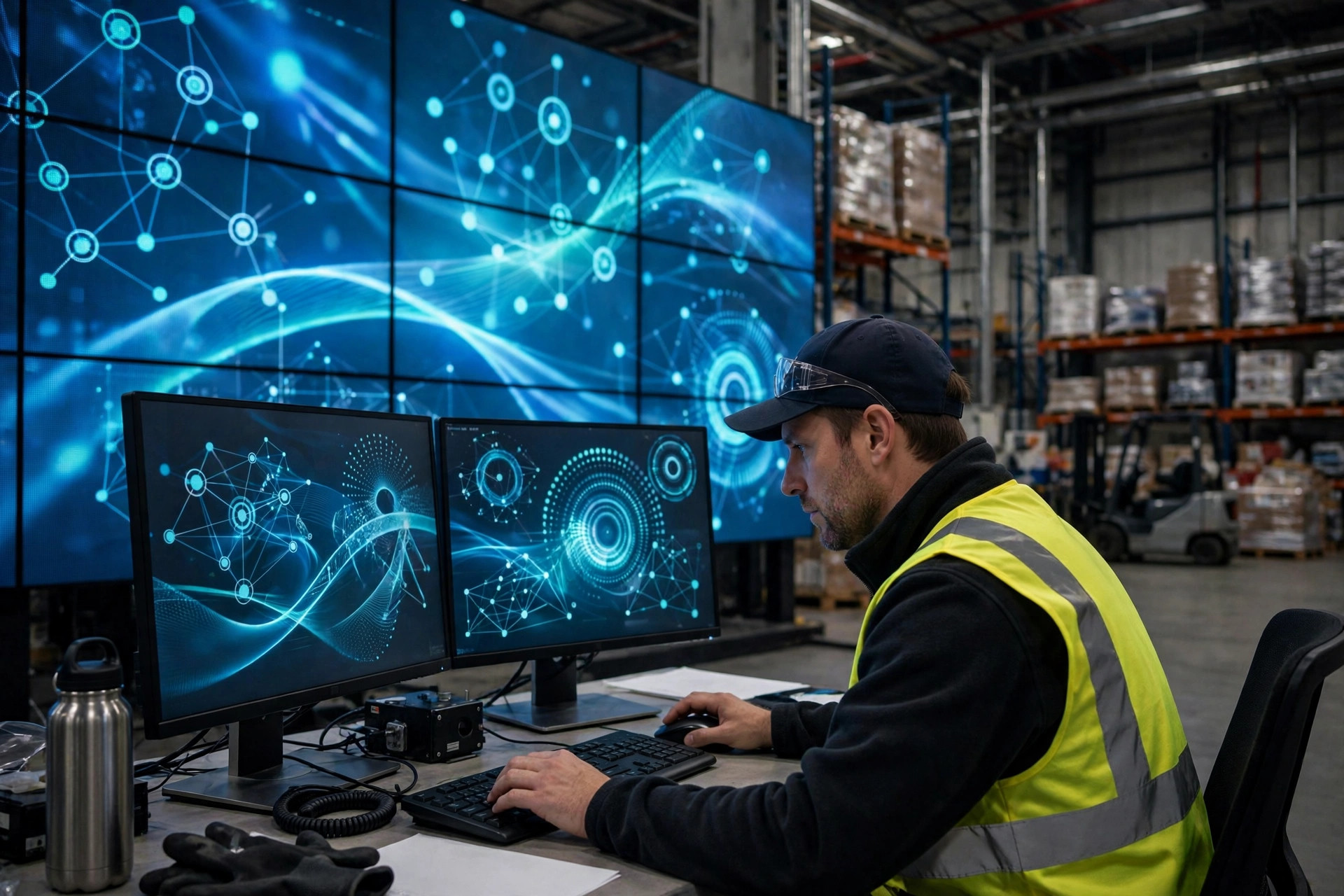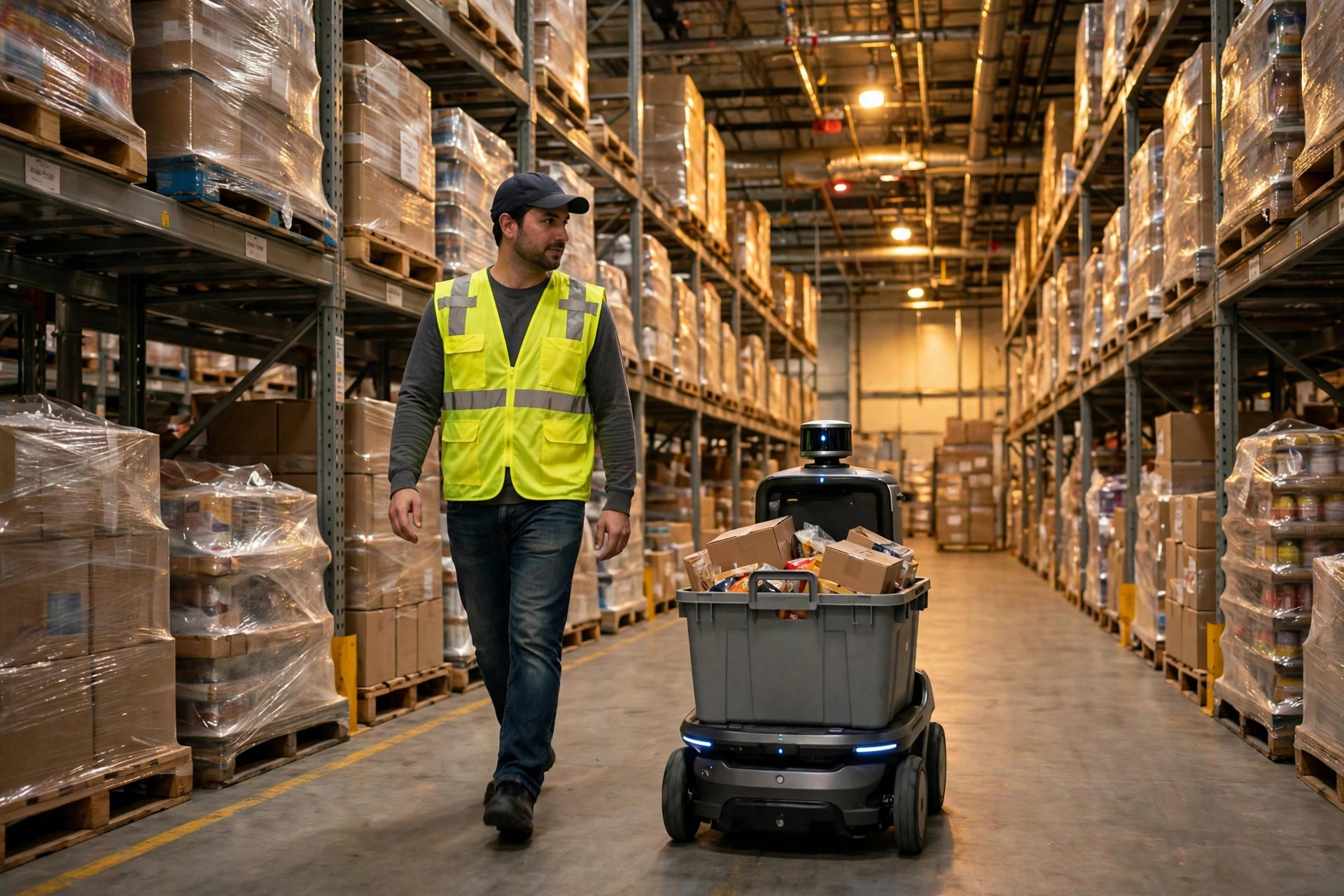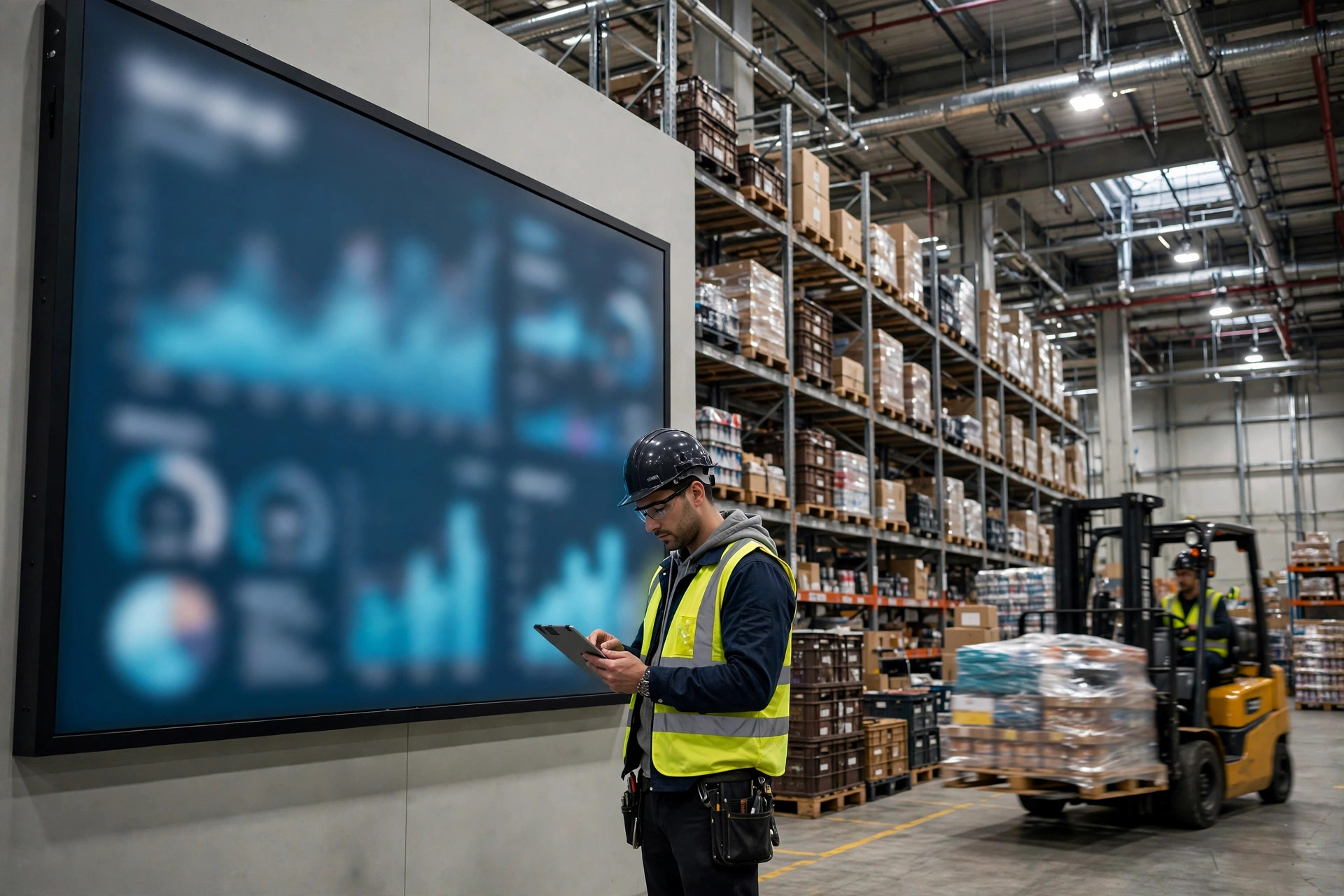
My verdict up front: in 2026, generative AI in warehouses is genuinely good at reading documents and answering questions, and at least two generations away from making decisions on your behalf. Here is the timeline, stage by stage, with honest notes on maturity, payback, and pitfalls.
Early in 2024, nearly every client who came to me about system selection asked the same question: "Lao Mi, can AI just run the warehouse for us?" I could only smile. Two years later, the answer is still no — but the boundary of that "no" has moved forward quite a bit. This piece walks through the timeline: how many stages generative AI adoption in the warehouse actually breaks into, how mature each stage really is, whether the money is worth it, and where a small or mid-size warehouse should start.
Stage One: Q&A and Support (Live Since 2024, Most Mature)
This is where generative AI first got a real foothold in warehouses, doing one thing: pulling existing information out in natural language. A picker asks "which slot is this SKU in" and gets an answer. A new hire asks "what is the returns process" and the chatbot walks through the SOP step by step. Customer service auto-replies to "where is my shipment."
Why did this land first? Because it never touches decisions. If the answer is wrong, someone double-checks it — nobody ships to the wrong address. Late in 2024 I visited an e-commerce warehouse in Ontario, about 120,000 square feet, that had wired its internal knowledge base into a Q&A layer. The picking supervisor told me new-hire ramp-up dropped from roughly two weeks to about one. Note the "roughly": what it saves is the training supervisor's time, not headcount directly.
The economics are also the clearest here. These are usually add-on modules from existing WMS vendors, or a Q&A layer built on a commercial large-model API — a project in the tens of thousands of dollars, affordable for a mid-size 3PL. The main pitfall is data quality: if your SOP documents are five years out of date, the AI will teach the wrong process with total confidence. Clean up the knowledge base first, then talk about AI Q&A. That order is not negotiable.
Stage Two: Document Recognition and Exception Alerts (Started 2025, Still Climbing)
Stage two puts AI eyes on paperwork and pictures: reading key fields off receiving documents, packing lists, and bills of lading for automatic entry; flagging damaged-parcel photos off the conveyor; turning a driver's texted delivery update into structured data. The value is real — it replaces the most tedious, most error-prone manual keying in the building.
But here is my cold water: "99% accurate in the demo" and "99% accurate in production" are two different animals. Warehouse paperwork is gloriously messy — handwriting, creases, oil stains, fax copies. A model tuned beautifully on one client's documents can fall flat at another 3PL. I watched a project where the pilot accuracy looked gorgeous, then peak-season temp workers' scrawled forms doubled the error rate, and they had to add a human review step. Once you price in the reviewers, the ROI stops looking so pretty.
My judgment on this stage: go ahead where document formats are stable — long-term suppliers with fixed layouts, standardized carrier invoices. Worth the money. Where documents come from everywhere in every format, do not pull the humans out yet. The investment is an order of magnitude above Q&A, and you must budget for human review. That lesson was paid for in cash.
Here is how I do the math: ignore the vendor's "efficiency uplift percentage" and price your current document-handling labor directly. Take a 3PL around 100,000 square feet — a few hundred inbound documents a day, two people dedicated to keying and checking. Automation that saves more than half of their time has a number you can set against the project quote, and the payback is either positive or it is not. Any project where you cannot do this math goes on hold.
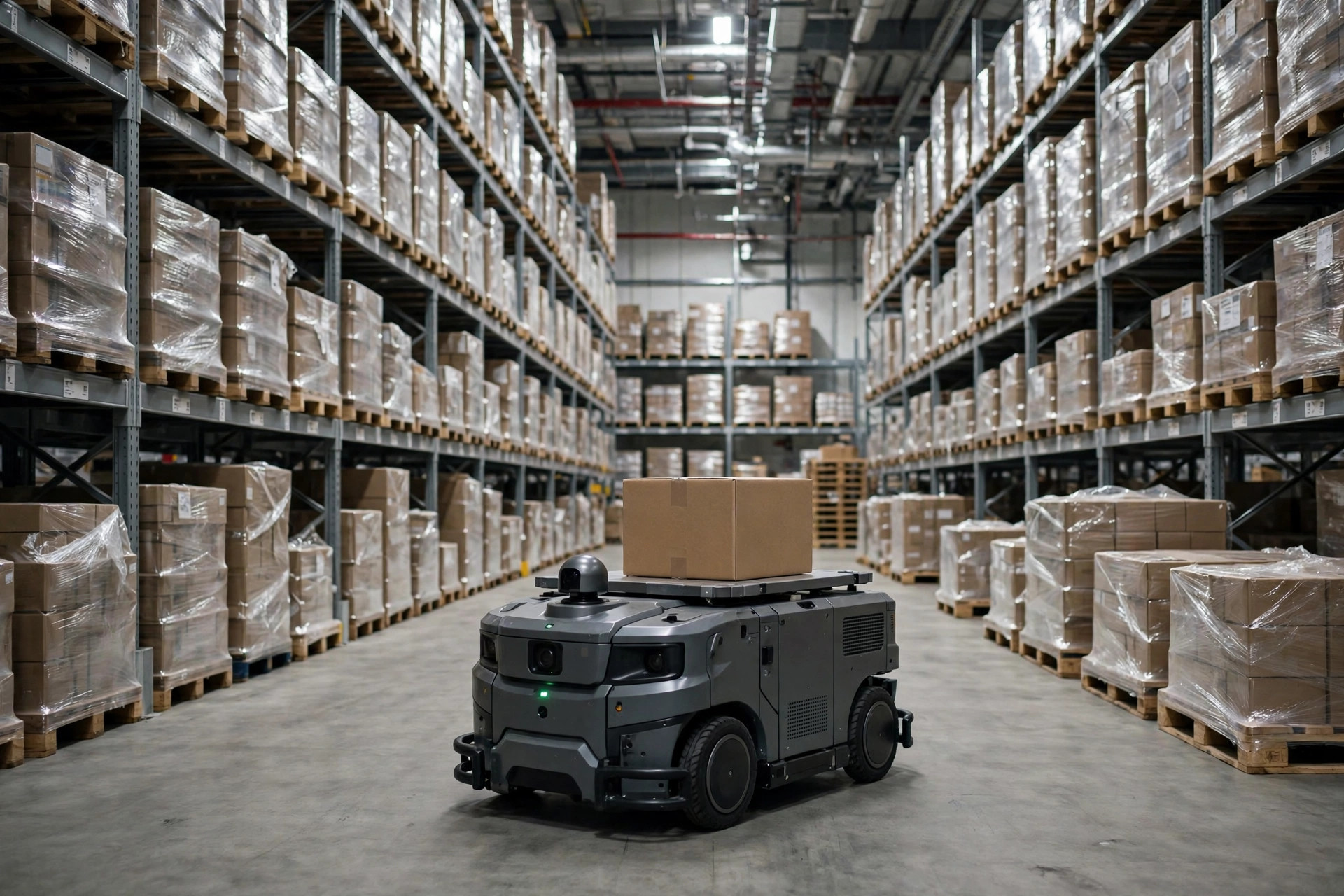
Stage Three: Scheduling Assistance and Autonomous Decisions (Pilots in 2026, Nowhere Near Reliable)
This is the part everyone asks about: can AI decide tomorrow's headcount, which truck goes first, how replenishment gets triggered? The honest answer for 2026 is: assistance, yes; autonomy, no.
Assistance means the system looks at historical order volume, promo calendars, weather, and suggests "plan for 18 people tomorrow," and the supervisor glances and signs off. This "AI advises, human decides" pattern already pays off in e-commerce warehouses with spiky demand. A beauty e-commerce warehouse in Southern California I know uses this kind of tool for peak-season labor planning; the manager says its forecasts beat his gut, and he no longer scrambles for temp labor the night before a big sale.
Autonomy is a different beast. Warehouse decisions are chained: staffing drives pick rates, pick rates drive cutoff times, cutoffs drive carrier pickups — change one constraint (say the carrier moves its pickup window) and the whole plan needs recomputing. Generative AI is good at language and patterns; it is not good at optimization under hard constraints. That is operations-research territory. Handing scheduling fully to a large model is like asking a brilliant essayist to do a mathematician's job: the direction feels right, the numbers might not be.
Then there is accountability: if the AI understaffs and peak day blows up, whose fault is it? Until there is a clear responsibility framework, no operations director I know will hand over sign-off authority. So my call is that before 2027, autonomous decisions stay confined to closed micro-scenarios — say, replenishment triggers on one fixed production line — not full-warehouse orchestration.
Where a Small or Mid-Size Warehouse Should Start: Three Pieces of Advice
Three actionable suggestions to close.
First, start with Q&A and the knowledge base. Smallest investment, fastest payback, lowest risk. Get your SOPs, FAQs, and customer-specific requirements into documents and feed them to a Q&A system. Do not underestimate this step: plenty of warehouses under 50,000 square feet still keep their SOPs in veteran employees' heads, and the knowledge walks out the door with them. AI Q&A forces you to capture that knowledge, and that alone is worth the ticket.
Second, use document recognition only where formats are fixed. Count your three highest-volume document types per day; if any of them is highly standardized — say, one big customer's fixed-format receiving slip — pilot on that one. Keep human review on every document during the pilot, run it three months, look at the real error rate, then decide whether to expand.
Third, try scheduling assistance, but keep the decision rights. Treat the AI forecast as a second advisor to cross-check against the supervisor's experience. If its suggestions keep beating human judgment for several months running, then consider giving it a bigger voice. The sequence is: assist first, semi-automate second, autonomy last. Skip any step and the tuition gets expensive.
Back to the timeline. 2024 was Q&A going live, 2025 was documents climbing the curve, 2026 is scheduling assistance entering pilots, and 2027 will most likely still be human-machine collaboration, not machine autonomy. Generative AI in the warehouse is no scam, but it is no magic either — a powerful advisor, not the boss who signs off. Get that straight and the money will not be wasted. The technology will keep moving, but warehouse dollars should always go where they cut deepest. That is the most honest conclusion I have drawn from watching this space for two years.