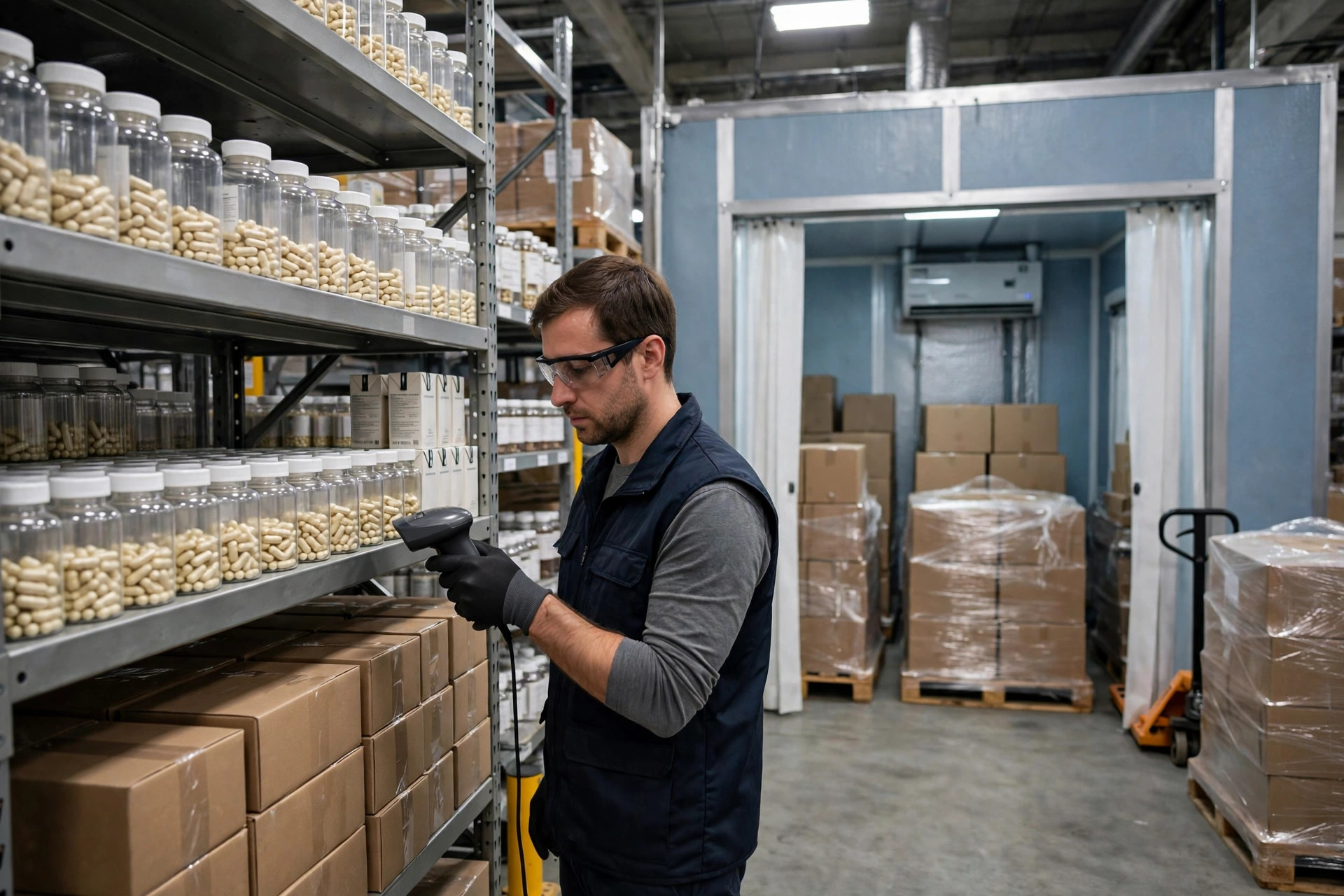
Start with the principle: frozen food warehouse storage is a race against time, and the race is not about speed. It is about continuity of temperature. Frozen goods do not fear one cold moment. They fear a break in the cold chain. Break it once, and quality drops a notch. That drop does not reverse, and you often cannot see it. You taste it later, when the customer already has the product.
Think of a frozen warehouse as one very large refrigerator, except this refrigerator covers thousands of square meters, runs forklifts inside it, and keeps people working in the cold. Any step that lets temperature rise costs quality: doors left open, warm inbound goods, a refrigeration unit down for service. A swing by itself is not the disaster. An unrecorded, unnoticed, unmanaged swing is.
In my years as an integration lead, I watched frozen warehouses spend money in the wrong places. They bought the thickest wall panels, then left the doors open all day. They installed redundant refrigeration units, then placed temperature sensors only by the door. Door temperature is the most misleading number in the building. A cold door does not mean a cold pallet core, and the pallet core is where the truth lives.
Frozen Food Warehouse Storage Gate One: Temperature Must Never Break
Gate one is continuous recording and alarming, not one accurate reading. Frozen foods are generally held in a range well below zero, roughly in the teens to twenties below zero Celsius, with the exact requirement set by the product label and the customer. Ice cream, frozen dumplings, frozen meat, and seafood do not share the same sensitivity, so confirm whether different categories can share a temperature zone before mixing them for convenience.
Here is a real failure pattern. During a summer peak period, a frozen warehouse rotated refrigeration units for service, and the temperature inside the stock rose slowly over several hours. The duty operator glanced at the door display, judged it still acceptable, and moved on. Later, customers complained about texture. When the team pulled the logs, sensors deep inside the pallets had already alarmed. Nobody had owned the alarm. The goods had not melted into water, but their quality was already damaged, and the batch had to be sold at a discount. The equipment was not the main failure. The alarm chain was: sensor, alert, owner, action. Miss one link and the chain does nothing.
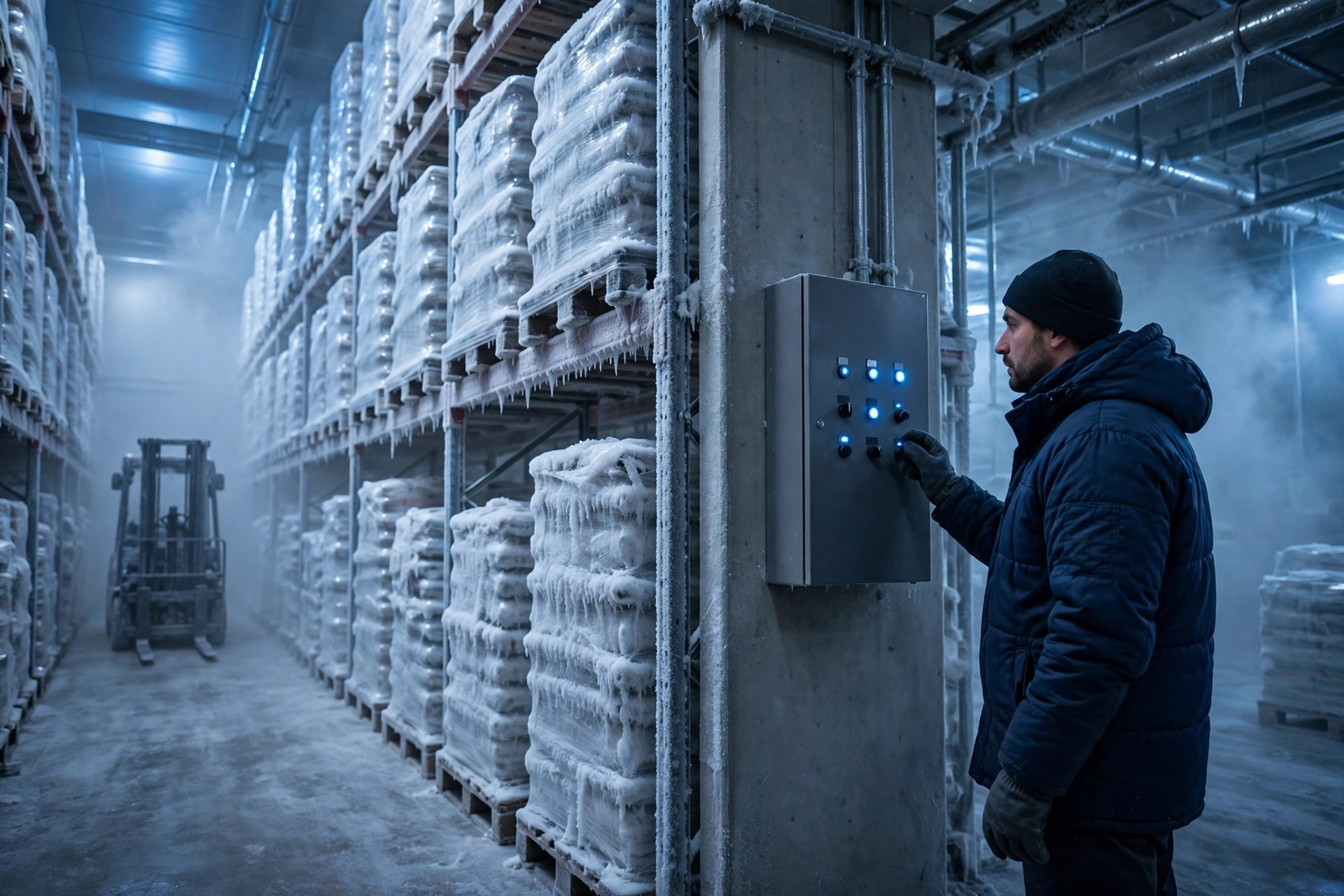
My sensor layout uses three positions together: inside the pallet stock, at the return-air vent, and at the door. Reading only one point is like checking a refrigerator by touching its handle. Alarms need levels too. A mild swing alerts the duty operator. A sustained rise notifies the supervisor. A breach of the customer-agreed range triggers emergency action: stop inbound and outbound movement, close doors to hold the cold, and inspect the units. That procedure belongs on the wall and in the duty manual, not in one person's head.
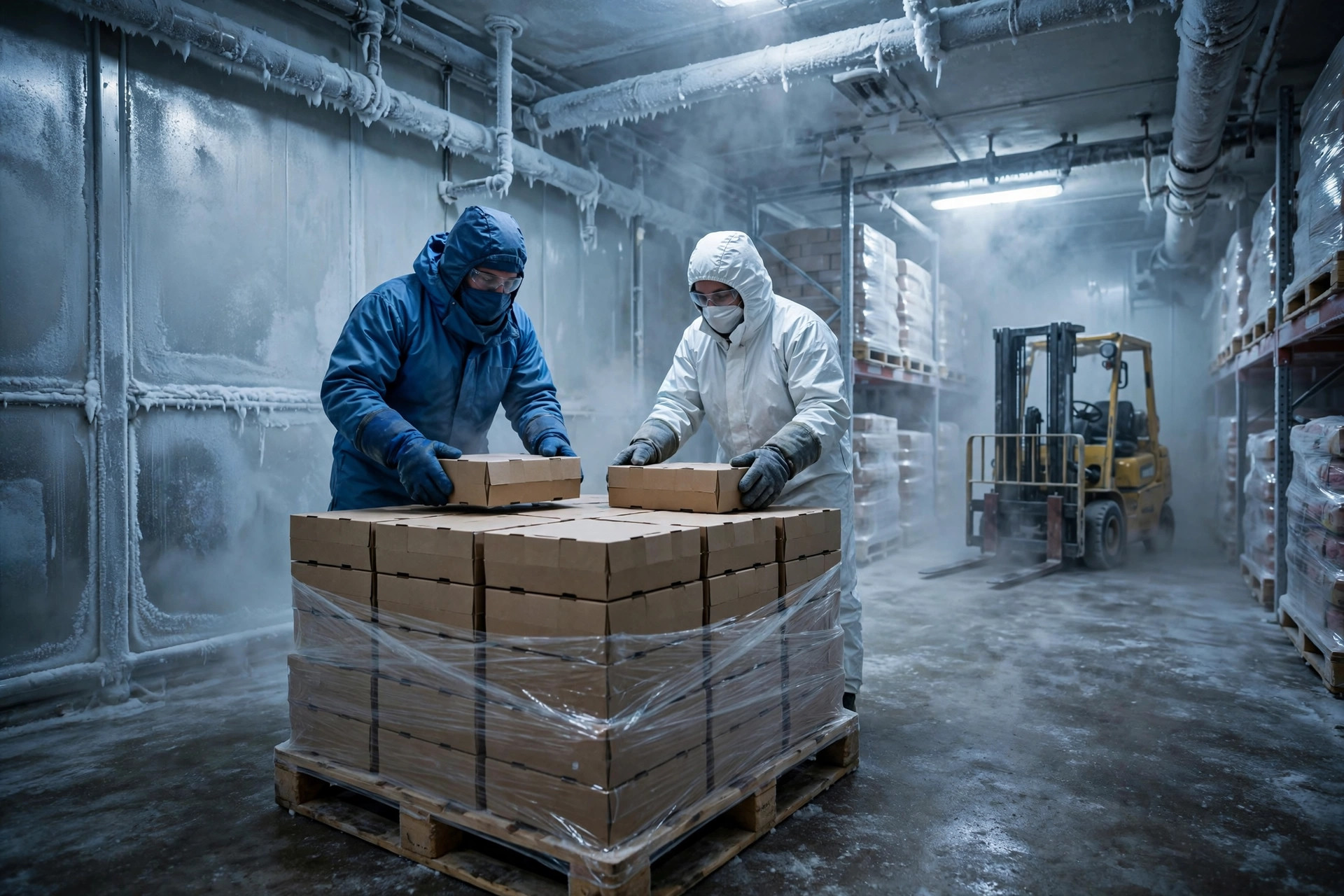
Inbound handling is part of gate one. Frozen goods left on a warm dock for half an hour arrive with surface heat already gained. Pushing them into the freezer then imports that heat into the building. Docks need a chilled buffer, and the gap between unloading and putaway must be short. In summer, ten extra minutes on the dock can cost far more time pulling the temperature back down inside.
Gate Two: Expiry Dates Must Stay in Order
Gate two is expiry control. Freezing is not magic preservation. Frozen goods still expire, and expiry is harder to manage than in ambient storage because frozen blocks all look alike. Only labels and systems tell new stock from old stock.
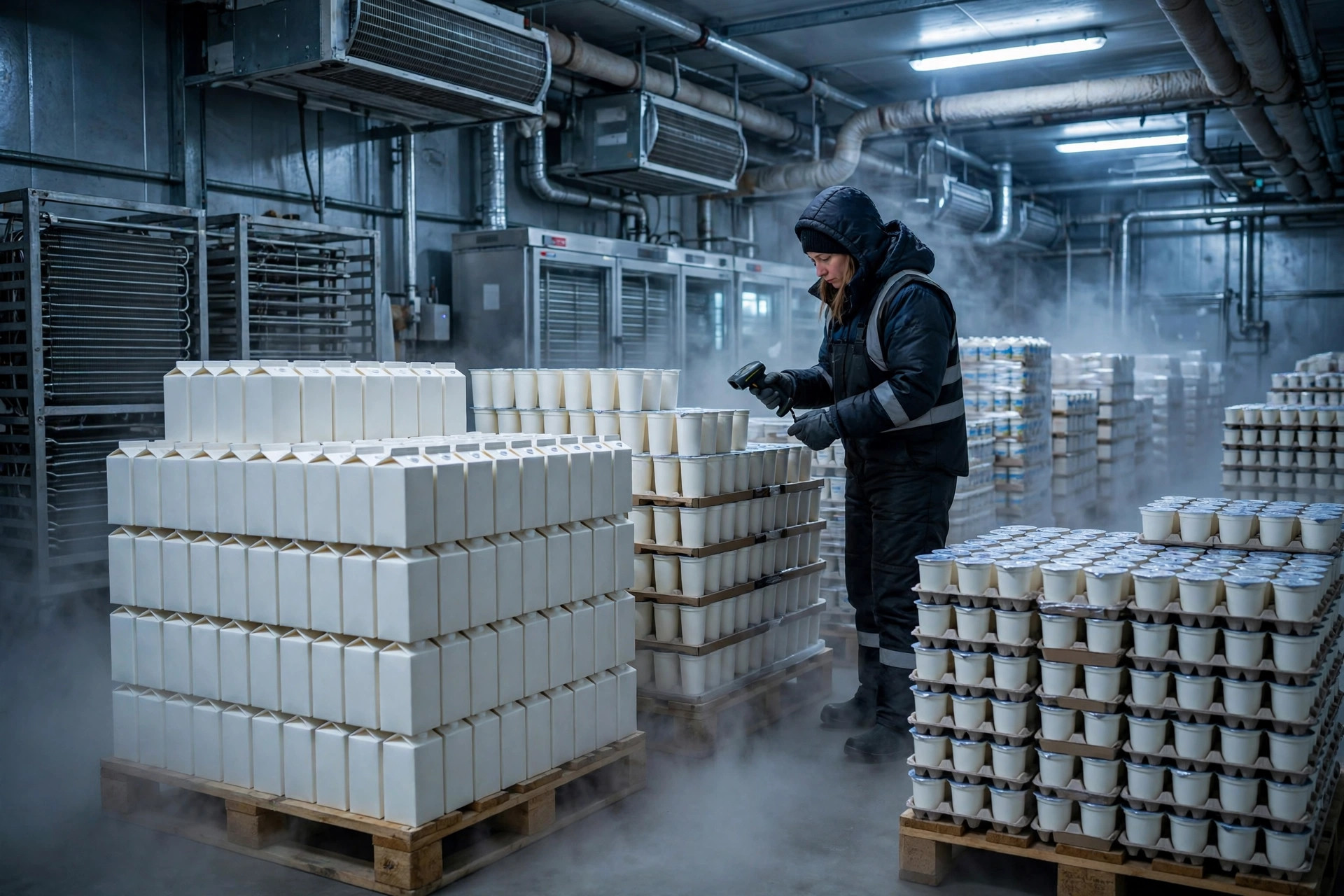
The most common failure is first in, first out as a slogan rather than a practice. The system says first in, first out, but pickers grab the pallet nearest the door because it is convenient. The nearest pallet is often the newest arrival, so old stock sinks deeper and deeper. During a clearance, a team finds near-expiry stock that should have shipped months earlier, and the only options left are discount or write-off. The fix is structural: plan locations around expiry, place near-expiry goods where they are easy to pick, sort pick lists by expiry, and print the expiry date on the pick ticket. The picker should not have to judge. Following the ticket should be following rotation.
Mixed batches on one pallet are another trap. One pallet holding three batches with three different expiry dates, tracked only at pallet level, makes outbound control impossible. This happens most during peak-season rush, when speed beats discipline. My rule is strict: no unrecorded mixed batches in frozen storage. If batches mix, split the pallet. Splitting costs labor. Losing expiry control costs product.
Expiry warnings must run ahead of trouble, not behind it. I use three bands: comfortable, watch, and urgent. Watch-band stock gets pushed to sales early. Urgent-band stock gets checked daily. Near-expiry frozen goods leave very little room to maneuver, because discounting, promotion, or return all take time. An early warning is simply buying yourself that time.
Frozen Food Cold Storage Gate Three: Equipment Must Fit the Cold, Not Just the Catalog
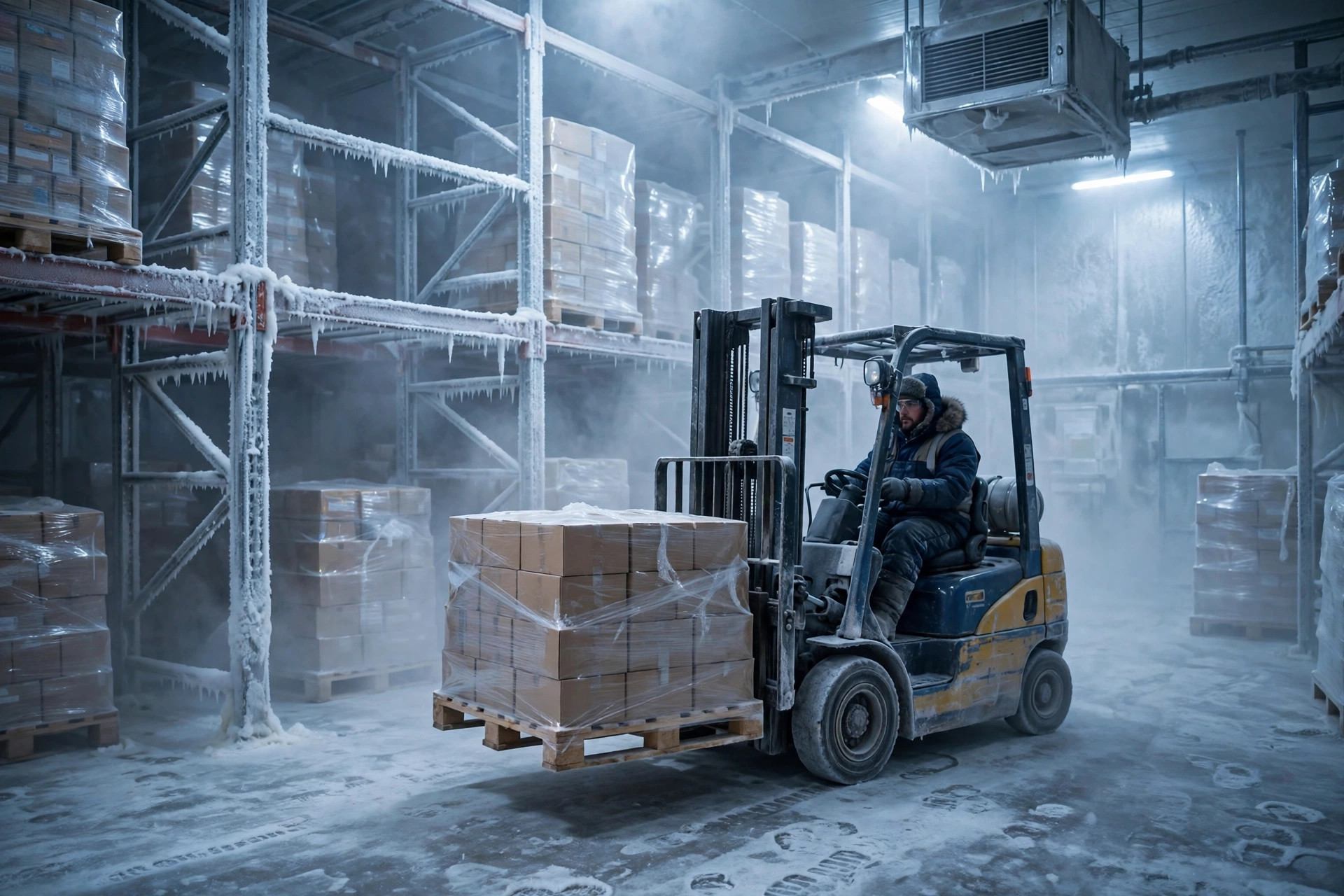
Gate three is equipment, and cold amplifies every small weakness. Batteries drain faster, hydraulic oil thickens, plastic turns brittle, and floors ice over and turn slippery. Selecting equipment on ambient-temperature specifications alone is a category error.
Think of a freezer forklift as a different trade from an ambient forklift. It needs a low-temperature battery, a heated cab, slip-resistant forks, and tires suited to cold floors. I watched a warehouse buy ambient forklifts for freezer work to save purchase cost. When winter arrived, battery range fell sharply, drivers rotated through charging, and throughput dropped. The purchase savings were spent again on labor and delays.
In frozen food warehouse storage, racking and pallets follow the same logic. Standard plastic pallets turn brittle in deep cold and crack under load. Freezer storage needs low-temperature pallets and racking, floors treated against frost heave, and doors fitted with air curtains or high-speed doors to limit cold loss. Whether a high-speed door pays for itself is easy to test: multiply daily door cycles by cold loss per cycle, then by energy price and refrigeration load. The more frequent the door use, the faster the payback.
Maintenance in a freezer is expensive when skipped. A refrigeration unit left unserviced fails during peak season, and peak season leaves no recovery window. My fixed checklist covers unit servicing, fan defrosting, door-seal inspection, and sensor calibration. An uncalibrated sensor is worse than no sensor, because it produces confident false records. Calibration needs its own record too: date, technician, and measured deviation, all retrievable later.
The Trade-Off in Frozen Food Warehouse Storage: Fast, Cold, and Cheap Cannot All Win at Once
When you price a frozen operation, one trade-off never goes away. Fast turnover, stable temperature, and low cost cannot all be maximized together. Fast turnover means frequent door openings and constant movement, which disturbs temperature. Stable temperature means fewer openings and heavier refrigeration investment, which raises cost. Low cost means lighter equipment and leaner staffing, which raises risk.
My selection boundary is simple: rank goods by value and temperature sensitivity. For high-value, sensitive goods, temperature stability comes first and cost follows. For low-value, hardy goods, a leaner rhythm is acceptable. A single standard for every product hurts both ends. Sensitive goods go unprotected, and hardy goods absorb costs they never needed.
So here is the decision frame in three lines. First, grade goods by sensitivity and manage grades separately, never as one pool. Second, put temperature recording and alarming ahead of any fancy automation, because automation without records is flying blind. Third, buy low-temperature equipment and maintain it on a freezer schedule, not an ambient warehouse schedule.
Here is the counterintuitive point: colder is not always better. Pushing temperature far below the required range drives energy cost straight up while quality does not improve in proportion, and some products and packaging actually suffer at excessively low temperatures. The professional target is the range given by the product label and the customer, held continuously. Driving colder than that is effort spent in the wrong direction.
Before you call a frozen food warehouse storage operation ready, ask three questions and demand records, not opinions. Has the temperature broken at any point in the past week? How much shelf life remains on the oldest batch? When was the refrigeration plant last serviced? If all three answers come with records, the warehouse passes. If any answer is a guess, the problem is management, not machinery.
By Da Liu, Automation Engineer