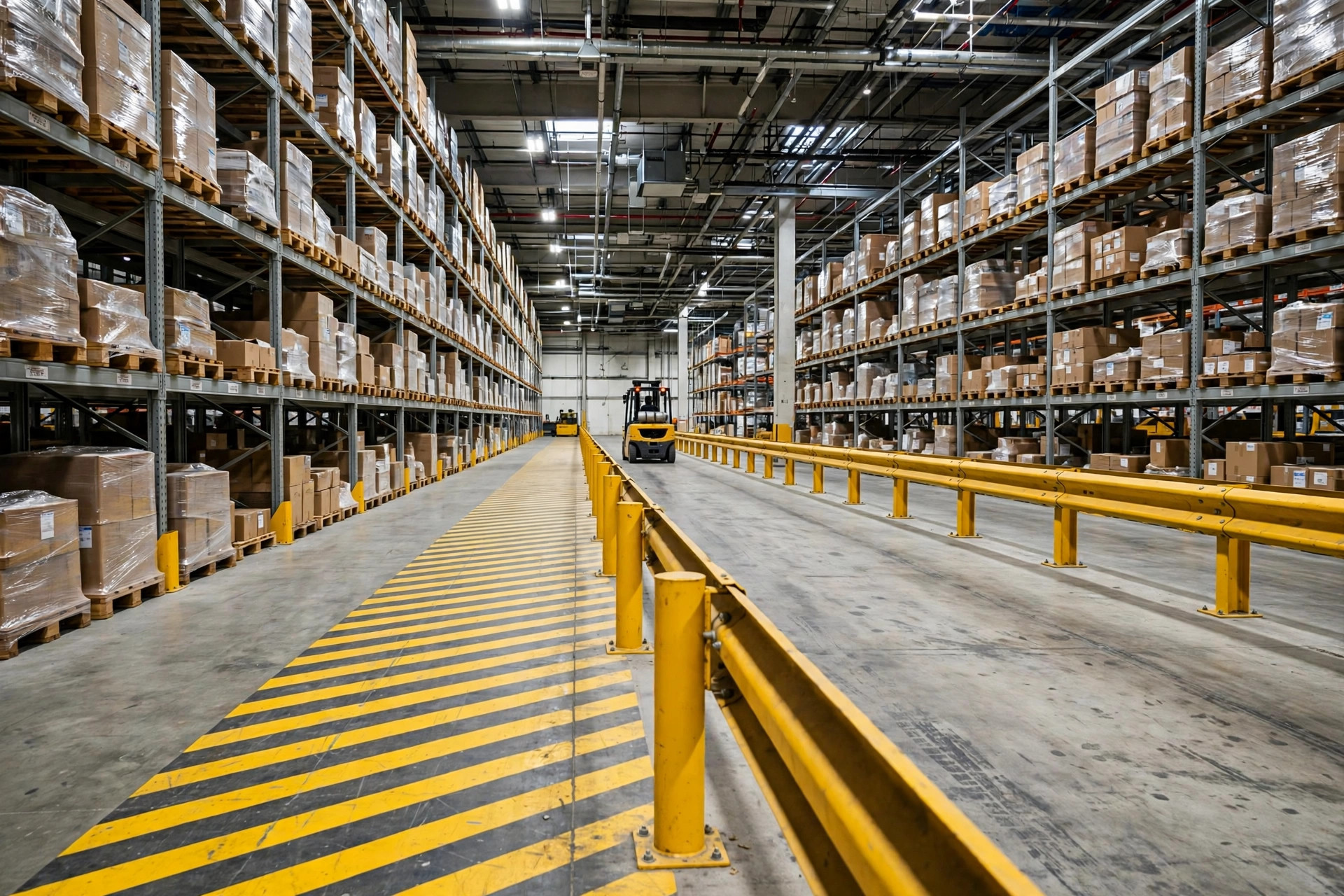
Last fall, a friend who runs a warehouse in Ontario, California called me in a foul mood. That morning, two OSHA compliance officers had walked in unannounced. During the afternoon replenishment cycle, a reach truck driver backed out of a narrow aisle a little too fast and nearly clipped the pedestrian guardrail. The inspector said nothing, wrote down the operator's name, and back in the office asked for exactly one thing: "Show me this operator's training and evaluation records."
My friend said, "He's certified. Five years at his last warehouse. The certificate is in my desk drawer."
The inspector shook his head. The certificate had been issued by the previous employer. This warehouse had no training or evaluation records of its own — and under 29 CFR 1910.178(l), training and evaluating operators is the employer's job. A piece of paper doesn't transfer it. The citation that followed included failure to train and certify operators. A single serious violation now carries a maximum penalty of $16,550 — the inflation-adjusted figure in effect after January 15, 2026, straight from OSHA's own penalty page. "I thought a license was enough," my friend told me. "Turns out I had to test him myself."
I've heard that misunderstanding at least a dozen times. People treat a forklift certification like a driver's license: pass once, carry it everywhere, good for life. OSHA's logic works nothing like that.
Who needs training, and what training actually requires
Start with the scope. OSHA doesn't regulate "forklifts" — it regulates powered industrial trucks. The training paragraph, 1910.178(l), covers operators of every type: sit-down counterbalances, reach trucks, order pickers, pallet stackers, even electric pallet jacks. The working rule: if you use it to lift or pull a pallet, you need training.
The blind spot I see most often is the "just lending a hand" operator. During peak season, an inventory clerk hops on a pallet jack to move one pallet. The supervisor figures that doesn't count. It does. The only exception in the standard is a trainee — and a trainee may drive solely under the direct supervision of someone qualified to train and evaluate, in a way that endangers no one. "He's done it before, let him try" does not hold up in front of an inspector.
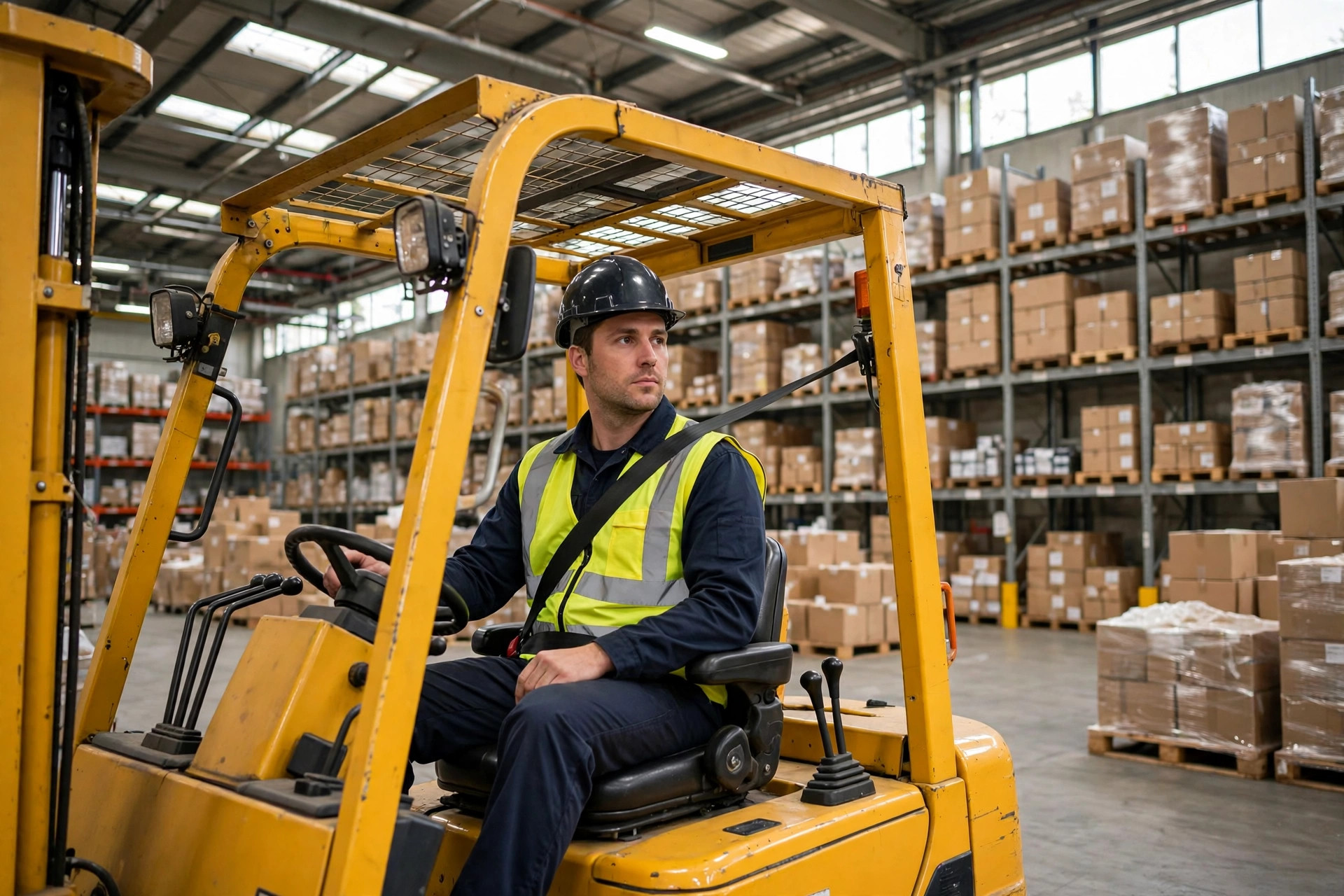
The training itself has three components, all mandatory: formal instruction, practical training, and an evaluation. Formal instruction can be classroom, video, or online, and it has to cover truck-related topics (operating instructions, stability, load handling, fueling or charging, attachments) plus workplace-related topics (floor conditions, pedestrian traffic, narrow aisles, ramps, ventilation). Practical training means demonstration by the trainer plus hands-on exercises by the trainee — in person, on a real truck. An online course alone cannot finish the job. The evaluation is the operator driving in the actual workplace while the employer, or the employer's designee, watches and scores. Training and evaluation both have to be passed before the operator is allowed to drive solo.
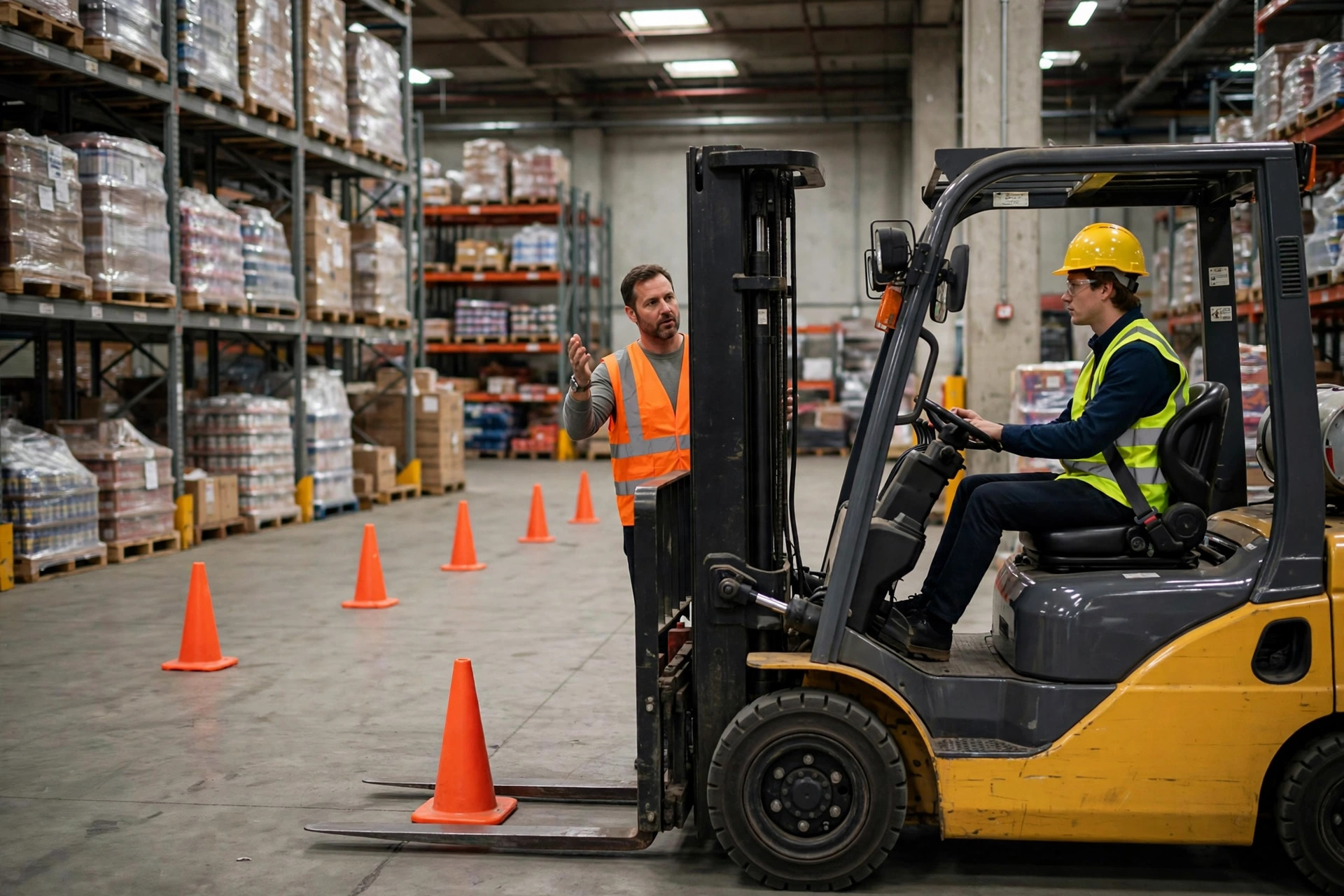
Now the part almost everyone gets backwards: the certificate is issued by the employer, not the training company. Under 1910.178(l)(6), the certification record must contain four elements: the operator's name, the date of the training, the date of the evaluation, and the identity of the person who performed the training and evaluation. Without those four, you have no defense when the inspector asks.
The number everyone misremembers: refresher training is not "every three years." Paragraph (l)(4)(iii) requires a performance evaluation at least once every three years — an evaluation, not a class. Genuine refresher training is event-triggered, in five situations: the operator is observed operating unsafely; the operator is involved in an accident or a near miss; an evaluation reveals the operator isn't driving safely; the operator is assigned a different type of truck; or workplace conditions change in a way that affects safe operation. Any one of those triggers retraining on the relevant topics, followed by another evaluation.
The kicker: there is no such thing as an expiring federal forklift license. The "valid until" date printed on vendor cards simply mirrors that three-year evaluation rhythm. When the three years are up, the employer has to watch the operator drive again — not buy another online course.
That distinction matters because of the gap between certified and competent. Everyone passes the written test. Drawing the stability triangle on paper doesn't prove you can pull a pallet off the fourth level, back down a ramp checking your blind spots, or stop — instead of swerving — when a pedestrian steps out. Only a workplace evaluation shows that. Which is exactly why OSHA wrote evaluation into the rule: it wants to see how this person actually drives, not their test score.
Then come the traps. The first is outsourced-training theater. A warehouse pays a vendor a few thousand dollars, a trainer lectures for a day, certificates get handed out, and the boss considers the problem solved. But OSHA wants training and evaluation for your warehouse, your truck types, your operating conditions. The vendor's generic course doesn't produce your certification record, and the evaluation has to happen on your floor. The worst case I've seen: a full day of videos in a conference room, nobody ever touched a truck, certificates issued. One question from the inspector — "Where was the evaluation done?" — and it collapses.
The second trap is temps. Peak season, the staffing agency sends a stack of certificates, the boss glances at them and hands out keys. Under OSHA's logic, the host employer owns the training obligation for temporary workers too. Another warehouse's certificate proves nothing about your aisles and your trucks. The right fix is almost embarrassingly cheap: two hours. A qualified lead rides along, demonstrates, watches the temp drive, signs a form, files it. That is the cheapest $16,550 insurance policy you will ever buy.
One more line item people skip: 1910.178(q)(7) requires every truck to be examined before being placed in service — at least daily, and after every shift for round-the-clock operations. A truck with a safety defect stays parked until it's fixed and reported. Inspectors don't just ask for certificates; they ask the driver, "Did you do the pre-shift inspection today?" A blank stare is another citation.
And a hard line: under the Fair Labor Standards Act, nobody under 18 may operate a forklift in a non-agricultural setting. Let a summer temp touch a truck and you're looking at willful-violation territory — up to $165,514 per violation.
A compliance self-check for warehouse managers
Run through this once a quarter. Thirty minutes.
- For every truck type on your floor (counterbalance, reach, order picker, pallet jack): is there a training and evaluation record with all four elements — name, training date, evaluation date, trainer and evaluator identity?
- Has any operator gone more than three years without a workplace evaluation?
- Any accidents or near misses in the past year? Were the operators retrained, and is it documented? (Near misses get buried more often than accidents, but the rule treats them as the same trigger.)
- New truck types or layout changes since the last round? Were the affected operators retrained?
- Temps and internal transfers: evaluated on your trucks, in your building?
- Are pre-shift inspections actually happening? (Ask three drivers at random.)
- Has anyone under 18 operated a truck?
None of that costs money. It costs someone keeping records and someone following up. The whole point of the forklift rules is simple: OSHA doesn't want the card. It wants the employer to prove that this person, on this floor, on this truck, won't hit anyone.
So here is the honest question: when was the last time your warehouse evaluated a driver?