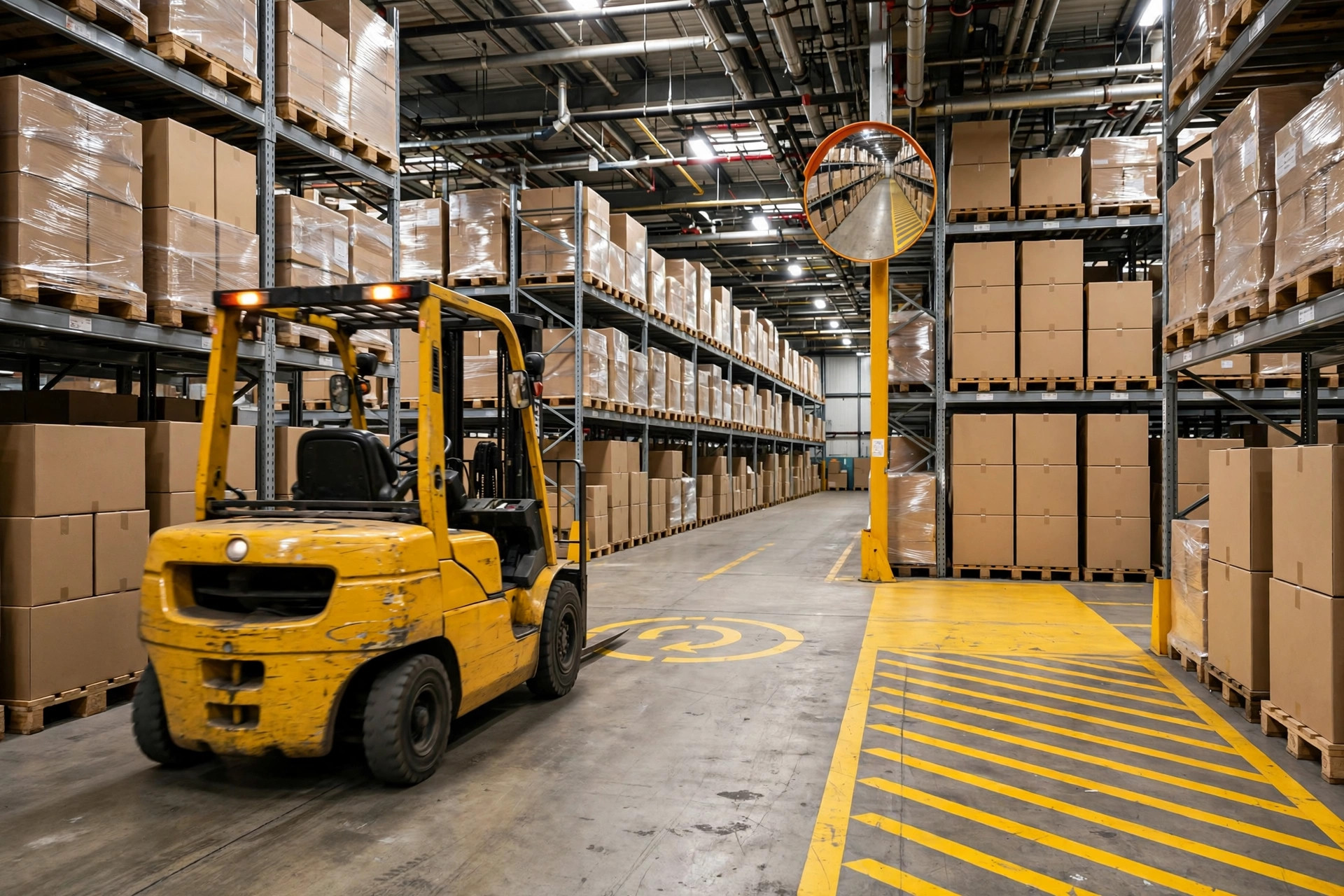
Last fall, I was delivering to a 3PL warehouse outside Ontario, California, and got stuck waiting at the dock doors for nearly two hours. A kid in his early twenties was driving a sit-down forklift, took a corner way too fast with his forks raised high, and clipped a row of boxes off the racking. Fifty or sixty cartons came crashing down and blocked the receiving lane solid. I watched it from my cab and just shook my head — you could tell from a mile away that this kid had never been properly trained.
Later I found out from the warehouse manager that the kid was "certified" — he'd paid a few dozen bucks to some online course and got a nice-looking wallet card in the mail. Let me tell you: under OSHA rules, that card means almost nothing. Here's the straight talk on forklift certification in the U.S.: who needs it, how often it gets renewed, and where warehouse managers keep getting burned.
"Certified" doesn't mean qualified — OSHA wants the employer's paperwork
Here's the thing most people get backwards: there is no government-issued forklift license in the United States. The rule is OSHA 29 CFR 1910.178(l), and it puts the responsibility on the employer. The warehouse itself has to run a training program, train each operator, evaluate them, and produce a written certification. The wallet card from an online vendor is just proof of training. When something goes wrong, the OSHA inspector asks for the employer's certification — not the card in the driver's wallet.
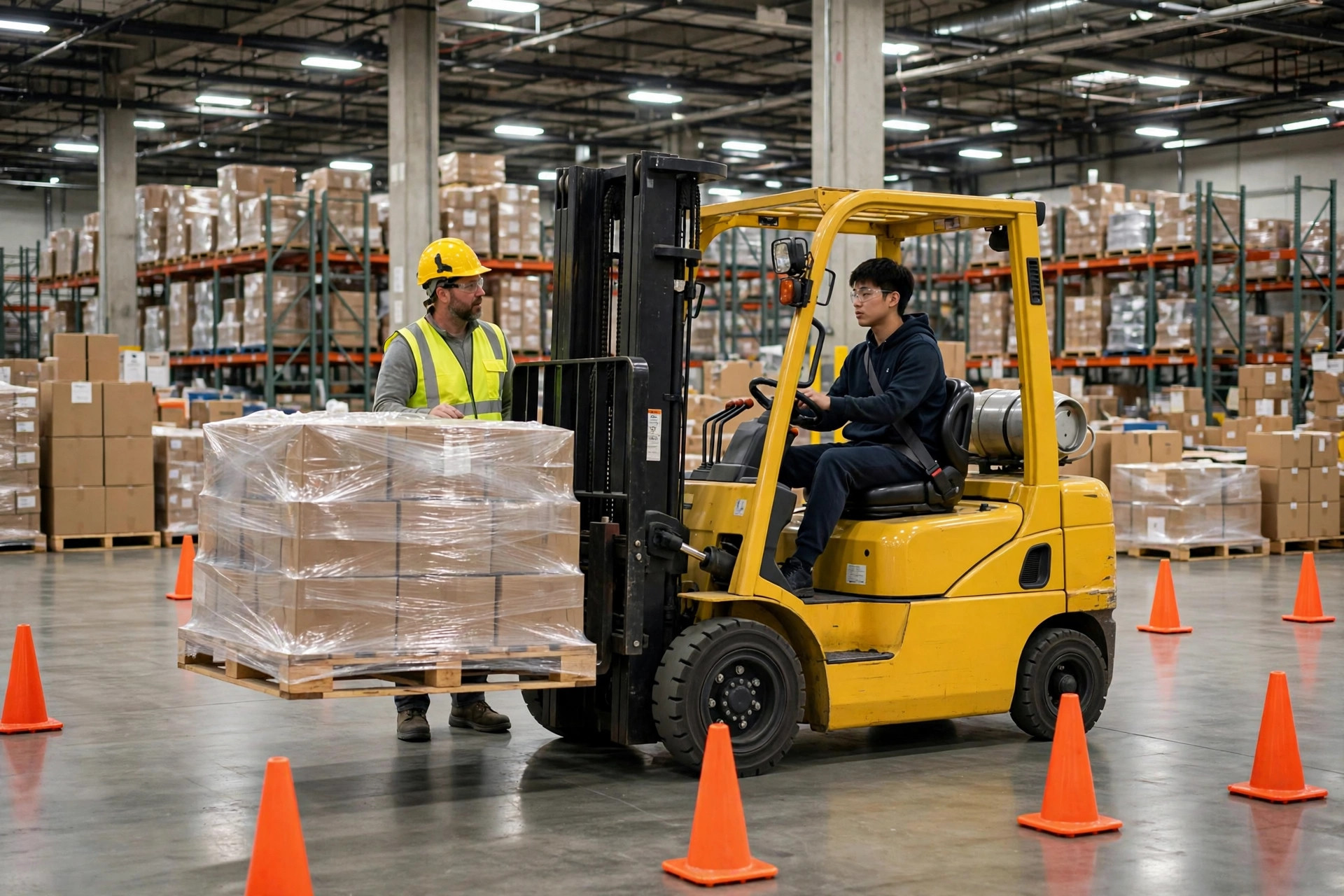
Compliant training has three parts, and you can't skip any of them: formal instruction (classroom or online, both fine), hands-on practice on a real truck, and a workplace evaluation by the employer. An online course only covers the first part. The other two have to happen at your actual workplace, on the truck you actually drive. Any outfit claiming you can get fully certified 100% online is selling you something OSHA doesn't recognize.
And when it's done, the employer has to keep four things on file: the operator's name, the date of training, the date of the evaluation, and the identity of the person who did the training and evaluation (1910.178(l)(6)). I've seen the most frustrating kind of violation: the training happened, the evaluation happened, but nobody wrote down who conducted it — and the inspector cited them anyway. Incomplete records are the same as no records in OSHA's eyes.

If you drive it, you need the certification — even for an afternoon
The rule covers everyone who operates a powered industrial truck: sit-down counterbalance forklifts, reach trucks, order pickers, and rider electric pallet jacks. OSHA groups these into seven classes, and switching to a different class means new training and evaluation.
Two traps I see warehouses fall into all the time:
First, there's no such thing as an "occasional operator" exception. A maintenance tech who hops on a rider pallet jack once in a while to move a pallet needs certification too. Plenty of small warehouses get caught on this one, assuming only their full-time forklift drivers need it.
Second, a purely manual pallet jack — no motor, no rider platform — is exempt. But anything with a motor or a rider platform counts.
One more thing while I'm at it: the folks who work around forklifts all day — receivers, loaders — aren't required to be certified, but a good warehouse gives them a basic safety briefing anyway. Know the turning radius, know the blind spots, never walk under raised forks. The people who get hit are usually not the drivers.
Every three years — and sooner if any of these happen
Burn this into your memory: every operator has to be re-evaluated at least once every three years (1910.178(l)(4)(iii)). That's the floor, not the ceiling.
But if any of these happen, forget waiting three years — refresher training starts now: an accident or a near miss, someone observes unsafe operation, the operator gets assigned to a different type of truck, or workplace conditions change (new racking, new floor, night shifts added for peak season). Early this year I had drinks with a 3PL owner in Houston who was kicking himself. OSHA walked through his warehouse and pulled five forklift operator files: two operators were nearly a year past their three-year re-evaluation, and one file didn't even name the trainer. The citation, tallied violation by violation, would have paid for a decade of training for his whole crew. OSHA adjusts its penalty amounts every year, so check the current published figures — but remember this: serious violations are counted per violation, and the more operators, the worse it gets.
The math I ran for you: training costs pennies, citations cost a fortune
After all these years on the road, what bothers me most is watching people save pennies on safety training and spend dollars on the consequences. Here's the honest math:
| Item | Roughly what it costs |
|---|---|
| Online theory course | $20–50 per operator |
| Hands-on training + evaluation (in-house) | Mostly the evaluator's time |
| Full initial certification | Typically under $100 per operator |
| Train-the-trainer program | $500–1,500 one time; then $50–100 per operator in materials and time |
| OSHA citation | Serious violations start in the tens of thousands per violation and stack up; five uncertified operators on one citation can run into the tens of thousands of dollars (per current published OSHA penalty levels) |
See the picture? Full certification for one operator runs under a hundred bucks — and by law the employer pays for it, not the driver. One citation starts in the tens of thousands. Even a fool can do that math.
One last warning: change jobs, lose the certification
This is the most counterintuitive part of the whole deal, and where job-hopping drivers get hurt: forklift certification belongs to the workplace, not the person. The certification you earned at your old warehouse doesn't count at the new one. Your new employer has to conduct their own workplace evaluation to confirm you can operate safely in their facility, on their trucks. That wallet card you carried over? It's just evidence of prior training. OSHA wants the new employer's written certification.
So here are three pieces of advice for warehouse managers — take them, they're free:
First, keep those four record elements complete. A spreadsheet works fine. Set a reminder 60 days before each three-year evaluation comes due. Don't wait until it's expired.
Second, the day there's an accident — or a near miss — start the refresher process that same day. Every day you drag it out is money on the citation.
Third, once you have more than ten operators, stop sending everyone out for training one by one. Develop your own in-house evaluator. It'll save you half the cost over a year, and the training will actually match your own warehouse's conditions.
All my years running trucks taught me this: a certification is just a piece of paper locked in a filing cabinet — until something happens, and then it's the thing that saves you. There's an old saying back home: sharpen the axe before you chop the wood. Get the paperwork straight, and you can sleep at night.
By Shifu Zhao, Trucking Veteran (15 yrs)