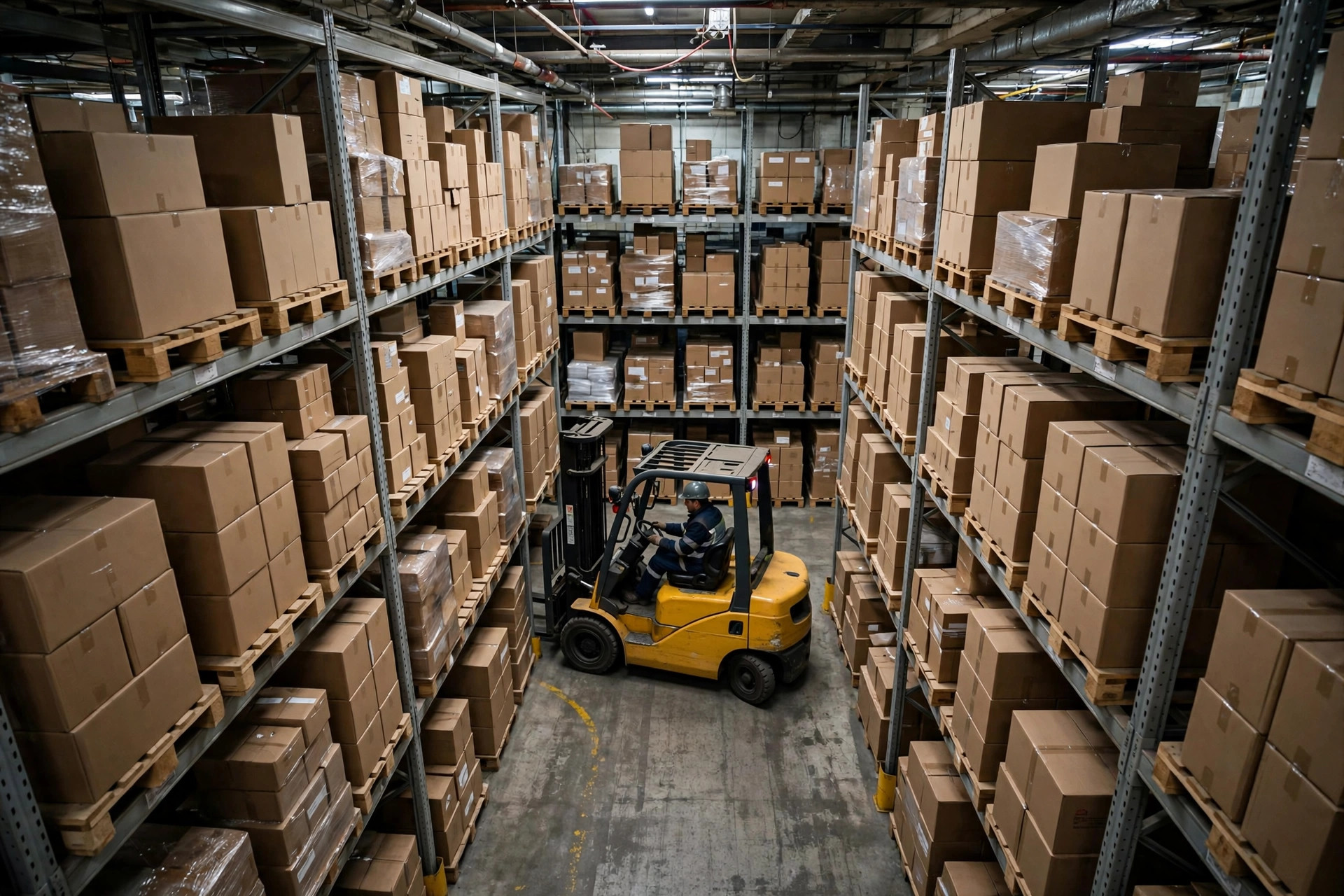
3.2 meters versus 2.8 meters. Forty centimeters — about sixteen inches — sounds like nothing. In a 60,000-square-foot warehouse, those sixteen inches buy you several hundred pallet positions. They can also buy you a monthly repair bill for rack damage. After twenty years of laying out warehouses, I can tell you aisle width is the most-asked-about number in this business, and the one most often set by gut feel — "that's how the last guy painted it."
Aisles Are the Only Square Footage That Earns Nothing
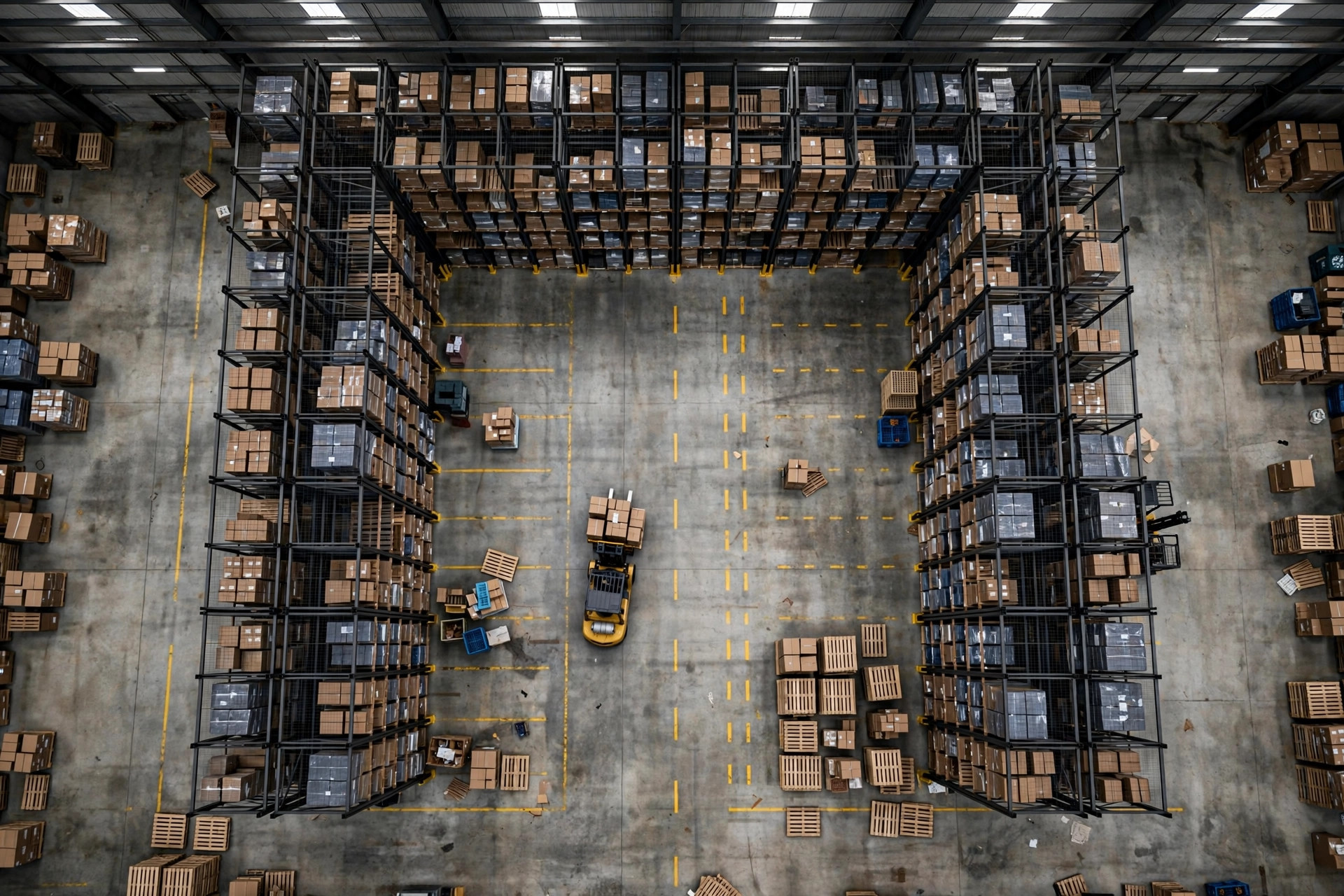
Every square foot of aisle is square footage that pays no rent. Picking zones and storage zones earn money; aisles only cost it. One aisle, 100 meters long and 3 meters wide, eats 300 square meters. Twenty aisles eat 6,000 — the footprint of an entire small warehouse. So the first thing I do on any layout is compute the aisle ratio: aisle area divided by total building area. Anything over 35% tells me the layout has a problem — either the aisles are too wide or the racking is chopped into too many short runs.
But narrower is not automatically better. A narrow aisle saves floor space and gambles on three things: whether the truck can make the turn, whether the driver slows down, and whether the racks get hit. Shrink the aisle without doing that math, and the rent you saved comes back as repair bills and incident reports.
Start With the Turning Radius, Not the Racks
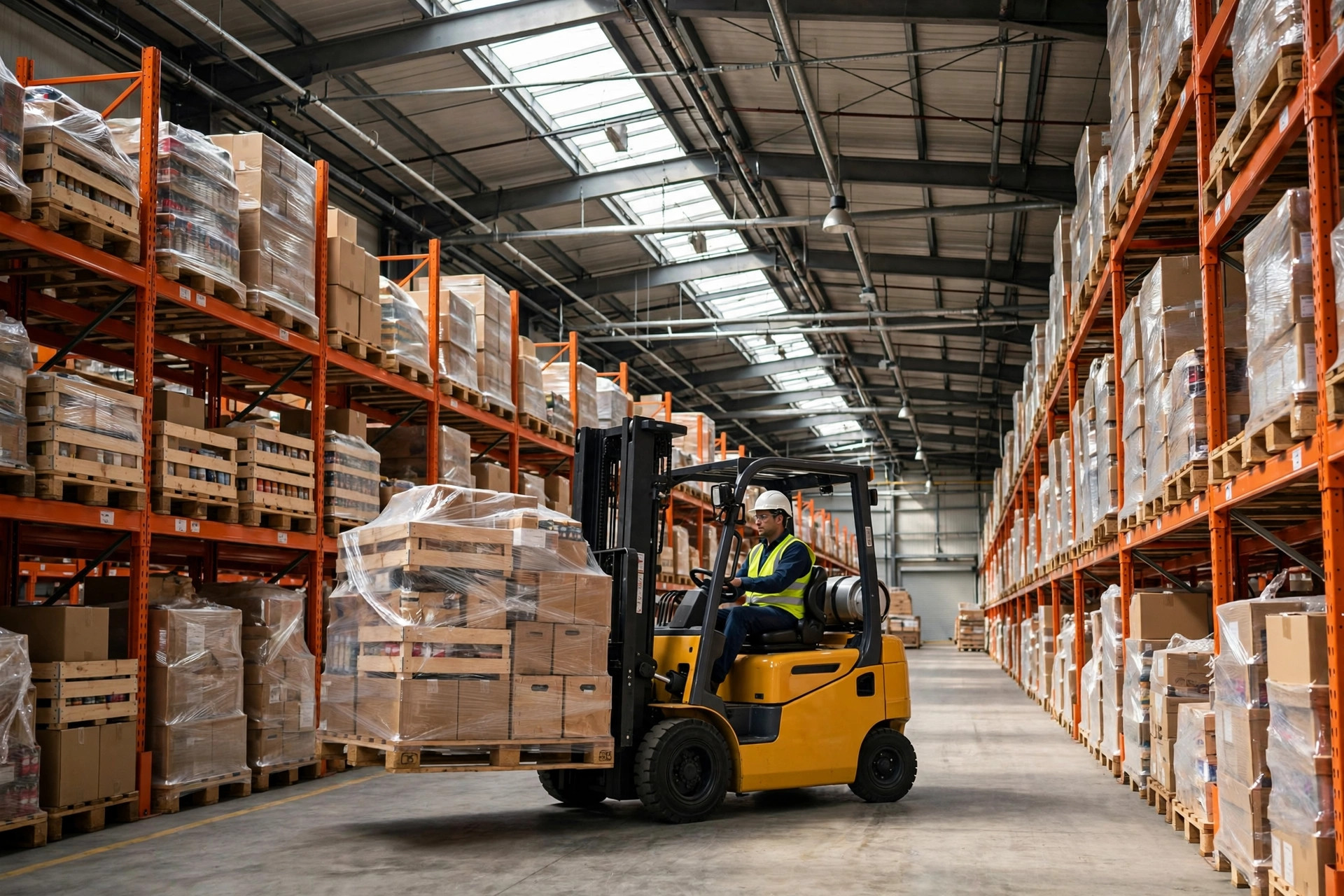
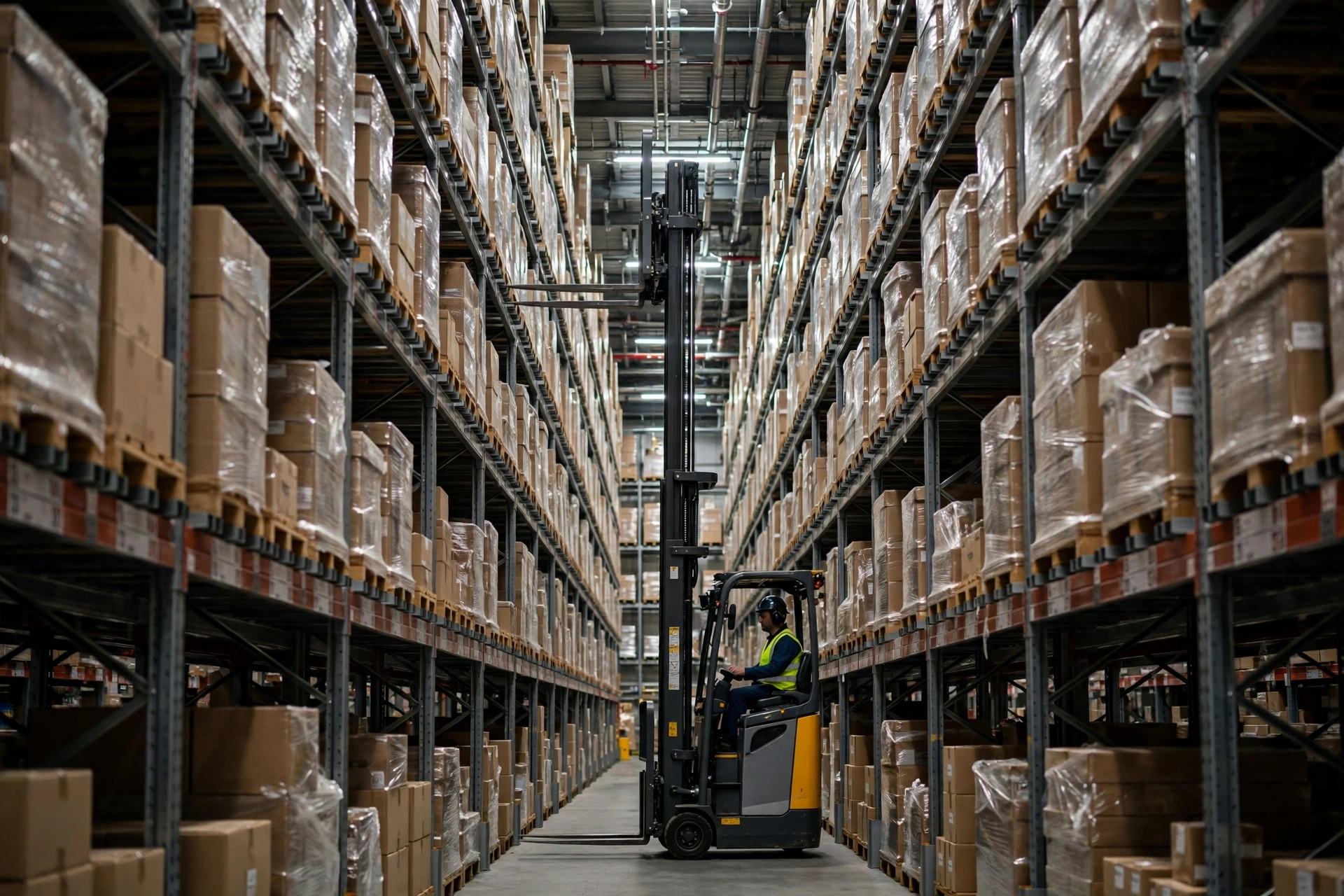
Aisle width starts with the forklift's turning radius, not with rack spacing. The Wa figure on the spec plate is the radius swept by the outside wheel on flat ground, unloaded, with the steering at full lock. The field rule of thumb: minimum right-angle aisle width is roughly the turning radius, plus half the pallet length, plus about 15 centimeters of safety margin.
Here is a documented example: a 1.5-ton counterbalance truck with a 1.6-meter turning radius, handling 800×1200 mm pallets lengthwise into the rack, carries a manufacturer-rated aisle width of 3.12 meters — calculated for North America's most common pallet, the 48×40-inch GMA; if you run Euro 1200×800 pallets, rerun the numbers. Note that this is the "just barely fits" number. My habit is to measure with a tape: fully loaded, full lock, one complete circle, watching the actual track of the outside tire. The real-world number usually runs 10% to 20% bigger than the spec plate — uneven floors and off-center loads both push it outward.
The sentence that matters most: size the aisle for the truck with the largest turning radius in your fleet, not the average. As long as one old counterbalance is still running in that building, the aisle belongs to it. Plenty of warehouses sized their aisles for the shiny new reach truck and then watched the old truck scrape its way down every aisle.
What Half a Meter Narrower Actually Buys You
Time for the math. Take a warehouse 100 by 60 meters with 20 aisles, and shrink each aisle from 3.2 meters to 2.7: the recovered floor space is 20 × 100 × 0.5 = 1,000 square meters. One pallet position, racking included, occupies roughly 1.5 to 2 square meters, so that reclaimed space converts to 500 to 650 pallet positions. Pallet-position rents vary widely by market — check your local numbers — but over a year it is real money.
There is a catch: the trucks have to change. A standard counterbalance needs 10 to 12 feet (about 3 to 3.6 meters) to turn; a reach truck manages in 8 feet (about 2.4 meters); a very-narrow-aisle truck squeezes into 5.5 to 6.5 feet. Every step narrower means a capital event — reach trucks cost more than counterbalances of the same capacity, and VNA needs rail or wire guidance on top. My rule: the annual value of the gained pallet positions has to cover the extra truck cost with payback inside two years. If payback stretches past three years, spend the money on taller racking instead. And don't forget clear height: narrower aisles usually come with taller racking, and a counterbalance lifting past 6 meters is neither stable nor precise — change the truck and the aisle together, or don't bother.
The Hidden Ledger of Aisles Gone Too Narrow
An aisle squeezed too far does not show up on the P&L right away. The cost hides in three places. First, rack strikes. A bent beam costs a few hundred dollars in parts plus downtime; a collapsed run is an incident with a capital I. I watched a 3PL warehouse in Ontario narrow its main aisles from 3.5 meters to 3 meters in 2023 — eleven rack repairs in six months, and then they paid to repaint the lines back where they started. The round trip cost more than two years of the "extra" rent would have.
Second, throughput. In a tight aisle, drivers slow down instinctively. A few fewer pallets per hour per driver adds up across a shift, and in peak season it converts directly into overtime. Third, people. Driving all day in a "just barely fits" aisle keeps a driver mentally wound tight. The good drivers leave first, and the ones who stay have more incidents. There is also a hard legal line. OSHA standard 1910.176(a) requires sufficient safe clearances wherever mechanical handling equipment operates, aisles kept clear and in good repair, and permanent aisles appropriately marked. Note what it doesn't give you: a number. "Sufficient" is a performance standard — the inspector judges it against your equipment and your own written rules. If your SOP says 10-foot aisles and the inspector measures 7 feet with a pallet sitting in it, your own rule becomes the evidence.
Aisle width looks like a space equation, but underneath it is the intersection of three conditions — affordable, navigable, and low-damage. Miss any one and the deal fails.
Three Things You Can Do Monday Morning
First, copy the spec-plate turning radius off every truck in your fleet, take the largest one, add the pallet diagonal, and recompute the theoretical minimum for your aisles. You will immediately see which aisles are "overweight." Second, paint double lines on the floor: the aisle edge line, plus a 15-centimeter no-parking buffer at the rack base — no pallet may cross it. Third, before peak season, tally your rack-strike locations; the aisle with the most strikes is the first one to widen. There is no standard aisle width. There is only the width you have done the math on.