
Fall 2023, a food 3PL in Ontario, California. A container of imported Greek yogurt rolls in: nine months of total shelf life, five and a half months left on the clock, over forty grand in product value. The client's QA takes one look at the receiving log and rejects the whole container. The contract says remaining shelf life on delivery must be at least two-thirds. Two-thirds of nine months is six months. We missed it by two weeks, and the entire load went back. Return freight, port charges, rescheduling — all on the warehouse. The operations manager told me it was the most expensive lesson of his career: the problem wasn't those two weeks. It was that nobody had seriously negotiated the clause before signing.
"Remaining shelf life on delivery ≥ two-thirds" is a line almost everyone in food warehousing has signed, and almost nobody truly understands. Strip it down: it's insurance that flows downstream from retail. Big grocery chains and distributors need enough sell-through time on the shelf and don't want short-date product rotting in their own hands, so the pressure travels up the chain — retailer to distributor, distributor to brand, brand into the warehouse contract — and the warehouse becomes the last gate being graded. Two-thirds isn't law. It's a ratio the industry has passed around for a decade plus because it "works." Don't dress it up as an FDA requirement; it isn't. The only number that matters is the one in your client contract, and in a dispute, that's the only document anyone reads.
By the time the ratio reaches the warehouse floor, it starts breaking things. Retail thinks "sellable"; the warehouse deals with "arrivable." The same two-thirds is a non-issue on ambient beverages — eighteen months of life, fast turns, no sweat. It gets brutal on refrigerated dairy — six to nine months of life, a month-plus on the ocean for imports, arriving already hugging the line. Worst of all is short-life bakery and fresh product: twenty-one days of life means two-thirds leaves logistics seven days total, and one port delay wipes out the shipment. So here's my verdict, plainly: two-thirds is retail's insurance policy, not the warehouse's scripture. Whether you dare to split the ratio by product category at the negotiating table is the litmus test of a serious food warehouse operator.
Three things to hold the line on: the ratio, the exception, the liability
Split the ratio by category — the single most important sentence of the negotiation. The good contracts I've seen carry an appendix table: ambient dry goods at two-thirds, refrigerated dairy at one-half, frozen and short-life fresh on fixed-day minimums (say, 120 days or 14 days remaining on receipt). Fixed days instead of ratios is the survival tactic for short-life categories — demanding two-thirds on a 21-day product is suicide; "14 days remaining on delivery" is something everyone can live with. For a client who won't budge, at least push for a quarterly review mechanism: the ratio flexes down in slow season when turns drag, captured in a supplemental agreement.
Second: the short-date exception clause. Clients always have clearance and promotion cycles where they desperately want the warehouse to ship near-expiry product fast. The contract needs a "short-date acceptance by written consent" mechanism: with the client's written confirmation, product below the ratio ships normally, and liability sits with the client. Without it, you land in an absurd spot — the client screaming at you to ship while the contract says you can't, and shipping anyway counts as your breach. The exception isn't a loophole; it writes down who gets to decide.
Third, and the most commonly skipped: liability terms. Too many contracts read "the warehouse guarantees ≥ two-thirds remaining shelf life on delivery and bears all losses for breach." That's unlimited liability — signing it is digging your own grave. A sane version has three lines: first, cap rejection and return costs, for instance at a multiple of the freight on that ticket; second, define the boundary — shelf life is decided jointly by production and transit, and the warehouse doesn't carry the can for late factory shipments or ocean delays; third, a claim window — claims filed more than a set number of days after receipt are void. I've seen a contract whose penalty read "full product value compensation." One bad load would have wiped out a mid-size warehouse's entire annual profit. Walk away from that deal rather than sign it.
Signed terms are only the start; three things happen on the floor
First, receiving shelf-life inspection becomes iron law. Every pallet: production date and expiry checked one by one, entered into the WMS lot and expiry fields — mandatory, no receipt posts without them. Anything below the contract ratio gets system-locked on the spot and the client gets written notice within 24 hours awaiting instructions. Never "receive it now, sort it out later" to save time — once product lands in sellable inventory and the short date surfaces at outbound, the liability is entirely yours.
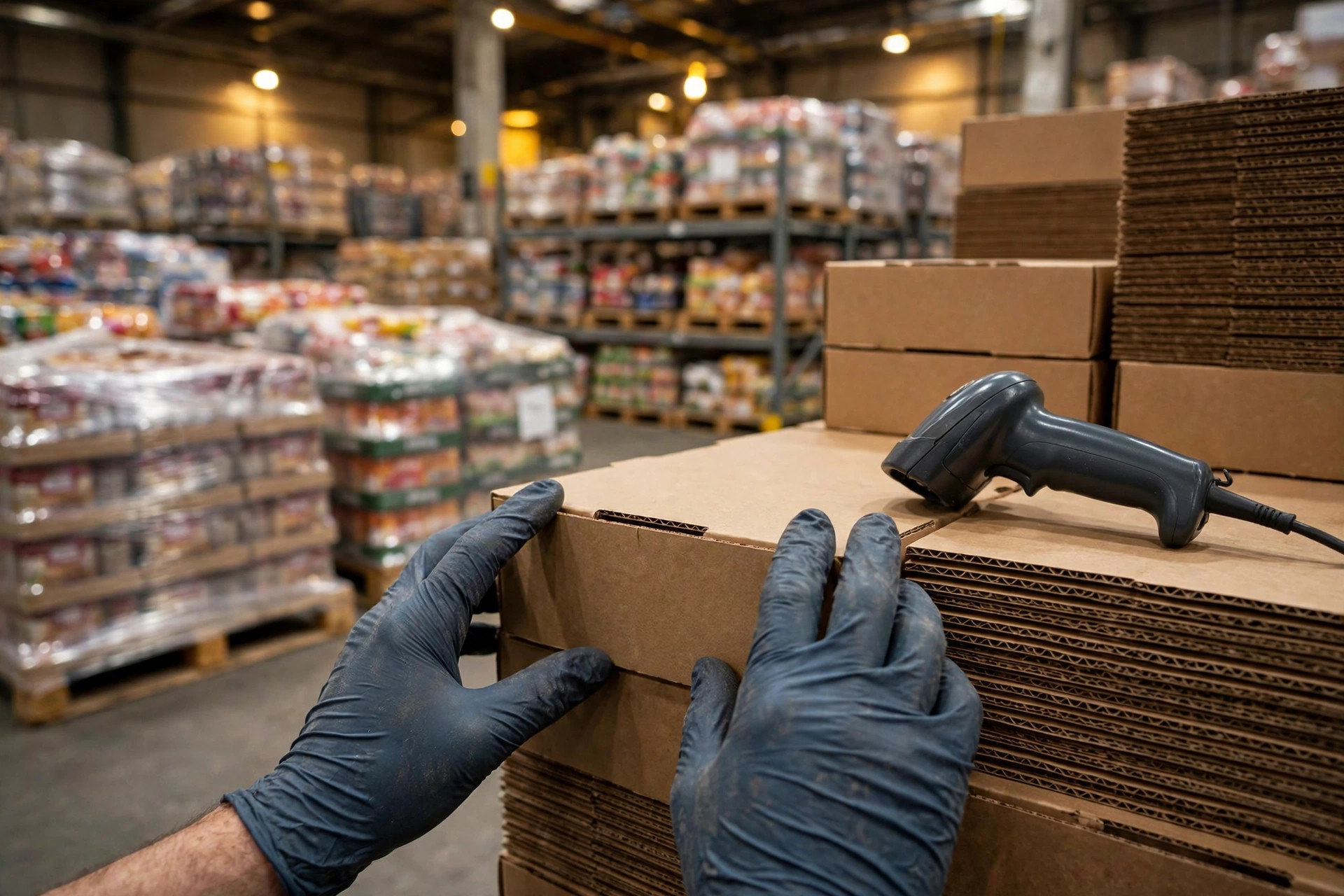
Second, ship FEFO, not FIFO. First-in-first-out is wrong in food warehouses — the first lot in may carry a longer date than the second. The WMS outbound rule must pick by expiry date, and replenishment follows the same logic. Plenty of systems default to FIFO; check it before onboarding any food client. I learned this the hard way: one warehouse never flipped the setting, pickers pulled by ticket order, and near-expiry product sat in a corner for two months. The whole lot went to disposal, and the client billed us just under a hundred grand.
Third, push expiry alert reports to the client — don't let them rot inside the system. The common practice is three tiers: 180 days, 90 days, 30 days. The 180-day report feeds the client's promotion planning, 90 days is for discussing transfers or clearance, 30 days is the final warning. Send them weekly, keep the send logs — when the dispute comes, "we warned you weeks ago" is the strongest evidence there is. If the client ignores the alerts, the responsibility boundary is clear.
At its core, a shelf-life clause is a trade-off: the client wants certainty, the warehouse needs executability. The tighter the ratio, the less room the warehouse has to maneuver, and the higher the chance of breach. A genuinely mature food warehouse contract has tiered ratios, written exceptions, and capped liability — with inspection, FEFO, and alerts closing the loop on the floor. That forty-thousand-dollar container bought exactly this lesson.
One question to sit with: of your biggest food clients, which link is it — receiving, the system, or outbound — that nobody ever actually checks?