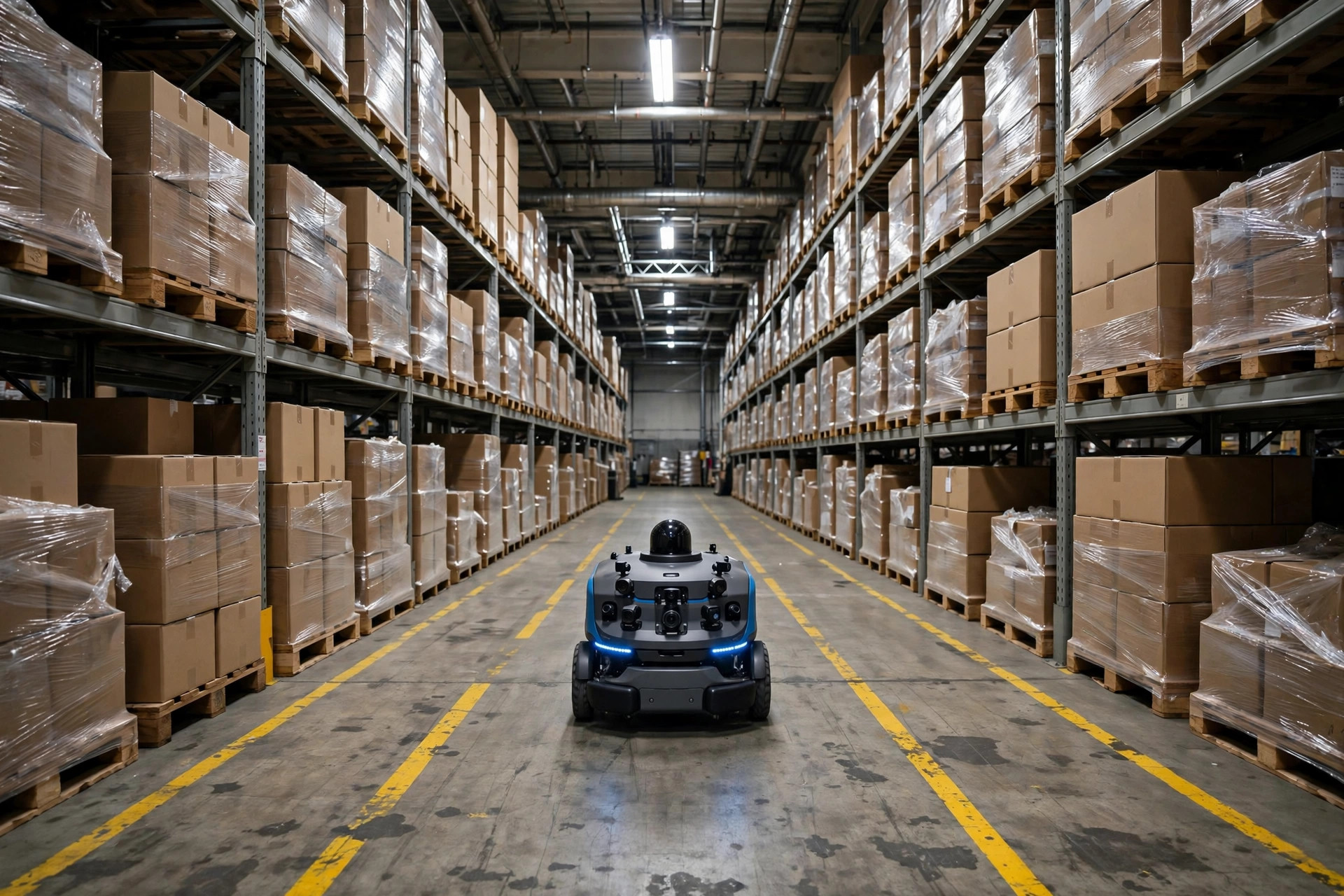
Here's my verdict up front: don't buy the most expensive AMR for your first pilot. Buy the right route.
In 2024 I walked a 3PL warehouse in Ontario, California — a little over 80,000 square feet, pushing more than 20,000 orders a day in peak season. The year before, they'd deployed two AMRs, and for the pilot they'd picked the busiest spot in the building: the entrance to the pick zone, the most people, the most chaos. Six months later the robots were the most expensive decorations in the warehouse. They charged three or four times a day, needed human intervention more often than pickers needed a water break, and the floor supervisor finally parked them with a shrug: "the guys with pallet jacks are faster."
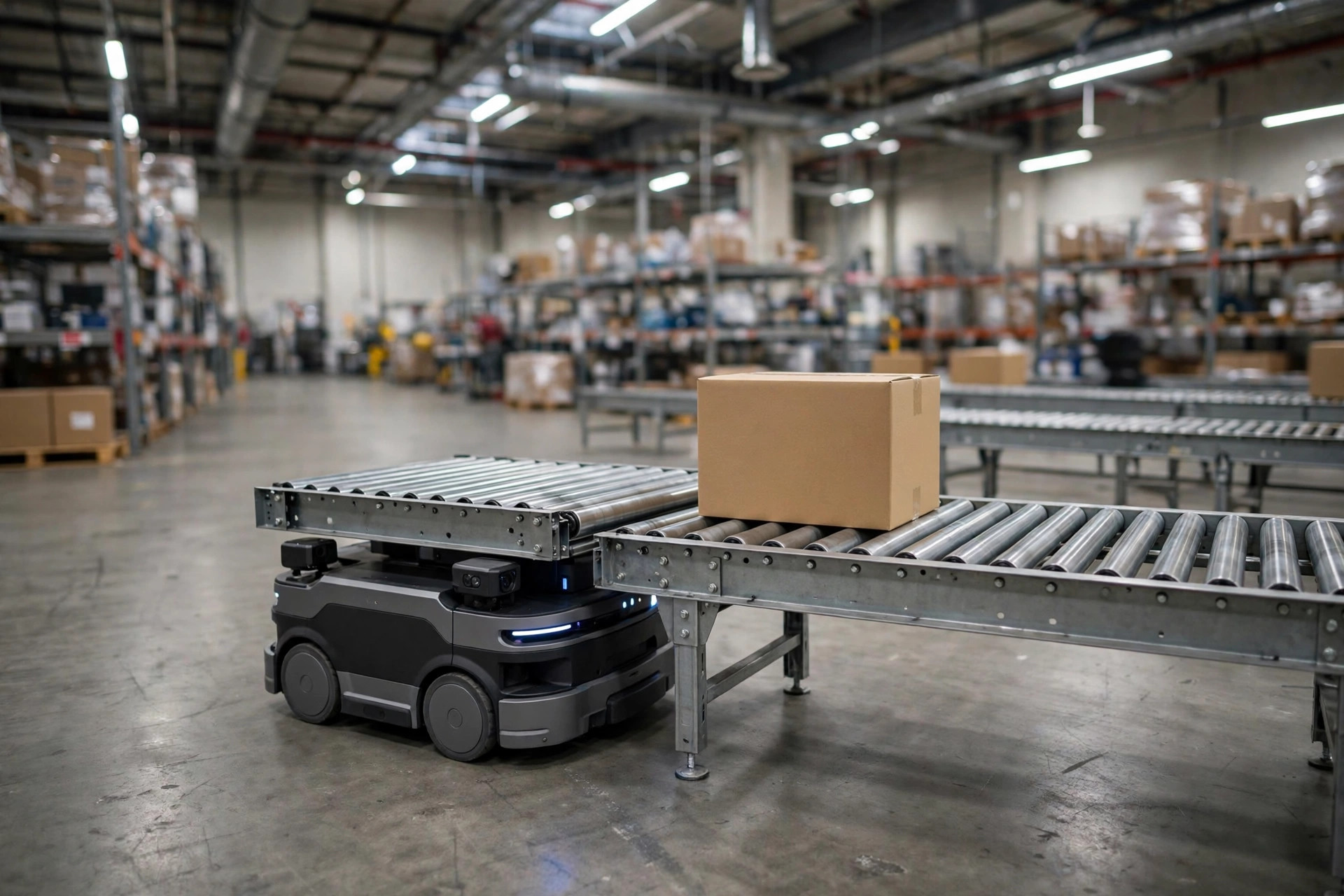
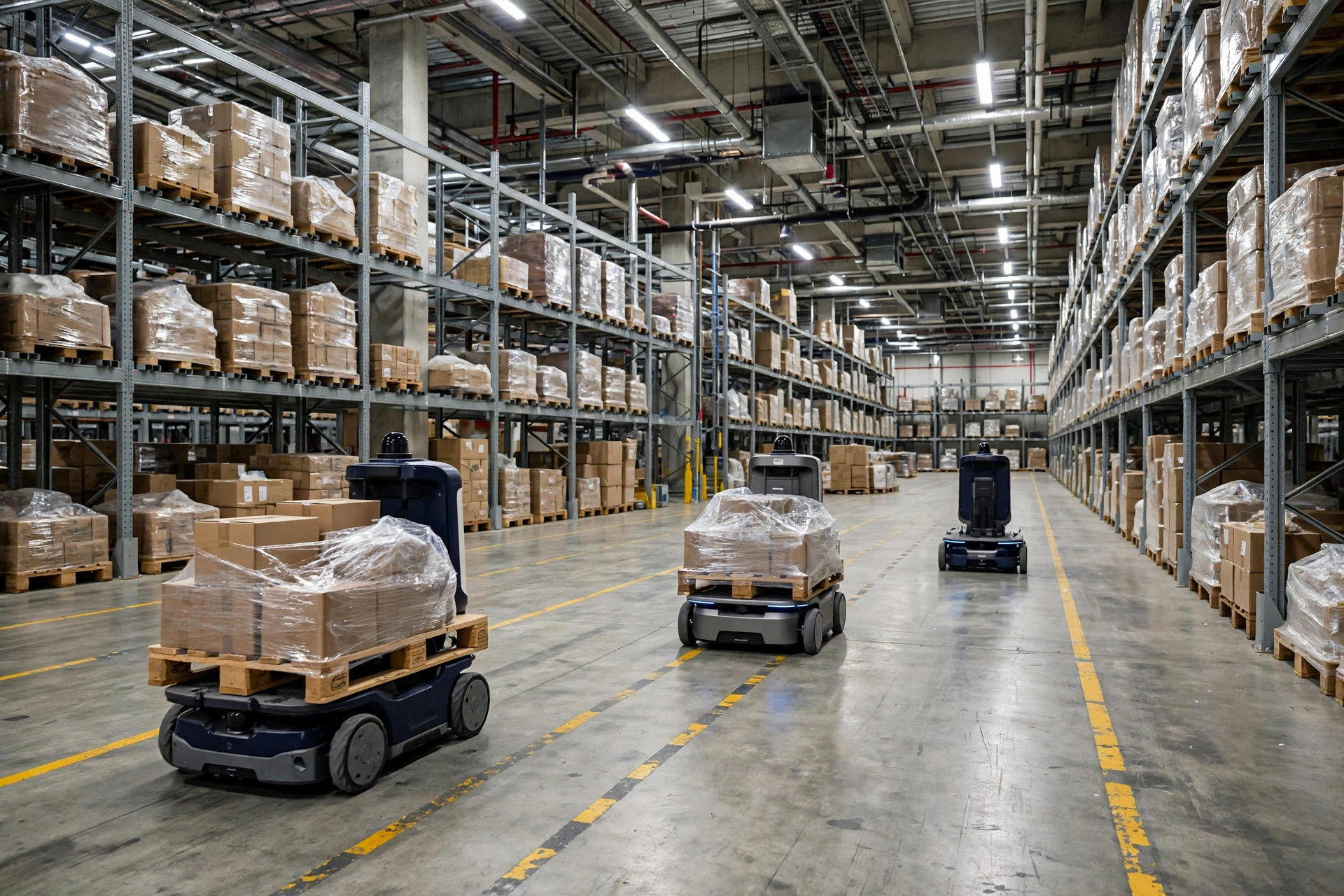
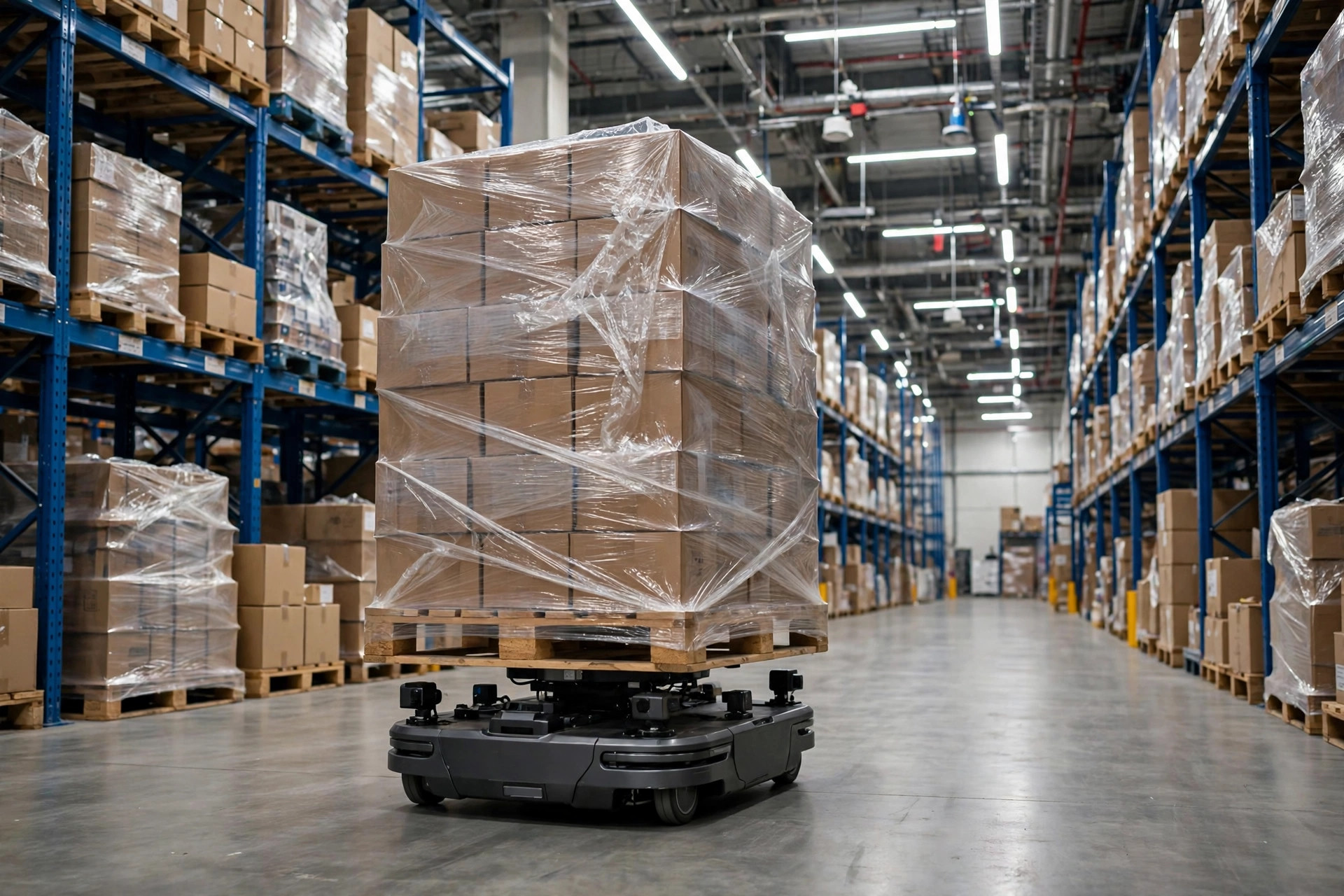
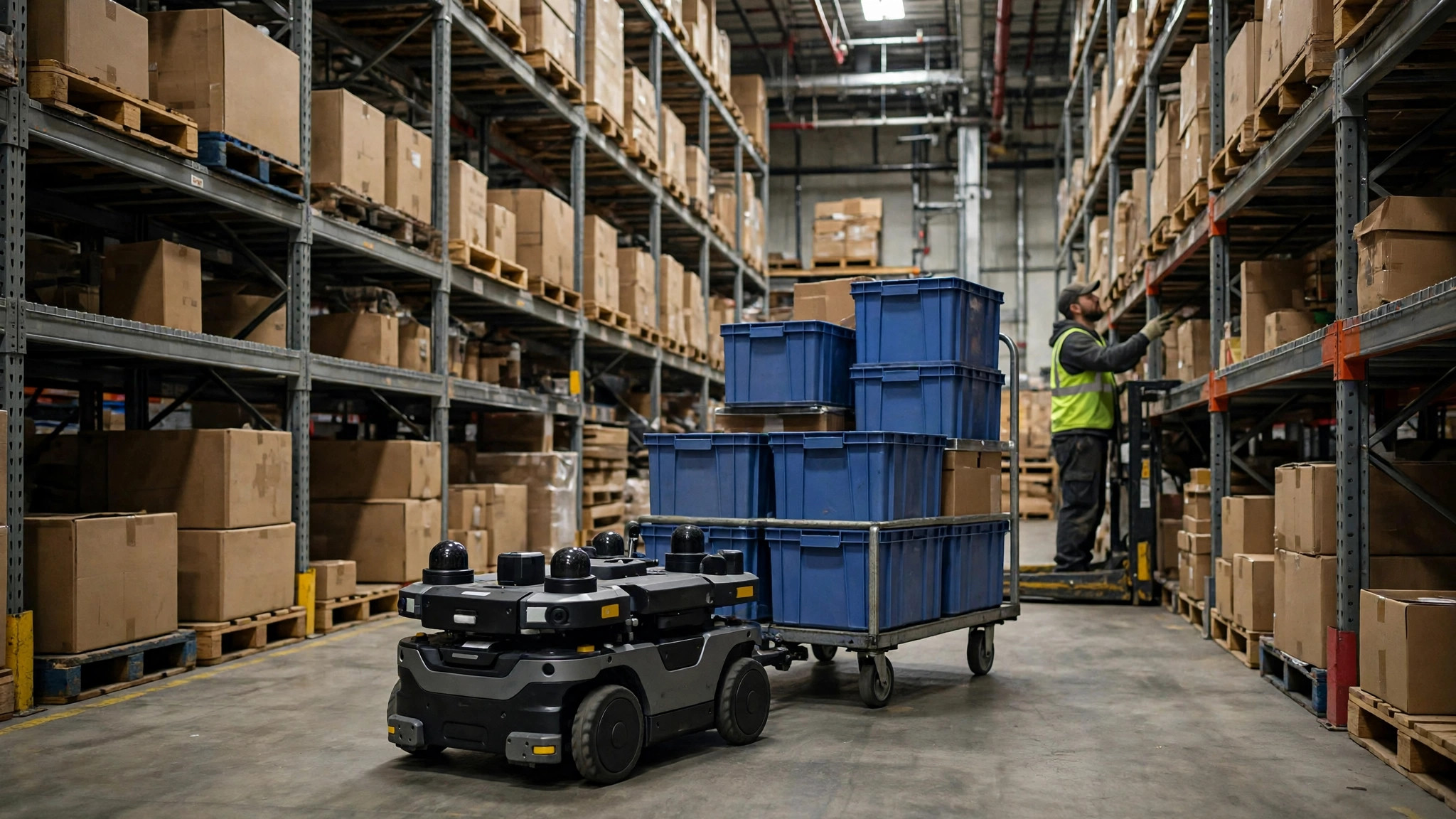
We moved the surviving unit to a fixed pallet run between receiving and the staging area. Same robot. Fixed start and end points, uniform pallets, no forklifts crossing the path. Within weeks it was quietly replacing two manual cart runs a day, and the math finally worked.
Same machine, different route, completely different outcome. Whether your first AMR succeeds is about seventy percent route selection and thirty percent the robot itself.
Do the Math: Distance Times Trips
I evaluate a pilot route with one formula: trip distance × trips per day × how many years this travel path will survive.
An AMR replaces manual transport that is repetitive, long-distance, and predictable. Look for a route that runs a dozen or two dozen trips per shift, each leg over a hundred meters — receiving to staging, staging to production feeding, end-of-line to the pack area. You need both volume and distance; miss either one and the payback never pencils out.
The way to size it is unglamorous but it works: shadow a manual cart run for a full shift. Count the trips, measure the distance, log every wait and detour. A 250-kilogram-class AMR — the workhorse size most warehouses start with — costs in the tens of thousands of dollars all-in with implementation. A fully loaded warehouse associate in the US costs roughly that magnitude per year. So the question is brutally simple: can this route reliably absorb at least one full-time-equivalent worth of transport labor? If yes, it's a pilot candidate. If no, change the route, not the robot.
Two costs people forget. First, charging: don't just look at how fast the robot moves — look at how many hours a day it's actually working. A route that forces frequent recharge trips might only deliver seventy or eighty percent of its rated availability. Build the charging windows into your takt calculation. Second, the lifespan of the route itself: will the production line move in two years, will the building lease turn over? Nothing kills a pilot like getting the route dialed in just as operations redesigns the flow. Confirm the travel path's lifespan with whoever owns capacity planning before you commit.
Stay Out of the Chaos Zone — At Least for the Pilot
What an AMR fears most isn't long distance. It's unpredictability.
Mixed pedestrian-and-equipment zones, forklift intersections, areas full of temporary pallets during peak season — places where even a veteran forklift driver slows down. Sending a LiDAR-guided robot into that mess guarantees e-stops and interventions. In 2023 I watched a warehouse pilot their first AMR in the e-commerce returns area, where temporary staging changed daily. The robot emergency-stopped twenty-plus times a day. The crew went from curious to walking wide circles around it, and the pilot's reputation never recovered. After that, nobody in the building believed in automation anymore.
A pilot route needs three non-negotiables: fixed start and end points, standardized carriers, and clean, level floors. The carrier part is where people get sloppy — wooden pallets today, plastic pallets tomorrow, an oversized custom pallet the day after. No docking mechanism survives that. Lock it in before the pilot: this route runs one pallet type or one cart type, written into the operating procedure.
And the invisible killer: Wi-Fi. An AMR needs a steady heartbeat with the fleet manager, and any coverage dead zone along the route means a "lost" robot and another e-stop. I've been burned by this, so now it's a rule: walk the entire route with a phone before selection day, mark the weak spots, and add access points or adjust the path first. That network work costs a fraction of the robot, and it decides whether your pilot runs smooth or spends its life being rescued.
This sounds conservative, and it is. A pilot's job isn't to impress — it's to produce evidence that the robot reliably replaces manual labor. Evidence is what unlocks the budget for unit number two.
When Does Robot Number Two Earn Its Keep?
Once unit one is humming, don't rush to expand. Three signals tell you it's time.
The first is stability: two or three straight months with interventions down to single digits per day. Intervention count is the single best health metric you've got. If it won't come down, the route is wrong — adding robots just adds chaos.
The second is queuing: tasks are backing up, with wait times running more than double the single-trip takt. That's real demand, not a hunch. And I mean sustained queuing, not one peak-season day — buying a robot for the peak means it sits idle the rest of the year.
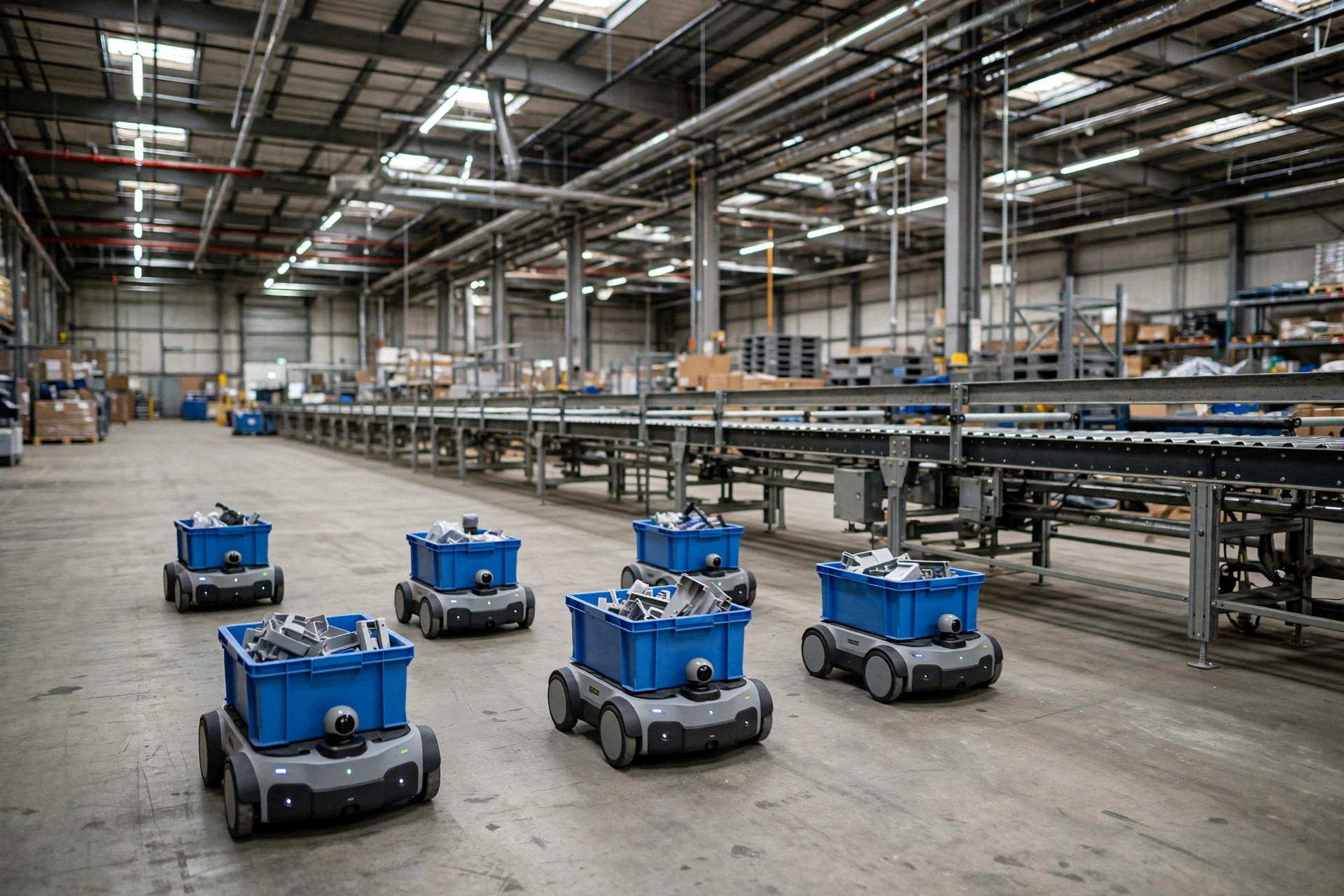
The third is replicability: there's a second, similar route nearby — same map, same traffic rules, same carriers. Replication has the lowest marginal cost and the highest success rate. Whatever you do, don't start talking about a "site-wide automation roadmap" before route one is solid. That's digging your own hole.
One more thing, and it won't make me popular with the vendors: buy your first unit from a brand with a local service team. During a pilot, what matters isn't the spec sheet — it's how fast an engineer shows up when something breaks. The gorgeous spec sheet with support half a country away can wait until you're scaling.
My verdict is blunt: your first AMR buys evidence, not capacity. Once the evidence exists, units two and three follow naturally. Without it, a bigger fleet just means a bigger mess.
Something you can do tomorrow: pick the route where manual cart pushing hurts the most right now, shadow it for a full shift, and write down the trip count, distances, and wait points. With real data, route selection becomes arithmetic instead of guesswork.
So here's my question back to you: in your building, which route is the one where it's not the people who are exhausted — it's the distance?