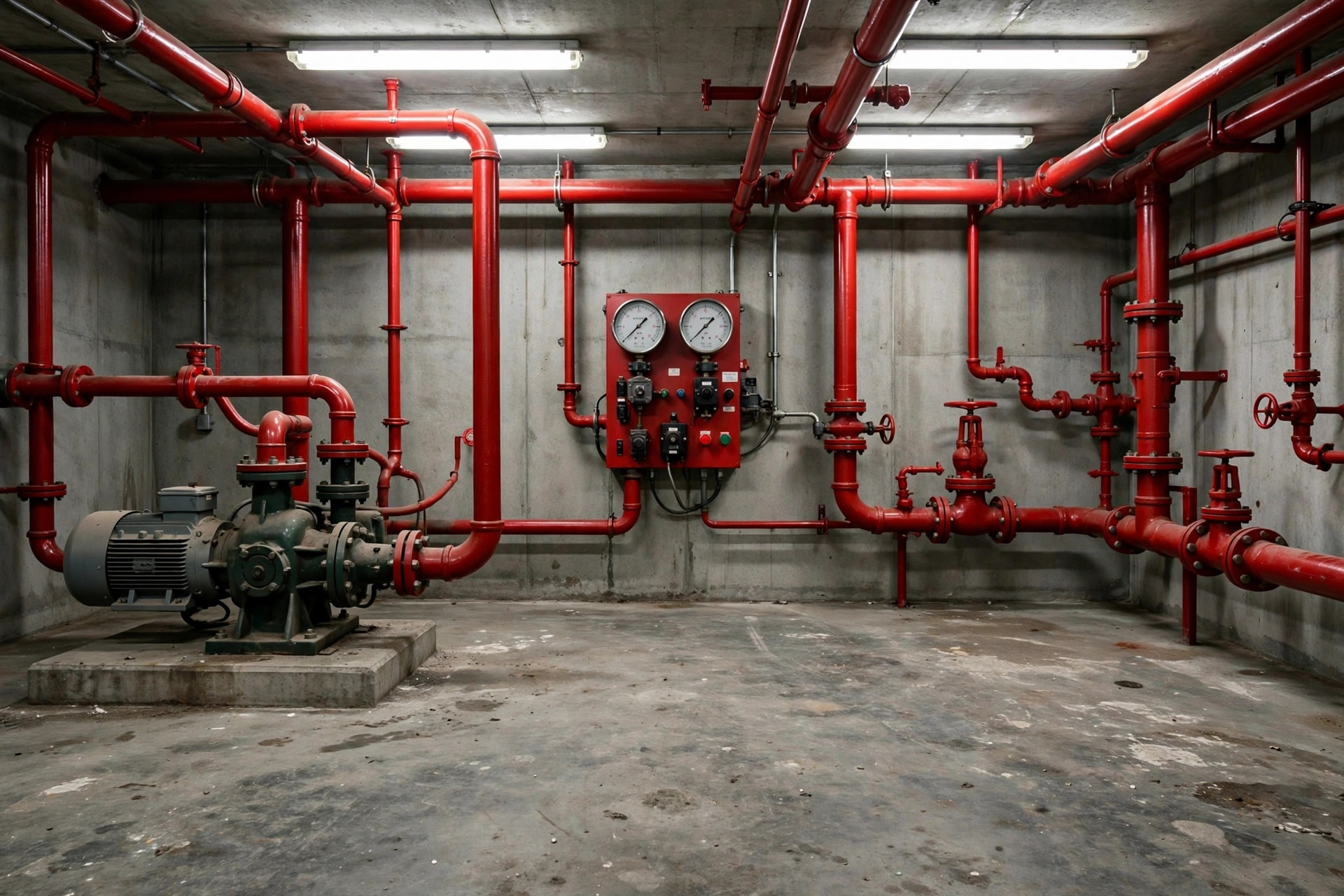
Summer of 2023, at a frozen-food distribution warehouse in Riverside. I was there looking at a new racking area when the warehouse manager came jogging over — something felt "off" about the fire pump room. We walked to the back of the building, pushed the door open, and a wave of hot air hit us: three pallets of unbroken-down cardboard stacked inside, barely a half-meter of walkway left. And the pressure gauge on the discharge pipe? Needle sitting right on the line between yellow and red.
My stomach dropped. Not because the room was hot, but because of what's in it: equipment that does nothing for 365 days a year and then, one day, becomes the only thing between your people and your inventory and total loss.
Turns out, nothing catastrophic. Municipal water pressure had dipped overnight, and the system's resting pressure sagged with it. The cardboard was a receiving crew cutting corners. The gate valve on the main line was open less than two full turns — nobody knew who'd touched it or when. Three small problems, each harmless alone. Together, they meant water wouldn't have gotten where it needed to go if a fire had broken out that week. The insurer's inspector wrote it up, and the premium went up close to ten percent at renewal. The increase alone would have funded two full-time inspectors for a year.
That's the uncomfortable truth about fire equipment inspection: it never shows up in your KPIs, never comes up in the morning standup, nobody gets promoted for doing it, and nobody volunteers for it. But on the day it matters, it is the only KPI. So here's how I think about daily, weekly, and monthly inspections from the warehouse floor — not the code book, but what your eyes should look at every time you walk past that pump room door.
The Pump Room: A 30-Second Daily Habit
The pump room is the heart of your fire system, so the daily check lives there and takes about thirty seconds. Whoever opens the shift walks in and looks at three things.
First, the pressure gauges. Most have color-coded dial zones; the needle belongs in the green. Green means the pipe network is holding; yellow or red means it's losing water or has a leak. I worked with a 3PL in Moreno Valley where the needle crept down three days straight and the manager waved it off as a bad gauge. It was a slow leak in a buried main. By the time anyone took it seriously, there were a couple inches of standing water in the room and the pump base was starting to rust. That repair ran into the tens of thousands of dollars. A thirty-second glance would have saved all of it.
Second, valve positions. In a fire system, nearly every valve should be fully open in its normal state. Your job is to confirm the indicator on each critical valve points to open. Why? Because a warehouse is full of people working — someone fixing a pipe shuts a valve and forgets it, someone twists a handle because it's in the way. At the Riverside site, the gate valve was open two turns. The pump would have started on alarm, but the water would never have made it through at volume. Afterward I had them hang a tag on every valve marking open and closed: "Touched this? Tell your lead." Crude. It worked.
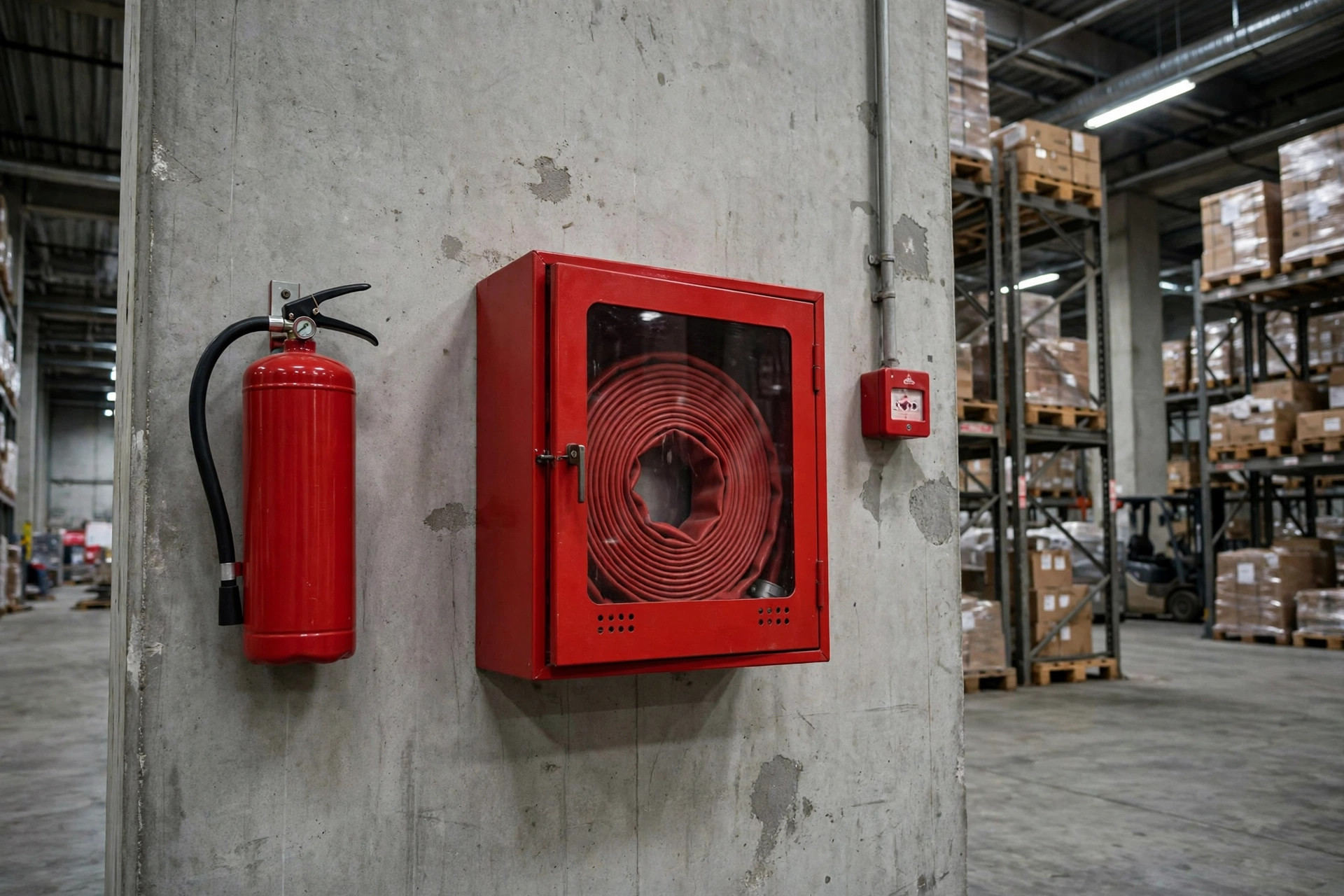
Third, the room itself. Can a person walk through it? Anything stacked in the way? Any smell of burning or sign of seepage? Are the extinguishers in place with needles in the green? Does the door open cleanly? Warehouses have a universal habit: any room nobody visits becomes a "temporary warehouse." When the fire crew needs to get in, they can't. Keep the pump room like a fire lane: clear, always.
Snap a photo when you're done and drop it in the shift group chat. The photo is evidence and an anchor — three weeks of this and it becomes muscle memory.
Sprinklers and Detectors: A Weekly Lap
The weekly check moves out of the pump room and into the building: sprinkler heads and detectors. Friday afternoons work well — you're walking the aisles for closeout anyway.
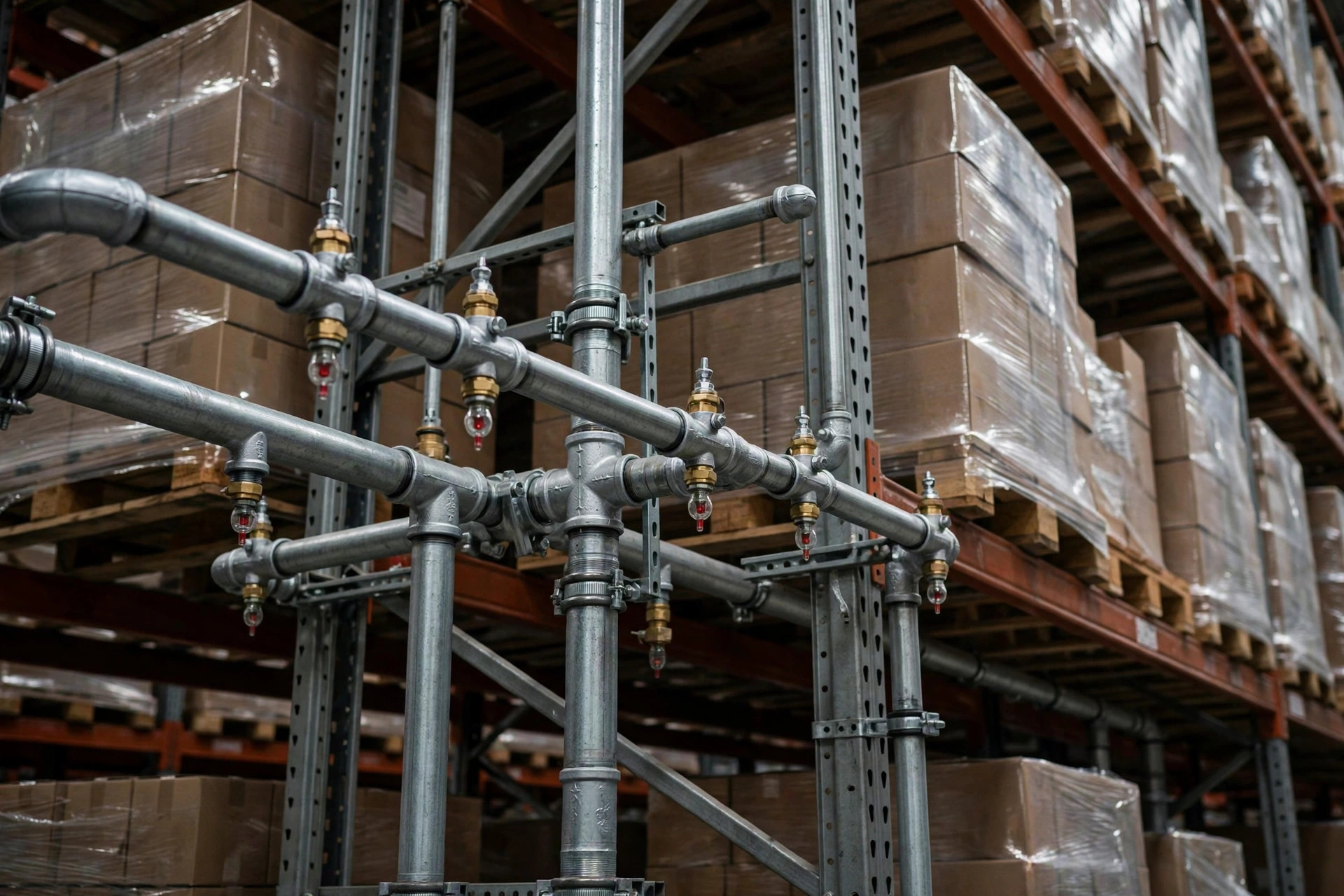
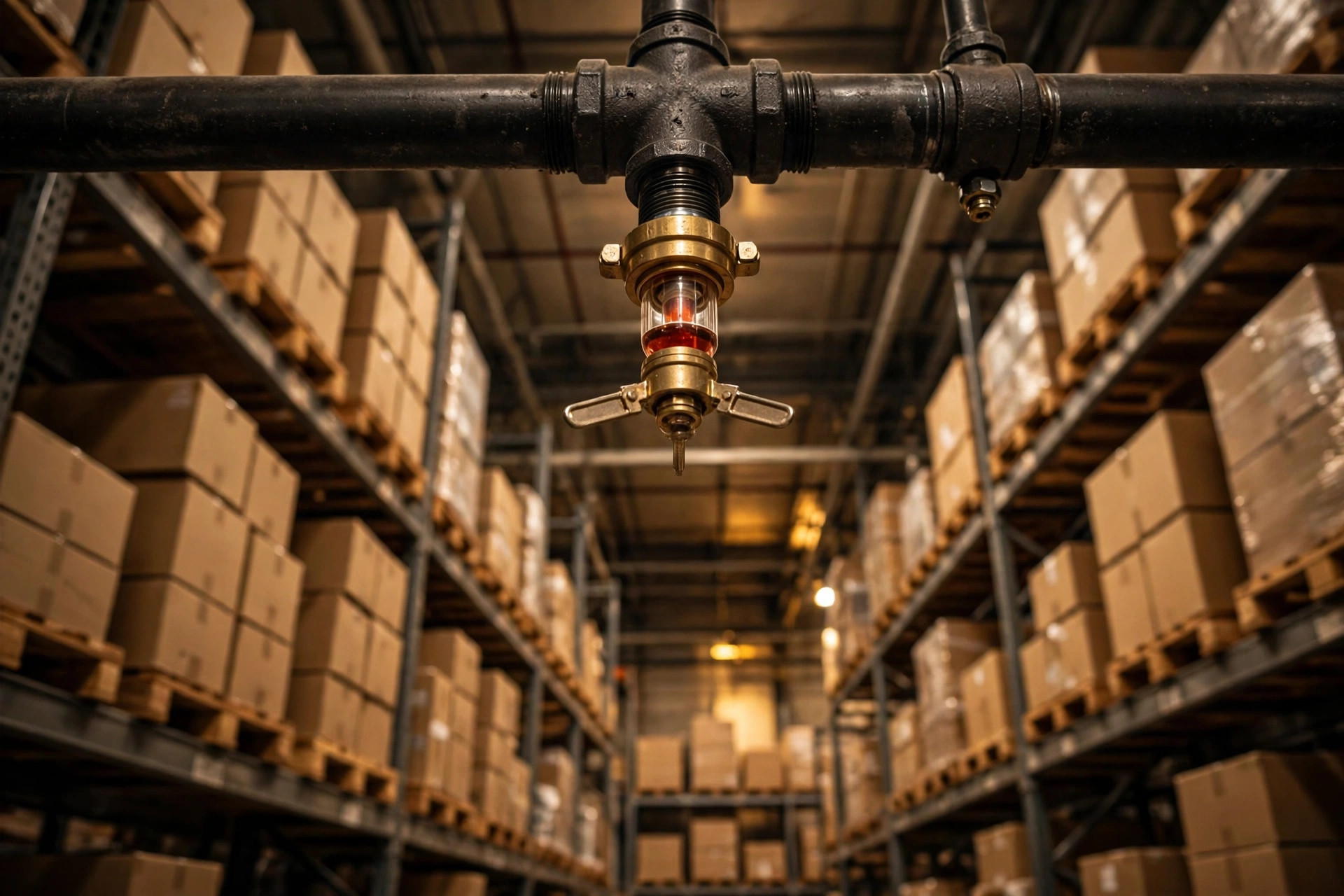
Look up at the heads first. Each glass bulb intact, the deflector straight, nothing knocked or bent. The killer scenario is stock piled too high underneath. The rule everyone knows but plenty of warehouses ignore: clear space between the top of storage and the sprinkler deflector. Water comes down, not sideways. The worst case I ever saw was an e-commerce warehouse in Fontana — peak season, bursting at the seams, product stacked to within a couple feet of the heads. The safety guy had signed off "normal." I asked how the water was supposed to reach a fire under all that. He stared at me and said he thought sprinklers covered everything. They do — as long as nothing's in the way.
Then look for layout changes. Did anyone add a rack row or raise a beam level this week? The most common fire risk in a working warehouse is that the floor changes and the fire system doesn't follow. Racks go up, heads stay where they were. A zone gets reconfigured, detectors still guard the old layout. You can't see that drift on a drawing; you see it walking the floor. My habit: carry a rough sketch of the floor plan, mark anything that changed, review it at the monthly inspection.
Smoke detectors and pull stations get tested in rotation — a handful each week. The thing that kills alarm systems isn't failure, it's the assumption they can't fail. One warehouse had a horn-strobe with its wiring chewed through by a rat — undiscovered for half a year because nobody had pressed a test button. My rule: the longer a system sits unused, the more often you should make it move.
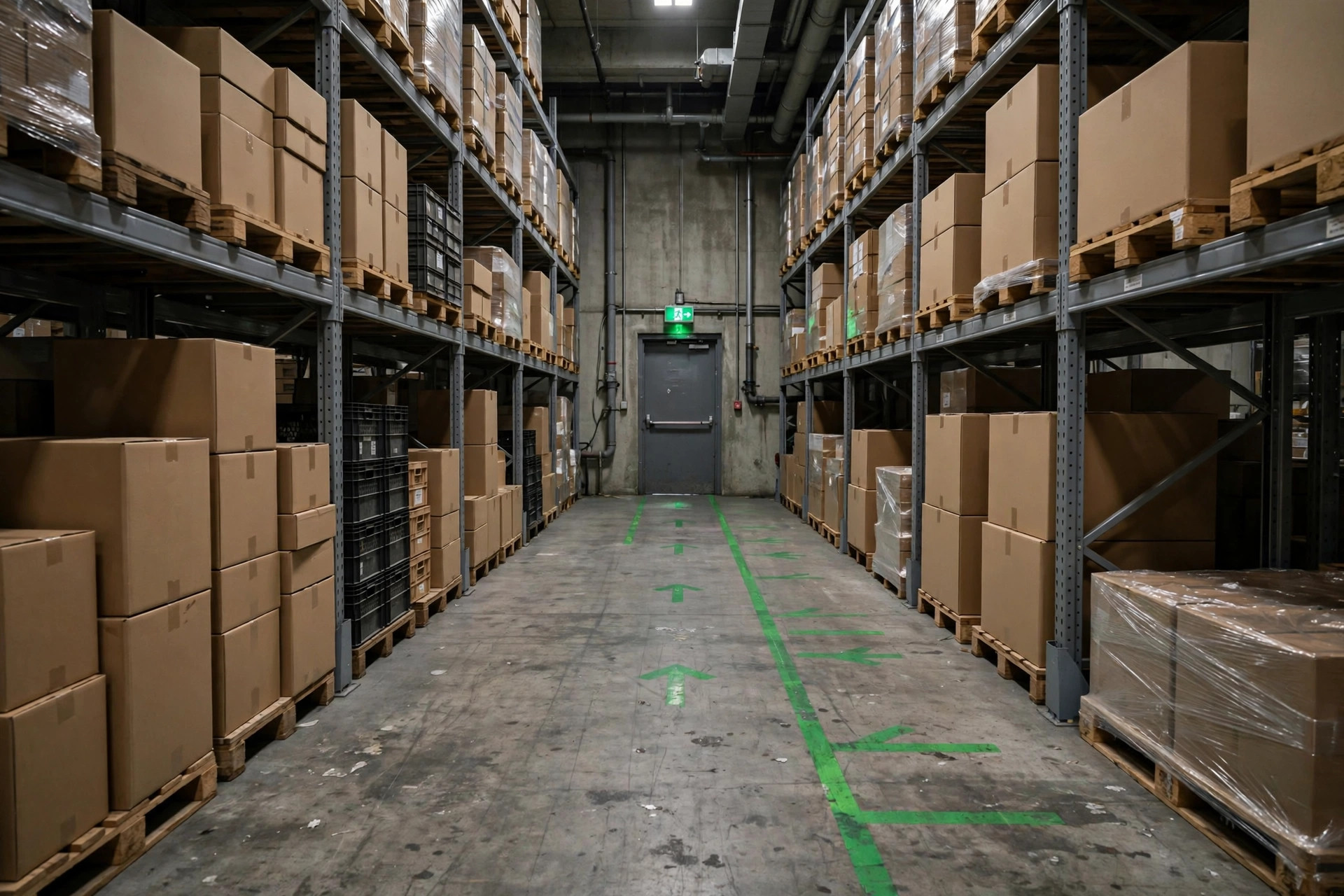
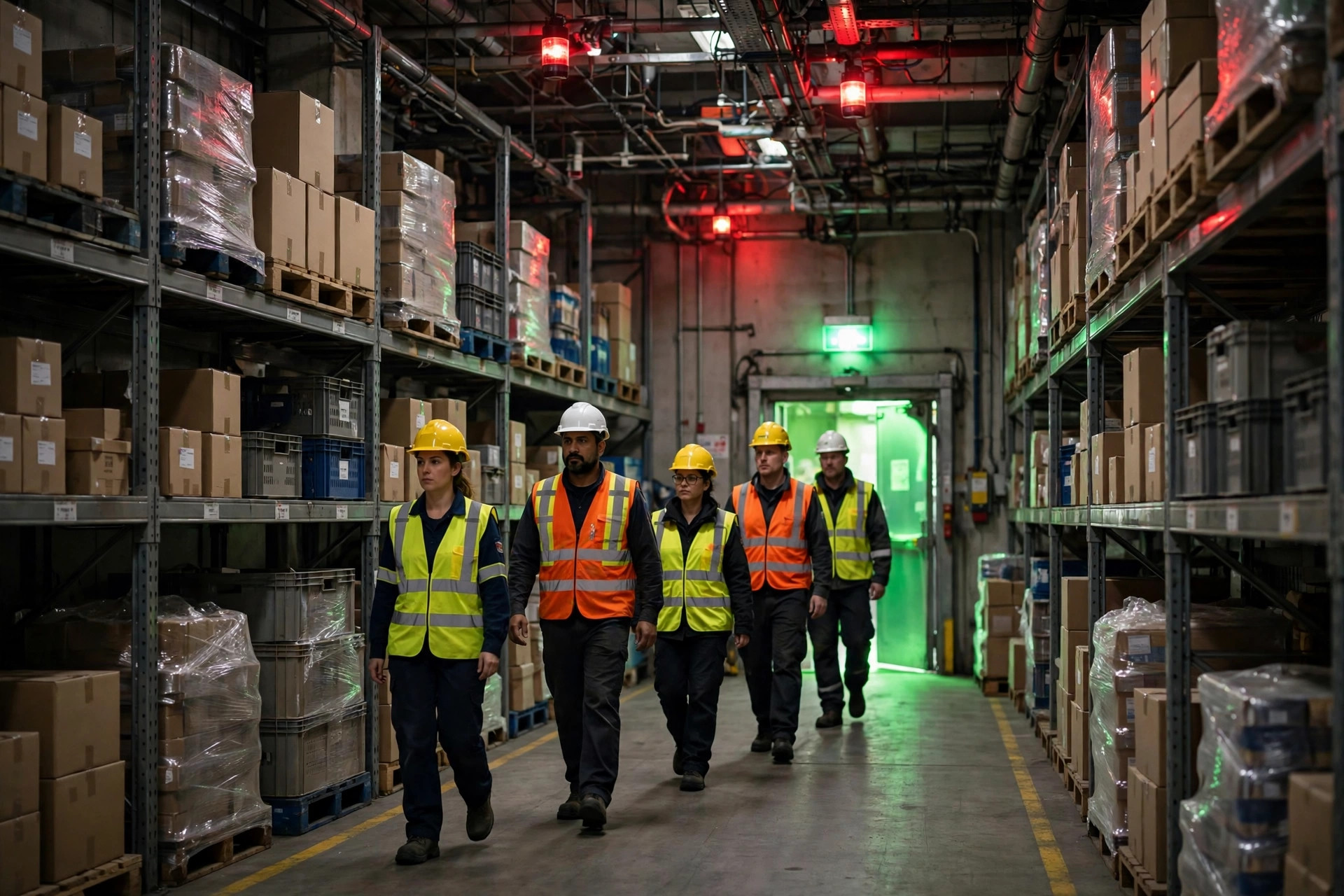
Walk the fire lanes and exits while you're at it. Friday, five minutes: pallets in the aisles? Carts? Temporary return staging? Do the exit doors push open, does the panic hardware work, are the exit signs lit? Five minutes — but on fire day, the aisle is the thing between people and the door.
Once a Month: Actually Work the System
Daily and weekly are about looking. Monthly is about doing. Pick a day and run the fire pump for a few minutes. Listen for abnormal noise. Watch the pressure come up — does it rise the way it should? Cut the main power and confirm the backup takes the load.
Diesel-driven pumps need this even more: the engine has to run unloaded monthly, or the batteries go flat and the fuel system gums up, and when you need it, it won't start. A cold-storage operator I know hadn't cranked his diesel pump in two years. Drill day: three attempts, three failures. A drill can be redone. A real fire can't.
Then sit down with the month's records — the daily photos, the weekly notes — and look for trends. Gauge readings sliding down month over month? Same zone always blocked by product? Same shift always blocking the aisle? A single day won't show you that; stacked days will. Records don't need to be fancy — a shared spreadsheet is fine. What matters is that somebody reads them and follows up.
One thing I always say about records: keep them. If a fire happens, the insurer's adjuster and the fire marshal's investigator will ask for your inspection history before anything else. Complete records mean you did your job. No records, and the best-maintained system in the world won't help your case. In twenty years, I've watched it play out more than once.
Should you hire a professional fire protection company? Daily and weekly checks are yours — nobody knows your building better than your crew. But once a year, bring in a licensed contractor for a full test: pump performance, pipe network pressure, alarm system functional testing. That takes calibrated equipment and certifications your people don't have. Don't skip it. Five figures for a proper annual test buys something no insurance policy can: sleep.
Owners always ask whether this should be someone's dedicated job. For a small or mid-size warehouse, no. The best inspectors are people already walking the floor — the morning forklift driver, the night guard, the safety lead doing Friday closeout. Break the work into small actions, attach them to existing routines, and it sticks. A dedicated role sounds professional, but it's a single point of failure: the day that person calls in sick or quits, the whole system stops. Actions tied to a process survive turnover. Actions tied to a person don't.
Tonight: have the night guard photograph the pump room gauge and drop it in the group chat. Tomorrow morning, take one look. Needle in the green? Then get on with your day.