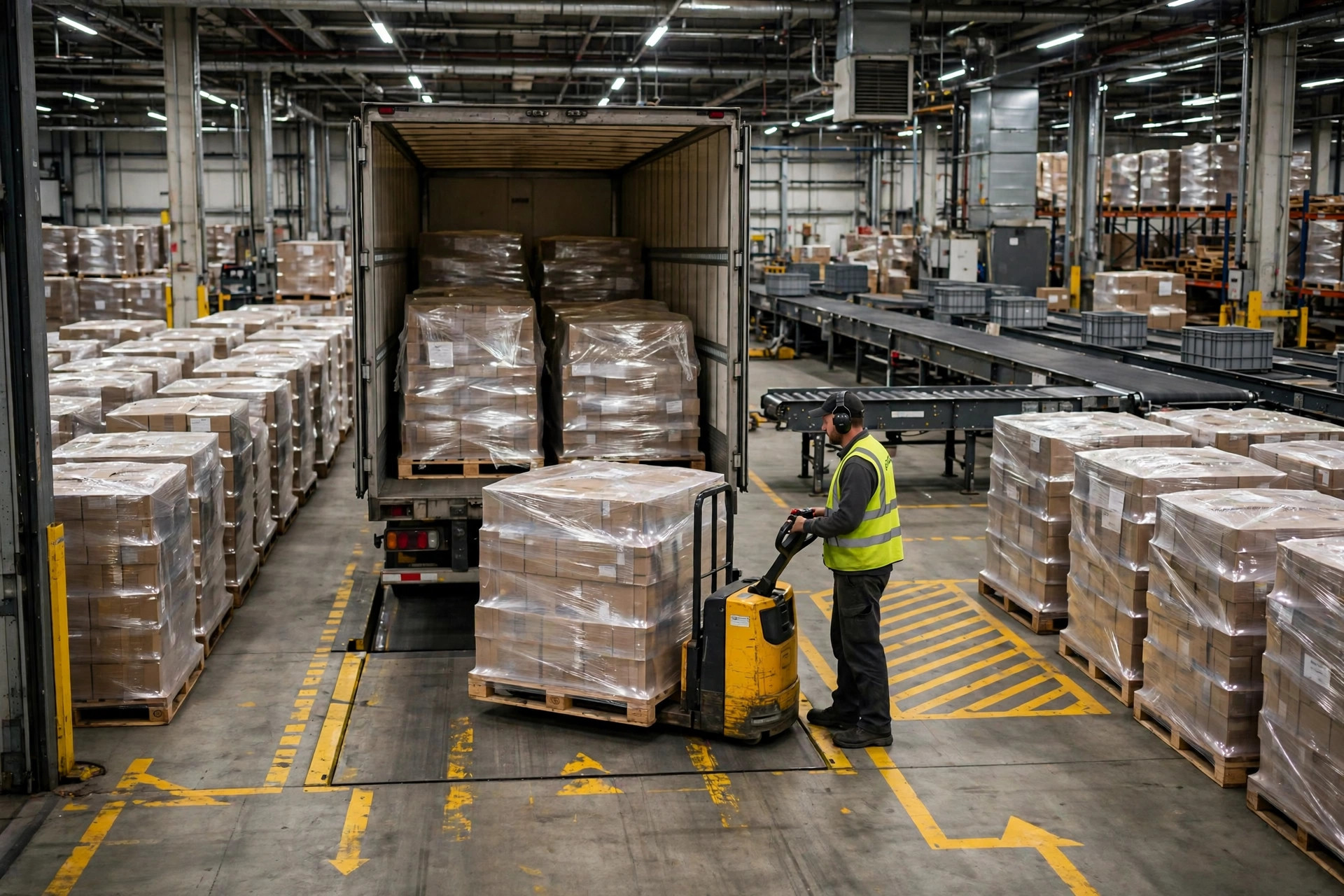
Let me start with a rant: Amazon changed the rules again. Storage fees keep climbing every year, and planning replenishment is getting harder, not easier.
I've been selling home storage products on Amazon US for five years. Here's the thing about inventory: new sellers fear stockouts, veteran sellers fear overstock. Which one are you?
Listen — replenishment is not about "ordering extra just to be safe." Insurance costs a premium, and your premium is storage fees paid straight to Amazon. They never miss a bill.
My stockout: 11 days, ranking from #7 to #34.
June 2025, two weeks before Prime Day. My desktop organizer was doing 80 units a day, then it exploded to 140. I had 900 units left. The next batch was on a boat.
Result: stocked out on June 28, dead for 11 days. The listing dropped from #7 to #34 in the category. Ad ACoS jumped from 28% to 41% — because you still have to keep ads running during a stockout, or you won't even hold #34 when you come back.
Eleven days of staring at that red out-of-stock warning in Seller Central. My blood pressure was not okay. Post-mortem: I lost over $20,000 in sales and torched half a year of ranking equity.
My overstock: working for Amazon for three months.
October, same year. Lesson learned, right? I shipped 6,000 units by sea for Q4. "No way I'm stocking out this time."
Then a big seller hijacked the listing and undercut the price. Daily sales fell from 60 to 35 units. 6,000 units at 35 a day — nearly six months of inventory.
Enter the aged inventory surcharge. I won't quote the exact rate here — check Amazon's official policy for the current numbers — but let me tell you, when you see that line item for inventory sitting over 90 days, your hand shakes. I paid close to $4,000 in surcharges alone, on top of regular monthly storage fees.
Stockouts kill your ranking. Overstock kills your cash. Every veteran seller knows this squeeze.
The Replenishment Formula: Daily Sales x (Inbound Days + Check-In Days + Safety Days)
After that, I stopped replenishing on gut feel. Everything became a formula:
Replenishment quantity = average daily sales x (inbound transit days + FC check-in days + safety stock days)
Here's how I set each number.
Daily sales: trailing 30-day average. Before peak season or promos, use the trailing 7-day average. Not what you "feel" you'll sell — real Seller Central data.
Inbound days: from the moment you ship to the moment units go "available" at the fulfillment center. My sea freight forwarder, Shenzhen to a West Coast FC, runs 22-28 days; I use 25. Air is 10-12. Ask your own forwarder, not me — every lane is different.
Check-in days: once freight arrives at Amazon, receiving to stow can take 5-7 days in peak season, 2-3 in slow months. I use 5, bumping to 7 for peak.
Safety days: your cushion. 7 in slow season, 10-14 in peak, 15 before Prime Day or Black Friday. Don't get greedy — every extra safety day is real cash sitting still.
The Turnover-Days Template: Copy This Table
One of my SKUs doing 50 units a day:
| Parameter | How to get it | My number |
|---|---|---|
| Daily sales | Trailing 30-day sales / 30 | 50 units/day |
| Inbound days | Forwarder's door-to-FC lead time | 25 days |
| Check-in days | 3 slow / 7 peak | 5 days |
| Safety days | 7 slow / 14 peak | 10 days |
| Replenishment qty | 50 x (25+5+10) | 2,000 units |
| Coverage | 2,000 / 50 | 40 days |

See? One shipment covers 40 days. When inventory drops to safety days x daily sales (500 units), the next shipment should already be moving. Rolling replenishment — never stock out, never overstock.
I keep one sheet per SKU, refresh daily sales every Monday morning, and the quantities recalc automatically. Ten minutes for the whole store with some Excel formulas.
New product with no sales history? Most-asked question I get. My approach: ship a small test batch of 300-500 units first — air freight if sea is too slow. Yes, it costs more, but you're buying data. Run it for two weeks, get real daily sales, then plug the big shipment into the formula. Don't ship 3,000 units on "I think this will blow up" — that's where 90% of new-product disasters start.
Those three day-counts added together are your cash cycle. 40 days means every replenishment order parks that inventory investment outside your account for 40 days before it starts turning back into revenue. Once you see it that way, you realize replenishment quantity is never a gut call — it directly sets your cash flow speed.
The Counterintuitive Take: "Better Safe Than Sorry" Is Poor-Seller Thinking
A lot of sellers live by "order more, sleep better." I'll say it straight: that's poor-seller thinking. You're not buying insurance — you're donating to Amazon.
Do the math: unit cost $8, over-order 1,000 units, that's $8,000 parked in a warehouse. Opportunity cost at 5% annualized is $400 gone, plus aged-inventory surcharge risk. A stockout costs you ranking you can win back; dead cash flow can genuinely kill a small seller.
And here's the deeper, counterintuitive truth: turnover days beat sales forecasting. Forecasts? Nobody gets them right — not even Amazon's own. But turnover days are yours to control: transit time, safety days, reorder rhythm. Control what you can control; don't gamble on what you can't.
Pitfalls: Three Places Sellers Blow Up
First, seasonal products. Never use a full-year average. Pool gear does 200 units a day in July and 20 in November — replenish on the 110 average and winter becomes an inventory disaster. For seasonal SKUs, use expected daily sales for the next 60 days.
Second, post-promo hangover. Pad safety days before Black Friday, but cut them back immediately after. I've watched sellers keep ordering on the 15-safety-day rhythm into December, then sit on dead stock all January, paying surcharges that hurt.
Third, don't give every SKU the same safety days. Your A SKUs (the 20% driving 80% of revenue) get generous cushions. C-list long-tail SKUs? Better an occasional three-day stockout than cash locked up. Nobody remembers a long-tail stockout; a hero SKU stockout torpedoes your ranking.
One more hidden trap: counting in-transit units as available stock. Plenty of sellers see 800 units in the dashboard and feel safe, when 500 of those are tied up in pending orders and only 300 are actually sellable. Always read the "Available" column — anything not checked in doesn't count as one single unit.
The numbers: one year on this system.
So far in 2026: stockouts down from 7 last year to 1 (a forwarder lost a container — force majeure). Average inventory turnover down from 68 days to 41. Aged-inventory surcharges from $4,000 in Q4 last year to under $500 per quarter this year.
Faster turnover means living cash flow. Living cash flow means testing new products and funding ads. That's the real point of replenishment — not keeping the warehouse full, but keeping the money moving.
Tested it myself. It works.
By Ah K, E-commerce Seller (5 yrs)