Let me start with a bill, because that is where this question always starts. Last month a seller of small home goods showed me a quote from a prep center: labeling, poly bagging, and bubble wrap, all priced per unit, and the per-unit number looked painless. Doing it in his own warehouse looked painless too, right up until he counted the people and the floor space. The fba prep center vs in-house prep cost debate goes wrong when it runs on gut feel. Gut feel is the most expensive line item in logistics. You need two ledgers, kept honestly, and one break-even volume where the answer flips. Below that volume, outsourcing wins. Above it, in-house wins. Without that number, every discussion is theatre.
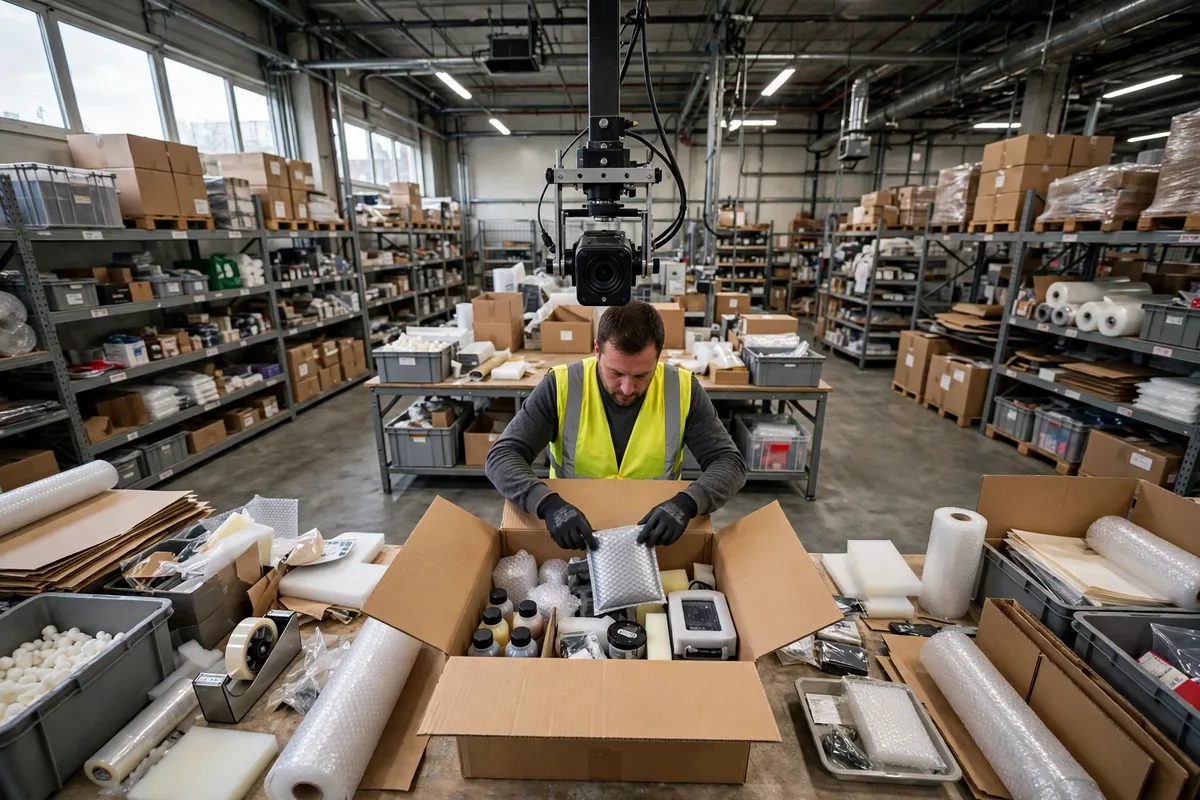
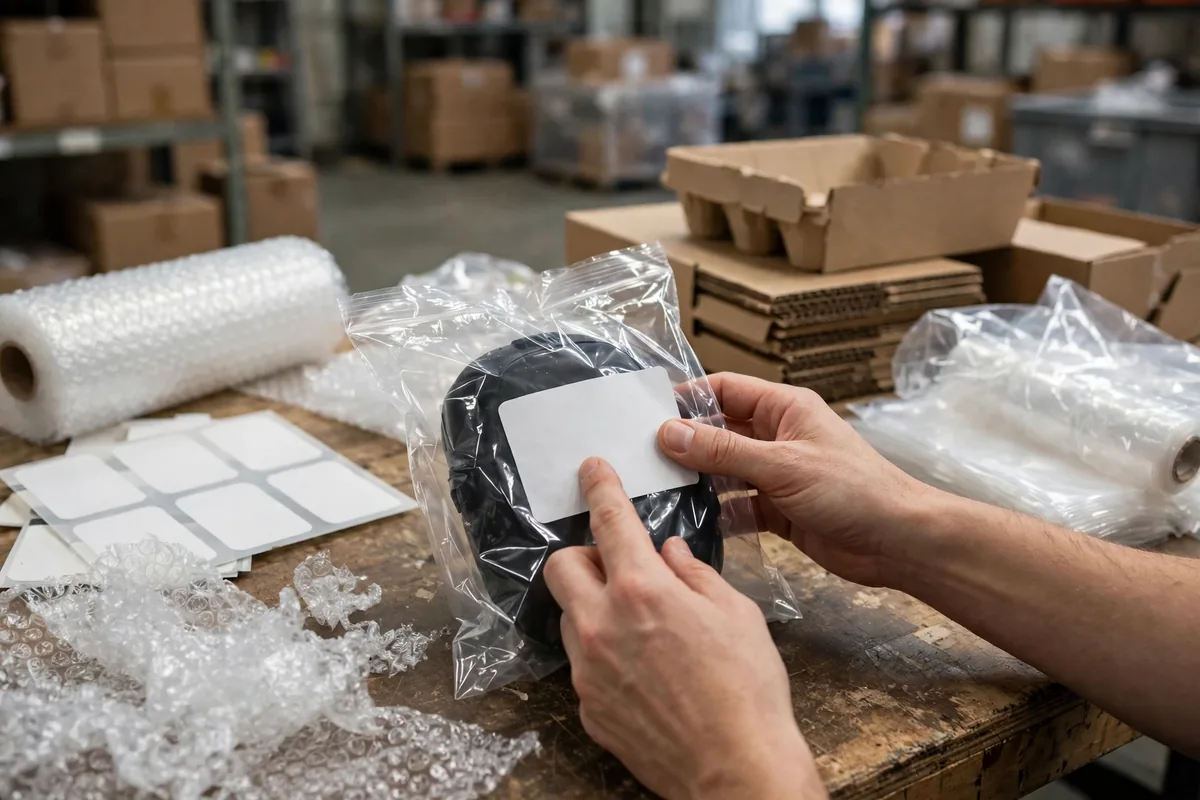
First, define the work. FBA prep is everything that has to happen before Amazon will accept the goods: FNSKU labels, poly bags, bubble wrap, bundling into sets, suffocation warning labels where required, and so on. Get it wrong and Amazon redoes it for a fee, or refuses the shipment. One ground rule before any math: prep requirements change, and what your category needs this year is whatever Seller Central currently says. Check the latest policy there, not last year's habit.
Ledger One: The Prep Center Bill Is Simple, the Costs Around It Are Not
A prep center charges per unit, and per-unit rates vary widely by provider, category, and task. I will not print a rate here as if it were current, because it would be stale before you read it — use each provider's latest quote, always. What I will insist on is that the per-unit fee is only the first line. Four more costs ride along:
Freight detour. Your goods could have gone straight to Amazon. Routing them through a prep center adds a leg, a handling, and a chance of damage. Queue time. In peak season prep centers back up. Every extra day your inventory sits in a queue is a day it is not live, and stockout risk has a price even if nobody invoices you for it. Error and communication cost. Your bundling logic and label placement now travel through a third party's ticket system. Mistakes happen more often at a distance, and rework freight runs both ways. Minimums and extras. Some providers carry per-batch minimums and storage triggers after a set number of days. At low volumes, minimums quietly double your effective per-unit cost. Read the quote line by line and ask what rework costs before you sign.
A client of mine outsourced prep for glassware last year because the unit price looked cheap. In peak, the provider's queue ran nine days. The shipment missed its sailing, part of the range went by air to protect the listing, and the air freight delta cost several times the entire prep bill. The unit price was never the problem. Nobody had priced the queue.
Ledger Two: In-House Prep Cost Is Not Just Labor
Most sellers who cost in-house prep count labor and stop. That is the single biggest error in this comparison. A complete in-house ledger has five blocks:
| Cost block | What to count | What people forget |
|---|---|---|
| Labor | Prep hours at loaded wage | Training time, supervisor oversight |
| Consumables | Bags, labels, bubble wrap, tape, cartons | Printer depreciation and ribbons |
| Floor space | Prep area at your rent per square foot | In peak, that space could hold sellable stock |
| Rework | Expected cost of non-compliant units | Your own errors tend to fail by the batch |
| Management | Scheduling, QC, carrier and platform back-and-forth | Hiring and ramping seasonal temps |
Rework is the most underestimated block. A prep center does this work all day, every day, and its error rate shows it. Your warehouse, pulling two seasonal temps onto a labeling bench in November, can misplace a label or use the wrong bag thickness across an entire batch. One rejected batch — rework fees plus delay — can erase a season of labor savings. The mirror image is also true: in slow months your crew is partly idle anyway, so the marginal labor cost of prep drops toward zero, and the in-house ledger looks completely different. That is why this calculation must be run twice, once for peak and once for off-peak. An annual average hides the answer.
The Break-Even Formula for In-House Prep
With both ledgers open, the math is one line. In-house prep carries fixed costs; outsourcing does not. The fixed costs have to be earned back from the per-unit saving:
Monthly break-even units = Monthly in-house fixed cost ÷ (Outsourced all-in unit cost − In-house variable unit cost)
Where: in-house fixed cost means the prep area's monthly rent share, equipment depreciation, and fixed supervision. Outsourced all-in unit cost means the quoted per-unit fee from the provider's latest quote, plus per-unit freight detour, plus a per-unit allowance for queue and error risk. In-house variable unit cost means labor minutes per unit plus consumables per unit.
A worked example, clearly labeled: the following numbers are an illustrative assumption, not any provider's real pricing — they exist so you can copy the method. Assume monthly in-house fixed cost of $3,000. Assume an outsourced all-in unit cost of $1.20. Assume an in-house variable unit cost of $0.70. Break-even = 3,000 ÷ (1.20 − 0.70) = 6,000 units per month. Above a steady 6,000 prepped units a month, in-house starts winning. Below it, the prep center wins. Swap in your own numbers and the conclusion is yours.
Now the counterintuitive part: do not switch the month your volume crosses the line. The formula is static; your volume is not. If peak months clear the bar and slow months fall under it, the annual picture can still favor outsourcing. My working rule: move prep in-house only when volume holds at least 30 percent above break-even for several consecutive months. Volume hovering near the line calls for the hybrid — a base load in-house, peak overflow sent out.
The Verdict on Prep Center vs In-House
Run the numbers honestly and most sellers land on the third answer to fba prep center vs in-house prep cost: split it. Stable, high-volume standard items belong in-house, where fixed costs spread thin. Fragile goods and multi-item bundles, where one error is expensive, deserve either strict in-house QC or a specialist center — and in peak, usually the center. New products with unproven volume should be fully outsourced; never build fixed cost ahead of demand you have not seen yet.
Here is your homework, and it takes an afternoon: pull your last three months of prepped units, split them by category, and run the break-even formula per category, then run the peak month separately. Almost every seller who does this finds at least one category quietly overpaying — not because they chose the wrong side, but because they never calculated where the line was.
By Lao Zhou, Logistics Cost Analyst