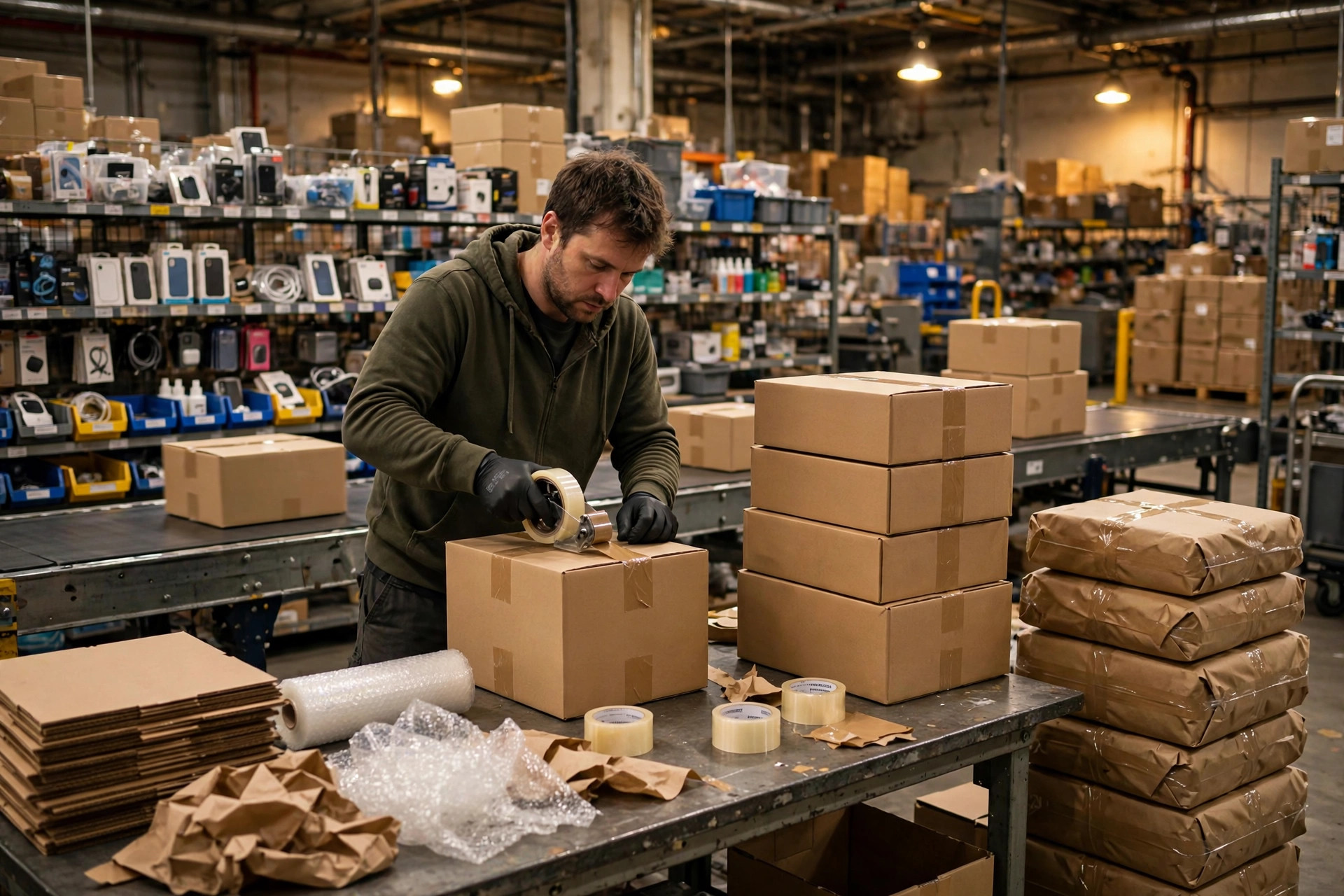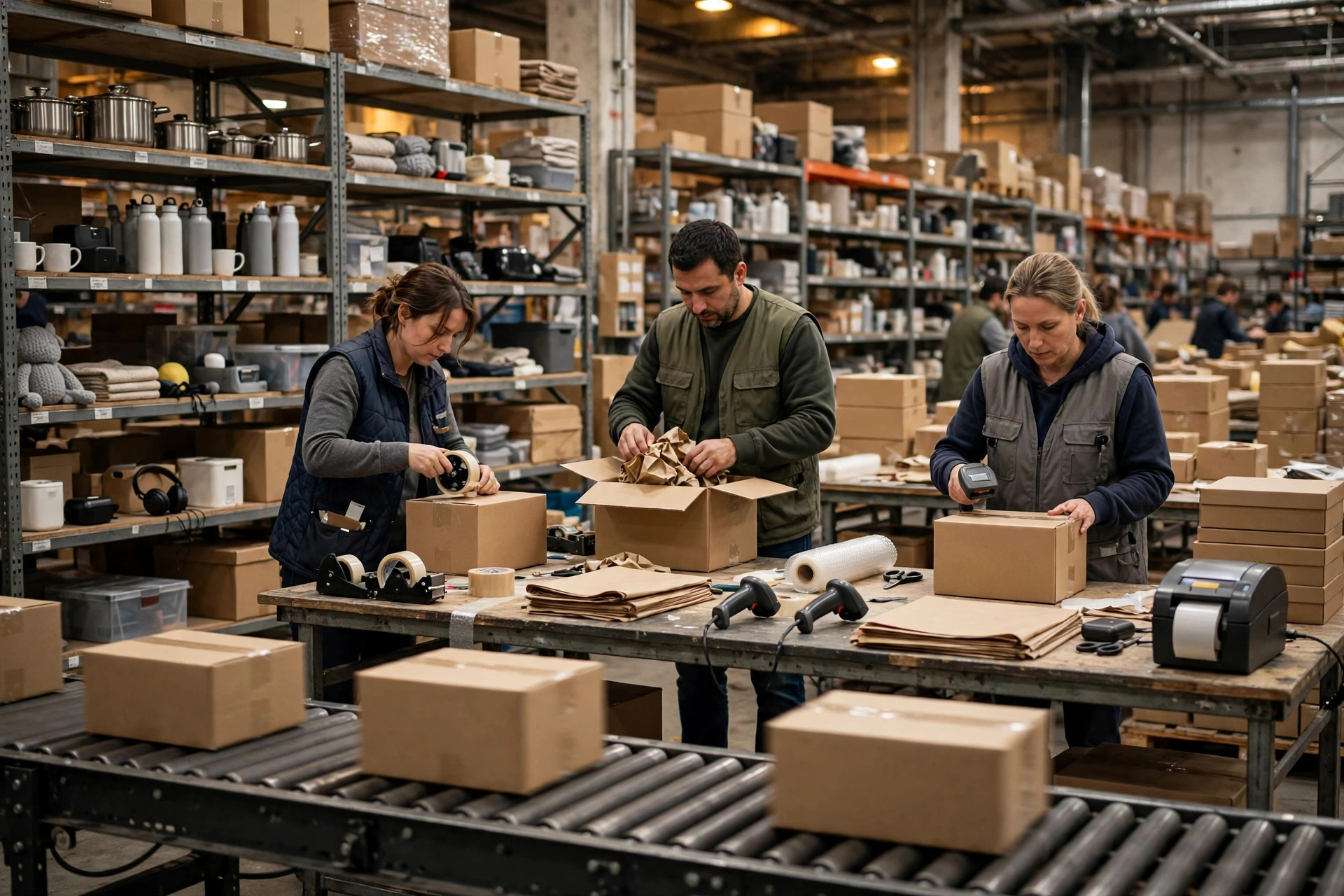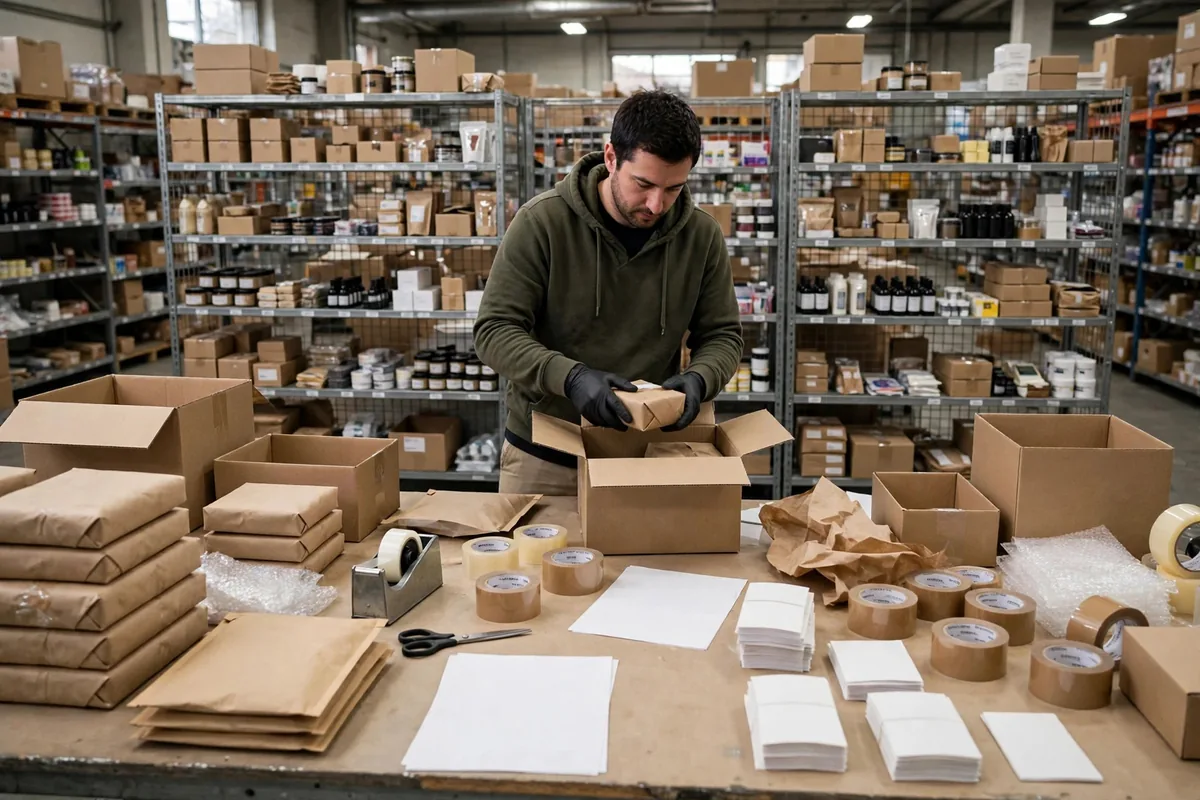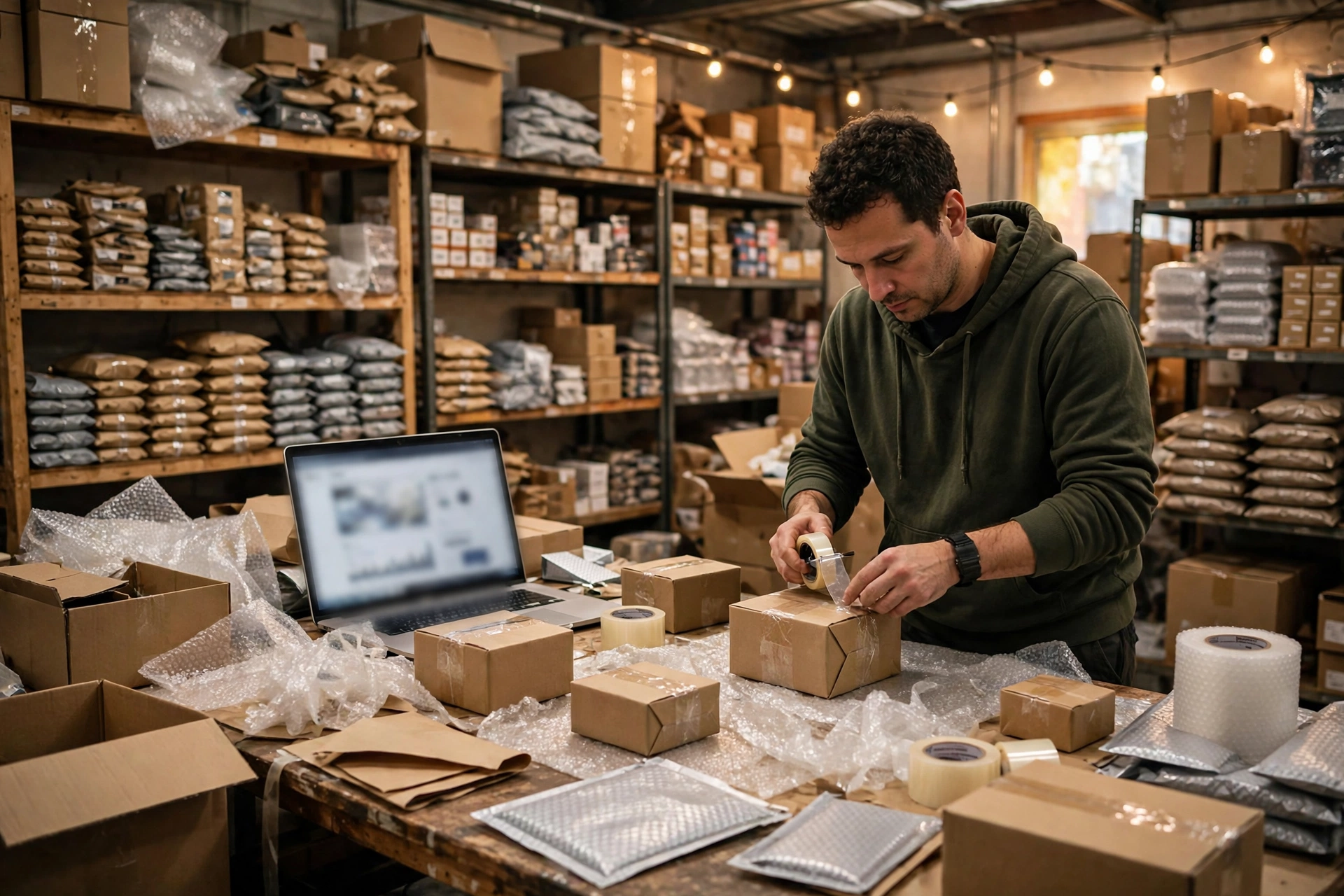
Our little warehouse cannot afford to burn money like that. Last year an AliExpress seller came to me asking for pick-and-pack service, shipping his goods to the United States from my place. His question was simple: is it cheaper to store with you, or to ship direct with Cainiao? I did not quote him on the spot. I went back and read his last three months of orders first. Eighty percent were small items at $12. The rest were heavier goods at $45. The answer split in two on the spot: small items are cheaper by Cainiao direct shipping, heavy goods are cheaper from an overseas warehouse. There is no single answer to AliExpress seller warehouse costs. There is only a calculation split by product type.
AliExpress Direct Shipping: Cheap Because It Costs You Nothing Up Front
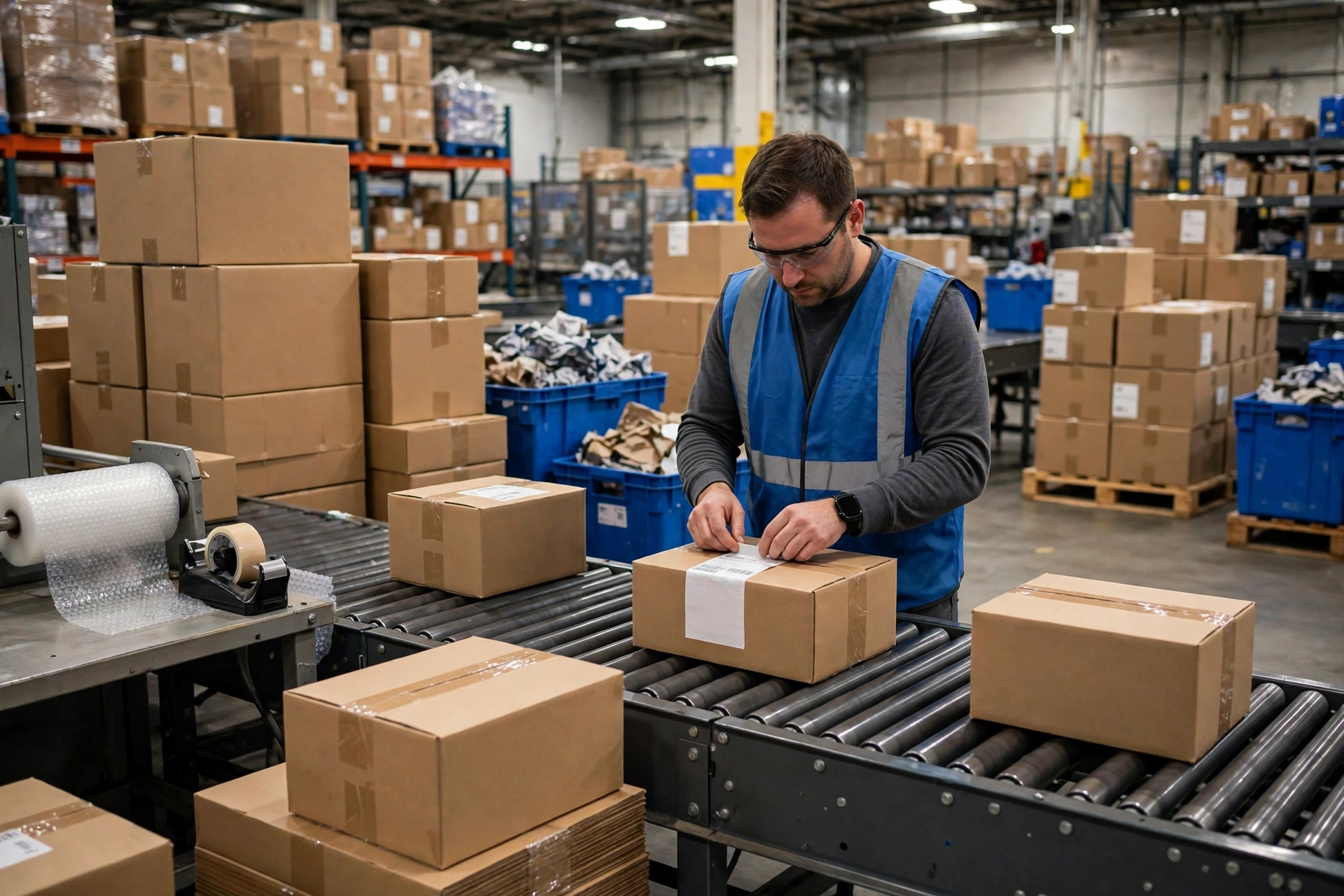
Cainiao direct shipping means the seller stocks in China and ships order by order from a domestic warehouse. Cainiao takes the parcel, flies it across, and hands it to the destination postal service. Published sources commonly put AliExpress Standard Shipping to the United States at 2 to 5 weeks, with the economy tier taking 30 to 50 days and tracking that goes quiet for long stretches. The advantage is real money: no stock pushed overseas in advance, no overseas rent, no cash locked in inventory. Goods that do not sell are still in your own hands.
Illustrative scenario: a phone-case seller in Shenzhen lists 300 designs, each selling three to five units a month. If he pushed all 300 designs into a United States overseas warehouse, the inbound freight and storage alone would eat his margin. Cainiao direct shipping is the right call for him: many designs, small volumes each. Better to let the buyer wait two extra weeks than to lock cash into stock that might never move. Here is the counterintuitive part: for a seller with many slow-moving designs, slow logistics is not a defect. It is trading time for cash flow.
But direct shipping has a wall it cannot dodge. In 2025 the United States ended the duty-free exemption for small parcels under $800, so parcels from China no longer enter duty-free, and duties are handled under the platform's current rules at checkout. Check the latest official policy before quoting any rate. Direct shipping looks cheap because the buyer pays in waiting time and the seller pays in disputes. A parcel that takes three weeks to arrive produces more disputes and refunds than one delivered locally, and that hidden cost rarely appears in anyone's spreadsheet.
AliExpress Overseas Warehouse: Speed Has a Price Tag
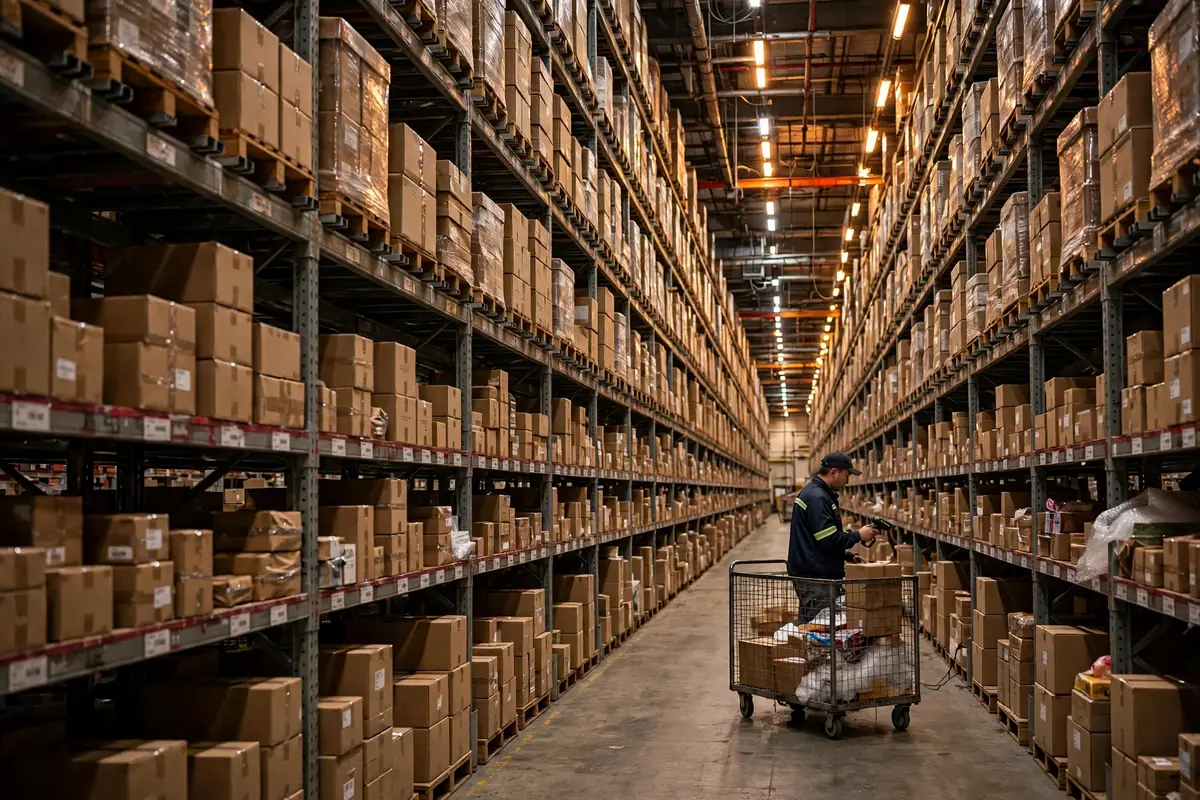
An overseas warehouse flips the logic: ship stock in bulk by sea to a warehouse in the United States or Europe, then deliver locally when orders come in. Published sources commonly put local warehouse delivery at 2 to 7 days. AliExpress Choice service carries a delivery promise, commonly about 5 to 15 business days in major markets, and stock in a local warehouse beats even that. The benefits are concrete: faster delivery lifts conversion, buyers order more readily, and returns come back to a local warehouse where they can be inspected and resold instead of written off.
The cost is equally concrete. Hypothetical example, small item first: a $12 item weighing 150 grams costs about $2.50 per order by Cainiao direct shipping. From an overseas warehouse the same order costs $0.60 in amortized sea freight, $0.30 in storage, $1.00 in handling, and $4.00 in local last-mile delivery, a total of $5.90. Direct shipping saves $3.40 per order. At 600 orders a month, that is $2,040 a month. For small light goods, an overseas warehouse is paying for speed at a loss on paper.
Now the heavy item, where the answer flips. Hypothetical example: a $45 item weighing 2 kilograms costs about $12.00 to ship cross-border by Cainiao direct. From an overseas warehouse it costs $2.50 in amortized inbound freight, $0.80 in storage, $1.50 in handling, and $6.50 in local delivery, a total of $11.30. The overseas warehouse is $0.70 cheaper per order and two to three weeks faster. The heavier the parcel, the faster cross-border parcel rates climb, and the bigger the advantage of bulk sea freight into an overseas warehouse. That is the dividing line: light small items go direct, heavy items go overseas.
How an AliExpress Seller Should Choose: Split by Product, Never One Rule
My approach is to split by product type instead of picking one route for everything. Proven sellers and heavy goods go overseas: designs with steady monthly sales that can fill a bulk sea shipment go into the overseas warehouse first, earning local delivery speed and the platform's traffic preference. Long-tail designs and small items stay on Cainiao direct shipping: designs that may or may not sell stay in the domestic warehouse and ship order by order, with no cash locked in stock.
Illustrative scenario: a home-storage seller in Yiwu picked 8 proven designs out of 120 and sent them to a warehouse in Spain, keeping the other 112 on Cainiao direct shipping. Three months later the review was clear. The 8 overseas designs converted noticeably better than the direct-shipped ones, and returns went back to the Spain warehouse, where refurbished units were resold and recovered part of the loss. The 112 long-tail designs had zero cash locked in inventory, and a slow design could be delisted the same day. After the split, both sides of the ledger looked better.
Two traps to flag in advance. First, slow-moving stock in an overseas warehouse costs more to ship back to China than it cost to send out, so the money is stuck abroad. Keep the first batch small, prove the sell-through, then restock.
Returns deserve their own line in the calculation, because this is where direct shipping loses hardest. With Cainiao direct shipping, a buyer return usually means refunding without getting the goods back, since return freight to China often costs more than the item itself. Money and goods both gone. With an overseas warehouse, returns come back locally, get inspected, get repackaged, and often sell again. Hypothetical example: on a $12 item with a 5% refund rate and 600 orders a month, that is 30 refunds. Under direct shipping those 30 payments are mostly a total loss. From an overseas warehouse, if even half the returned units resell, that recovers $180 a month. It is not a fortune, but for a small seller it covers the electricity bill. The higher the return rate in your category, the stronger the overseas case. For low-return standard items, direct shipping still wins. Second, platform rules move fast. AliExpress Choice launched on March 1, 2023, semi-managed on January 4, 2024, and overseas managed in February 2024, and pricing power, logistics responsibility, and after-sales duties differ under each model. Read the latest rules in Seller Center before choosing a model, and confirm fees and commissions against the official policy in force.
Small warehouses have their own way of surviving. We do not outspend big sellers on inventory. We out-calculate them. The AliExpress seller warehouse question comes down to one sentence: keep light items and long-tail designs on Cainiao direct shipping, send heavy goods and proven sellers to the overseas warehouse, and for everything in between, check whether the conversion lift covers the extra cost per order. Split your own catalog along that line and the numbers will answer for you.
By Xiao Ma, Small Warehouse Owner