We have a client — a small home-appliance exporter in Zhejiang, a couple hundred million RMB in annual revenue, eight years on their ERP. Late last year they called me in and got straight to the point: "Susan, be honest with us — do we actually need a standalone WMS?"
I said: don't rush to spend money. Answer my four questions first, and you'll have your own answer.
I've sold both sides — ERP suites and best-of-breed WMS — so let me tear down the polite fiction both camps maintain: for most SMEs, the warehouse module that comes with your ERP is enough until it starts hurting. And the hurt has recognizable symptoms. Two clients below: one wasted the money, one spent it well. See which one you are.
The One Who Wasted It: The ERP Module Was Plenty
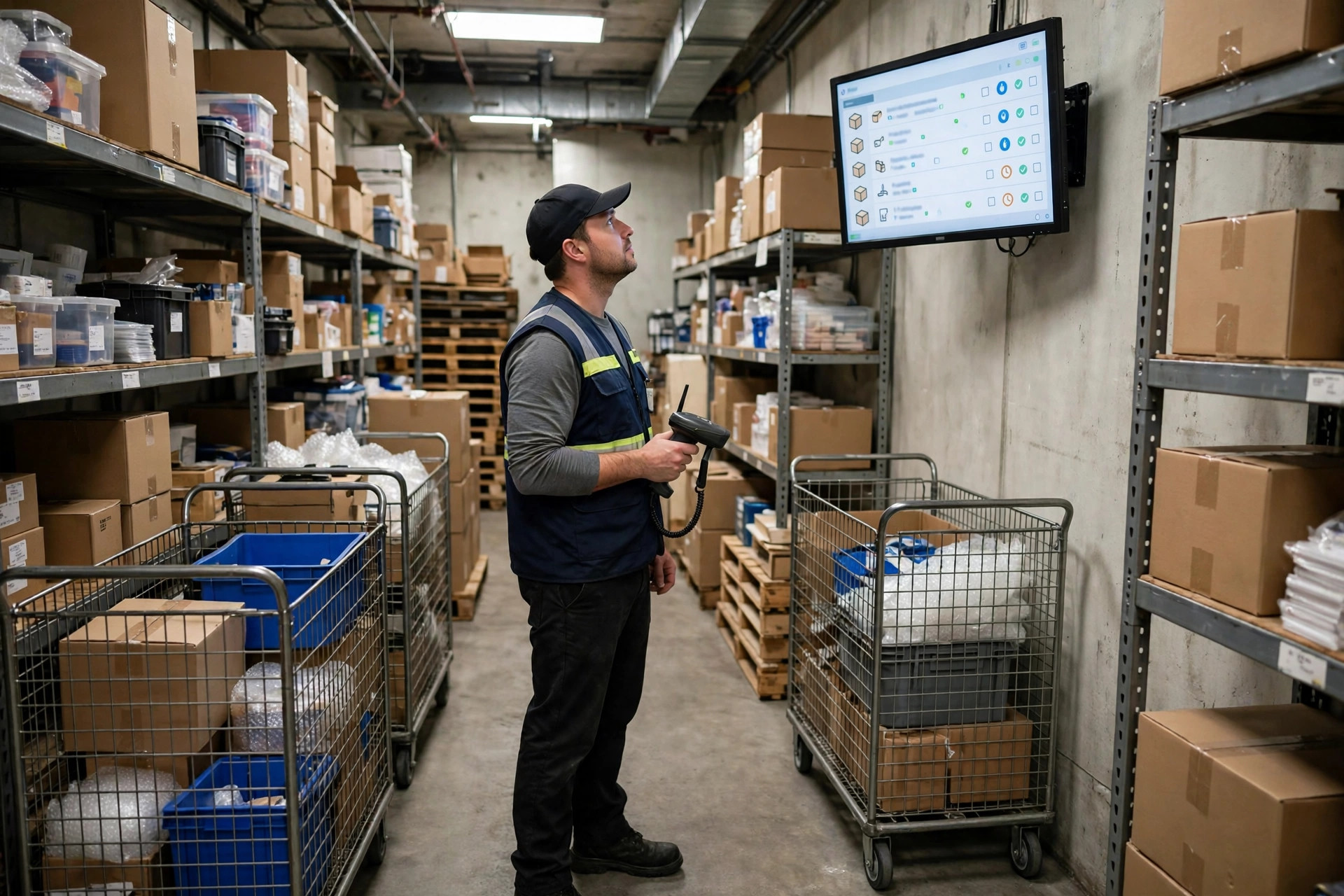
First, the wasted money. An auto-parts client: single warehouse, seven or eight hundred SKUs, three to four hundred orders a day, simple order profiles — basic discrete order picking gets everything out the door.
Two years ago a vendor's rep sweet-talked them — "at your scale you should be on a standalone WMS, or you won't keep up with your growth." They bought in, close to a million RMB out the door. Two years after go-live I went back for a visit and asked the warehouse manager how often they'd used wave picking. He scratched his head: "Never. Our orders don't need waves."
Classic case of buying software for the company you'll be in three years, not the company you are today. Their ERP's inventory plus barcode scanning was completely sufficient: goods come in, goods go out, the books reconcile. That million bought nothing but the comforting feeling of looking professional — plus annual maintenance fees on top. Software can sit idle; maintenance fees never take a discount.
A note to my buyer friends: when a salesperson says "it's time to upgrade," translate it as "I'm one deal short of my quarterly quota."
The One Who Spent It Well: Hit One of Four Lines
Now the money well spent. A beauty-supply-chain client: three warehouses, fulfilling for a dozen-plus brands, billing by the piece, by the order, by storage-day — each brand with its own rate card.
They started out muscling through on the ERP warehouse module, until month-end reconciliation became a ritual humiliation: system inventory never matched physical stock, off by a thousand units as a matter of routine; when returns spiked, which brand's goods went to which warehouse lived entirely in the warehouse supervisor's head. One customer complaint meant three days of detective work.
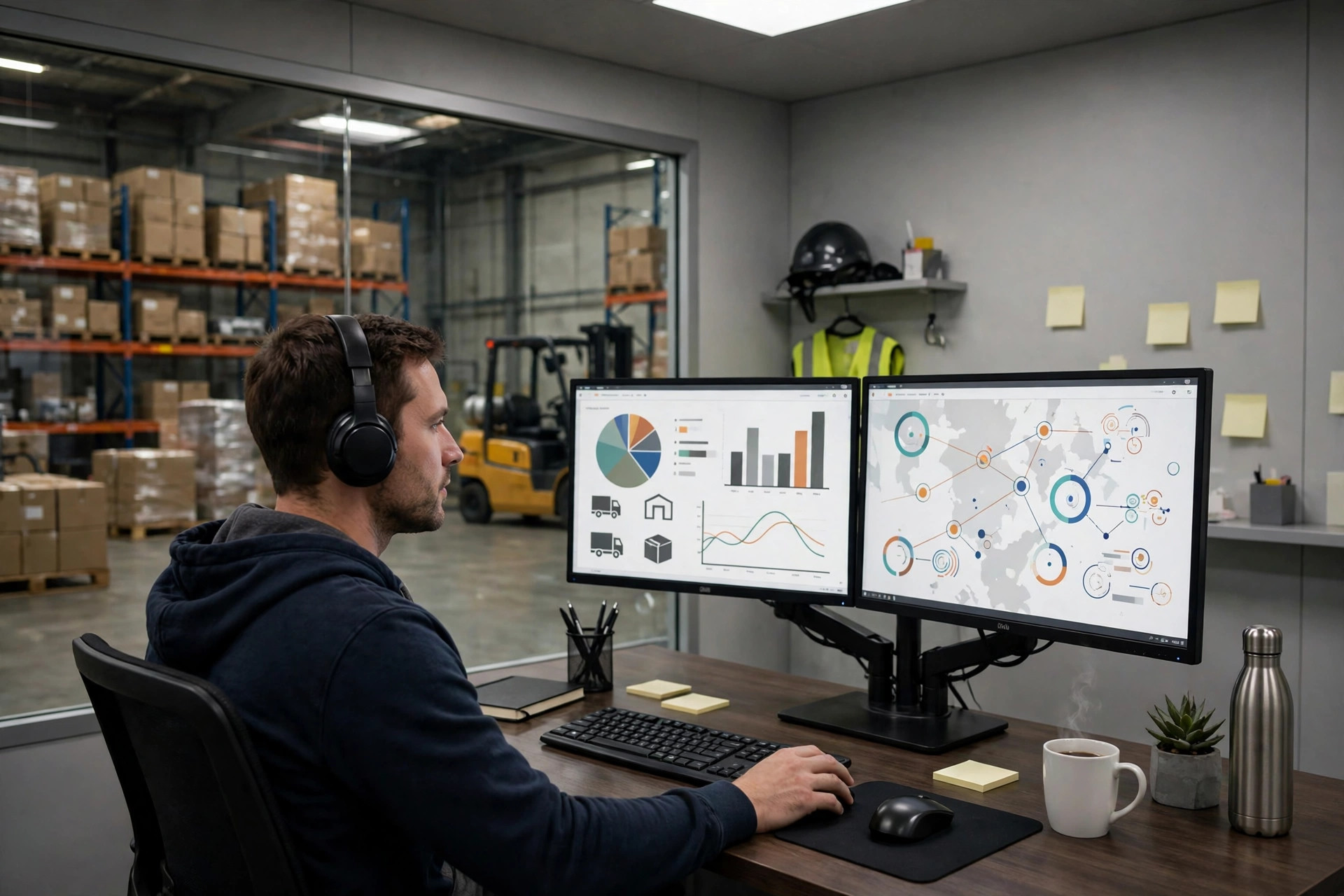
They went standalone WMS, and within three months the books were clean. Why? Because the ERP warehouse module simply wasn't born with a multi-client billing organ. Ask it to compute "how many units did this brand store this month, how many orders shipped" — it can't. Not because it's bad software; the function was never built.
Where the ERP Warehouse Module Hits Its Ceiling
Speaking as someone on the vendor side, let me say something that'll annoy my peers: when most ERP vendors say "we have a WMS module too," the plain-English translation is — it does inventory, inbound and outbound can scan barcodes, end of story.
The ceiling is visible to the naked eye:
First, no strategy. Putaway runs on tribal knowledge, picking runs on shoe leather. Waves, put walls, pick-and-sort — don't hold your breath. ERP thinks in ledgers; WMS thinks in orchestration. Different DNA. Ask a bookkeeping system to direct traffic and it'll just stand at the intersection staring.
Second, multi-warehouse is multi-warehouse in name only. Many ERPs implement multiple warehouses as stitched-together ledgers; transfers and global inventory visibility feel bolted on. You wanted one network; they gave you several sets of books.
Third, no billing engine. See the beauty client above — that's exactly where they died. 3PL, multi-client — the moment you need to charge for storage and handling, ERP surrenders. It's not that it won't calculate; it doesn't even have the concept of a rate card.
Fourth, traceability is half-baked. Batch, serial, expiry — ERP has the fields, but at pharma/food audit intensity, pull the full chain and it falls apart. It only looks fine because nobody's stress-tested it.
The Four Lines for Standalone WMS
So where's the line? My four questions for clients are four lines. Hit one, seriously evaluate standalone WMS; hit two or more, stop hesitating:
- Do your orders need "moves"? A few hundred orders a day, a few lines each — discrete picking is fine. When volume climbs and cut-off times tighten and you need waves and put walls, ERP can't play. The signal is obvious: when pickers start complaining their legs are falling off, your playbook is too thin.
- Are your warehouses "plural"? Two-plus sites needing coordination, transfers, one global inventory view — ERP's multi-warehouse will make you question your life choices. Before opening that second warehouse, ask whether your system can keep up.
- Do your goods need "invoicing"? Managing someone else's inventory and charging by the piece or order — without a billing engine it's a disaster. Your own goods, whatever; someone else's goods, every transaction must be accounted for. That's business.
- Do your goods need "ancestry"? Batch, serial, expiry, with compliance audits pulling the full chain — half-baked traceability won't pass. Pharma, food, auto parts (OEM recalls) — same logic.
Hit none of the four? Use your ERP module well, and spend the savings on a solid warehouse supervisor. Worth more than software.
| Dimension | ERP Warehouse Module | Standalone WMS | | First-year investment | Low, license add-on | High, a project of its own | | Implementation timeline | Short, weeks to a few months | Long, half a year and up | | Picking strategy | Mostly discrete order picking | Waves / put walls / pick-and-sort | | Multi-site | Weak, stitched-ledger feel | Strong, global inventory | | Warehousing billing | None | Multi-client billing engine | | Compliance traceability | Half-baked | Full-chain batch/serial |
Vendor Insider Stuff: What's Not on the Quote
Finally, some things only the vendor side knows. Buyers, take notes:
First, the license is the tip of the iceberg. The ERP vendor quotes you a "discounted warehouse module license" and you think you got a deal? Implementation services are the real money — billed by the man-day, routinely costing more than the license itself. Before signing, ask: how many man-days total, and what happens when we exceed them? That one question saves the most wasted money.
Second, the cost of "free and easy." ERP vendors love saying "you already own the ERP, the warehouse module just comes along." Sure — but the day you want to move to a standalone WMS, exporting historical data and building integrations each carry a price tag. Easy to enter, expensive to leave. Think about the exit before you sign the entrance.
Third, the question vendors dread. Next time an ERP rep tells you "our WMS module is very mature," ask one thing: "How many pure-warehousing customers signed for this module last year?" Watch the sudden silence. The vast majority of ERP warehouse modules are sold as ride-alongs with the ERP deal; customers who bought it for the warehousing itself are few and far between. Whether anyone pays for a feature standalone is the only real test of its maturity.
Next Time You Talk Contract, Ask These Three
To close: that Zhejiang client answered my four questions — missed on three, half-hit on "plural warehouses" since they're considering a second site. My advice: run the ERP well for now; when the second warehouse is live and the books genuinely stop reconciling, then we talk standalone WMS. Buy software for today's order volume, not for the three-year roadmap slide.
Next time a salesperson pitches you WMS, ask these three:
One — how many pure-warehousing customers signed for this module last year? Two — how many implementation man-days total, and how are overruns billed? Three — if we move to a standalone WMS in three years, how does our historical data come out, and what does that cost?
After those three, you'll know in one listen whether they understand warehousing or just want to sell licenses.
By Susan, 3PL Sales Director