Export equipment gets rejected over nameplates and manuals far more often than over the machine itself.
The equipment runs beautifully in factory testing, crosses the ocean, and arrives at the customer's warehouse — where the inspector walks around it with a checklist. The nameplate is missing the year of manufacture. The manual comes in English only, with no version in the local language. The certification mark is the wrong size. The whole shipment is refused entry. Rework, replacement parts, re-certification — tens of thousands of dollars gone. Nothing wrong with the equipment. All of it paperwork.
A few years back I met a conveyor manufacturer in Suzhou shipping to Europe for the first time. The goods landed in Hamburg, and the customer held them at acceptance: several required nameplate items missing, the manual's safety chapter not meeting local expectations. The shipment sat in a port warehouse for three weeks while new nameplates were made back home and the manual was revised, then flown over and swapped in. Storage fees, air freight, the customer's entire installation schedule blown — the margin on that order basically evaporated. He told me he used to think certification meant getting a certificate. Turns out the certificate is just the ticket; the nameplate and manual are the ID that gets checked every single day.
What has to be on the nameplate
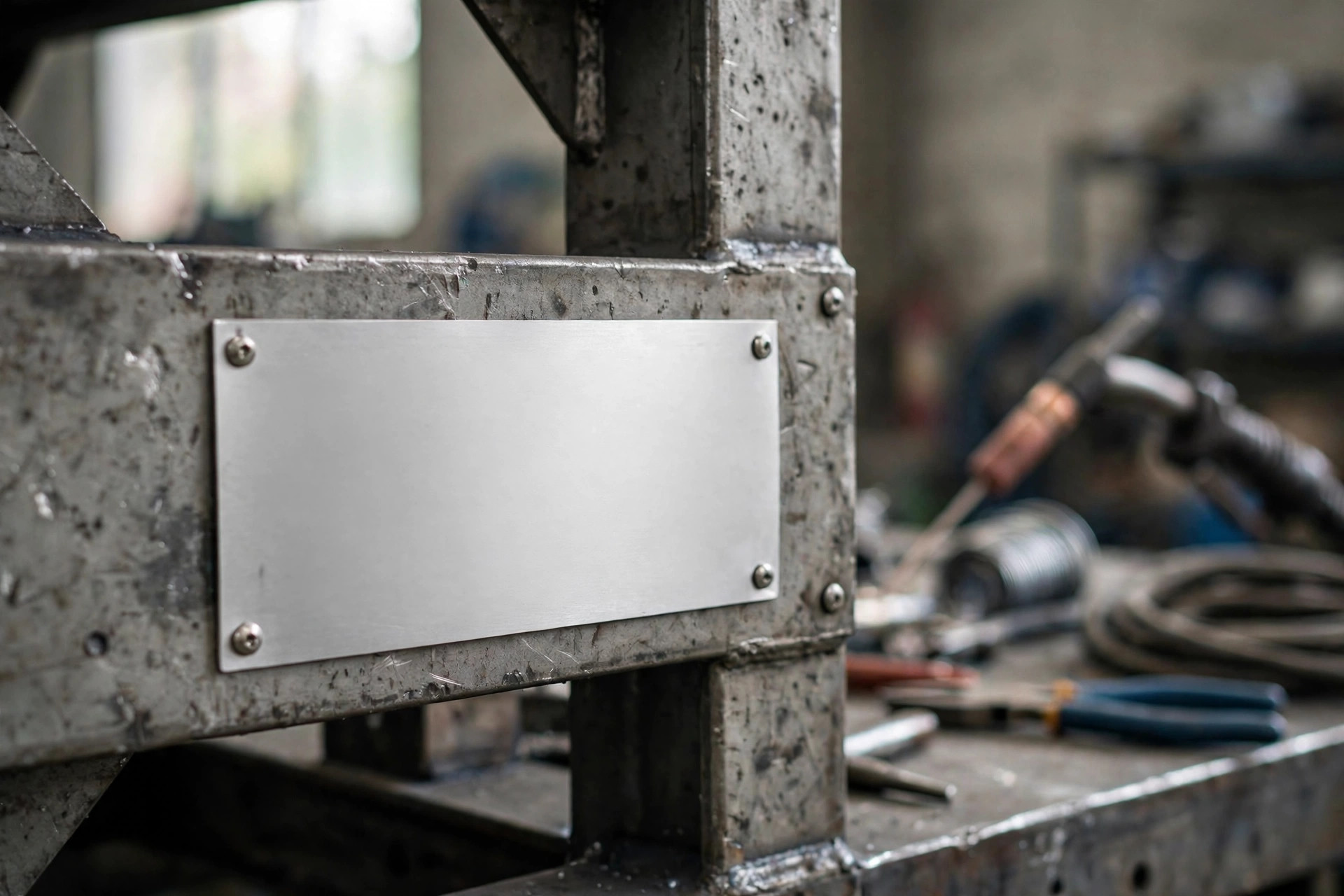
Europe first. The EU Machinery Directive (2006/42/EC) spells out nameplate content in its annex: manufacturer name and address, machine designation, CE marking, series or type, serial number, year of construction — every one of them. Note that from January 20, 2027, the new Machinery Regulation (EU) 2023/1230 fully replaces the directive, and the requirements only get stricter. Build your nameplates with headroom for the upgrade.
The United States has no single CE-style gateway; it works through NRTL certification — UL being the familiar name. The nameplate has to match the certification file: manufacturer name, model number, electrical ratings (voltage, current, power), identical to what was declared at testing. For control panels, UL 508A is the common route, and the nameplate is the first thing a field inspector checks against the file. Mismatch the file and you're looking at rework at best, a suspended listing at worst.
The details that trip people up most, one by one.
Serial numbers. Too many factories hand-write serial numbers before shipment — or worse, share one "serial number" across a whole model run. Certification and customs want traceable, unique serials: one machine, one number. Handwritten or duplicated, an inspector spots it instantly.
Year of manufacture. Plenty of domestic nameplates skip the year, assuming the model code covers it. Europe explicitly requires it. Missing it is a straight nonconformity.
The mark itself. The CE mark has defined proportions and dimensions — a freehand approximation doesn't count. The UL mark has to come through authorized channels; a faked or altered mark, once discovered, puts the entire shipment under a microscope.
Material and attachment. The nameplate has to be durable — riveted or permanently affixed, not a paper sticker that peels off. Equipment for outdoor or humid environments needs corrosion-resistant plate stock. A plate that fell off or wore illegible fails just the same.
One more that people overlook: the ratings on the plate have to match the actual build. The same model ships in high and low configurations with different motor power, but the plate was printed as one version. When acceptance testing doesn't match, the credibility of the whole batch takes the hit.
One more that's easy to miss: the EU wants a contactable economic operator inside the Union — an importer or authorized representative — traceable from the machine's documentation. Many Chinese factories export directly with only a domestic address on the plate. Under the new regulation, that chain has to be complete; without it, the machine is effectively "ownerless" on the EU market, and both customs and market surveillance will come asking questions. Sorting this out before shipment is far cheaper than fixing it in Hamburg.
Why manuals keep getting rejected
Manual rejections outnumber nameplate rejections, and the reasons are more varied. The usual suspects — check which ones apply to you.
Wrong language. The EU requires instructions in the official language or languages of the member state where the machine is placed on the market. Shipping to Germany with an English-only manual doesn't cut it — you need German. And the translation has to be identified as a "translation of the original instructions," with the original kept on file. Plenty of factories try to coast on one English manual worldwide; in Europe it gets stopped country by country.
Safety warnings missing or perfunctory. The manual has to spell out residual risks: crush points, electrical hazards, how the emergency stop works. Warning symbols must follow the international ISO 7010 set — home-drawn icons don't count. This chapter gets read at every audit and acceptance. Two lines of "be careful" won't survive it.
Incomplete installation and maintenance information. Foundation requirements, wiring diagrams, maintenance intervals, wear-parts lists — all of it belongs in the manual. The install crew on site works from this document; a missing wiring diagram means the job stops while someone waits for files from back home, and a day of idle riggers and crane rental adds up fast.
Version chaos. The design changed to V2; the manual still describes V1. The model on the nameplate doesn't match the model in the manual. Once an inspector finds one mismatch, they start doubting every document in the package — and the nameplate gets extra scrutiny too.
The fix is honestly simple, three things before shipment: check the nameplate line by line against the certifier's latest requirements; prepare the manual in the target market's language and have someone who knows the trade review the safety, installation, and maintenance chapters; align model and serial-number conventions between plate and manual. The hours this takes are nothing next to a shipment held at port.
One question to take home: are your factory's nameplates and manuals built to "get shipped," or built to "pass acceptance"? The gap between those two standards might be exactly your next order's profit.