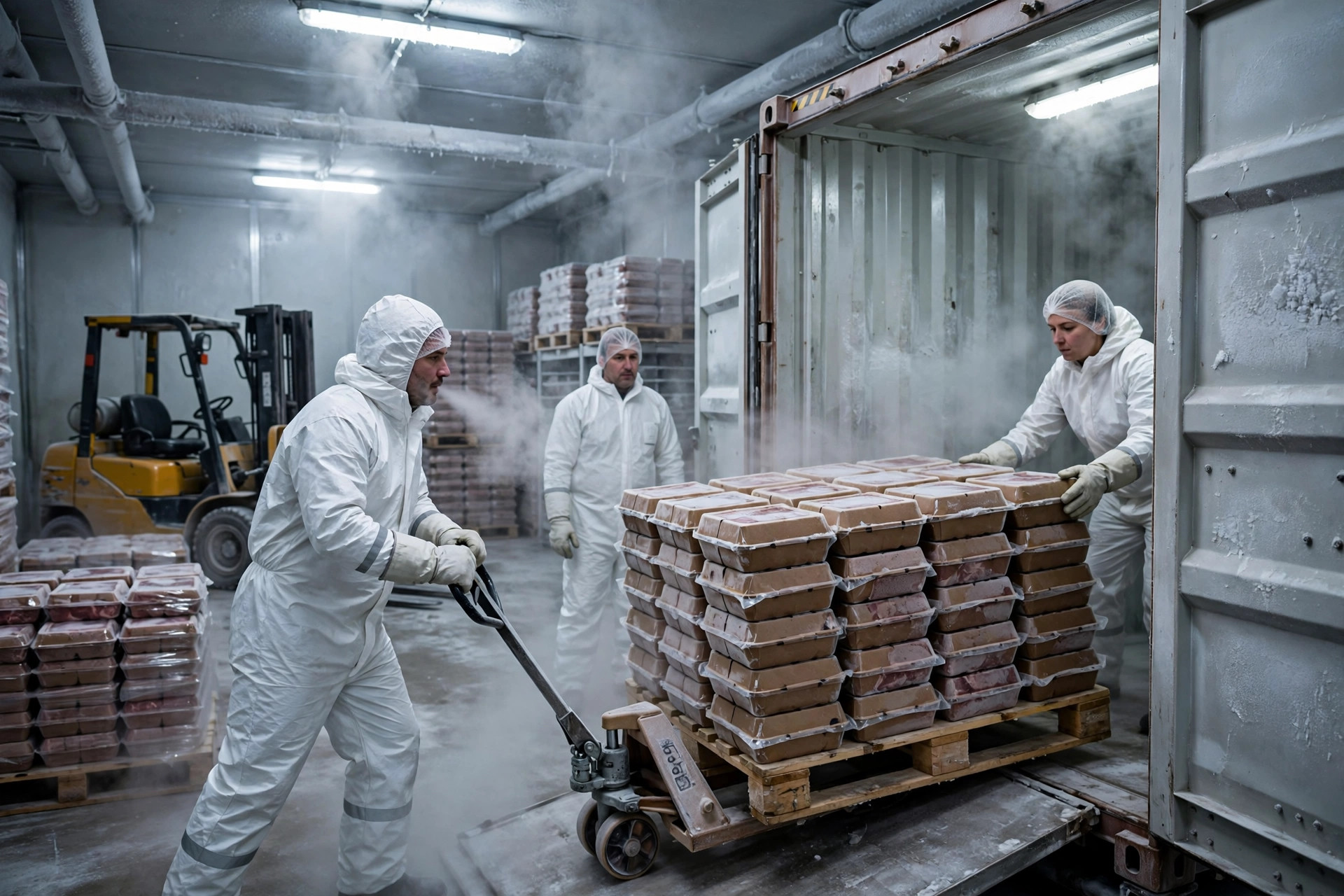
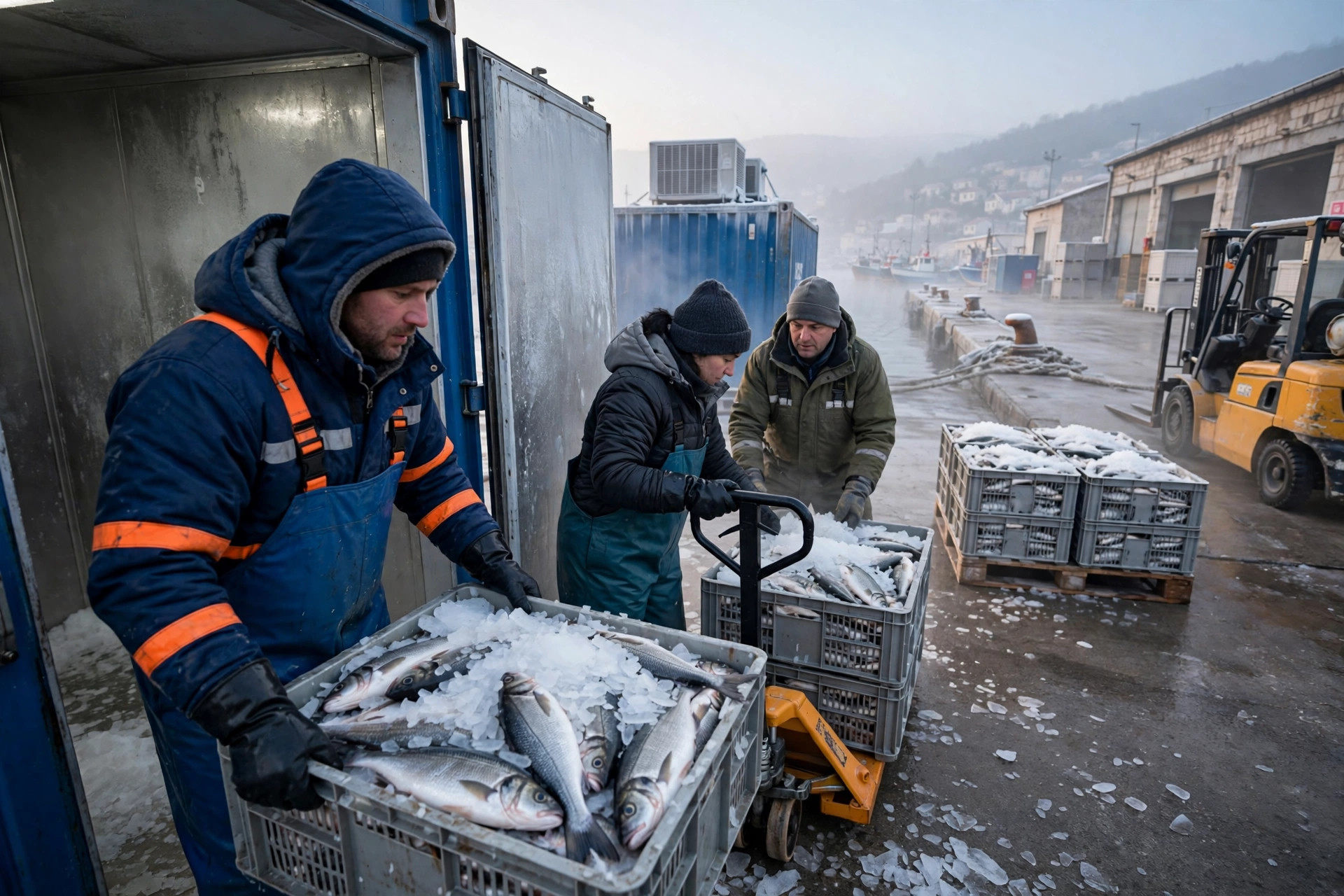
Let me start with the principle, because everything else follows from it. Think of a strawberry as a living thing that keeps sweating and softening after it is picked. The moment it leaves the plant, field heat is trapped inside the fruit, and every delay costs quality. So the Egypt strawberry export cold chain is not really about how big your cold store is. It is about how fast you can pull that field heat out, and whether you can keep the chain unbroken all the way to the airplane.
Egypt Strawberry Export Cold Chain Principle: Field Heat First, Everything Else Second
I have seen this scene play out in the Nile Delta. Picking crews start at first light, fill crates, and stack them at the edge of the field while they wait for a truck. Once the sun climbs, the top layer warms first, the bottom layer gets squeezed, and airflow is poor throughout the stack. By the time the truck finally arrives, the fruit is no longer in the condition it was in when it was picked. You can understand it like this: it is like wrapping a runner who has just finished a race in a thick blanket instead of letting them cool down. They only get hotter. If pre-cooling comes late, even a perfectly run cold store can only protect a starting point that has already lost value.
So the dividing line is clear: post-harvest handling is a race against time, not a contest over who owns the most expensive equipment. Crates must not sit long at the field edge. Shade, ventilation, and fast transfer matter just as much before pre-cooling as the pre-cooling itself. Many Egypt strawberry export cold chain exporters pour all their money into the cold store while ignoring the hottest stretch of all, the field edge. I will be blunt about that kind of false priority: the finest cold store in the world cannot rescue strawberries that have already heated through.
Egypt Strawberry Export Cold Chain Pre-cooling: Vacuum Versus Forced-Air Cooling
Now for equipment selection, and here the analogy helps again. Choosing a cooling method is like choosing how to bring down a fever. Different methods suit different cases. Vacuum cooling drops temperature fast, which suits thin-skinned fruit that bruises easily and has to move quickly. Forced-air cooling is gentler, with a lower equipment and operating threshold, which suits large volumes running on a steady rhythm. Pick the wrong side of that line and you pay for it. I once saw a packing house with modest, varied batches install a large system whose rhythm did not match its work. The crew waited for freight, the freight waited for the machine, and everyone ended up working around the equipment instead of the other way around.
The decision framework is just three questions. First, how large is a single batch: many small batches, or a few large ones? Second, how tight is your flight schedule, because the airplane will not wait while your cooling cycle catches up? Third, can your team actually maintain this system day after day? Knowing how to run a machine once and keeping it running well for a whole season are two different things. Put the three answers together and the line draws itself. Time-critical, small-batch, high-value fruit leans toward vacuum cooling. Large volume, steady rhythm, and cost sensitivity lean toward forced-air cooling.
Packing and palletizing carry their own trap. Seal a carton too tightly and cold air cannot get in, so the fruit in the middle stays warm. Stack pallets without proper air channels and the cold store develops warm and cold spots side by side. Packing is not decoration. Its job is to let cold air reach every carton. If it fails at that job, a beautiful cooling readout is only locally true.
In the Egypt strawberry export cold chain, maintenance is where good systems quietly fail. I have seen plants where the equipment was fine but upkeep lagged. Dust built up on fan filters and airflow faded slowly, with nobody noticing. Door seals aged and leaked cold air, so the store burned power while temperature drifted. A temperature probe sat in the easiest spot to pass, showing a lovely number while the middle of the stack told a different story. Think of the display number as a spot check, not a full health exam. The reliable approach is to test in different positions on a schedule, especially the middle of the stack, near the door, and at the end of the air path. Fix whichever point keeps drifting first, and do not comfort yourself with an average.
Egypt Strawberry Export Cold Chain to the Apron: Breaks Happen Where Nobody Is Watching
The third scene is the export leg. The road from cold store to apron is not long, yet breaks love to happen there. A truck door stands open while loading, the sun beats down, and freight waits on the dock for dispatch. At the airport, handover queues add another stretch outside controlled temperature. No single stretch looks long on its own, but added together they are enough to drop a grade. It is like a relay race: run the first legs brilliantly, then drop the baton once, and the earlier running is wasted.
My advice is direct: manage this stretch as part of the cold chain, not as a transport afterthought. Pre-cool the truck before loading, keep door-open time short, set a loading order at the dock, and move first-arrived freight first instead of letting it queue in the sun. Receiving inspection deserves the same discipline. Do not judge only by whether the outer carton looks clean. Check core temperature on samples, look for soft fruit and moisture damage, and treat those as the real quality signals. Write the acceptance standard into the buyer contract in advance, following the buyer's contract and the latest official requirements, so there is no argument after arrival.
One more leak is easy to miss: mixing batches. Some plants load freight with different pre-cooling completion times onto one truck to fill it up. The earliest-cooled batch waits longest, the latest batch is not fully cooled, and the truck starts out uneven. Arrival quality then varies for no mysterious reason at all. My rule is to load by pre-cooling completion time, keep one truck as close to one time window as possible, and label batch and time clearly. Then a problem can be traced to a batch and a step. A cold chain without batch records can only guess when something goes wrong, and guessing does not settle a quality dispute.
So does the investment pay? Do not judge it by equipment cost alone. Judge it by one number: the share of arrivals that still sell at export grade. When that share rises, the money spent on pre-cooling and an unbroken chain was well spent. When it does not rise, even the most expensive equipment is just decoration.
Is the money worth it? Look at that one number.
By Da Liu, Automation Engineer