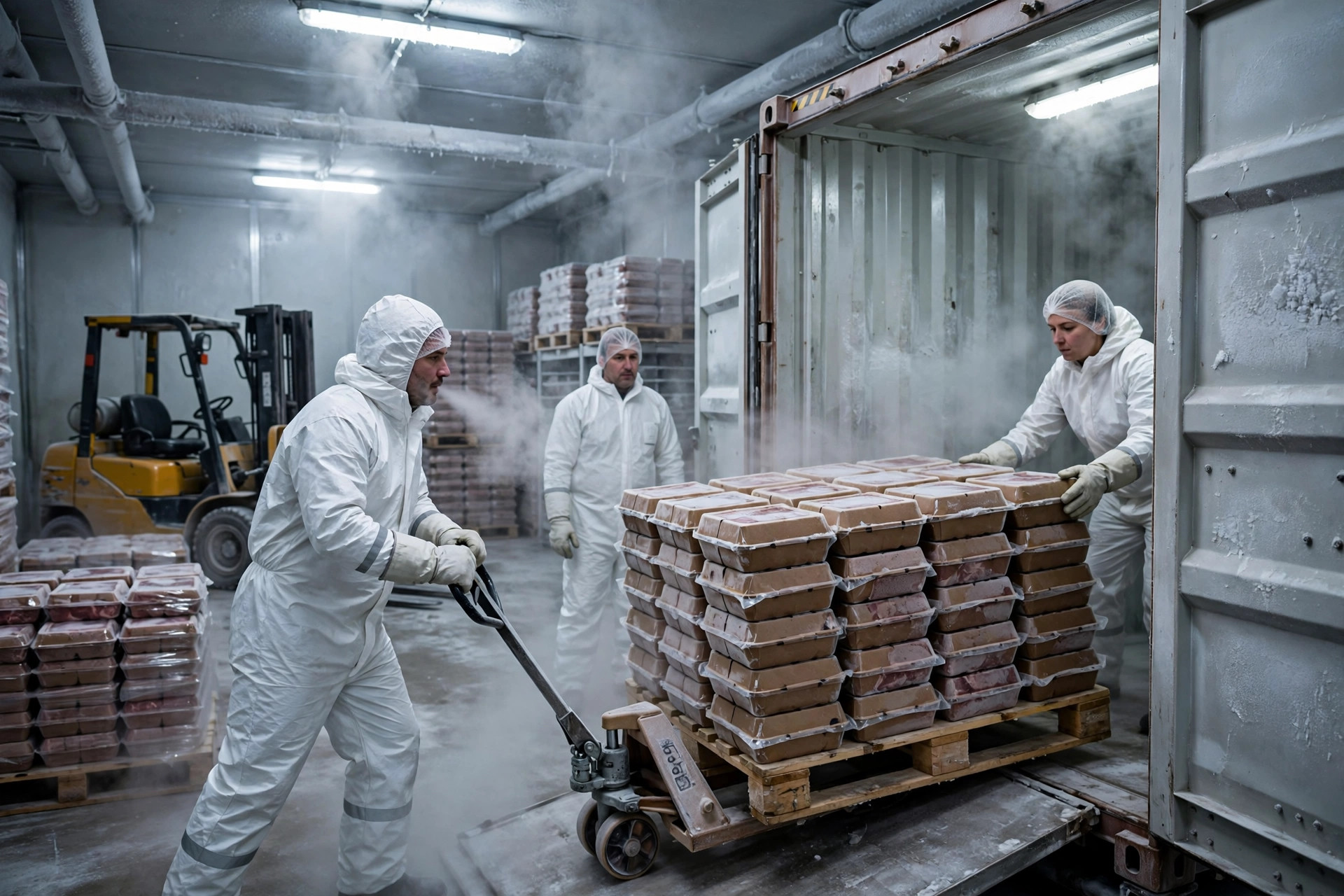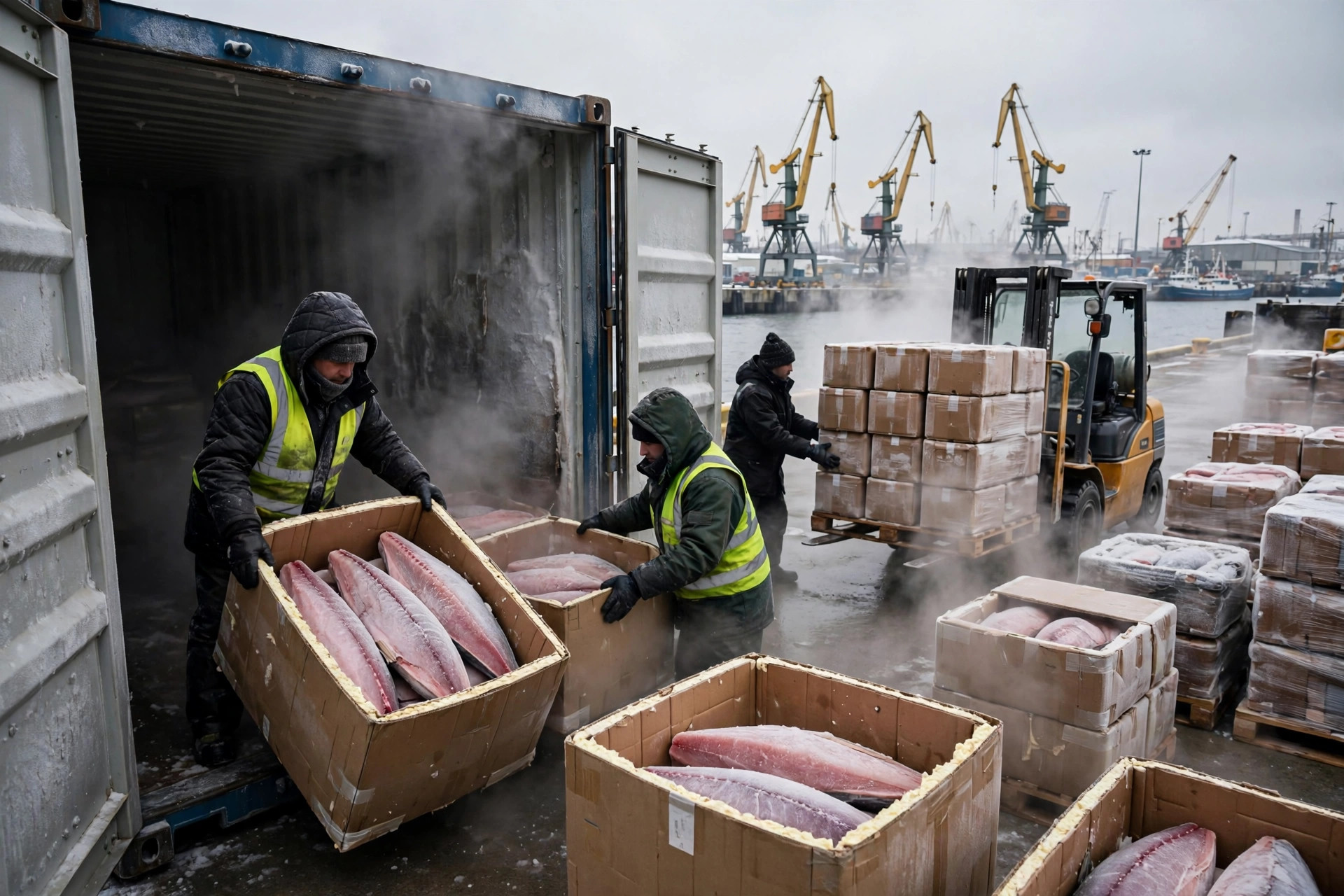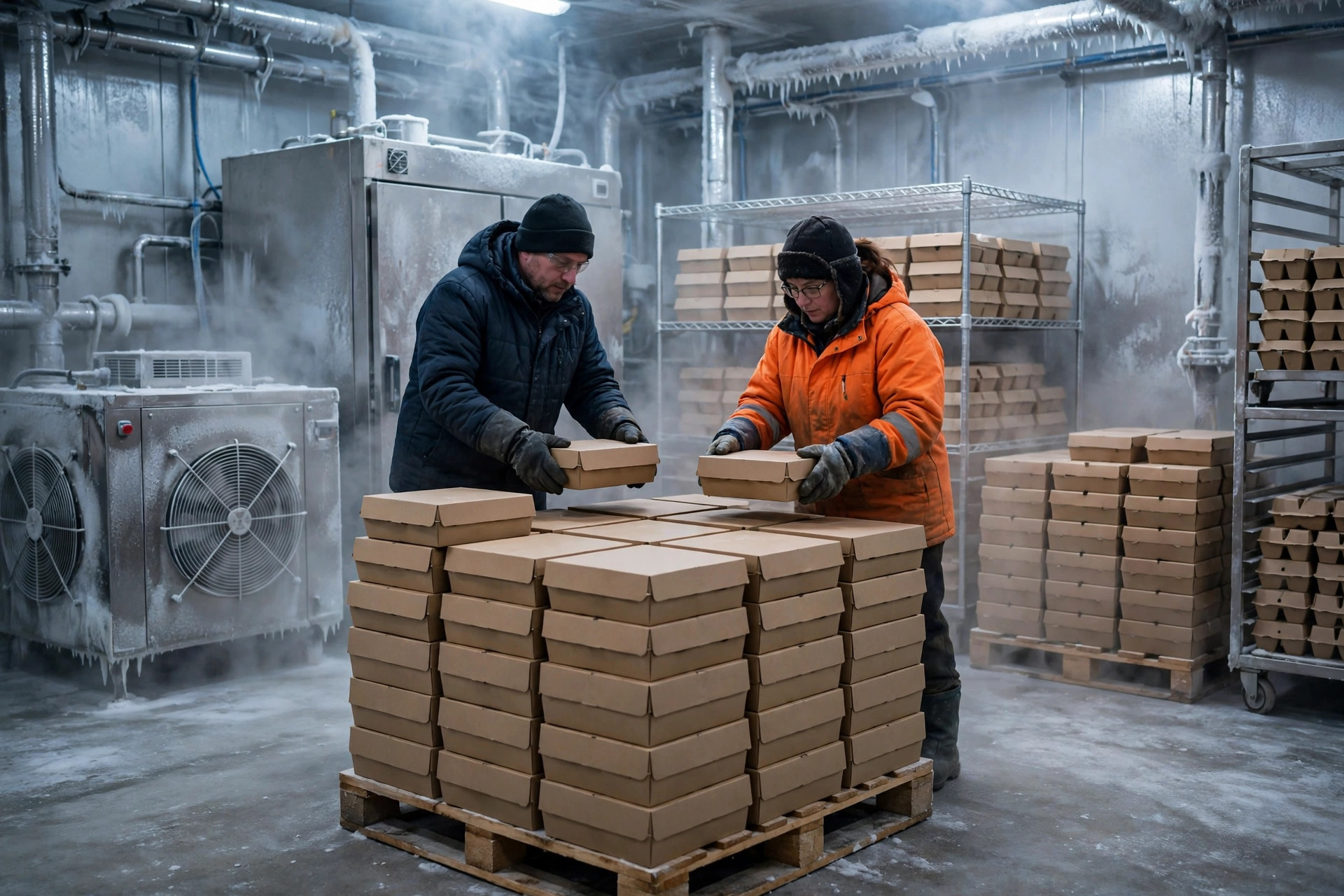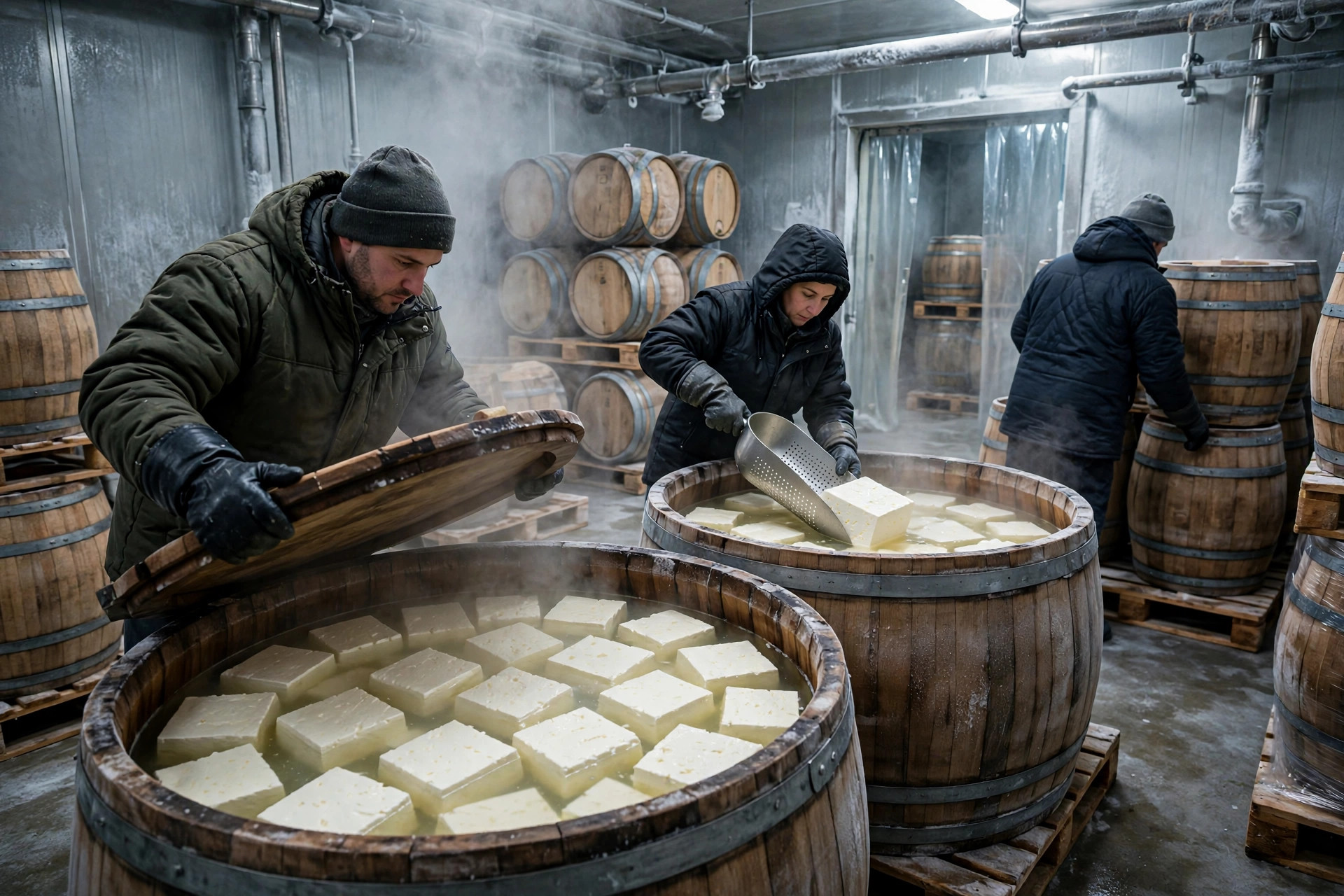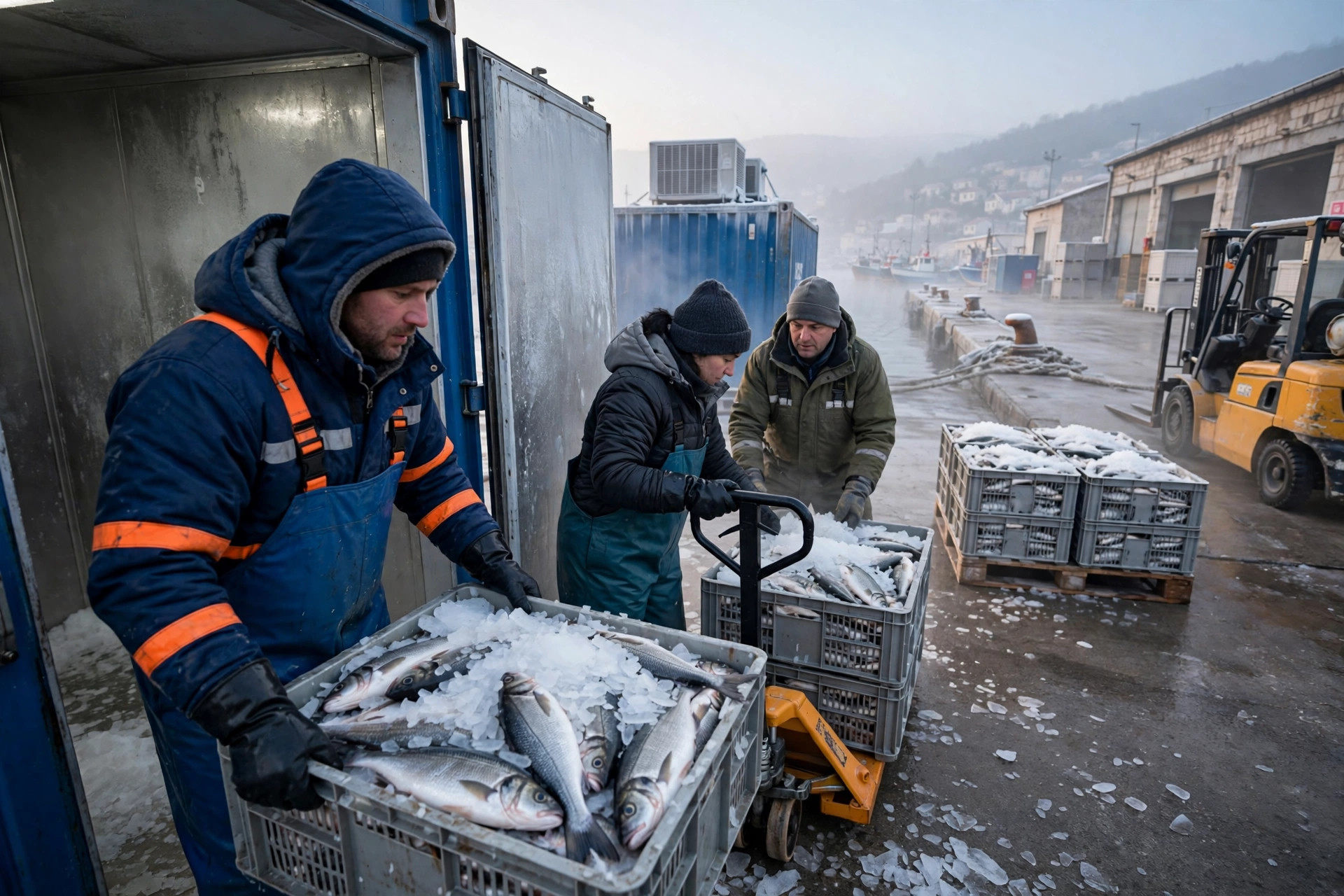
At dawn on a July morning in Split, a reefer truck opened its doors at the dock and workers started loading crates of sea bass packed in flake ice. The fish had come out of the Adriatic only hours earlier and still looked fine, but half the ice in the crates had already melted and water was pooling at the bottom. The driver glanced at the temperature display and frowned: the truck had not finished pre-cooling before the fish went in. That is the quiet way a croatia seafood export cold chain warehouse fails. Nothing dramatic happens. No alarm goes off. The buyer later found a few crates with soft flesh and a shorter shelf life than the contract promised, and nobody could say which step was to blame, because every step had looked "about right."
Think of it like a relay race where every runner is half a second slow. You do not lose half a second; you lose the race. From the moment seafood leaves the water, quality only goes one way — down. A cold chain cannot improve fish. It can only slow the decline. Pre-cooling, storage, and container loading each take their cut, and if any one of them drags, the money saved earlier gets paid back later, with customer trust on top.
The croatia seafood export cold chain warehouse starts at the dock, not the warehouse
Most exporters obsess over the cold store's refrigeration plant and ignore the first two hours after landing. The boat ties up, the catch is unloaded, sorted, and boxed, and all the while the fish often sits in the open while the sun does its work. Box temperatures climb faster than most people expect. The steadier practice is simple: get the fish into pre-cooling as soon as it lands — iced water first where that is practical — and only then move it into storage. If pre-cooling has to wait, at least keep the fish iced, shaded, and handled as few times as possible. Pre-cooling is not just "making the fish cold." It sets the starting temperature for everything that follows. Start warm, and the cold store spends the whole day chasing a target that has already run away.
I watched a small exporter on the Dalmatian coast learn this the hard way. In peak season they shipped dozens of crates of sea bass and sea bream a day, and their cold store was a few minutes' walk from the quay. But their routine was sort first, weigh second, label third, and only then move the fish into the cold room — which meant the catch spent well over an hour in a room-temperature work area. The fix cost them no new equipment at all: they moved the sorting benches inside the pre-cooling area, so weighing and labelling happened in the cold, and the time from water to cold room fell to under half an hour. Complaints about soft fish dropped sharply in the following weeks. You can think of the first step of a cold chain not as refrigeration, but as a race against the clock.
Cold storage is not about colder, it is about steadier
Ask about a cold store and most people want to know how low the temperature goes. That is the wrong question. Chilled seafood is generally held near the 0–4°C range in everyday operating practice — that is a working range, not a regulation I am quoting — and what matters most is not hitting the bottom of it, but staying steady inside it. A temperature that swings up and down by several degrees does more damage than a slightly higher temperature held constant. Doors opening constantly, inbound and outbound traffic sharing the same hours, and warm fresh catch pushed straight into the finished-goods room will all turn a flat temperature line into a roller coaster.
When I judge a cold store, I do not start with the brand on the refrigeration unit. I look at three things: whether door openings are actually controlled, whether inbound and outbound movements are staggered rather than colliding, and whether the temperature log has a reading every half hour instead of two entries a day, morning and evening. A temperature log looks like paperwork until the day something goes wrong, and then it is the only evidence you have. When a buyer asks what temperature a shipment actually sat at, a smooth, continuous curve answers the question; a confident explanation does not.
Then there is mixing. Seafood stored next to strong-smelling goods, or different batches piled into the same zone, creates two problems at once: odour transfer, and traceability. Once batches are mixed, a problem with one lot means you cannot recall just that lot. Zoning a cold store looks like a management detail. In practice it is the line between recalling a handful of crates and writing off a whole container.
Loading the reefer is where the whole chain gets settled
Container loading is where cold chains most often break, and where they are most often underestimated. Was the reefer pre-cooled before loading? How long did the doors stay open? Did the crew load crate by crate in one continuous push, or stand around with the doors open waiting for everyone to be ready? These details decide the real temperature of the fish as it enters the container. A reefer unit is built to hold a temperature, not to chill warm fish down. Load warm product and the unit runs at full stretch for the whole journey, which also raises the odds of a breakdown en route.
An exporter near Rijeka paid for exactly this mistake. The fish had been perfect in the cold store, but on loading day two shipments arrived at once, the container doors stood open for close to an hour, and the load went in several degrees warmer than planned. Nothing failed on the road, but at destination the buyer's inspection rated the shelf life shorter than a normal batch, and the next order was cut. The fix was procedural, not mechanical: loading by appointment, reefers pre-cooled before the crew arrived, fixed roles on the loading team, and doors opened only for one continuous run. Loading time fell to roughly twenty minutes. Same people, same container, different discipline.
| Stage | The easy way | The steady way | What failure costs |
|---|---|---|---|
| Pre-cooling | Sort first, cool later | Cool on landing, sort in the cold | A warm starting point the whole chain cannot recover |
| Storage | Temperature roughly right | Continuous logging, staggered movements, batch zoning | No evidence, no traceability, a whole batch implicated |
| Loading | Doors open while everyone gathers | Pre-cooled reefer, fixed crew, one continuous run | Shorter shelf life, smaller next order |
Run your own operation against that table, honestly. If any row is still in the left-hand column, the reliability of the whole chain is set by that weakest row, not by your best equipment.
A daily check that takes minutes catches most of the low-level failures: glance at the cold store temperature curve for gaps before work starts, check reefer door seals for wear, and confirm the container is already pre-cooled before loading begins rather than "cooling down." Equipment failure is not the scary part. Equipment failure that nobody notices for a full day is. Market-specific export and compliance requirements change over time, so check the latest official policy for your destination rather than relying on last year's paperwork.
Running a croatia seafood export cold chain warehouse on one number
So is it worth upgrading pre-cooling equipment or switching to continuous automatic temperature logging? Here is my blunt answer: do not price the equipment, price the orders you lose to "we cannot quite explain it." One shelf-life dispute, one cut order, one rejected batch usually costs more than the process fix that would have prevented it. Cold chain spending is not an equipment budget. It is a trust budget.
If you change only one thing, make it this: continuous temperature records from water to container, and one person who actually looks at the curve every day. The record itself creates no value. The person reading it does. On the day a buyer asks for proof, being able to produce it immediately is what closes the loop. A cold chain is not won by whoever owns the most expensive plant. It is won by whoever runs the process that stands up to inspection.
By Da Liu, Automation Engineer