There is a small, telling number at the heart of Egypt's strawberry trade, and it is the number this Egypt strawberry export cold chain warehouse guide keeps coming back to. In 2024, Egypt exported about 353,000 tonnes of frozen strawberries, worth about 383 million dollars, about 27% of global trade. It is the world's largest frozen strawberry exporter. And yet that is only half the story. In 2025, Egypt's strawberry export value reached about 697 million dollars, up 82% in a single year. The question is what kind of position that is: a stable lead built on structure, or a surge driven by a window that can close?
Start with the buyer. Germany is Egypt's most important market. In the first eleven months of 2025, Germany imported 81,900 tonnes of strawberries from Egypt, up 61% year on year, accounting for about 70% of Germany's strawberry imports. Since 2019, Egypt has been Germany's largest supplier. When one customer takes seven in every ten tonnes, a supplier's fate is tied to that buyer's taste, its retail cycles and its rules. That is not a flaw in itself, but it is a fact that shapes every warehouse decision behind the trade.
Egypt Strawberry Export Cold Chain: Fresh and Frozen Are Two Different Warehouses
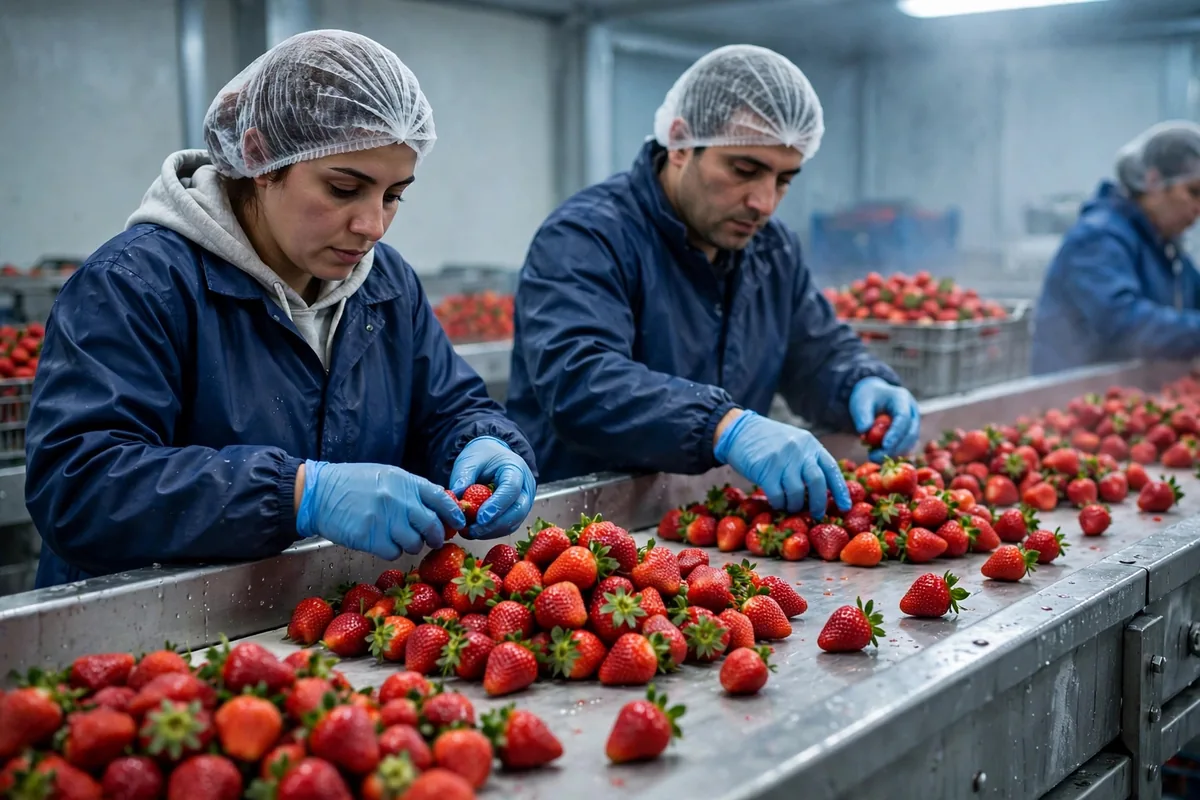
The first point to get right is that Egypt's strawberry business is two supply chains wearing one name. Fresh fruit is a seasonal race. The fresh season runs from December to April, with the peak in January to March, and the main variety is Festival. Fresh berries must stay cool and move fast, and every handling step shortens shelf life. Frozen fruit, mostly individually quick frozen, is a different business entirely: the fruit is frozen, graded and packed, and then it waits in a cold store until an order calls it out. One chain is built for speed, the other is built for storage.
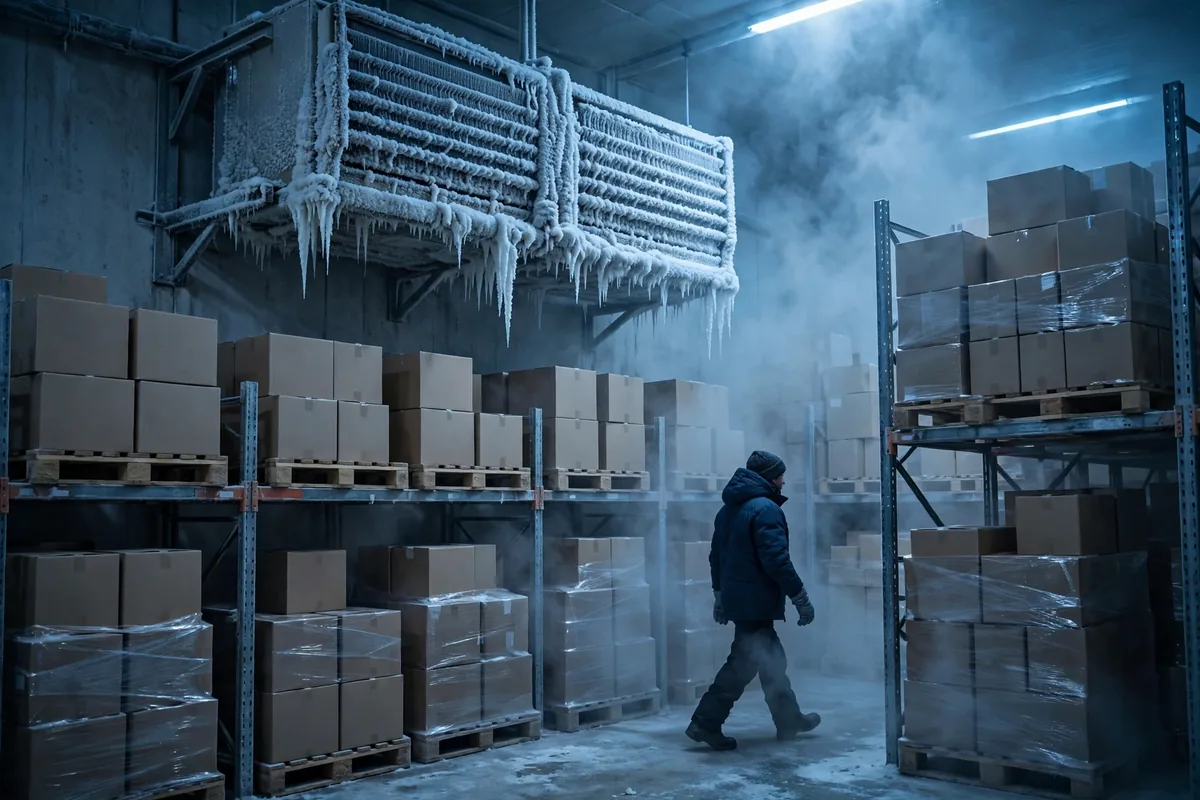
That difference decides the warehouse. For fresh fruit, the warehouse is really a transit hub: pre-cooling, grading, packing and dispatch, with stock that should turn over in hours rather than days. For frozen fruit, the warehouse is a buffer: the fruit waits in frozen storage, and the discipline is that the temperature never drifts, that first-in first-out is replaced by first-expiry first-out, and that stock is traceable to the field and the freezing line. A warehouse that treats both the same way, with the same staff roster and the same rotation logic, will fail at both, because the thing being protected is different in each case.
Here is a counterintuitive point, and one every Egypt strawberry export cold chain warehouse manager should sit with. Many people assume the frozen side is the safe side, because frozen fruit is stable. In practice, the frozen side carries the quieter risk. Fresh fruit spoils visibly and quickly, so everyone notices and acts. Frozen fruit spoils silently. If the cold store warms up and the fruit thaws partway, then refreezes, the damage is hard to see and impossible to undo. By the time a buyer opens the bag and finds clumping or off flavour, the shipment is already months downstream and nobody can agree when the damage happened. The risk of fresh fruit is obvious, the risk of frozen fruit is hidden, and hidden risk is the one that produces disputes.
Egypt Strawberry Export Cold Chain: The Data, the Rule Change, and Where the Trade Goes Next
The export classification tells its own story. Frozen strawberries are HS code 0811.10, fresh strawberries are HS code 0810.10. Different codes, different inspections, different paperwork, and different treatment at the border. A warehouse that mixes the two in its records, even once, can send the wrong documentation with the wrong load, and that is the kind of error that shows up as a delay or a rejection rather than as a spoiled berry.
Now consider the rule change. From 18 February 2026, the European Union has put Egyptian fresh strawberries under enhanced controls on pesticide residues, under Regulation (EU) 2026/194. This is not a ban, and it is not a surprise, but it changes the warehouse's job. The warehouse is no longer only responsible for temperature and speed. It is responsible for holding back a batch that cannot prove its residue paperwork, for keeping batches separate so that one failed test does not condemn a whole season's stock, and for recording which field and which spray record each pallet belongs to. Traceability is no longer a nice-to-have. It is the gate to the market.
Why does this matter now? Because the trade is growing fast, and fast growth rewards the players whose warehouses can already prove what they did. Here is an illustrative example, not a real contract, just to show the shape of it: suppose a warehouse holds 1,000 tonnes of frozen strawberries. If it cannot trace each pallet back to its field and freezing date, one failed residue test can freeze the whole stock, because nobody can tell the buyer which pallets are clean. If it can trace them, only the affected pallets are held, and the rest keeps moving. The cost of traceability is a system and a discipline. The cost of not having it is the whole season.
Looking ahead, three things will decide whether Egypt keeps its lead. First, whether the frozen side keeps its quality as volumes grow, because the 82% jump in value in 2025 will draw more growers and more packers into the trade, and not all of them will run the same standards. Second, whether the fresh side can keep its German buyer while diversifying, because a 70% share in one market is a strength only until that market changes its rules or its appetite. Third, whether warehouses treat traceability and cold-chain records as part of the product, not as paperwork, because under enhanced controls, the record is part of what the buyer is paying for.
The trade's numbers are impressive, and they are real, and that is why this Egypt strawberry export cold chain warehouse story matters: 353,000 tonnes of frozen exports in 2024, about 27% of the world, and a value jump of 82% in 2025. But the number to watch is not the export value. It is how much of that value is built on systems that survive a failed test, a warm day in the cold store, or a rule change at the border. Egypt's lead in frozen strawberries was built on cost and climate. Keeping it will depend on warehouses, records and cold chains, the quiet parts of the trade that do not appear in the export statistics.
By Dr. Chen, Supply Chain Researcher