Let me be honest: my warehouse is 3,000 square meters. Cold storage room? No. My own reefer? I rent one. So me writing about the ecuador shrimp export cold chain warehouse business is like a kid from a small town explaining how to run a port.
But that is the point. This trade lane is so hot that even I get calls every week: "Do you handle shrimp? Can you do cold chain?" My answer: maybe — but let me explain what you are buying.
First, the scale. Ecuador's National Chamber of Aquaculture (CNA) reports 2025 shrimp exports of $7.47 billion, about 3.07 billion pounds; China took 49.5% of that volume — roughly 1.52 billion pounds, worth $3.27 billion. One out of every two pounds of Ecuadorian shrimp ends up on a Chinese dinner table. Not a niche trade. A main highway.
Ecuador Shrimp Cold Chain Temperature Is the Whole Business
There is an old saying in cold chain, repeated like a mantra: a reefer container is a thermos, not a refrigerator.
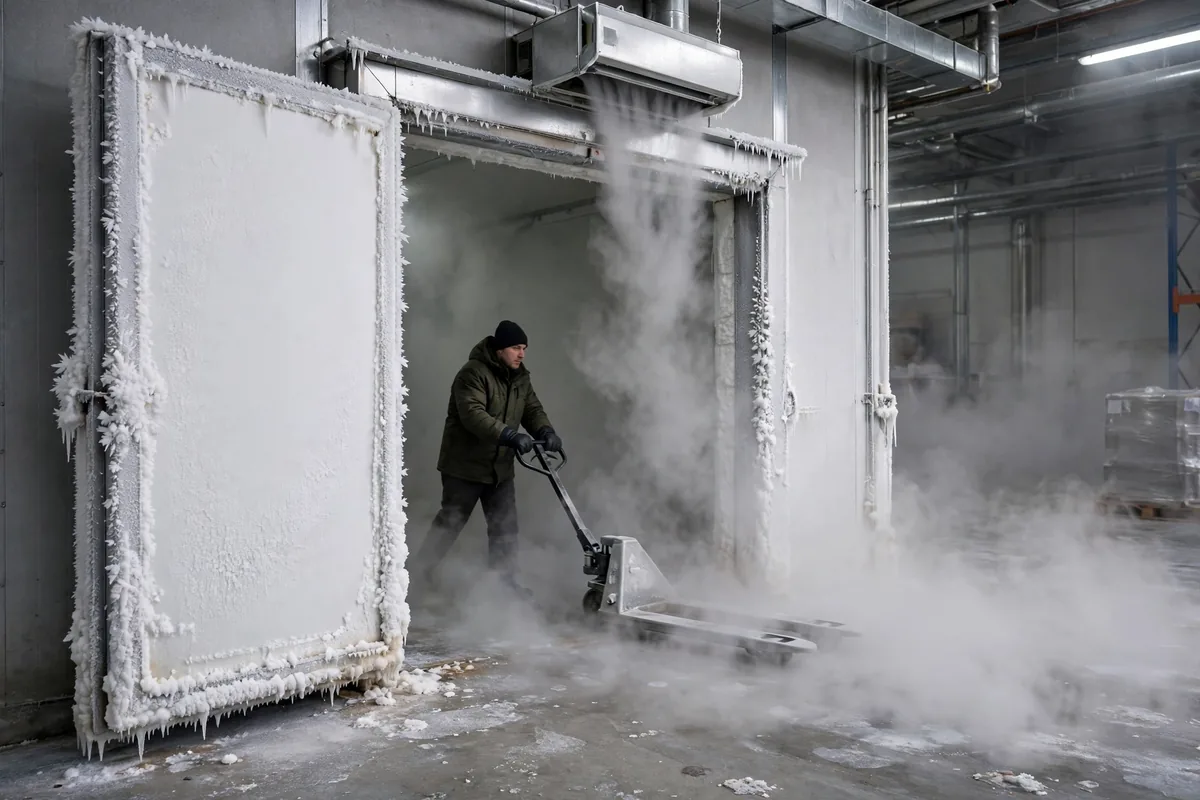
What that means is simple: frozen shrimp must already be frozen solid before it goes into the container — the container only maintains temperature; it does not bring it down. Stuff in cargo at minus 5 degrees, set the container to minus 18, and hope the ocean voyage freezes it through — that is a fantasy. A reefer's cooling unit is sized to fight heat leaking through the walls, not to freeze warm cargo.
The red line for frozen seafood is minus 18 degrees Celsius. Below it, microbes basically stop and quality holds; above it, shelf life ticks down fast. Industry data shows frozen seafood at minus 20 degrees keeps quality for around eight months, while at minus 15 it starts going downhill after about a month. Five degrees sounds like nothing — but on a voyage from Guayaquil to China that takes over a month, those five degrees are the difference between "sellable" and "sell at a discount."
So the first question I always ask is boring but decisive: was the cargo frozen through before loading? What was the core temperature at the cold storage exit? Is there a record? When a dispute happens, the whole argument comes down to those few pieces of paper. I turn down jobs when a client swears the goods were frozen the whole time but a spot check shows a core temperature of minus 12 — I would rather lose the job than inherit the problem.
Where Does a Small Warehouse Fit in the Ecuador Shrimp Cold Chain?
Let us be realistic: loading, customs, and booking at Guayaquil belong to the big players. Our opportunity is on the China side, after the container lands.
Take one 40-foot reefer — about 25 tons, roughly $4,000 per ton, so around $100,000 of cargo (an estimate only; actual prices follow the contract). Once it lands, three paths:
First, direct delivery: the buyer has cold storage near the port, the container goes straight there, almost no dwell time. Cheapest — but you need a buyer and cold storage already lined up, which most people lack.
Second, bonded cold storage and break-bulk: the container is split into a dozen smaller shipments heading across the country. The most common path — and exactly where a small warehouse earns its keep: deconsolidation, labeling, repacking, dispatch.
Third, the nightmare: the container sits at the port — a documentation problem, a customs inspection, a buyer whose payment has not cleared. Every extra day means demurrage plus reefer plug-in fees. Worse, reefer power plugs are limited, and in peak season you may not get one. The container waits; the temperature creeps up.
A friend who imports seafood told me a real case from late 2025: a shipment from Guayaquil reached Shanghai right during an inspection peak and sat at the port for four extra days. The shrimp survived, but plug-in and storage fees ran into tens of thousands of yuan, cutting his margin by a big chunk. His words: "The shrimp did not melt. The money did."
That is the cruel part of cold chain: even when the temperature holds, money can leak out somewhere else.
Here is something many people miss while staring at thermometers: market access. Between October 2025 and mid-2026, Chinese authorities suspended 14 Ecuadorian shrimp exporters; eight were reinstated in August 2026. Six are still suspended.
In practice: getting shrimp to China is not enough — the producing plant must be on the approved list. A plant off the list cannot ship, however good its shrimp. Before taking a job, check the exporter and the plant's registration status first, not the temperature. Finding out at the port is a mistake you only make once.
There is also the trade agreement angle. Ecuador and China have had a free trade agreement in force since May 1, 2024, bringing tariff benefits — but only when the certificate of origin is in order. One wrong letter can mean extra duty or a clearance delay. For a small warehouse doing break-bulk, the most valuable skill is often not moving boxes — it is getting the documents, labels, and batch records straight.
The Small Warehouse Playbook: Own One Link, Not the Whole Chain
So what is a small warehouse supposed to do in the ecuador shrimp export cold chain warehouse business? We cannot afford a cold storage facility — a few thousand square meters costs millions, payback in years. Here is the counterintuitive take: in cold chain, the money does not always go to whoever owns the cold room. It goes to whoever kills the breakage risk before it happens.
Our approach: be the "cold chain caretaker" for one segment only. Three services:
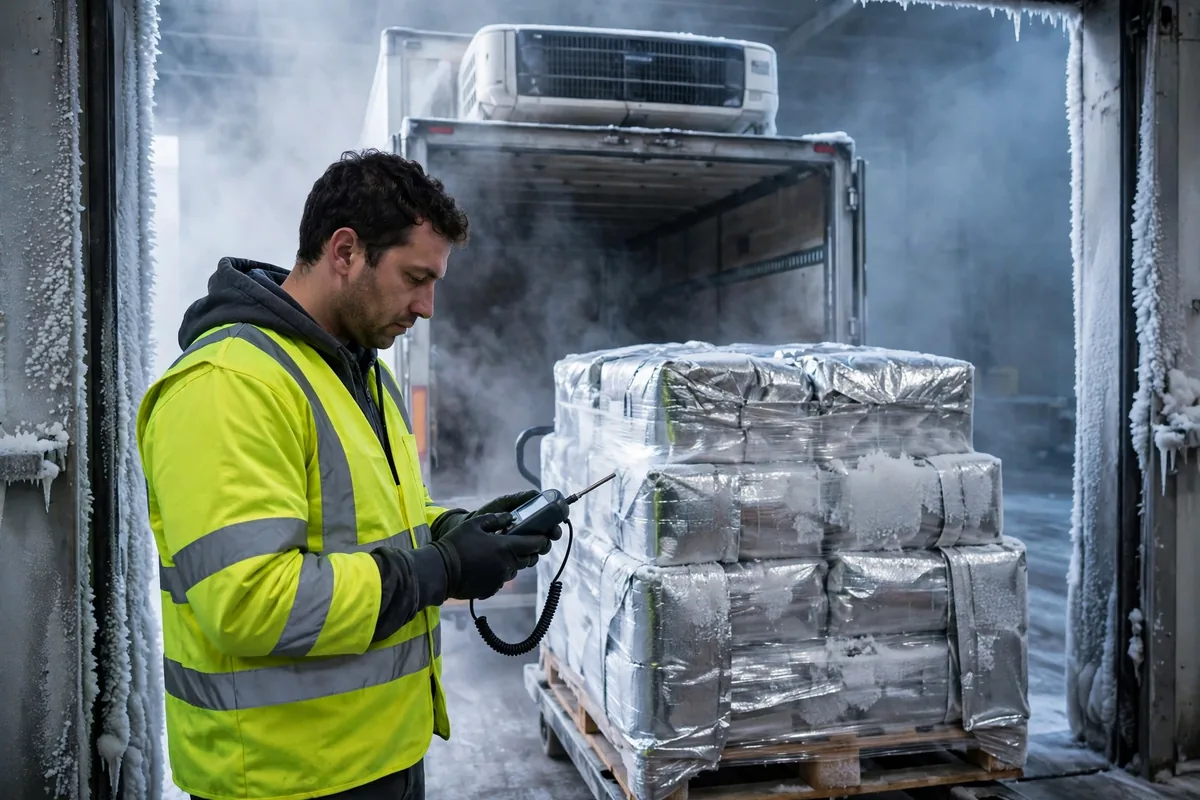
First, arrival inspection. When a container lands, we send someone: verify container and seal numbers, photograph the temperature logger data, spot-check core temperature, review the documents. Half a day's work, a service fee — far steadier than renting cold storage. Most importantly, the report draws the line: out of range at arrival is upstream's problem; out of range after it leaves our hands is ours. Clear lines, fewer arguments.
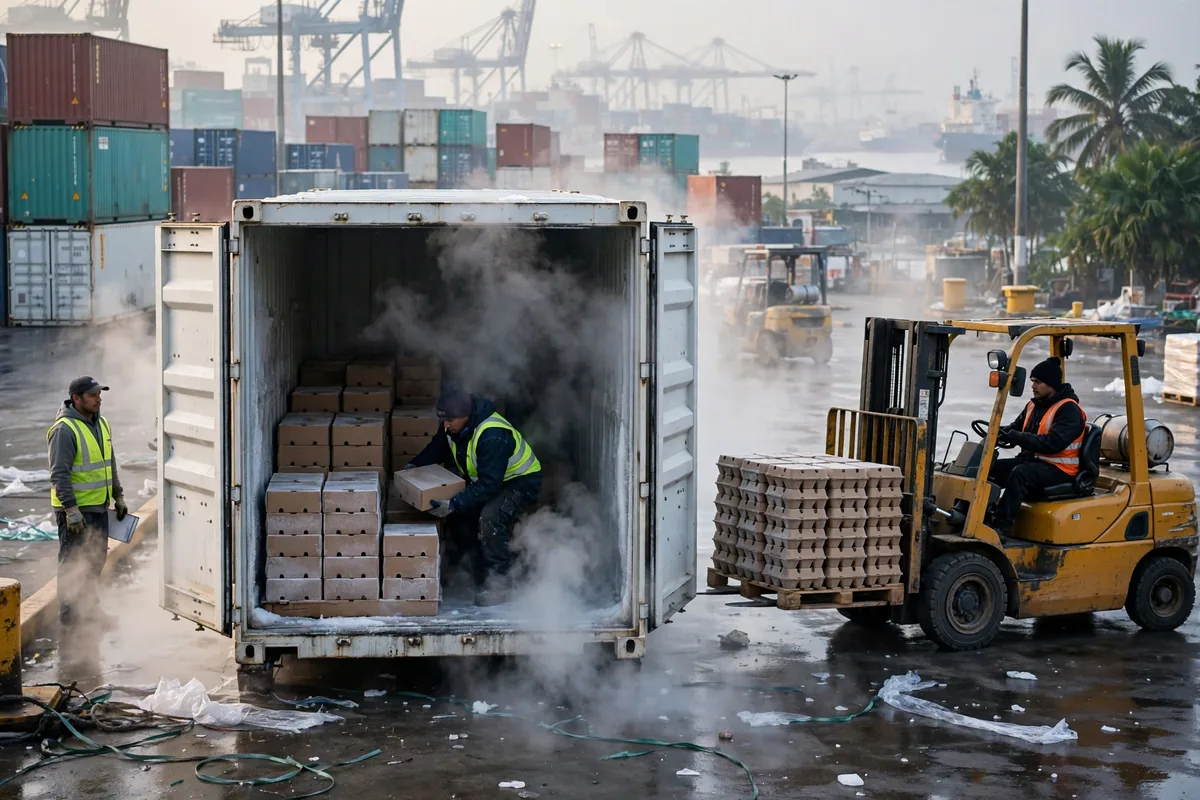
Second, break-bulk and labeling. One 25-ton container becomes dozens of shipments to different cities — Chinese labels applied, inner packaging changed, pallets built for dispatch. Not glamorous, but steady — and this is where things most easily go wrong unnoticed: the moment you open the doors to split the load, cold air escapes, and a slow crew lets the cargo temperature rise. Our low-tech fix is a heavy curtain at the deconsolidation area door, and a rule: open one pallet, move one pallet out, never leave the whole container standing open. Crude, but it works.
Third, temperature records all the way through. Every shipment leaving our dock carries one sheet: temperature at arrival, during break-bulk, at dispatch. Three points, one line. It costs almost nothing, but it is why our clients can answer their buyers with confidence — that sheet is a small warehouse's credibility.
Where the Money Goes: A Simple Map
| Stage | Main costs | Can a small warehouse play? | Key risk |
|---|---|---|---|
| Blast freezing in Ecuador | Processing, cold storage fees | Basically no | Core temperature too high |
| Loading and sailing from Guayaquil | Freight, booking fees | No | No reefer plug, schedule delays |
| Ocean transit | Freight, insurance | No | Temperature logger alarms |
| Arrival, customs, inspection in China | Duty, inspection, demurrage, plug-in fees | Documentation support | Approved-list status, delays |
| Arrival inspection and break-bulk | Labor, labeling, short haul | This is our ground | Temperature loss in splitting |
| Line-haul and last-mile delivery | Reefer trucking fees | Consolidated dispatch | Last-mile chain break |
The point of this table is one sentence: cold chain is a chain business. You do not need to own the whole chain — just be unbreakable in one link, and there is a living in that.
Strip it down and the ecuador shrimp export cold chain warehouse trade is three things: do not break the temperature, do not get the paperwork wrong, do not blur who is responsible. Temperature is physics, paperwork is process, responsibility is management. Temperature costs the most, paperwork is the most annoying, responsibility is the easiest to ignore — yet responsibility decides who pays.
If you run a small warehouse and want a piece of this shrimp boom, my advice is one line: do not rush to build a cold room. Start with arrival inspection and break-bulk, get the process smooth, build up clients, then think about moving upstream. In cold chain, slow is fast and steady is profitable.
Small warehouses have their own way of surviving. I have said that for three years now, and it still holds.
By Xiao Ma, Small Warehouse Owner