Let me be blunt: most eBay refurbished sellers do not lose money because their sourcing is bad. They lose it because their eBay refurbished goods warehouse grading is sloppy. A unit that could have sold cleanly arrives looking nothing like the listing, and then the feedback and the return come chasing after you. It feels unfair, because the product itself was fine. But buyers do not judge your intentions. They judge the box they opened.
I learned this the expensive way. In August 2025, a partner warehouse in Shenzhen held 120 refurbished tablets for me. At intake, the team sorted them into just two buckets, good and average, because that was faster. Within a week of listing, that batch produced nine returns and three negative reviews, all pointing at condition mismatch. When I rechecked the stock unit by unit, at least 20 of the so-called good ones did not deserve that grade. The goods were not the problem. The grading was loose, and loose grading always drifts upward, because nobody wants to push stock into a lower grade.
Since then I have run one non-negotiable rule in the warehouse: no standard, no listing. If the grading standard is not written down in a form a new hire can follow without guessing, the stock does not go live.
eBay Refurbished Goods Warehouse Grading Starts With Fixed Grades
I use four grades, and only four. Each one has hard criteria, not vibes:
| Grade | Appearance | Function | Accessories and packaging |
|---|---|---|---|
| Like New | Almost no visible signs of use | Fully functional | Original or equivalent accessories, clean packaging |
| Excellent | Light signs of use, no impact on appearance | Fully functional | Complete accessories, packaging intact |
| Good | Visible scratches or wear, but no impact on use | Fully functional | Core accessories complete, acceptable packaging |
| Fair | Obvious wear or cosmetic flaws | Core functions work, minor flaws disclosed | Accessories as actually supplied, disclosed honestly |
Notice what is missing from that table: phrases like roughly works or mostly fine. Those words are banned at my inspection bench. The moment vague language enters grading, every borderline unit floats up a grade. Fewer grades also beat more grades here, which surprises a lot of sellers. I have seen teams invent seven or eight grades to sound professional, and then watched the whole system collapse, because inspectors could not remember the boundaries, reviewers could not agree, and buyers could not tell the grades apart. Accuracy beats granularity. Four grades with sharp boundaries will outperform eight grades with fuzzy ones every time.
The trade-off is real, and it is worth naming plainly. Tighter grading costs inspection time and sometimes forces a lower price on a unit you hoped to sell higher. Looser grading saves time today and pays for it in returns, rework, and lost search standing tomorrow. When I did the math on that August batch, the cost of nine returns, re-inspection, relisting, and three bad reviews dwarfed whatever extra margin the inflated grades had briefly created. Grading honestly is not generosity. It is the cheaper option once you count the full loop.
eBay Refurbished Goods Warehouse Grading on the Inspection Bench
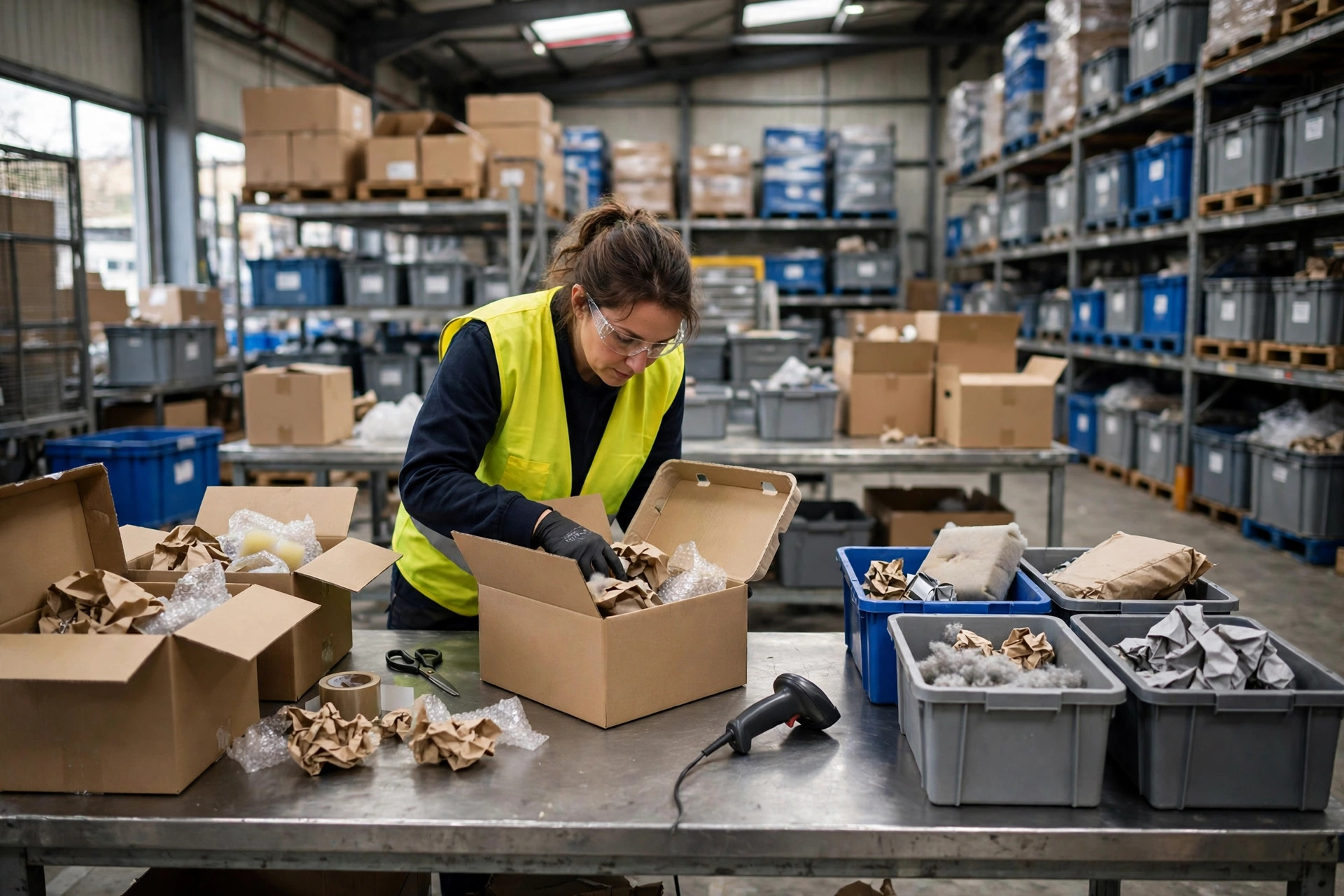
My bench process has four steps, printed on the wall above the inspection table:
First, power on and test everything. Every unit gets a full functional check: screen, buttons, ports, and battery condition. Spot-checking refurbished stock is a gamble I will not take, because refurbished problems never sit in the average unit. They sit in the few units that slipped through.
Second, photograph the condition, including close-ups of every scratch and dent. Those photos are not just for the buyer. They are your evidence when a return dispute starts. When a buyer claims an item arrived scratched, an intake photo settles the conversation fast.
Third, grade against the table, then have a second person audit. My rule is that the team lead rechecks at least ten units a day. If an audit finds a unit graded too high, that whole day's batch goes back for regrading. That sounds harsh. After about two months of it, over-grading basically disappeared, because everyone knew the audit was real.
Fourth, label and store by grade, physically separated. Different grades live on different shelves with grade cards on the rack. Picking follows the listing grade, never a judgement call of close enough. A surprising share of condition complaints is actually a picking error, not a grading error: the right grade was assigned, and then the wrong shelf was picked.
In February 2026, a small return batch put this to the test again. Sixty refurbished earphones came back from the United States, mixing two conditions. The team nearly merged them into one grade for speed. I held the line: 38 units graded Excellent, 22 graded Good, listed separately at separate prices. That batch finished with zero negative feedback and a single return for a personal reason. Process does not guarantee extra profit, but it stops you from losing money on avoidable mistakes.
Making the Listing Match the Goods
Good grading dies quickly if the listing talks it up again. Three rules keep me honest here.
First, the condition words in the listing must map one-to-one to the warehouse grade. If the warehouse says Good, the listing cannot say near mint. Marketing language that inflates condition is just over-grading with better copywriting.
Second, disclose flaws and photograph them. A scratch on the frame gets its location in words and a close-up in photos. Sellers fear this will scare buyers off. In practice, listings that describe flaws clearly tend to return less, because the buyer who still buys has already accepted the flaw. What buyers hate is not a flaw. It is a surprise.
Third, price by grade. Do not push lower-grade stock at a higher-grade price, and do not burn higher-grade stock in a price war. When you price, count the whole loop, including return shipping, re-inspection, relisting, and the traffic cost of bad feedback. For the exact platform fees and current policy details, check the latest official policy, because those terms change and last year's experience is not this year's rule.
Returns: Quarantine First, Relist Last
When a return lands, my warehouse does not put it straight back on the shelf. It goes into quarantine, gets tested again, and only then takes one of four paths: relist at the same grade, relist at a lower grade, repair and regrade, or scrap and part out. Relisting a return without checking it first is just burying the same problem and waiting for it to explode on the next buyer.
Track return reasons separately, too. Condition mismatch, functional fault, and buyer change of mind are different problems with different fixes. If condition mismatch keeps appearing, the fix belongs in grading or in the listing, not in arguing with buyers. Data here is diagnostic, not blame.
Here is my bottom line, and I will keep it short: refurbished selling is a warehouse discipline business more than a sourcing business. Write the grades down, inspect every unit, describe honestly, and treat returns as information instead of trash. Do those four things and the feedback and returns stop chasing you. This one I tested myself, and the numbers backed it up.
By Ah K, E-commerce Seller (5 yrs)