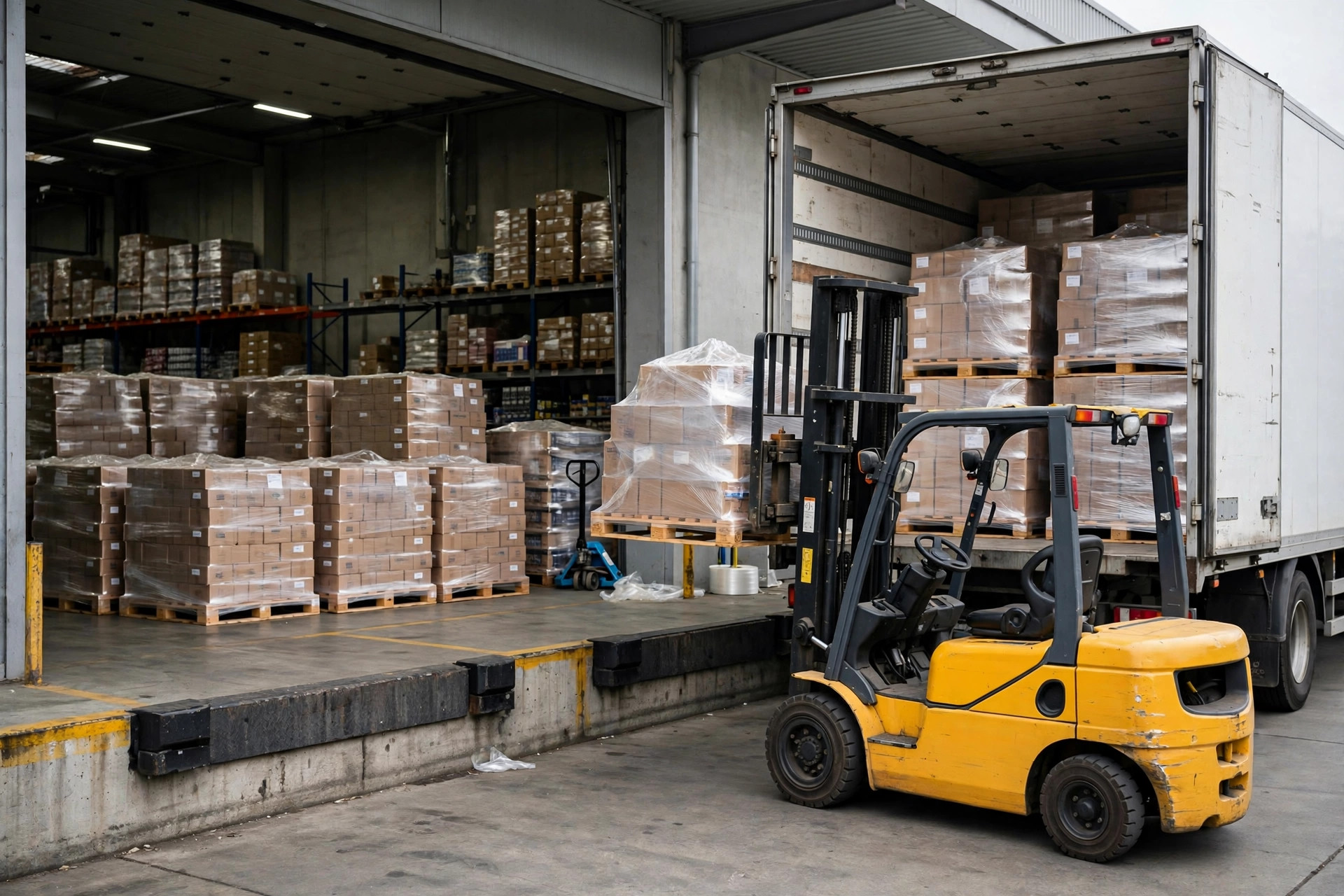
Bottom line up front: when dock-to-stock time blows past target, the putaway crew is at fault about 20% of the time. The other 80% sits in three places — appointments misaligned with labor, a bloated receiving inspection, and putaway tasks that never get released on time. Fix those three and a 40-pallet trailer goes from door to stock in 4 hours. Leave them alone and 48 hours starts looking normal.
That's not a guess. It's what I've measured, load by load, across more than 30 WMS implementations. The method is dead simple: four timestamps — truck at door, unload complete, receiving complete, putaway complete. Split any inbound load into those four segments and the bottleneck exposes itself. If you want to reduce dock to stock time in your warehouse, learn to time the phases before you try to optimize anything.
Where dock-to-stock time actually goes: three bottlenecks eat 80%
Here's the table. Take one full trailer — roughly 40 pallets, one dock door — and these are the ranges I keep seeing in real projects:
| Phase | Healthy | Out of control | How it dies | | Unloading | 1 hour | 2–3 hours | Short-staffed; forklifts borrowed by outbound | | Receiving / inspection | 1 hour | 8–24 hours | 100% open-box inspection, manual keying, waiting on a QA signature | | Putaway task release | 15 minutes | 4–12 hours | Nobody releases the task after receiving; pallets camp on the dock | | Putaway execution | 1 hour | 2–4 hours | No open locations, forklifts queueing |
Healthy adds up to under 4 hours. Out of control sails past 48. Look at the receiving row — 8 to 24 hours. That's the fattest piece of meat on the whole chain.
Case one: a 3PL warehouse in Ohio running a 36-hour average dock-to-stock. The client kept yelling at the putaway team to "move faster," and the putaway team was genuinely baffled. We timed the four phases: unload 1.2 hours, fine; putaway execution 1.5 hours, fine; receiving 21 hours — because they were doing 100% open-box inspection on every pallet. Open, count, photograph, key it in by hand. The kicker: that supplier's receiving discrepancy rate over the prior six months was under 0.3%. The full inspection was pure self-comfort. We switched to ASN pre-receiving plus tiered spot checks, receiving dropped to 1 hour, total cycle to 4.5 hours. I've seen this exact failure three times. Identical script.
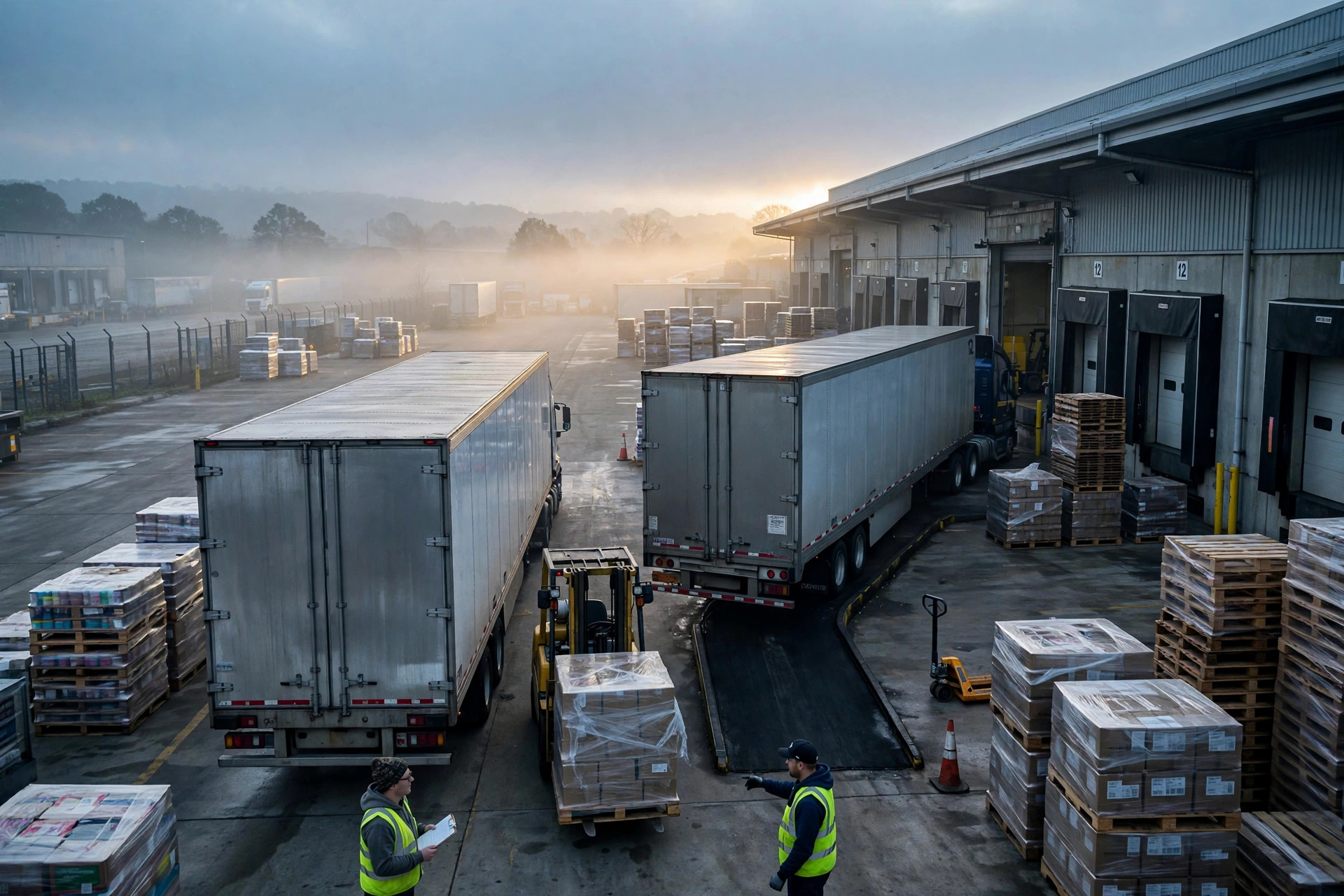
Case two: an e-commerce warehouse in California hitting 52 hours in peak season. Timing showed 9 hours of pure appointment waiting — every truck booked for Monday 8 a.m., the dock backed up onto the street, 12 unloaders working past midnight, then nothing to do on Tuesday. Labor and arrivals completely misaligned. We cut appointments into 2-hour windows, capped at 3 trucks per window, and tied the labor plan to the windows. Queue time dropped under an hour.
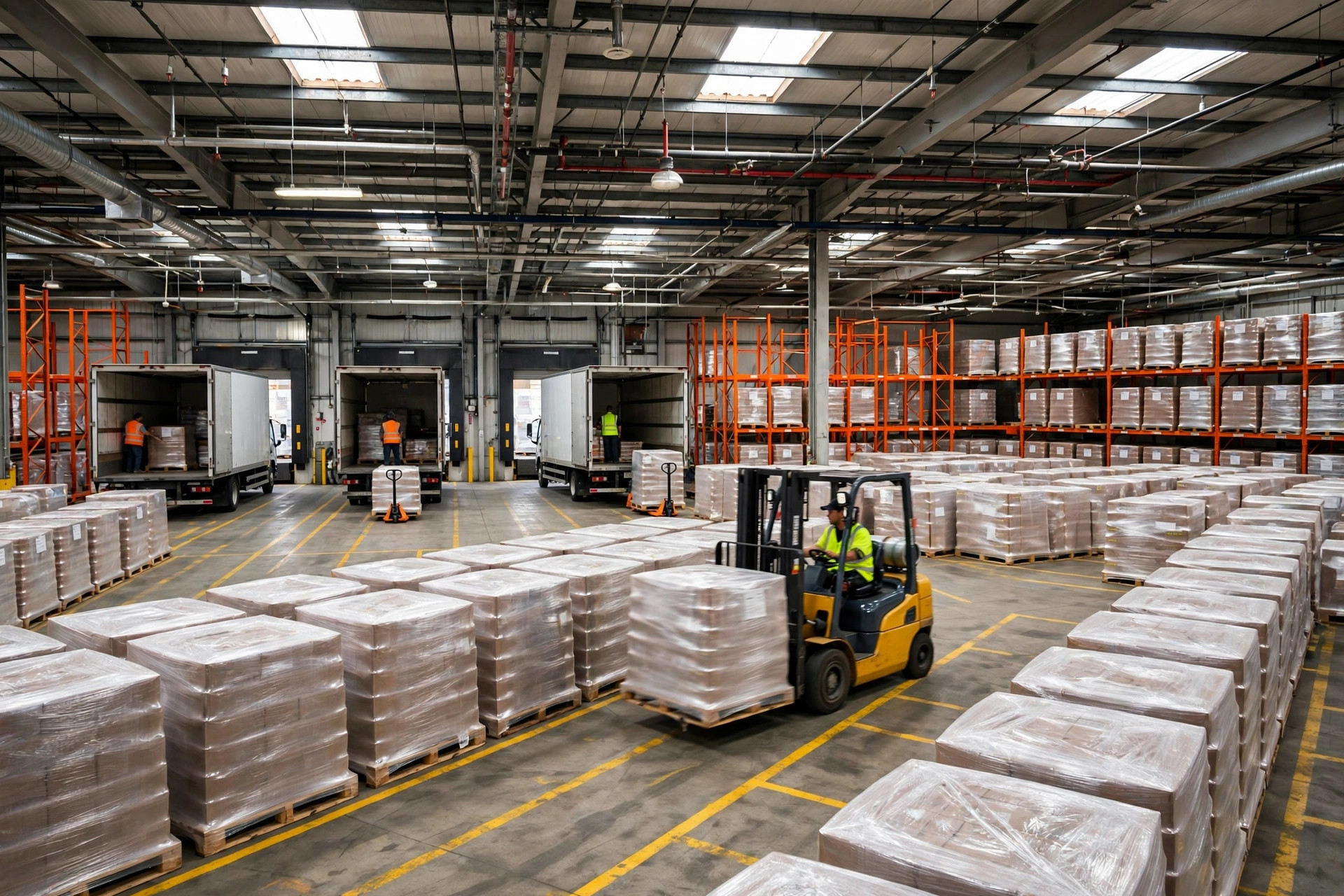
Here's the counterintuitive call: when putaway is slow, the problem usually isn't the putaway crew. In every project I've timed, putaway execution rarely exceeds 2 hours. The real black holes are appointments and receiving. Adding headcount to the putaway team while the upstream is broken is like bailing water downstream of the leak — you'll just get tired.
The 5-step playbook: cut dock-to-stock time to 4 hours
Step 1: Align appointments with labor first. Cut the appointment book into 2-hour windows. Each window gets a hard definition — how many doors open, how many trucks, how many people, how many forklifts. The labor plan follows the appointment book, never the other way around. A truck more than 30 minutes late loses its window and rebooks. Without that rule, the appointment book is decorative paper.
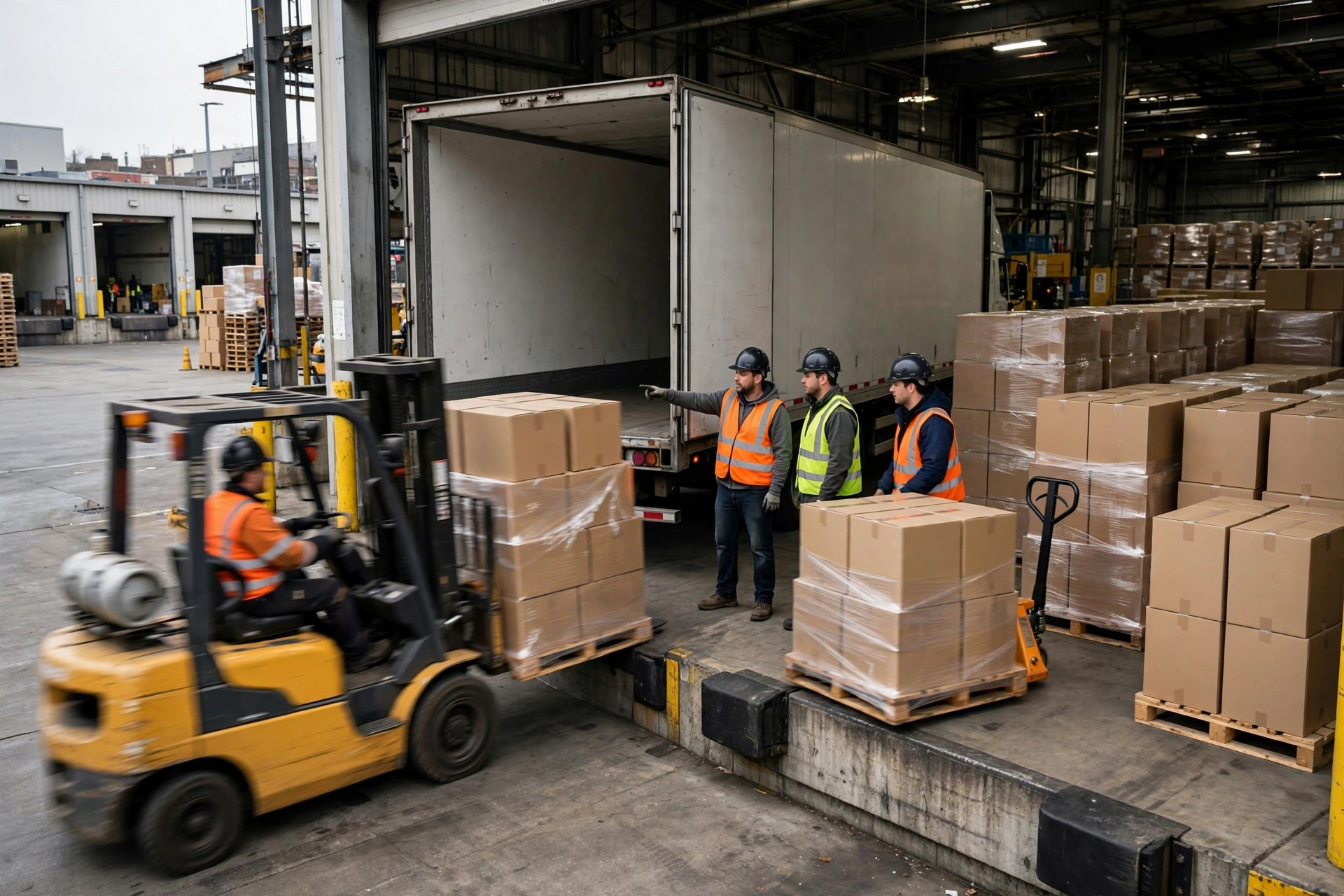
Step 2: Time the unload, and put a deadline on the staging area. One hour per trailer is the baseline. Staging must be cleared within 2 hours of unload complete. If it can't be cleared, receiving or task release is jammed upstream — a full staging area is the earliest alarm signal you'll get, two days before the daily report tells you anything.
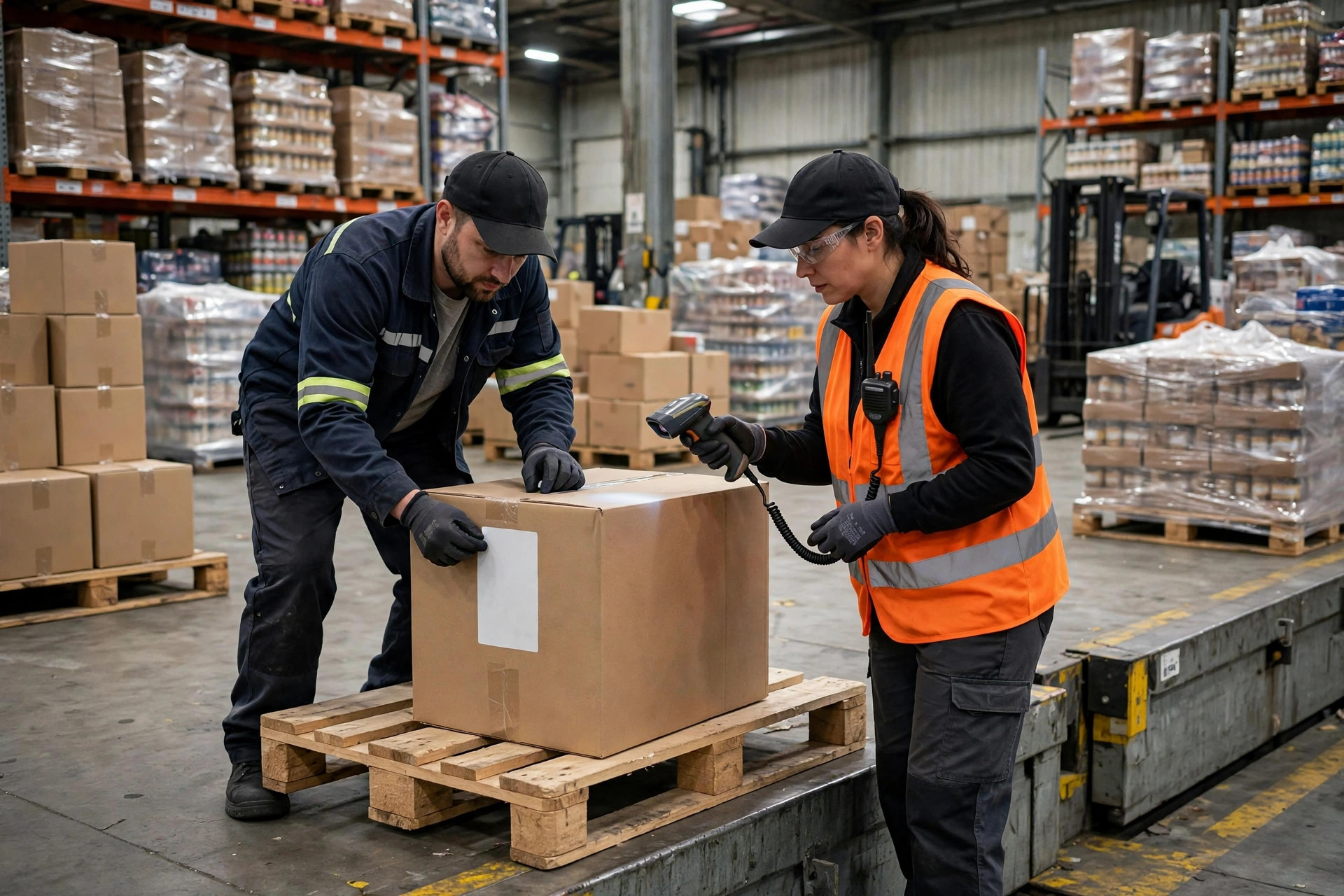
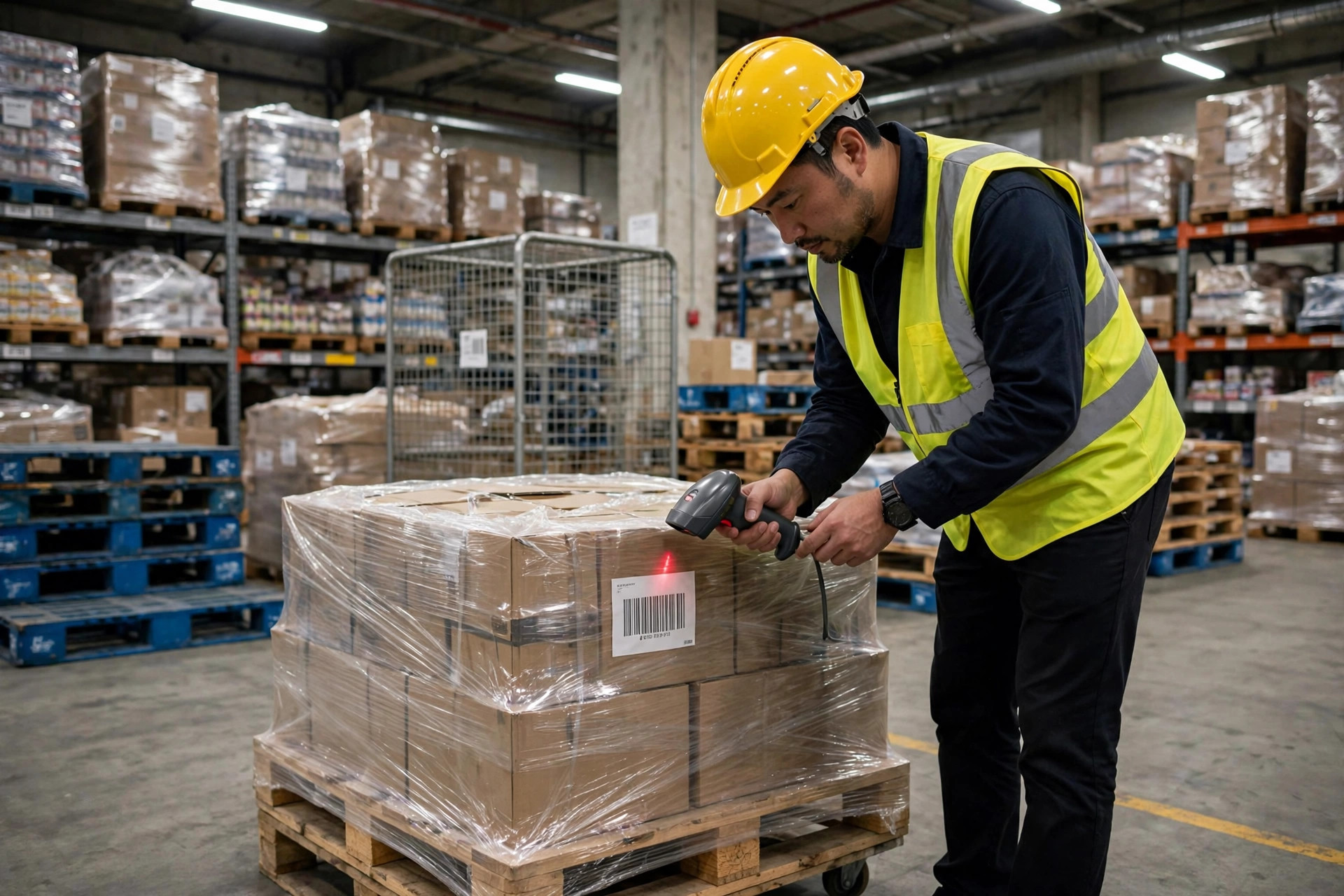
Step 3: Tier your inspection, kill the 100% full check. Grade suppliers by historical discrepancy rate: top suppliers get scan-and-go (scan the pallet license plate, count matches, done), average suppliers get a 10% spot check, blacklisted suppliers get full inspection. ASNs enter the system a day ahead; scanning auto-matches at receiving, and humans only touch exceptions. Write it into the SOP: spot check, 5 minutes max per pallet; open-box only for full inspection.
Step 4: Release putaway tasks in seconds, automatically. The moment receiving is confirmed, the putaway task must generate and dispatch itself — no "click a button to release" step in between. Hard-code the priority: putaway beats replenishment, replenishment beats housekeeping. And de-conflict the forklift pool from outbound — when outbound waves collide with the inbound peak, inbound always loses, so schedule them apart.
Step 5: Put the four timestamps on the daily report. Door arrival, unload complete, receiving complete, putaway complete — captured automatically in the WMS, published every morning as a phase-by-phase timing sheet, with overruns flagged red. Without that sheet, you're guessing where the bottleneck is. On my go-live eve checklist, I personally click through the timestamp capture logic — I've seen this failure three times: incomplete timestamps, and every optimization after that is flying blind.
Three failure modes I've seen three times each
Failure one: full inspection "to be safe." Warehouses doing 100% inspection don't have lower discrepancy rates than warehouses doing spot checks — they just spend 10x the time. Quality is built at the supplier, not inspected into the product at the dock. Bring the discrepancy data to the quality team; it beats arguing.
Failure two: manual task release. A night-shift receiver confirmed 40 pallets and forgot to hit release. The freight sat on the dock all night and nobody noticed until morning. There is exactly one fix: automatic release. Delete the human step from the chain.
Failure three: appointments that mean nothing. Sales promises anything to win the order, the truck arrives with no open door, the driver sleeps in the parking lot — and the dock-to-stock clock started ticking at the appointment time, so the number is indefensible. Appointments must be gated on real dock capacity. Over capacity means the next window. No negotiation.
One thing you can do tomorrow: pull last week's 20 inbound loads from your WMS, split each into the four phases — unload, receiving, task release, putaway. The biggest segment is your first battlefield. Don't add headcount yet. Time it first.
By Lin Xiao, WMS Implementation Consultant