It was still dark in Ohio when I backed up to a dock and the dock leveler repair cost question landed right in front of me. The forklift rolled onto the lip, the whole plate sank about half an inch with a clang, and I waved that driver back out fast. My back went cold. A plate that gives under a forklift is not a small problem.
Let me tell you something. In fifteen years on the road, I have never feared traffic the way I fear a dock plate that does not sit honest. A truck breaks down, you pull over and wait. A leveler fails halfway through a load, and your truck is stuck at the door, freight on the trailer, and every truck behind you waiting too.
The supervisor walked over. "Shifu, you think this can be patched up and keep going?"
I told him you cannot answer that with your eyes. Look at where it broke.
Dock Leveler Repair Cost: Do Not Start With the Quote
Most warehouses ask about money first. Fair, but the order is wrong.
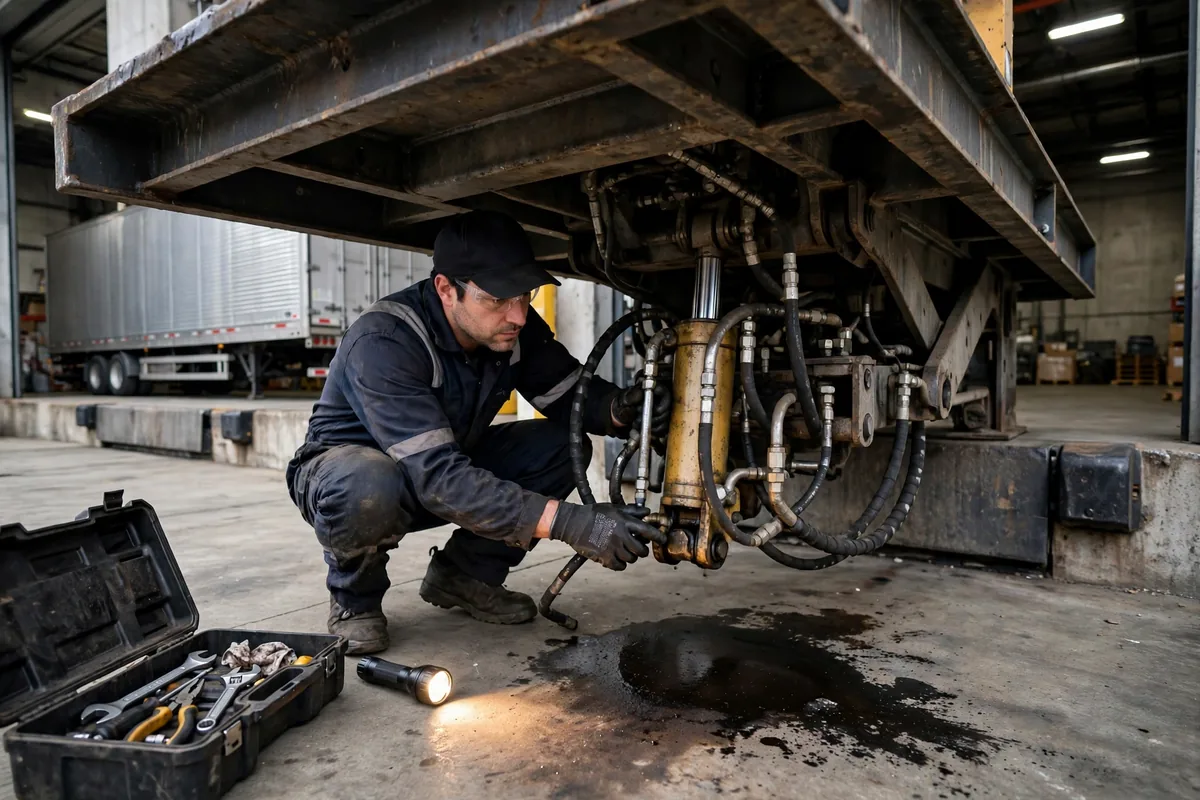
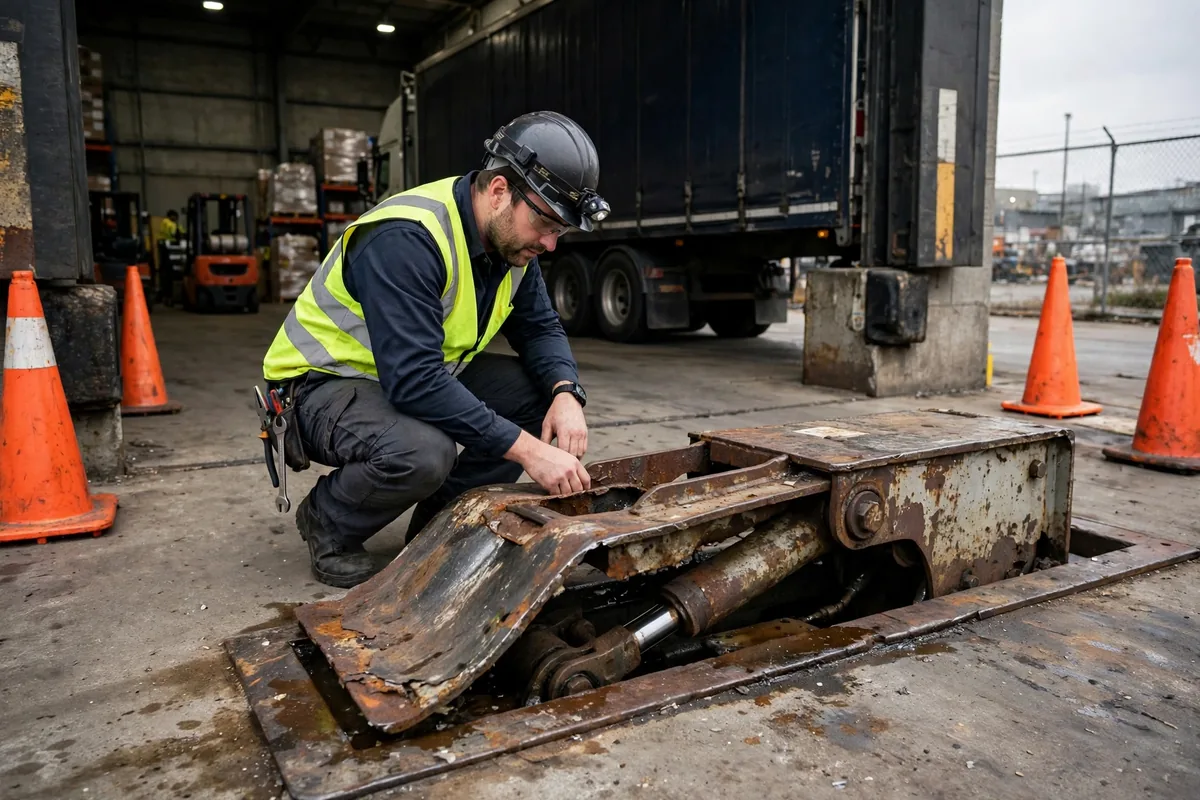
A leveler has three places that matter. The lip is the flap that rests on the truck bed. The hydraulic cylinder is the muscle that lifts the deck. The safety legs hold the deck up if something goes wrong, or while somebody works underneath. Those three do not fail the same way, and the repair-or-replace line is different for each. Skip that and just compare quotes, and the cheapest dock leveler repair cost on paper often turns out to be the most expensive one you ever paid.
Take that Ohio unit. The lip edge had been scraped by forklifts for years and curled up a little. When it dropped onto my trailer floor, there was a gap in the middle. The supervisor said, "Can't they just hammer it flat?"
Sometimes, yes. If a lip is lightly bent, the deck is not cracked, and the hinge is still tight, straightening it, welding what needs welding, and adjusting the hinge is a proper repair. I have seen those run fine for years. But if the lip is twisted, so one side sits high and the other low, the forklift bumps over it every pass. Bump it for three months and the hinge, deck edge, and frame all take a beating they were never meant to take. A small problem quietly turns into major surgery.
Here is the part that surprises people: the damage that looks scariest is not always the reason to replace, and the harmless-looking damage is sometimes eating the whole machine. A curled edge looks ugly. A twisted lip everybody keeps using is the real danger.
The repair tech they called did not quote right away. He put a level on it, had a forklift roll across empty twice, then said: replace the lip and hinge pins, leave the deck alone. I thought, this man is honest. The ones who want to sell you something start with, "The whole unit is old, replace everything."
For service intervals and how hydraulic and mechanical units differ, the dock leveler maintenance guide covers it well, so I will not repeat it here. Maintenance keeps it from breaking. This is about not wasting money once it has.
A Leaking Cylinder You Can Argue About. A Failed Safety Leg You Cannot
In Tennessee I backed into a dock where the hydraulic leveler rose slow and there was always a puddle of oil on the floor. Drivers were used to it. Somebody had even put cardboard down so nobody slipped. I told the young fellow running that warehouse: do not just mop the oil. Find out where it comes from.
A hydraulic cylinder leak comes in two kinds. In the first, the seals are old, but the rod is still smooth. Swap the seal kit, refill with the right oil, and that is a legitimate repair. If it stays dry, you are done. In the second, the rod is scored or rusted, or the barrel is bent. Change seals all year and it will still leak. And leaking is not just wasted oil. Low pressure means the deck feels soft at the top, and a soft deck under a loaded forklift will put a chill in you real quick.
I watched one warehouse refuse to replace a cylinder and change seals three times in a year instead. Every visit looked cheap. Add up the downtime and it cost more than one cylinder. The warehouse never did that math. The repair bills did it for them.
Safety legs are different. There is no conversation.
Most days you never see a safety leg work. But if the deck loses pressure, or a tech is underneath, that leg alone holds tons of steel off a man. If it is bent, stuck, will not drop, or will not hold: stop. Lock that door out until it is fixed right.
In fifteen years I have seen plenty of trouble, and most of it started with, "Just get this one trip done." Nobody says that about bad brakes. A safety leg is the brake pedal of your dock. Run forklifts over a failed one all day and that is not saving money. That is gambling.
Here is my rough line:
| What failed | Usually repairable | Usually replace the part — or the unit |
|---|---|---|
| Lip | Curled edge, light bend, surface wear | Twisted, cracked, hinge lugs tearing |
| Hydraulic cylinder | Old seals, minor weeping | Scored rod, bent barrel, leaks that keep coming back |
| Safety legs | Worn pins, stiff return | Bent, jammed, will not hold, cracked structure |
| Deck and pit | Local weld repair, rust cleanup | Bent main beams, broken pit concrete, whole unit settling |
And here is the line for replacing the whole unit: if lip, cylinder, and deck are all giving trouble at once, or the leveler has already been down two or three times for repairs, stop fixing it one piece at a time. By the end you will have spent most of the price of a new unit, and taken all the pain anyway.
Repair Cost for a Dock Leveler: Run the Downtime Math
Run a simple example, and treat the numbers as an example only — your real dock leveler repair cost depends on your model and vendor, so go by the supplier's actual quote.
Say one door handles twelve trucks a day. Take that leveler out for a day and those trucks either squeeze through other doors or sit in the yard. The other doors already have their own trucks, so everybody slows down. Forget late fees for a minute. Just driver waiting time, forklift detours, and overtime to catch up — the crew knows in their gut what that day cost.
Now say a lip repair takes half a day, and a full replacement two days. Looking at just this once, repair wins, easy. But if that unit has already gone down three times this year, add the repair bills, the three rounds of downtime, and the drivers cursing at your door, then set that pile next to the price of a new unit. Plenty of times, replacing is the cheaper road.
When you figure dock leveler repair cost, never count just the invoice. Count four things: what this repair costs, how long the door is down, how long the fix will hold, and who pays if it fails again mid-load. The first three are money. The fourth is somebody's safety. Lay those four on the table and the argument usually ends.
My advice to warehouses is three things, all learned standing at docks like yours.
Keep a notebook for every door: what broke, what was fixed, what it cost, how long the door was down. Without that record, every breakdown is a fresh guess, and fresh guesses are wrong half the time.
When the tech shows up, do not rush him to a price. Make him tell you what failed, why, and how long the repair should hold. A quote with no cause is one I would not sign, however low it is. Same for replacement — if he cannot explain plainly why it cannot be fixed, he is probably selling, not fixing.
And leave a spare door in the schedule. A warehouse that books every door solid has nowhere to go when one leveler quits. Same as a spare tire on my truck: you hope you never need it. The day you do, it is the most valuable thing you own.
There is an old saying among drivers: even the best truck only runs for the man who looks after it. A dock leveler is the same. Treat it right on quiet days and it will not embarrass you in front of a full trailer. Keep saying "good enough" and one day it will decide for you — at a whole lot more than your decision would have cost.
By Shifu Zhao, Trucking Veteran (15 yrs)