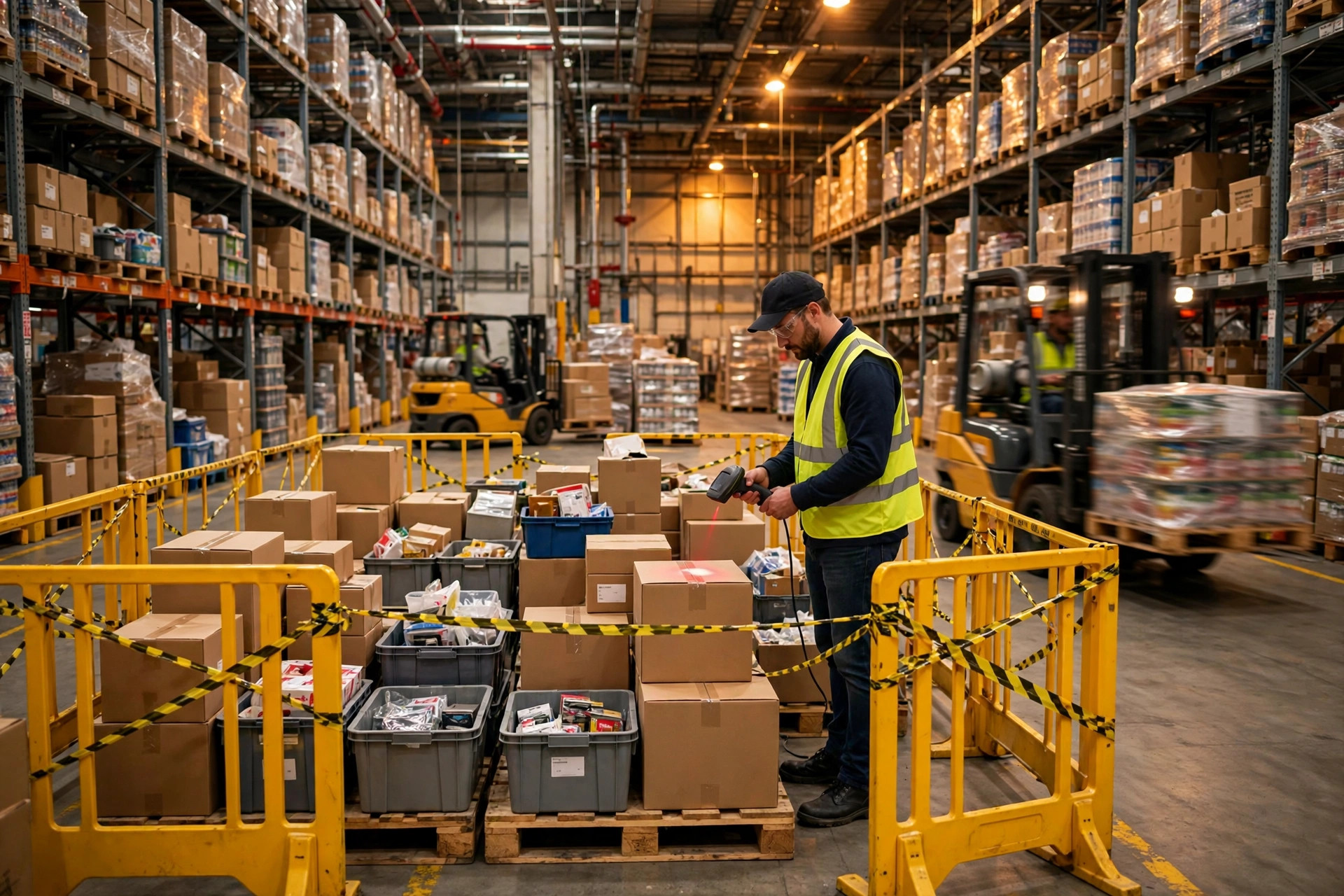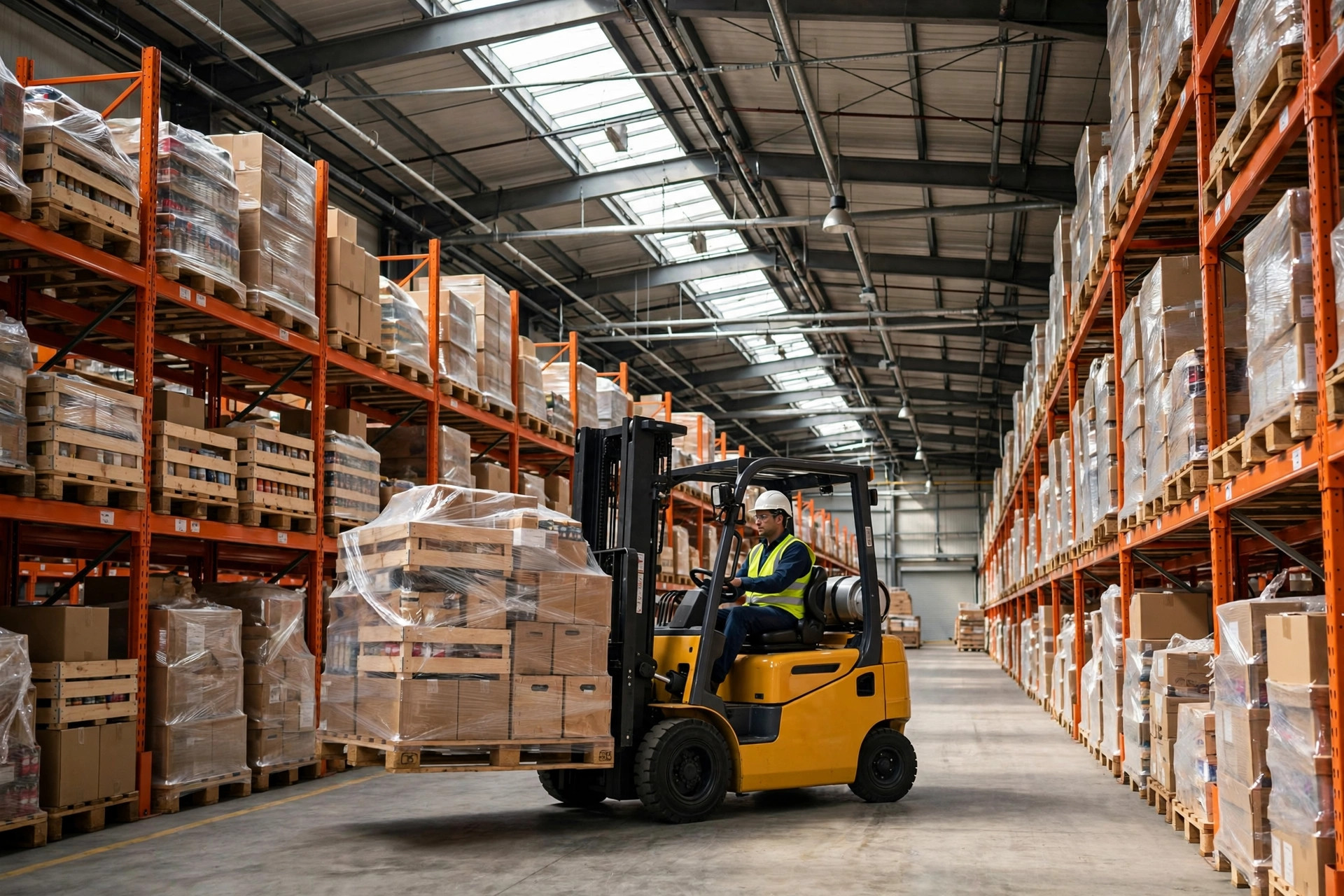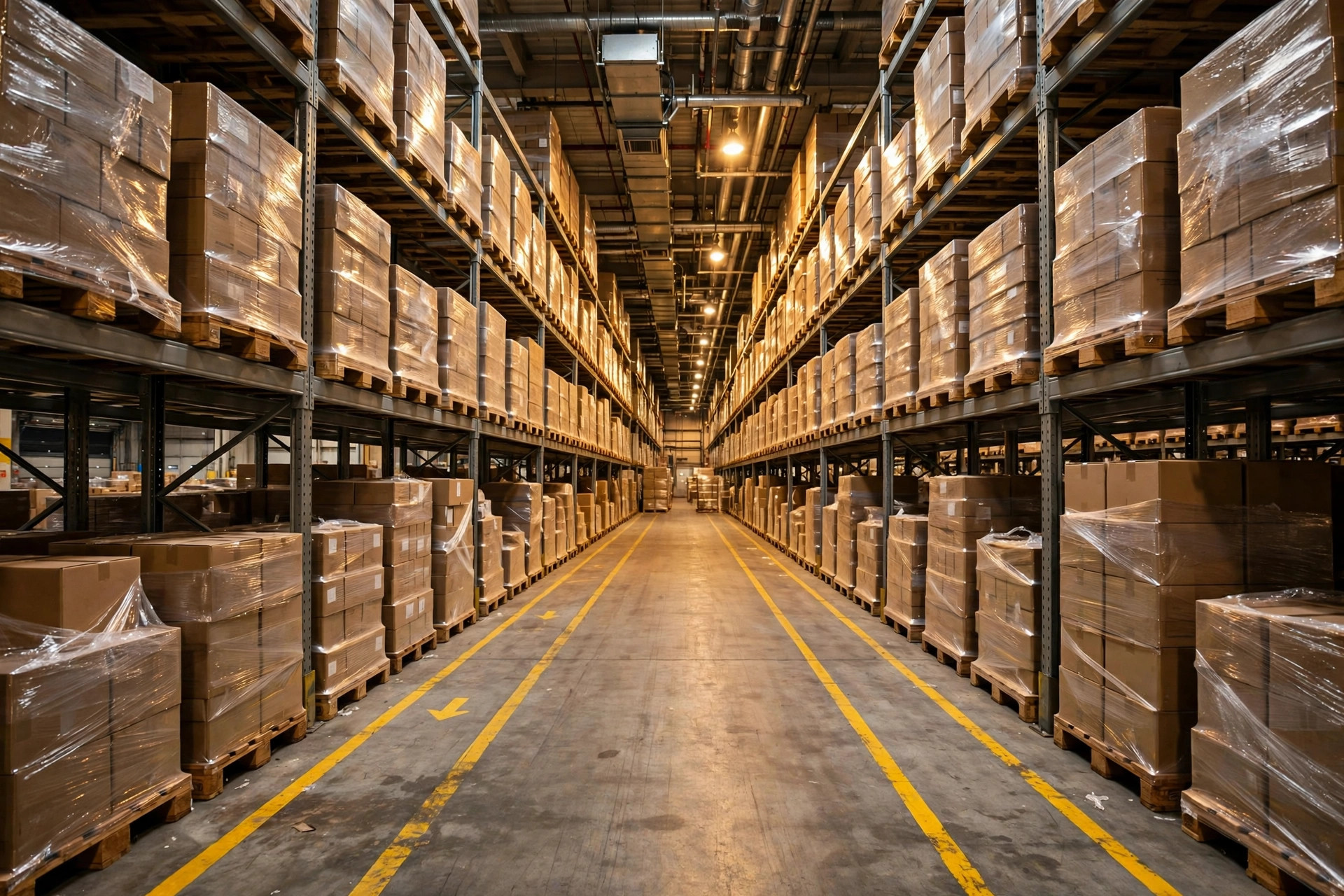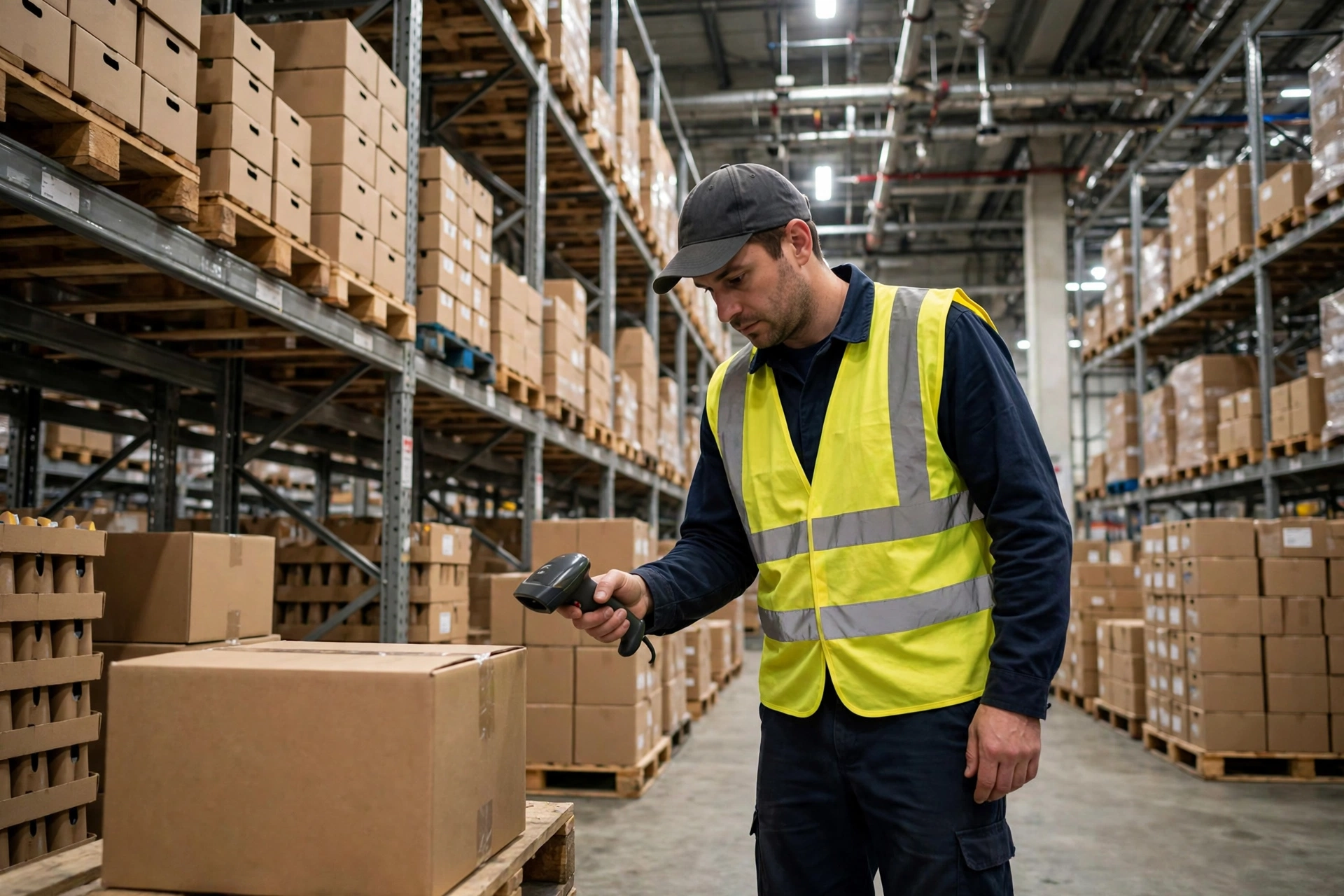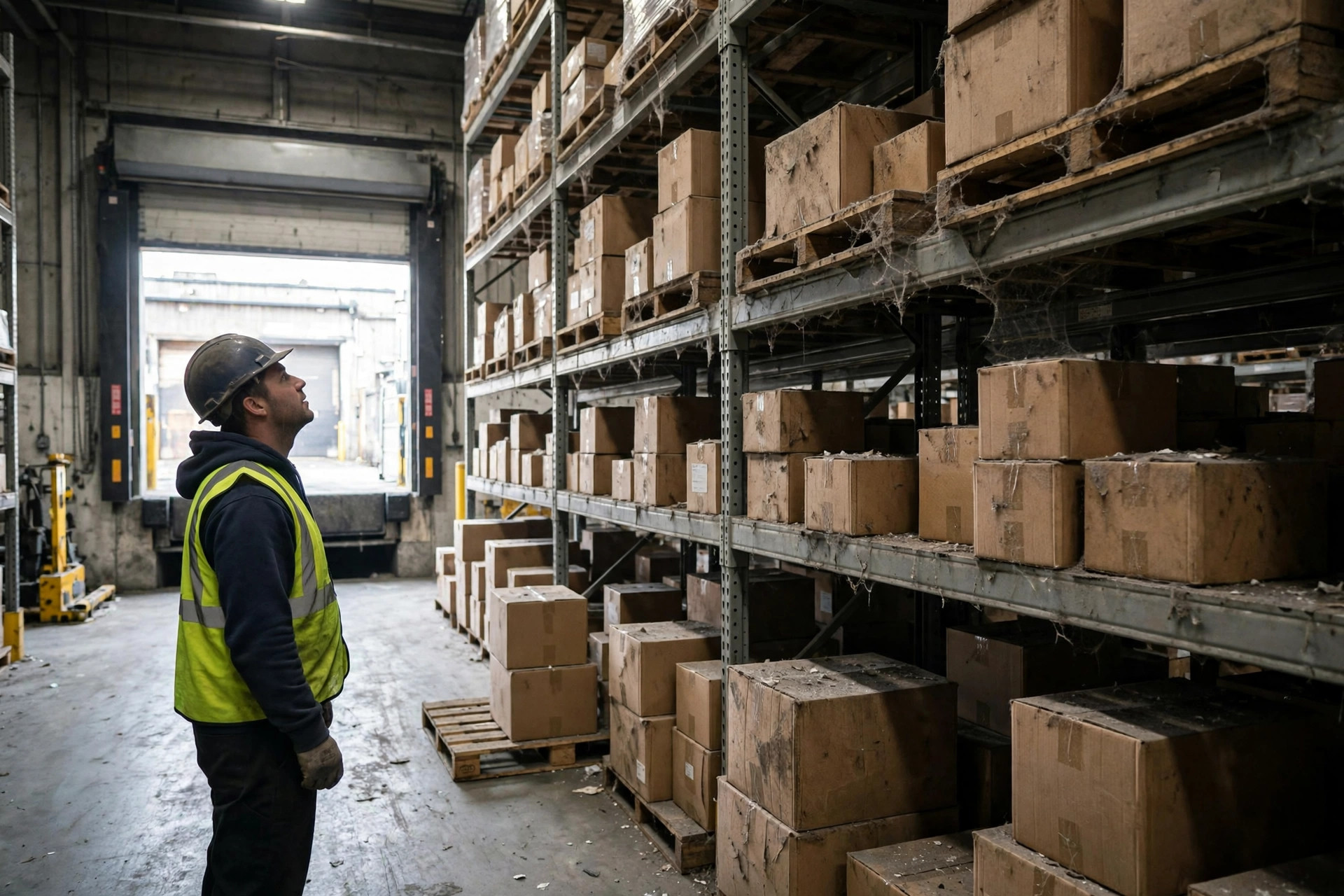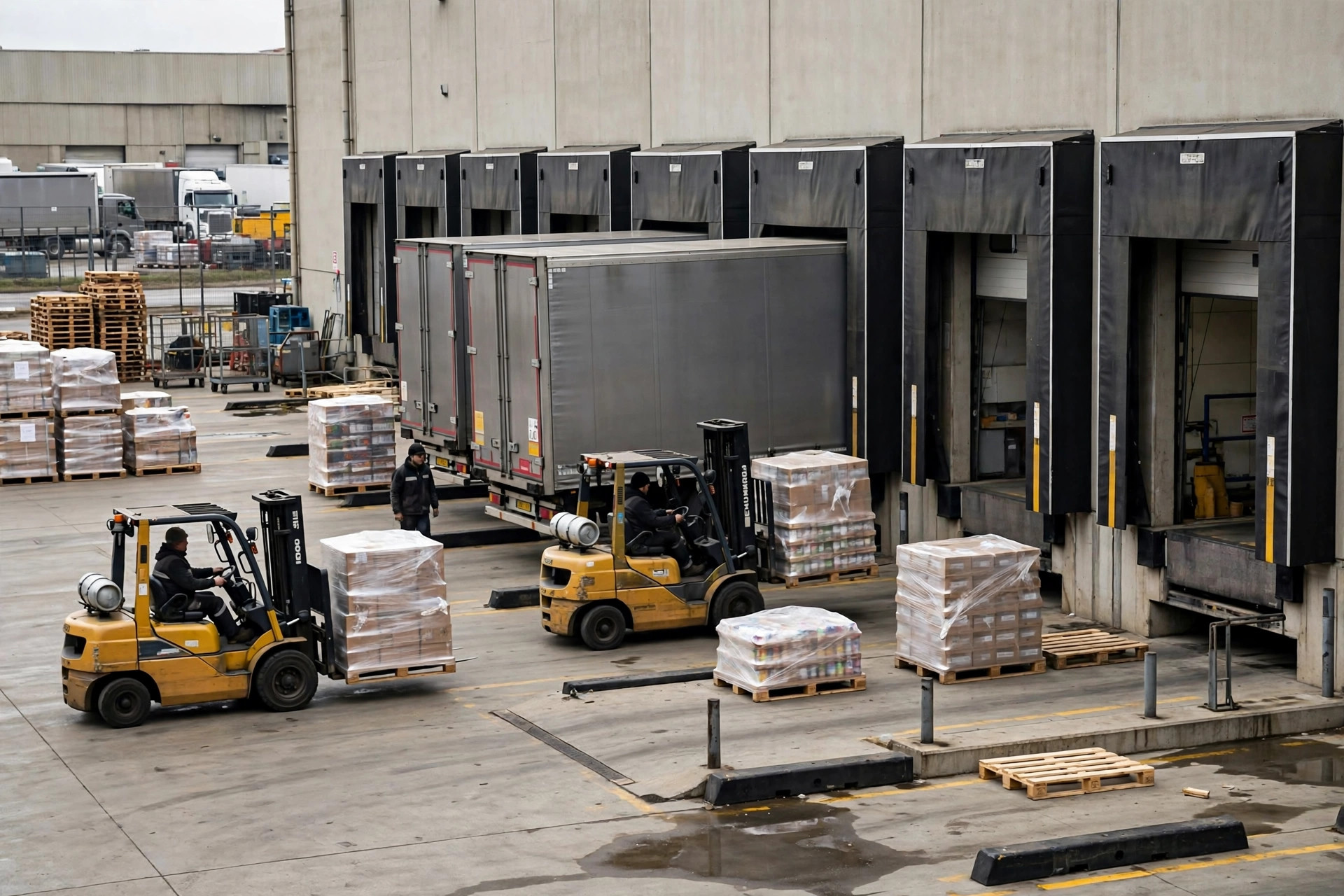
Back in February I walked a 3PL in Fontana, California — 140,000 square feet, 24 dock doors, 40-plus outbound trailers a day in peak season. The warehouse manager told me his forklift fleet was stretched thin and he was about to lease two more trucks. Twenty minutes on the dock told me the real story. His hottest SKUs — the ones that never sat still — were staged in the far corner, the longest possible walk from the doors. And parked dead-center in front of the best doors? Slow movers that hadn't turned in months. More than half of his fleet's daily mileage was paying for decisions made the day the building opened.
I have seen this movie too many times. Dock door assignment looks like a minor detail. It is one of the most expensive line items in your whole flow, and almost nobody prices it.
Doors Don't Move. Freight Does.
You can't move the doors. But which freight goes through which door is entirely your call, and the rule is simple: zone by velocity. The fast stuff lives closest to the door. Always.
Pull 90 days of outbound data and rank SKUs by pallets shipped. Your A movers — typically 20% of SKUs doing 70 to 80% of the volume — get the third of the doors nearest the picking area. B movers go in the middle. C movers get whatever is left, as far away as you like. Most warehouses I visit have done ABC analysis down to the slot level and never thought to apply it to the doors. That's leaving money on the dock.
Let's put a number on it, with the assumptions up front so you can check my math. Take a building 110 meters deep. The close doors average 35 meters from the pick area; the far doors average 95. That's a 60-meter difference one way, 120 meters round trip. Your A movers ship 60 pallets a day — one trip per pallet — so the wrong door choice adds 7.2 kilometers of forklift travel every single day. Over 260 working days, that's 1,872 kilometers a year. At a loaded average speed of 8 km/h — a conservative figure that includes lifting, waiting, and slowing for turns — that works out to about 234 forklift hours a year. Now price a forklift hour: roughly $35 fully loaded for the operator, another $20 for depreciation, power, and maintenance. Call it $55. The annual bill: about $13,000.
Read that again. Thirteen thousand dollars a year, not earned by working harder — burned by walking farther. Move the door assignment and the meter stops.
One caution: don't overstuff a zone. Cram every A mover through two or three doors and the staging area chokes. Forklifts queue, drivers idle, and everything you saved in mileage comes back as congestion. Keep about 20% headroom in each door zone.
Inbound and Outbound Shouldn't Share a Door
The second classic mistake: running inbound and outbound through the same door. The moment an inbound trailer arrives, outbound forklifts have to yield, and that little patch of concrete in front of the door turns into a four-way intersection with no traffic lights. It's slow, and it's dangerous — two forklifts meeting in a blind spot, neither one willing to hit the throttle.
Split them. Inbound doors go near receiving and QC; outbound doors go near the pack stations and outbound staging. Suddenly you have two clean flows — product comes in one side, finished freight goes out the other — and they never cross.
That brings me to staging, which eight warehouses out of ten get wrong. The staging lane in front of a door should hold at least a full shift's worth of freight. Too shallow, and pallets end up in the travel aisle, forcing every forklift to swing around them — a few extra kilometers a day, every day. I measured one operation that expanded its door staging from 4 pallet positions to 12. Morning load times dropped by half. The math is dead simple: however many pallets a shift loads, that's your minimum staging depth, plus 20% buffer.
Your Door Plan Isn't Carved in Stone
Here's where most plans die: they get drawn once and never touched again. Velocity changes. Seasons, promotions, customer churn — the SKU mix that was hot last year isn't hot now. Last Q4 I toured a beverage distributor whose summer blockbusters were dead stock by winter, yet the door plan still dated back to opening day. The "fast" doors hadn't been fast in years.
Redraw the plan at least once a quarter, and do a separate pass before the Q4 peak. It's an afternoon's work: rerun the outbound data, reassign a few SKU-to-door mappings, done. The hard part is remembering to do it at all — so put a recurring reminder on the calendar. That beats any SOP nobody reads.
Then there's the mistake I see in 3PLs especially: assigning doors by customer. Giving your biggest client six dedicated doors looks like great service. But customers change and SKUs churn; only velocity is relatively stable. I once saw a warehouse reserve six prime doors for its largest account. In the slow season those six doors sat empty while smaller clients' fast freight queued at the far end of the building. Assigning doors by customer takes an operations problem and solves it with sales politics.
And the final failure mode: the plan exists on paper but nobody follows it. Veteran operators put pallets where they've always put them out of habit. So the door chart goes on the dock office wall, yes — but the door number also goes on the receiving instruction sheet, and the SKU-to-door default gets hardcoded in the system. Wall, paper, and system, all three, or it won't stick.
Six things you can do tomorrow morning:
- Sketch your door numbers and pace off the distance from each door to the main pick area. Mark it on the sketch.
- Pull 90 days of outbound pallets and rank your A movers.
- Compare: are your A movers the farthest from the doors? If yes, that's your first savings, sitting right there.
- Measure your door staging depth. Does it hold a full shift's freight? If not, expand it.
- Check for shared doors: any door handling both inbound and outbound goes to the top of the fix list.
- Set a quarterly recurring calendar reminder: rerun the velocity data and redraw the door plan.