Here's the verdict first: the Colombia flower export cold chain isn't won by whoever has the biggest cold storage. It's won by whoever breaks the chain last. From the moment a stem is cut near Bogotá to the moment it reaches a wholesaler in Miami, you have 48 hours, 0–4°C, and 95% humidity. Miss any one of those three numbers by half a day and the flowers are finished.
I've seen too many people treat cold chain as "a cold room plus a plane." Years ago I helped a flower importer look at a shipment that had gone wrong. The roses arrived in Miami with blackened petal edges, and the whole lot had to be sold at a discount. The problem wasn't the flight and it wasn't the cold storage. It was the tarmac at Bogotá airport — the boxes came off the reefer truck and sat in the sun for forty-odd minutes waiting to be loaded. In that time the temperature climbed from 2°C to 9°C. The heat trapped inside the flower heads never escaped, and it only showed up in Miami. I won't say how much money that one shipment lost. Let's just say the client never again treated cold chain as a simple thing.
This business has two sides. On one side, this is one of the most mature flower cold chains on earth. Colombia is the world's second-largest flower producer, exporting more than $2 billion a year, with roughly 80% going to the United States. Miami International handles 90% of all flowers imported into the US — about 1,500 tons a day in peak season — and Colombian flowers make up roughly 70% of Miami's flower imports. In the 2026 Mother's Day season, Avianca Cargo alone moved over 21,000 tons, 42% of Colombia's flower exports to the US, on more than 330 cargo flights with 9 dedicated freighters. On the other side, the margin for error is terrifyingly thin. At 1,500 tons a day in peak season, any bottleneck costs you by the ton.
Where the 48 hours actually go
Most people assume most of the 48 hours are spent in the air. They aren't. Bogotá to Miami is barely four hours in the air. The real time is on the ground.
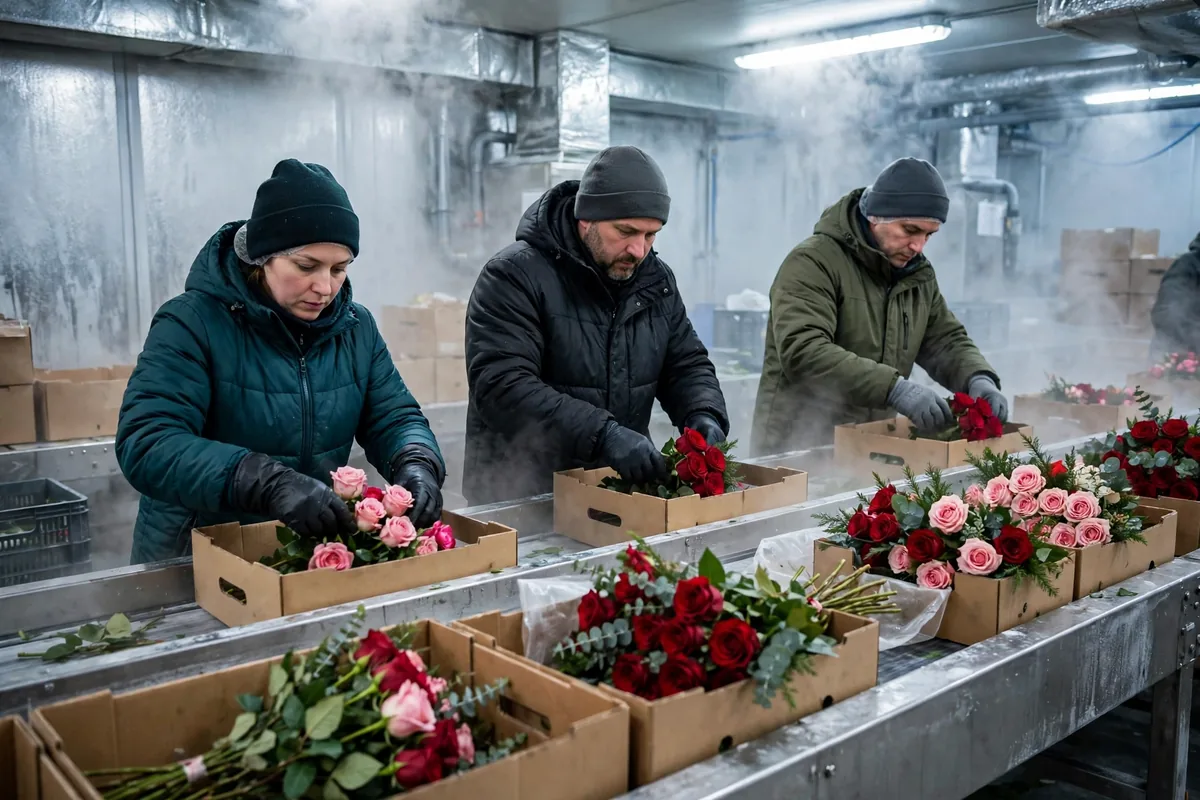
The stems are cut in the fields, and the first job is pre-cooling. A freshly cut flower carries field heat — the core temperature can be above 20°C — and it has to be brought down to 0–4°C as fast as possible. Get this wrong and nothing downstream matters. The heat trapped inside the flower head is like heat under a blanket: the outside feels cool while the inside is still running a fever. After pre-cooling comes grading, bunching, and boxing, then the boxes go onto a reefer truck to the cold chain cargo terminal at Bogotá airport.
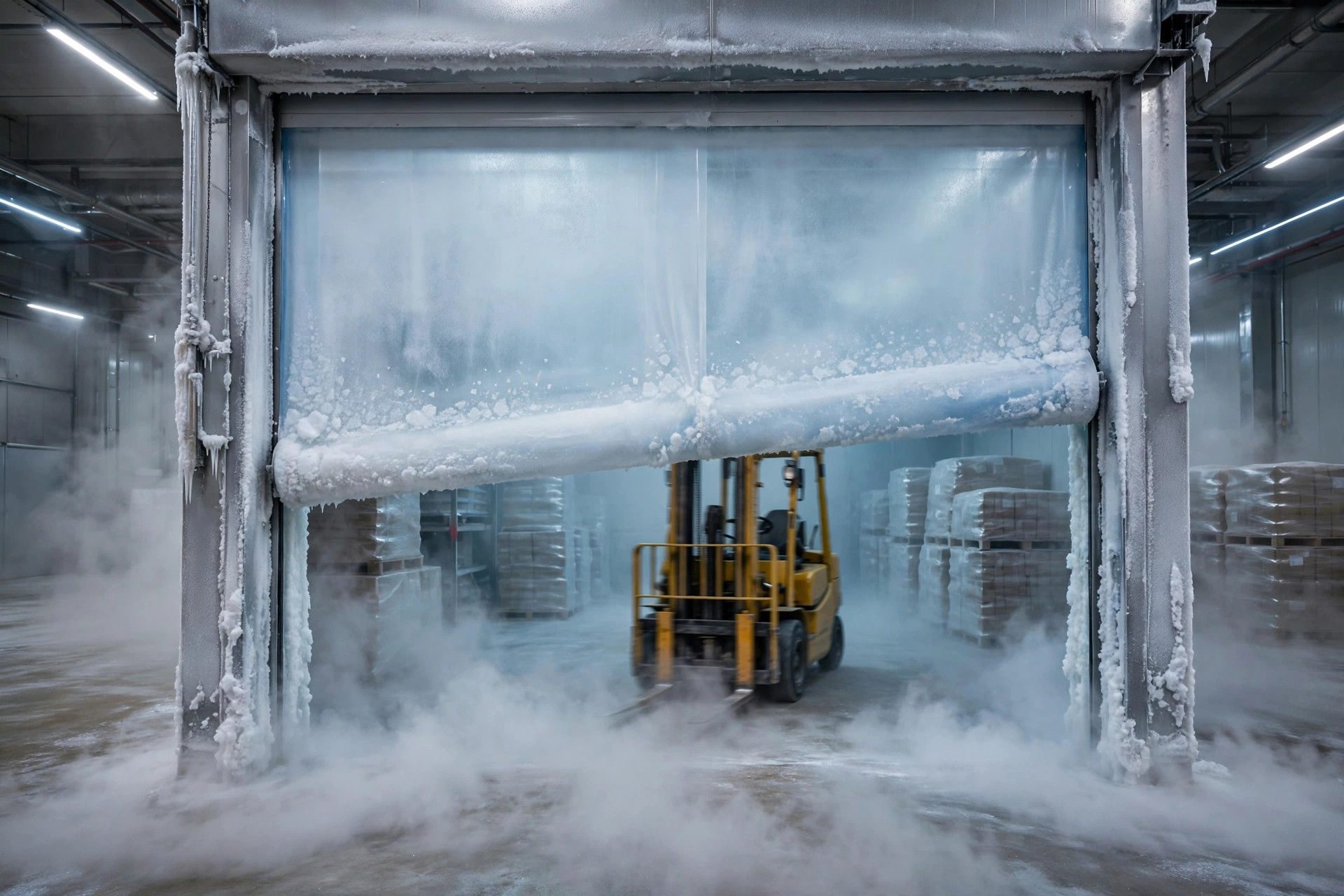
The airport is where things most often go wrong. The freight has to clear security and customs and wait for a slot, and any queue means waiting at the terminal. A good terminal has a complete cold chain path: boxes come off the truck straight into cold storage, and only go to the apron right before loading, so the time exposed to ambient temperature is measured in minutes. A bad terminal has a stretch of open road between the cold room and the aircraft, and ten extra minutes in the sun is enough to drop a grade.
After landing in Miami, the freight goes through the airport's cold chain facility for customs clearance and inspection, then out to wholesalers' and distributors' cold storage, then onto reefer trucks to flower shops across the country. The scale of the 2026 Valentine's Day season tells the story: Avianca moved 19,000 tons on nearly 320 flights, LATAM moved over 24,000 tons on 430 flights out of Bogotá, Medellín, and Quito, and US Customs and Border Protection processed around 940 million stems in January and February. That kind of volume doesn't come from one company being brilliant. It comes from every link in the chain holding.
The three places the Colombia flower export cold chain breaks most often
Put plainly, the Colombia flower export cold chain rarely breaks on the airplane or in the cold room. It breaks at three handover points.
The first is farm to reefer truck. How far is the field from the pre-cooling room, and how fast do cut stems get into the cold? Plenty of small farms have no reefer truck of their own and haul with an ordinary truck, so the temperature is already climbing on the road. The fix isn't complicated: put pre-cooling as close to the fields as possible, or give the farms mobile pre-cooling units. According to Asocolflores, the flower industry supports around 240,000 direct and indirect jobs, many of them small growers. When their cold chain awareness rises, the whole chain starts on solid ground.
The second is waiting time at the airport terminal. In peak season the flights are full, and freight that arrives without a confirmed slot waits for the next one. Waiting inside a cold room is fine. The danger is when the cold room is full and the freight has to wait in an ambient area. Any forwarder working this lane in peak season should lock in cargo space and terminal cold storage positions in advance — not after the freight arrives. In peak season, a confirmed slot and a cold room position are the two most valuable things you can buy.
The third is distribution after landing in Miami. Once the freight clears customs, it needs to get into the wholesaler's cold storage as fast as possible. The cold chain warehouses around Miami airport run at full capacity in peak season, and trucks queue to get in. Wholesalers need to book dock slots and unloading times in advance. Don't let freight sit in a queue outside the airport's cold facility — the rent and the turnaround pressure there are real, and every extra hour costs money and quality.
If you run the Colombia flower export cold chain, put breakage in the budget
Most people cost cold chain as freight plus cold storage rent. I've seen too many of those spreadsheets. The money is always lost in the column that isn't there: spoilage.
Take a 10-ton shipment. Freight and cold storage might add up to a serious number, but if one break in the chain forces the whole lot to be downgraded, the loss can be two or three times the freight bill. And flowers don't get a second chance — Valentine's Day and Mother's Day come and go, and after the date passes, the only option is a discount. In peak season, the time value of the freight is worth more than anything else.
So my advice is to put a separate line in the budget: a breakage reserve. Spend it on three things: pre-cooling equipment and reefer trucks, deposits to lock cargo space and storage positions in peak season, and temperature loggers for the whole journey. Loggers aren't expensive — put two or three on each shipment and you get a full temperature curve on arrival in Miami. If something went wrong, you know exactly where. If nothing went wrong, the curve is proof of quality for your customer.
One more thing: don't put all your eggs in one basket. In the 2026 Valentine's season, Avianca and LATAM together moved 43,000 tons on 750 flights. On the shipper side, split your bookings across two carriers — if one has a problem, the other can cover. In cold chain, redundancy isn't waste. It's insurance.
This 48-hour Colombia flower export cold chain took Colombians decades to build into the benchmark for flower cold chain worldwide. Benchmark doesn't mean it never breaks. It means it has broken so many times that people know exactly where it breaks. If you want into this lane, don't start by asking what the freight costs. Start by asking: while my freight waits for a slot at Bogotá airport, which cold room is it sleeping in?
By Lao Mi, Supply Chain Veteran (20 yrs)