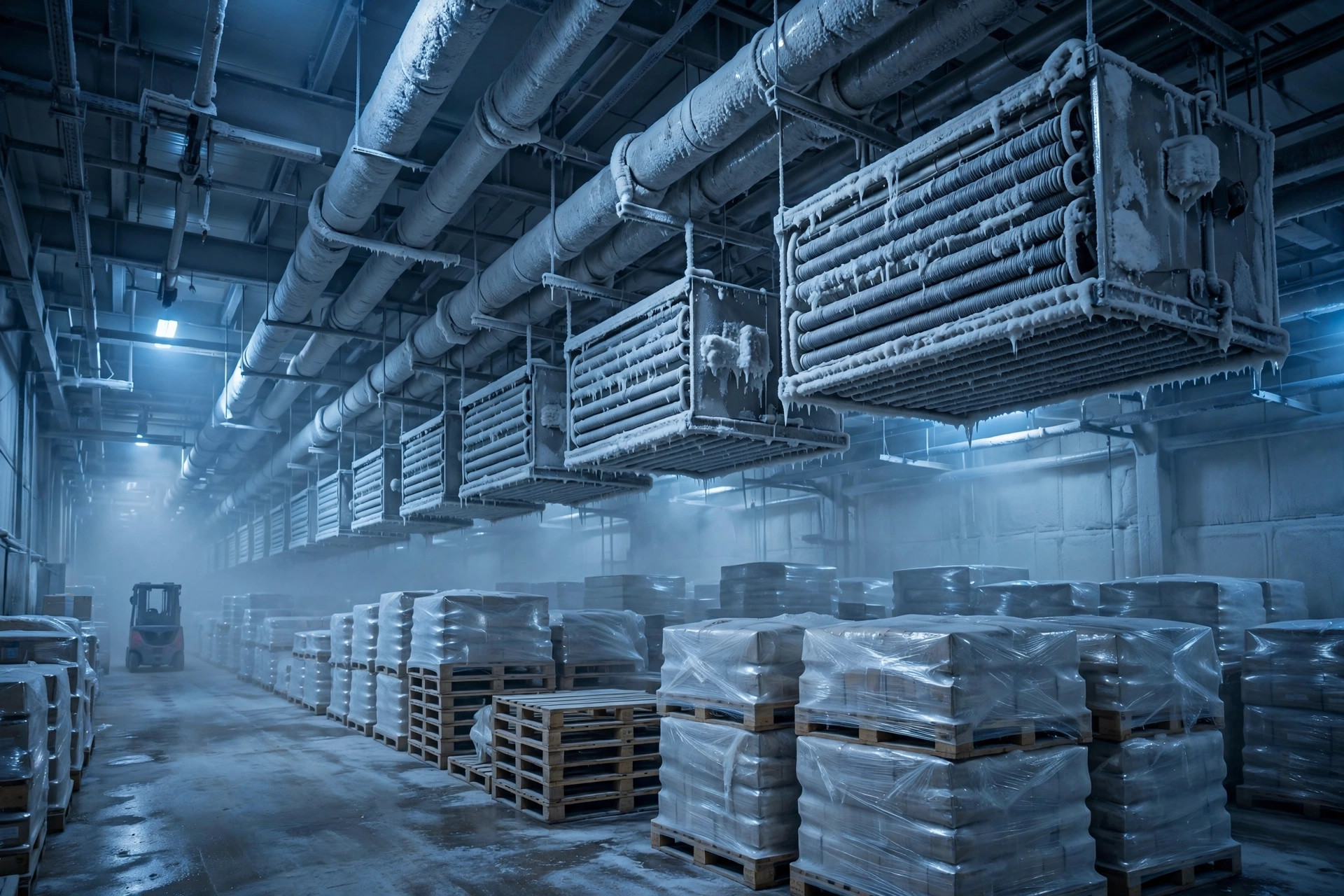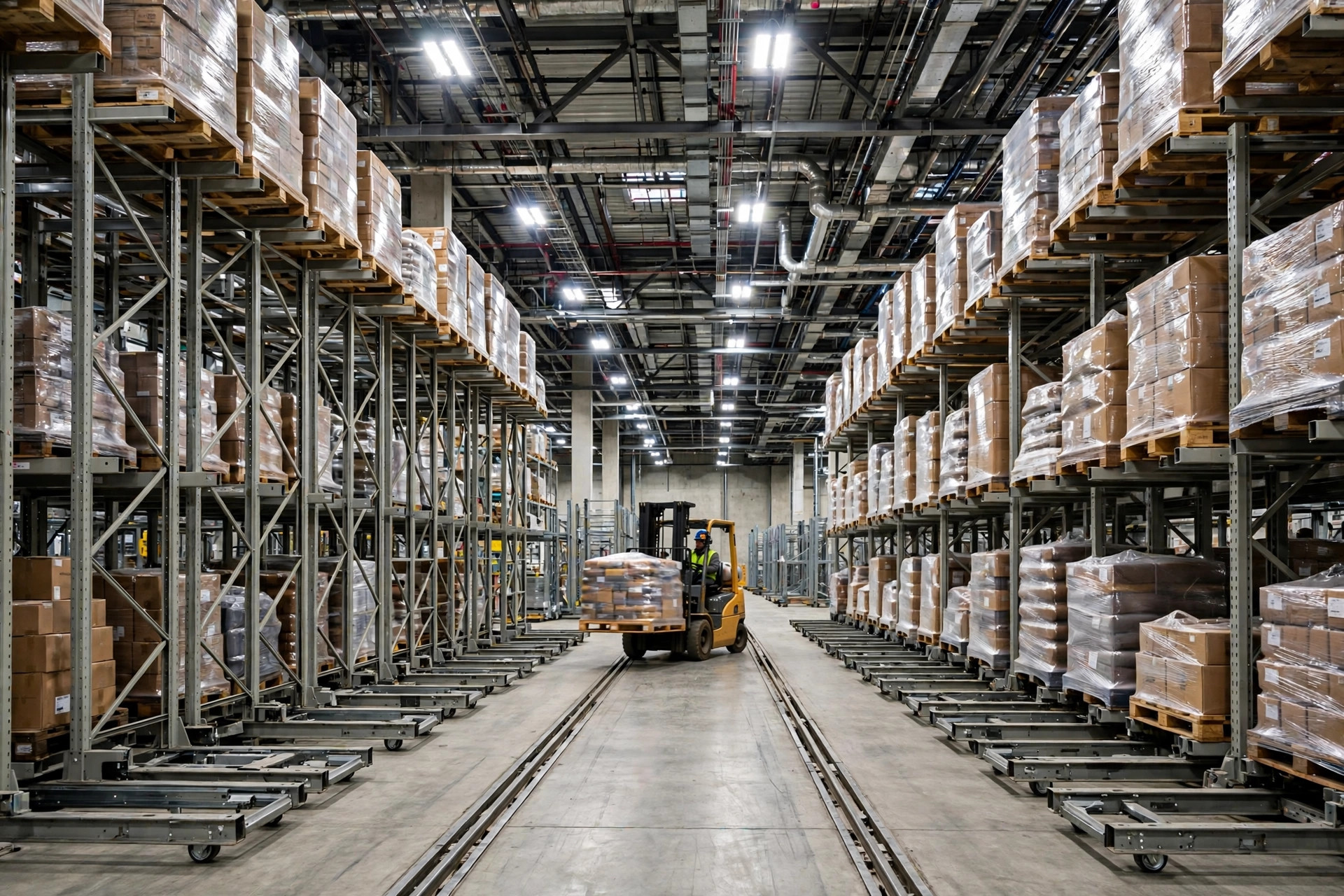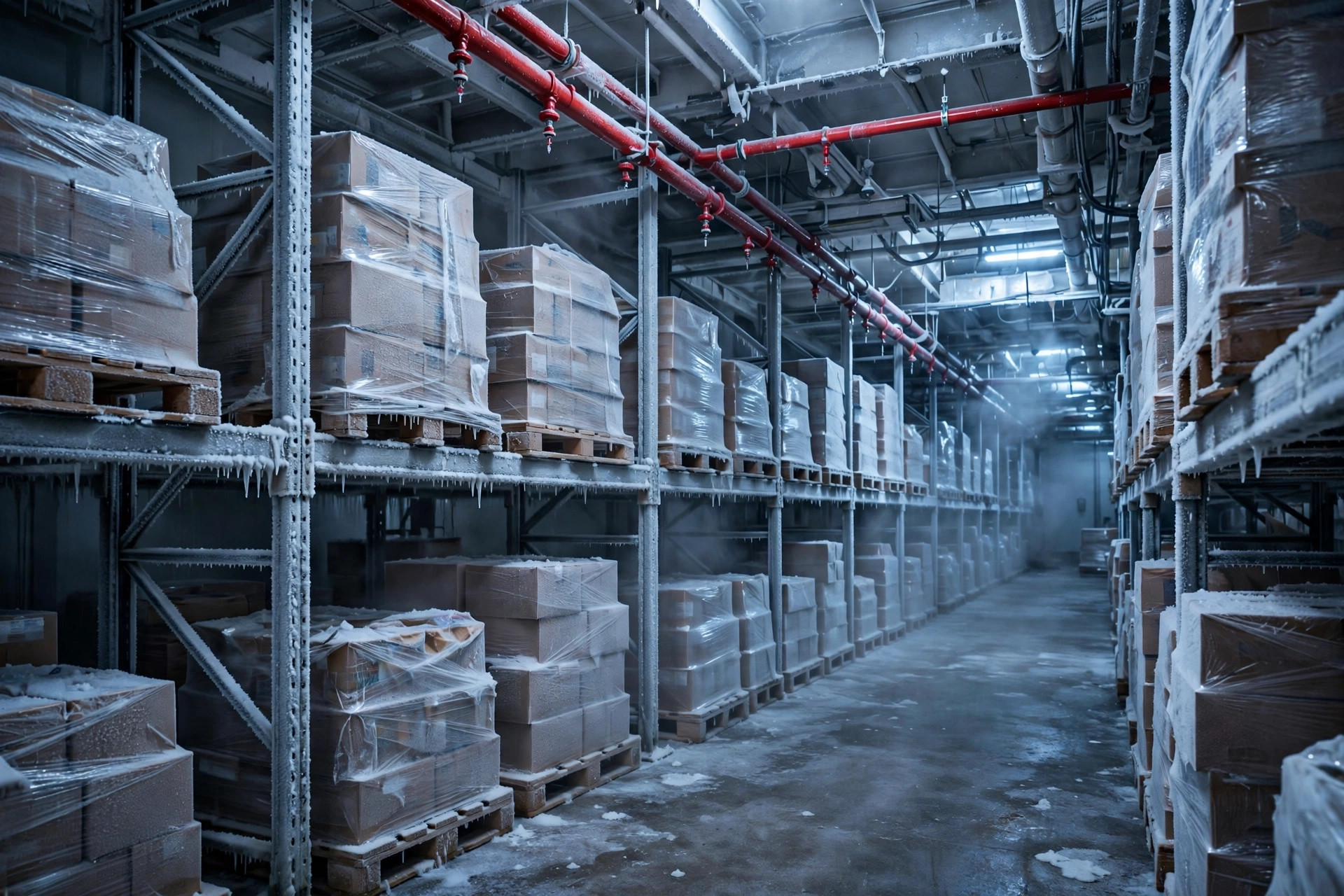
Here's a question most warehouse operators never ask until it's too late: what's inside the sprinkler pipes of a freezer running at twenty below zero?
If the answer is water, you don't have a fire protection system. You have a very expensive plumbing failure waiting for its first winter. I saw it happen in 2021 at a frozen-food warehouse outside Fresno, a little over 40,000 square feet. The owner had built it like an ambient warehouse, wet-pipe sprinklers and all, pipes charged with water year-round. After one winter, inspection found seepage at three fittings. We cut open a section and the pipe wall had already started to bulge from the inside. Give it one more freeze cycle and the pipe itself splits. At that point you haven't just lost the pipe, you've lost the entire system.
The first principle of cold storage fire protection is dead simple: there must be no water in the sprinkler pipes. At least not until a fire actually starts.
That's what dry-pipe systems are for. In a normal wet system, the pipes sit full of water and the moment a sprinkler head breaks, water is already there. In a dry system, the pipes are charged with pressurized air, and the water is held back by a dry-pipe alarm valve sitting in a heated valve room attached to the freezer. When a real fire breaks the glass bulb in a sprinkler head, the air pressure in the network drops, the valve clapper gets pushed open by water pressure, and only then does water flood the pipes and reach the heads.
Simple on paper. The devil, as always, is in the details.
Dry-pipe and preaction systems get confused constantly, so let's settle it. A dry-pipe system is single-trigger: head breaks, water flows. A preaction system adds a second gate. The pipes still hold air, but a broken head alone isn't enough. A fire detection system has to confirm the fire first, the valve opens and pre-charges the pipes with water, and then the heads discharge. Double interlock, and the chance of an accidental discharge drops to almost nothing.
Which one do you pick? Look at what's in the building. A plain frozen-food warehouse does fine on dry-pipe. It's simpler and cheaper to maintain. But a pharmaceutical cold store, high-value inventory, or a building stacked with cardboard packaging? I'd go preaction every time. One accidental discharge, ruined product plus the shutdown and de-stocking to dry everything out, costs far more than the price gap between the two systems. It's a trade-off with no universal answer, just your inventory value weighed against your risk tolerance.
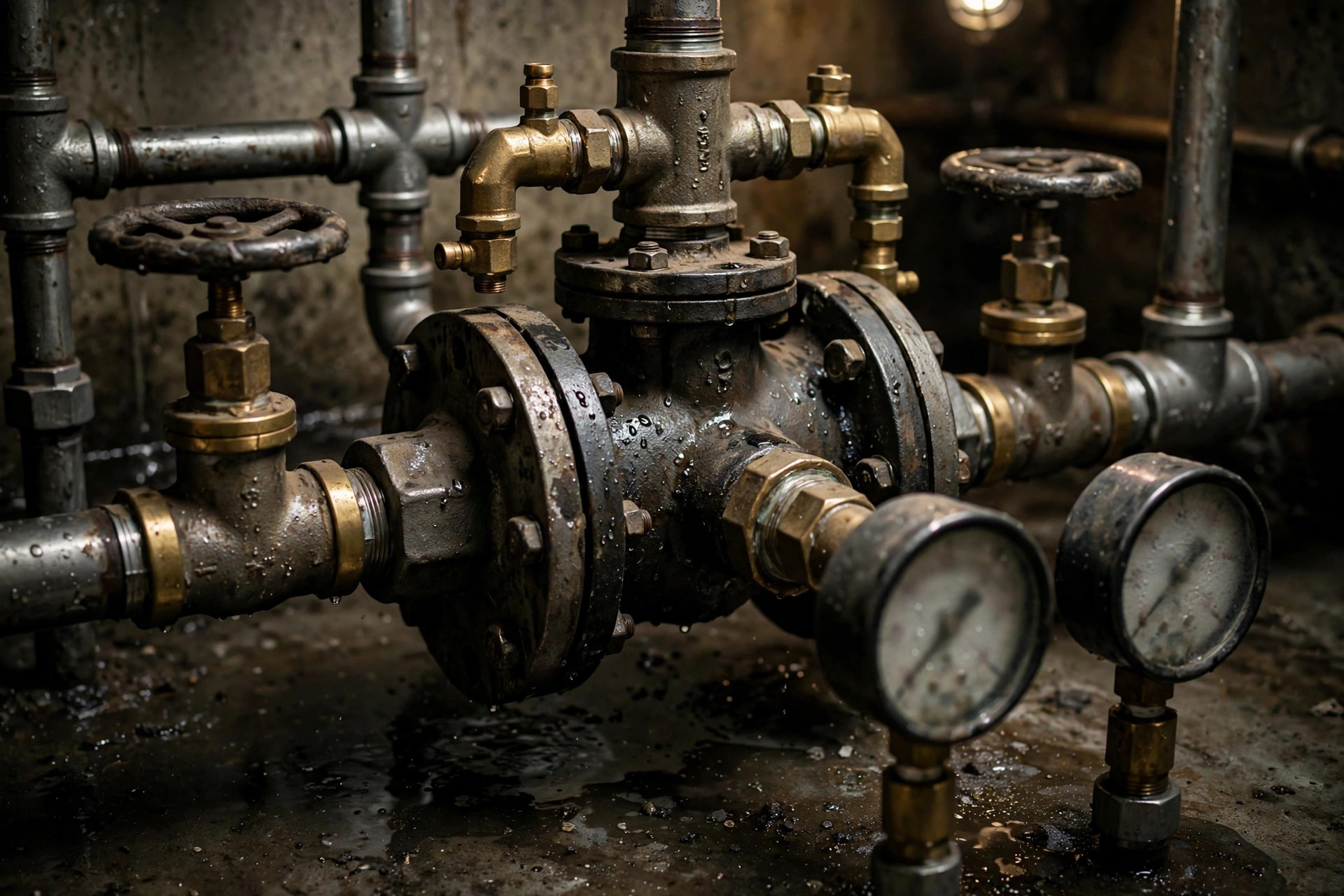
The Valve Room Is the Whole Game
A dry system has no water in its pipes, which tricks people into thinking there's nothing to maintain. The valve room is the heart of the entire setup, and getting its location wrong poisons everything downstream. It has to be an insulated room, usually partitioned off right against the freezer's exterior wall, and it has to stay above freezing all winter. Two things inside matter most: the dry-pipe alarm valve itself, and the air compressor that keeps the pipe network pressurized.
That compressor has humbled plenty of operators. Its job is to hold network air pressure and top it up when it sags. Undersize it and here's what happens: somewhere with big day-night temperature swings, network pressure drops with the overnight temperature, the little compressor can't keep up, the valve thinks a head has broken, and it trips. Water floods into the pipes, freezes solid in a subzero environment, and the whole system is dead on the spot. I've seen exactly this failure. Fixing it cost more than a fresh install, because every frozen section of pipe had to be traced and replaced.
Routine inspection comes down to three things. First, watch how often the compressor cycles. Frequent cycling means the network is leaking air, and an unfound leak is a future freeze failure. The leak point is usually also where the pipe will split first. Second, watch the valve room temperature. If the heating fails and frost starts forming on the valve body, the clapper can seize. A valve that won't open in a real fire is worse than no valve at all. Third, run the main drain test on whatever cycle the current code and your local fire authority require. I'm deliberately not giving you a number here. Look it up for your jurisdiction, don't take it from a contractor's offhand remark.
Heat tracing deserves its own mention. Electric heat trace wrapped around pipes under insulation is a decent insurance policy for extreme conditions, but the cable ages, and it ages silently. It keeps drawing power and stops producing heat. Anywhere you've installed it, put a dedicated line on the inspection sheet and actually verify it's still warm. Anyone treating heat trace as install-and-forget ends up paying for a full pipe replacement.
Wall penetrations are another quiet killer. Where pipes pass through the freezer's insulated envelope, the sleeve has to be sealed and insulated properly. I've seen crews punch through and fill the gap with spray foam. The foam cracks with age, the penetration becomes a thermal bridge, and cold creeps along the steel pipe straight into the valve room. The room's heating was sized for normal heat loss, not for that ambush, so the temperature slides down a degree at a time and frost starts on the valve. By the time anyone notices, it's been growing for months.
Decide Fire Protection Before the Concrete, or Pay Double
Here's my verdict, and I'll say it plainly: on a new freezer build, the fire protection design has to be locked in before the civil drawings are finished.
Why? Every element of a dry system, the valve room location, the pipe routing, the wall penetrations, is tied to the insulation and the structure. The valve room needs its spot reserved and its sleeves placed during civil works. Penetration sealing and insulation details belong in the civil spec. Done during construction, all of this costs almost nothing on the margin.
Decide after the building is up and it's a different story. The insulation panels are sealed, so every new penetration means cutting them open, and sealing one penetration properly after the fact costs multiples of doing it during construction. There's nowhere to put the valve room, so you end up bolting a heated shed onto the outside of the building, insulation, heating, and pipework all redone from scratch. On one retrofit I was involved with, the fire contractor's quote came in at roughly double what the same system would have cost if designed in from day one. The owner's hand was shaking when he signed, and it wasn't just the money. Two months of schedule had evaporated too.
Worst of all is the operating freezer. Product is already in the building, so the retrofit means hot work and cutting holes in a live freezer. Inventory has to be shuffled, refrigeration can't stop, and the crew works in whatever gaps operations allows. None of that shows up on the quote. All of it is real money. And there's a sneakier trap: to save hassle, some retrofits cram the valve room inside the insulated envelope, where the valve lives in permanent cold and humidity. Three winters later it's corroded shut. That's an expensive decoration, not a fire system.
So stop thinking of fire protection as equipment you add later. In cold storage, it's part of the building, not part of the equipment list. Before the structural drawings go out, the fire contractor needs a seat at the design table, with the valve room location, pipe routes, and every penetration marked on the drawings. That one step saves double the money and half a year of grief later.
If you're planning a freezer right now, do one thing this week: get the fire contractor into the design meeting, lock down the valve room location and every wall penetration on the spot, and only then let civil issue its drawings. Get the order backwards and the price doubles. That's not a metaphor. I've watched it happen.