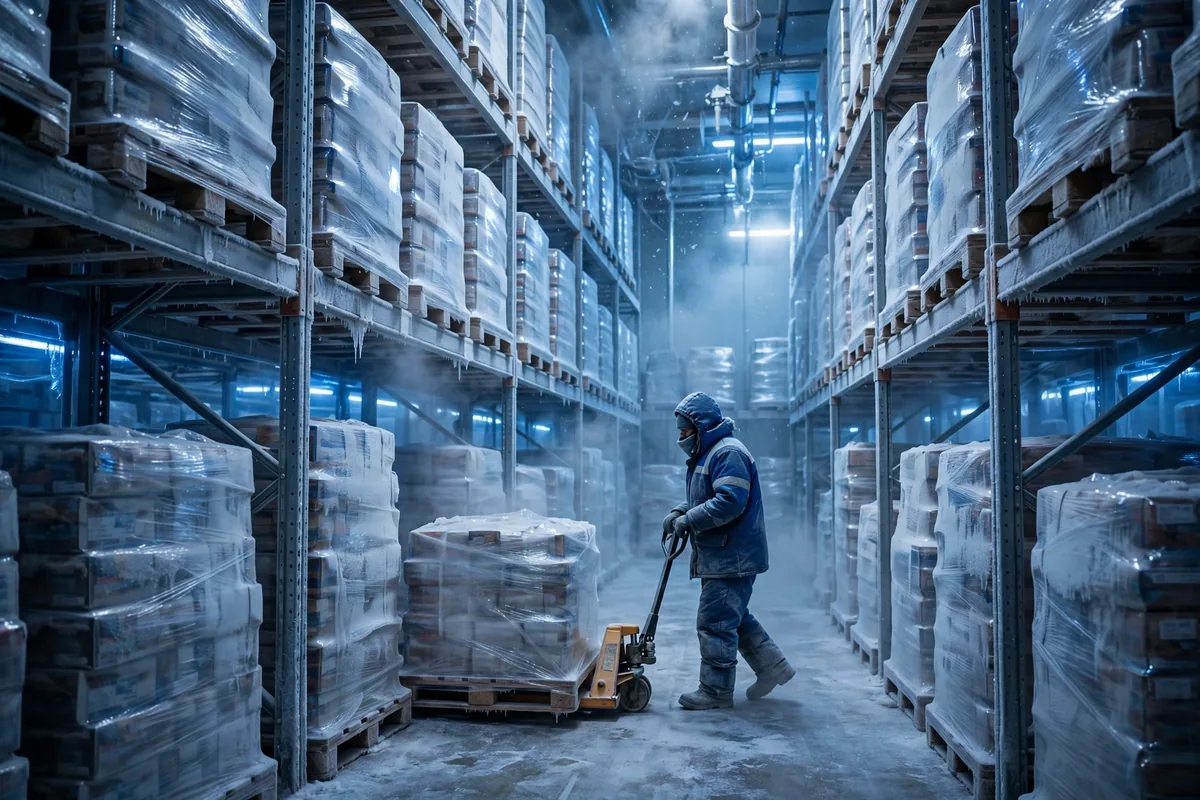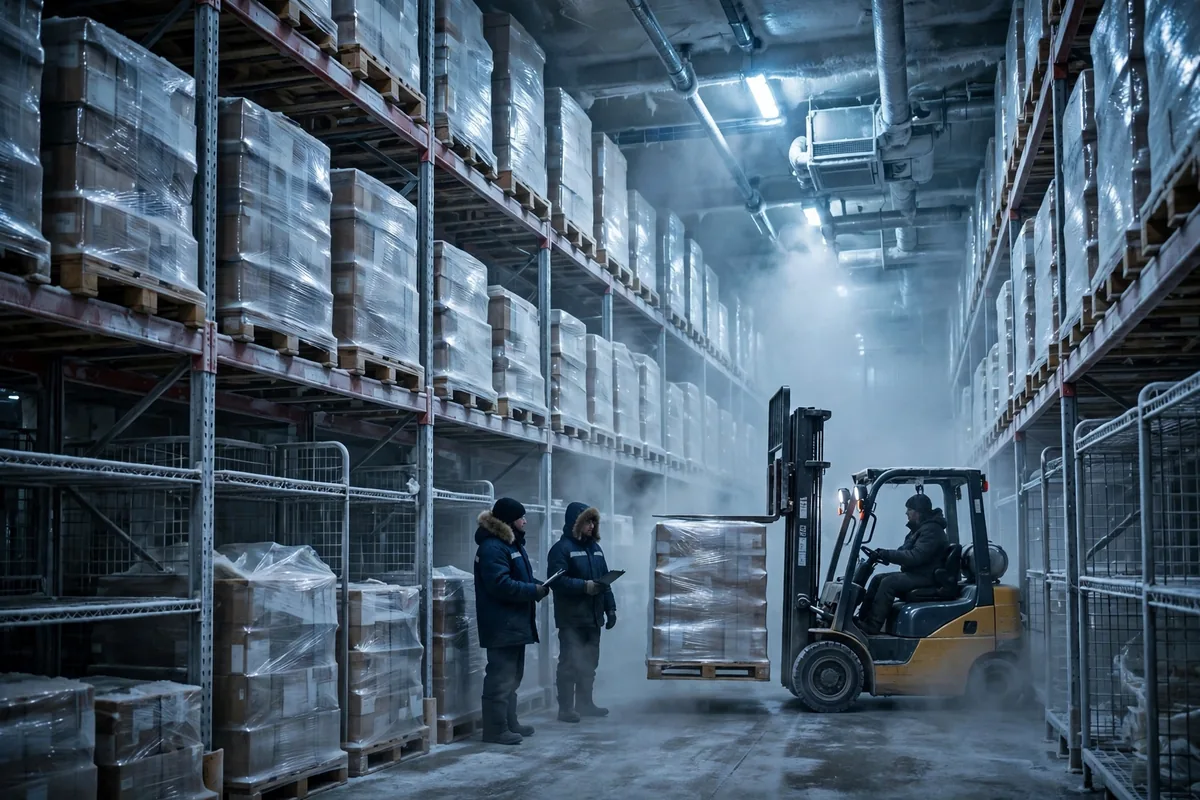
Start with the number: $780 a year. That is the cold storage cost per pallet for one frozen pallet position in the worked example below — $65 a month. It is not a quote and not an industry average. It is a worked example, built so you can swap in your own numbers. If a 3PL quotes you something different, do not argue about the number. Ask what is inside it. Most people talk about cold storage as if it were all about the power bill. That is where the math goes wrong from the start.
In spring 2024, a frozen-food importer near Los Angeles asked me to check their numbers. They rented 3,000 frozen pallet positions. The monthly rent looked reasonable. But at year end, total warehousing spend came in nearly 20% over budget. Where did the extra money go? Part of it was the power bill. Part of it was forklifts — batteries wear out faster in the cold, and maintenance bills pile up. And part of it was a batch of product written off after temperature swings in the building, with insurance covering only a share. The three extras together were bigger than the rent itself. The lesson: cold storage cost per pallet is never just a rent figure. It is five costs stacked on top of each other.
The five pieces of cold storage cost per pallet
| Cost item | Per position per year (USD) | Share |
|---|---|---|
| Rent | 300 | ≈38% |
| Refrigeration power | 180 | ≈23% |
| Labor | 150 | ≈19% |
| Equipment depreciation and maintenance | 90 | ≈12% |
| Shrinkage and insurance | 60 | ≈8% |
| Total | 780 | 100% |
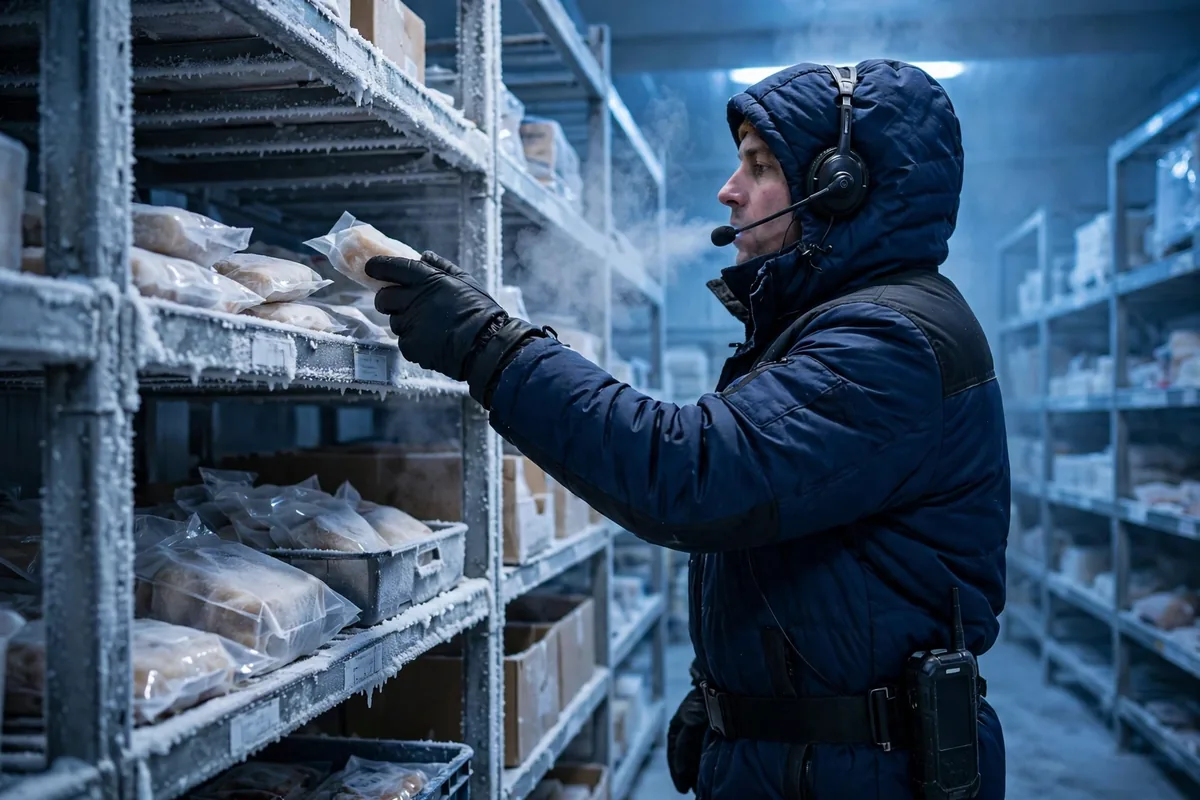
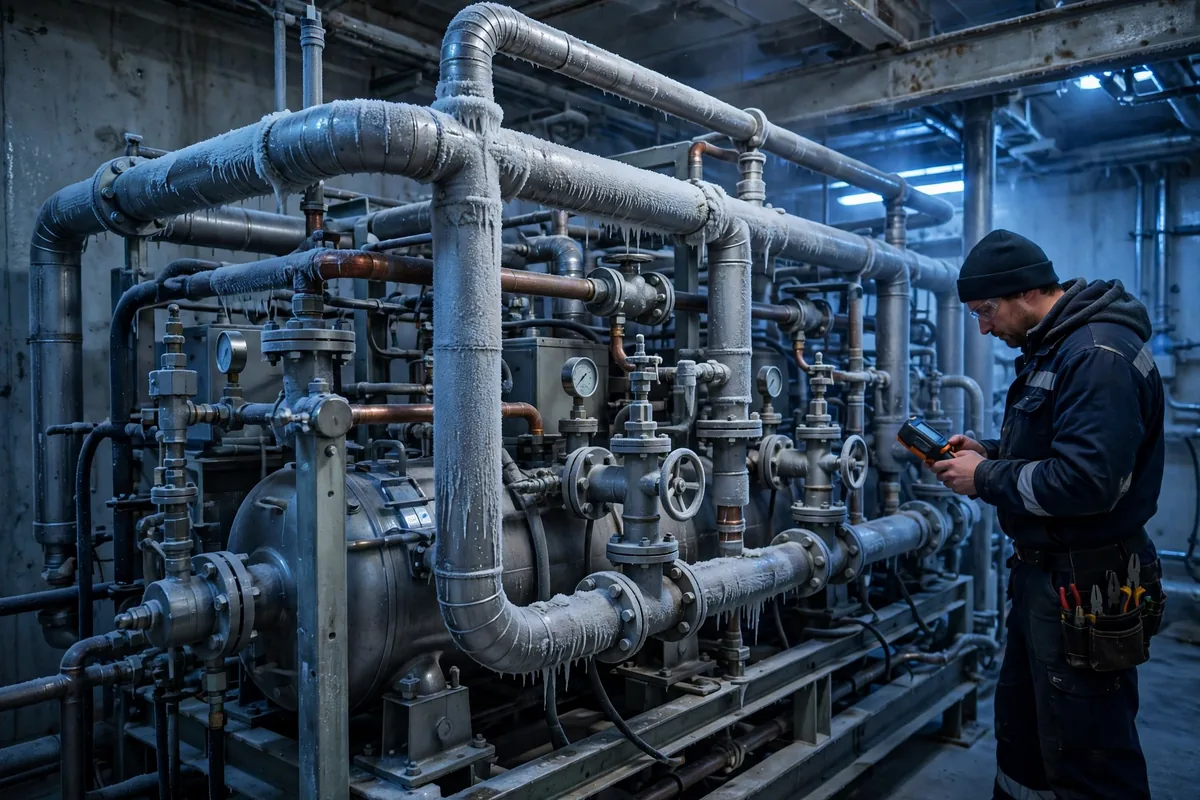
The worked example below assumes a 10,000-position frozen store at -18°C, fully occupied. Rent at $25 per position per month works out to $300 a year. Power has public benchmarks to check against: the average US cooler runs about 1.54 kWh per cubic foot per year, freezers run 20–40% higher, and the US commercial average electricity price is about $0.135 per kWh. Working back from those benchmarks, $180 a year per position for refrigeration power is a reasonable order of magnitude. Labor at $150 is an allocation — cold work is slower, with heavy clothing, shorter shifts and more rotation, so output per hour runs below an ambient warehouse. Depreciation at $90 covers the refrigeration plant, the insulated envelope and cold-rated forklifts, plus maintenance. Shrinkage and insurance at $60 is the annualised cost of temperature excursions, frost damage, write-offs and cover.
A word on why cold rent runs about double ambient rent. The building itself costs more: insulated panels, a thicker slab with heating elements underneath to stop the ground freezing and heaving, airlocks at every door. Then the refrigeration plant, which is capital equipment with a 15-year life, not a fit-out. When a 3PL quotes $25 a position a month, a good chunk of that is paying off concrete and compressors, not floor space.
Cold vs ambient: three times the cost
| Cost item | Frozen (USD/position/yr) | Ambient (USD/position/yr) |
|---|---|---|
| Rent | 300 | 150 |
| Power | 180 | 20 |
| Labor | 150 | 70 |
| Depreciation and maintenance | 90 | 15 |
| Shrinkage and insurance | 60 | 5 |
| Total | 780 | 260 |
The power gap is the biggest single piece. The UK's CIBSE TM46 benchmark puts a refrigerated warehouse at about 145 kWh per square metre per year against about 35 kWh for an ambient one — more than four times as much. Refrigeration typically accounts for 60–70% of a cold store's total electricity. Put plainly: you are not renting space. You are renting a fridge that never switches off.
Here is the counterintuitive part: the most expensive thing in a cold store is not power. It is an empty pallet position. Rent and depreciation are fixed costs — you pay them whether the position holds product or air. In the example above, fixed cost is $390 per position (rent $300 plus depreciation $90), which is $3.9 million a year across 10,000 positions. At 70% occupancy, the 7,000 occupied positions each carry $557. At 90% occupancy, 9,000 positions share the same fixed cost and each carries $433. Nothing changed except the fill rate, and fixed cost per position fell by $124. Plenty of operators haggle over 5% on the power tariff while a fifth of their positions sit empty. That is money spent badly.
Three levers, in order of payoff
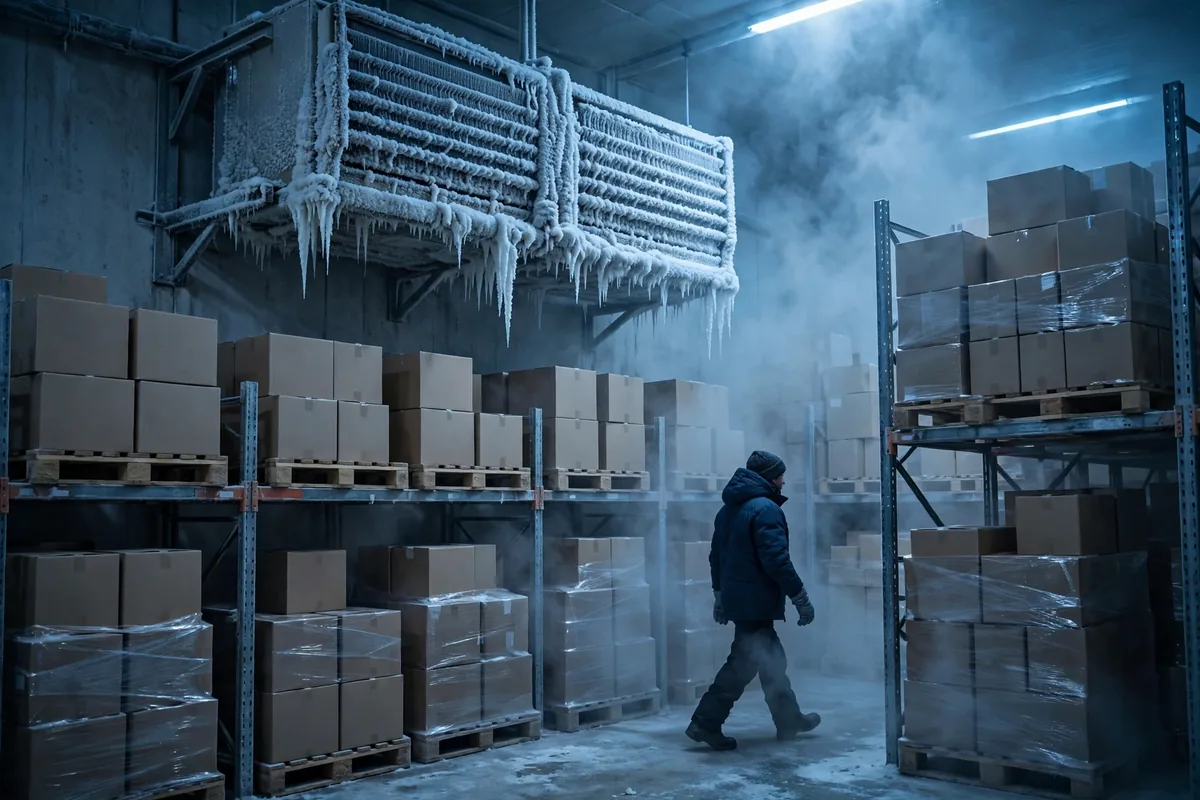
Occupancy first — the arithmetic is above, and it beats everything else. Then the temperature setpoint: -18°C is the usual frozen setpoint, and pushing colder costs power for little extra shelf life, unless your product contract demands a lower temperature. Do not add degrees of cold on your own initiative. Then door management: cold air leaves through open doors. In 2023 I looked at a cold chain site in Chicago that fitted high-speed doors plus air curtains; compressor runtime dropped visibly within weeks. Doors are a small line item and one of the few upgrades where small money saves big money.
One more lever gets overlooked: tariff structure. A cold store is a 24-hour continuous load, which makes off-peak pricing work in its favour. Shift schedulable work — pre-cooling, defrost cycles — into off-peak hours and the bill comes down by a few points a month. Exactly how much depends on your local utility's peak and off-peak rates, so check the latest published tariff before you count on it.
And if you rent rather than build, there is a lever inside the contract. A flat monthly rate per pallet position looks simple, but it pushes all the occupancy risk onto you — empty positions still get paid for. A fixed base fee plus a throughput charge, or a minimum-volume commitment you can actually hit, usually works out cheaper over a year. Run both pricing structures through the formula below before you sign anything.
Here is a formula you can use directly: cold storage cost per pallet = annual fixed cost ÷ occupied positions + variable cost per position. Fixed cost is your rent plus depreciation. Variable cost is power, labor and shrinkage. Put your own numbers in and in three minutes you will know what one pallet position really costs you for a year. Take that number into your next 3PL negotiation and you will see exactly where the fat is in their quote.
Before you sign a multi-year cold lease, run the math on cold storage cost per pallet for your own building, not a brochure average. Ask for the last twelve months of power bills, divide by occupied pallet positions, and add labor, maintenance, and shrinkage on top. If the landlord will not share the power data, that silence is itself an answer. By Lao Zhou, Logistics Cost Analyst