Let me put the bill on the table first. Last summer, one cold chain shipment went wrong, and I still remember the claim letter: goods worth 460,000 yuan, a claim for 520,000, settled at 310,000 in the end. Insurance covered 180,000. The remaining 130,000 came out of our own pocket. When a cold chain break turns into a claim, the math works like this — and once you see it, you understand that a break never costs you just the goods.
Inside that 130,000, the goods were the biggest piece, but not the whole story. Reshipping cost money. Disposing of the spoiled load cost money. The hours customer service spent arguing with the shipper cost money. And the next quarter, the shipper quietly moved its volume to another warehouse — that cost the most, and it never showed up on any invoice. The worst part? We actually had temperature loggers in place. The data just wasn't there when we needed it. One unit's battery had died the month before and nobody replaced it. At the negotiating table, the other side's lawyer asked a single question: how do you prove the break happened in your hands? We couldn't answer.
After that I ran the full numbers. A cold chain break claim has four layers, and most people only ever see the first one.
Cold Chain Break Cost: The Claim Is Never Just the Goods
Layer one is the value of the goods. Spoiled is spoiled, priced at cost, no argument. Layer two is the cost of the claim fight itself — legal fees, time, back-and-forth staff hours. Layer three is the insurance deductible: every policy has one, small losses aren't covered at all, and large ones are only partly covered. Layer four is the one people forget, and it's the most expensive: losing the customer. A shipper who loses a cold chain load doesn't just lose goods — it loses face with its own downstream customers. It walks away to another warehouse, and a year's worth of volume from that one customer can cost more than the claim itself.
Here is the full picture for one broken shipment, worked out as an illustrative example. Run it against your own goods value, policy, and margins before you copy anything.
| Cost item | Amount (illustrative example) | Note |
|---|---|---|
| Goods written off | 460,000 yuan | Full load scrapped, at cost |
| Reshipment and disposal | 32,000 yuan | Rush reefer truck plus disposal |
| Claim negotiation and legal | 25,000 yuan | Lawyer plus internal hours |
| Insurance deductible borne by us | 130,000 yuan | Deductible plus cap shortfall |
| Lost customer (one year of margin) | ~400,000 yuan | Hardest to measure, most expensive |
| Total | ~1,047,000 yuan | More than double the goods value |
Look at that number. Goods worth 460,000, total damage over a million. A cold chain break claim is never priced at the value of the goods. It's priced at the chain reaction.
The Temperature Logger: On the Negotiating Table, the Curve Is the Evidence
Whether a claim costs you half or double comes down to one thing, and it isn't the lawyer. It's the logger.
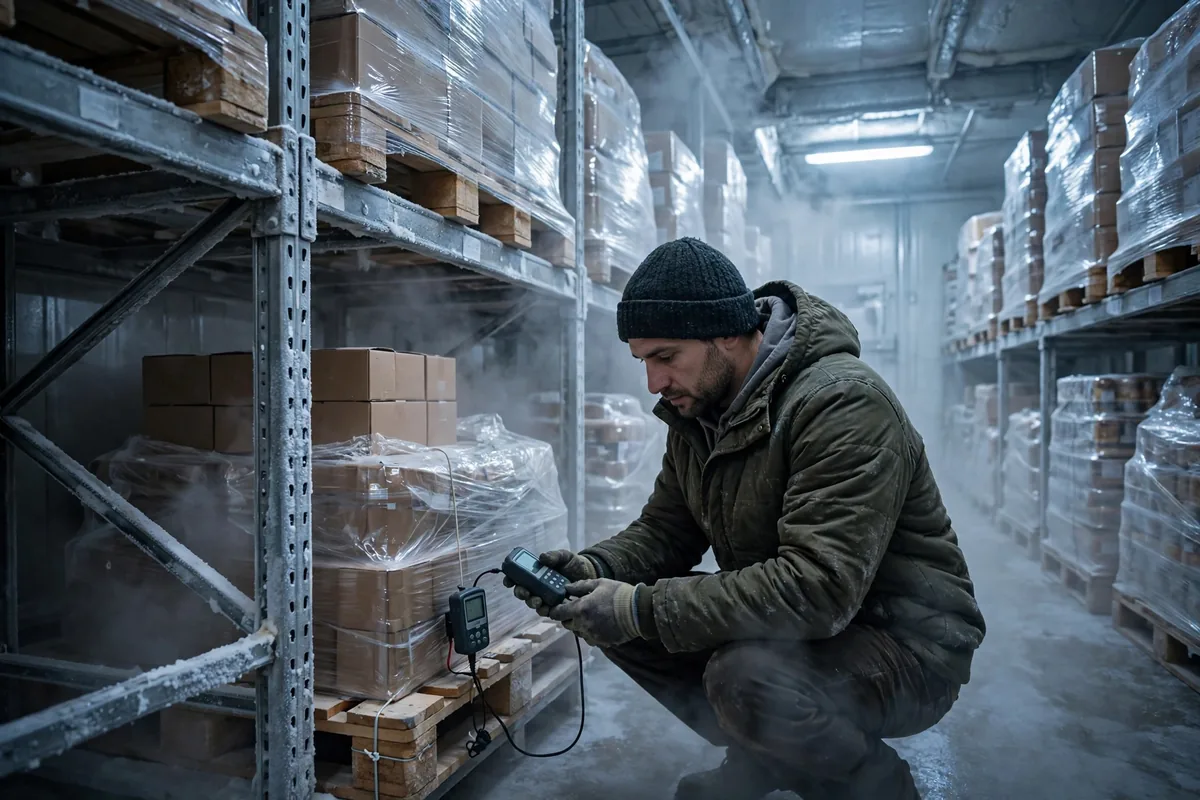
For logger data to hold up as evidence, it needs three things: continuous recording with no gaps; regular calibration so the accuracy stands up; and timestamps that line up, from inbound to outbound, end to end. For pharma cold chain, the accepted accuracy bar is ±0.5°C or better. The U.S. CDC recommends calibration every one to two years, and sensors drift ±0.1°C to ±0.5°C a year on their own. No calibration certificate, and your data is scrap paper at the negotiating table.
The most painful case I ever saw: August 2024, a vaccine distribution cold store. A reefer truck waited more than two hours at the dock before unloading, and the load temperature climbed from 4°C to 11°C — outside the 2–8°C pharma refrigerated band. The shipper claimed. The warehouse actually had logger data proving the excursion happened during the wait on the truck, which would have put the liability on transport, not storage. But the logger had been installed three months earlier, the calibration certificate couldn't be found, and its clock was running 40 minutes slow. The other side's lawyer needed one sentence: how do you prove this curve belongs to this shipment? The warehouse ended up carrying 60% of the liability it shouldn't have had.
Here is the counterintuitive part: in cold chain, the most expensive thing isn't the refrigeration equipment. It's having no evidence. Broken equipment can be repaired. Missing evidence leaves you with nothing to bargain with. A logger costs little. What it buys is a voice at the negotiating table.
The Three Places the Cold Chain Breaks Most Often
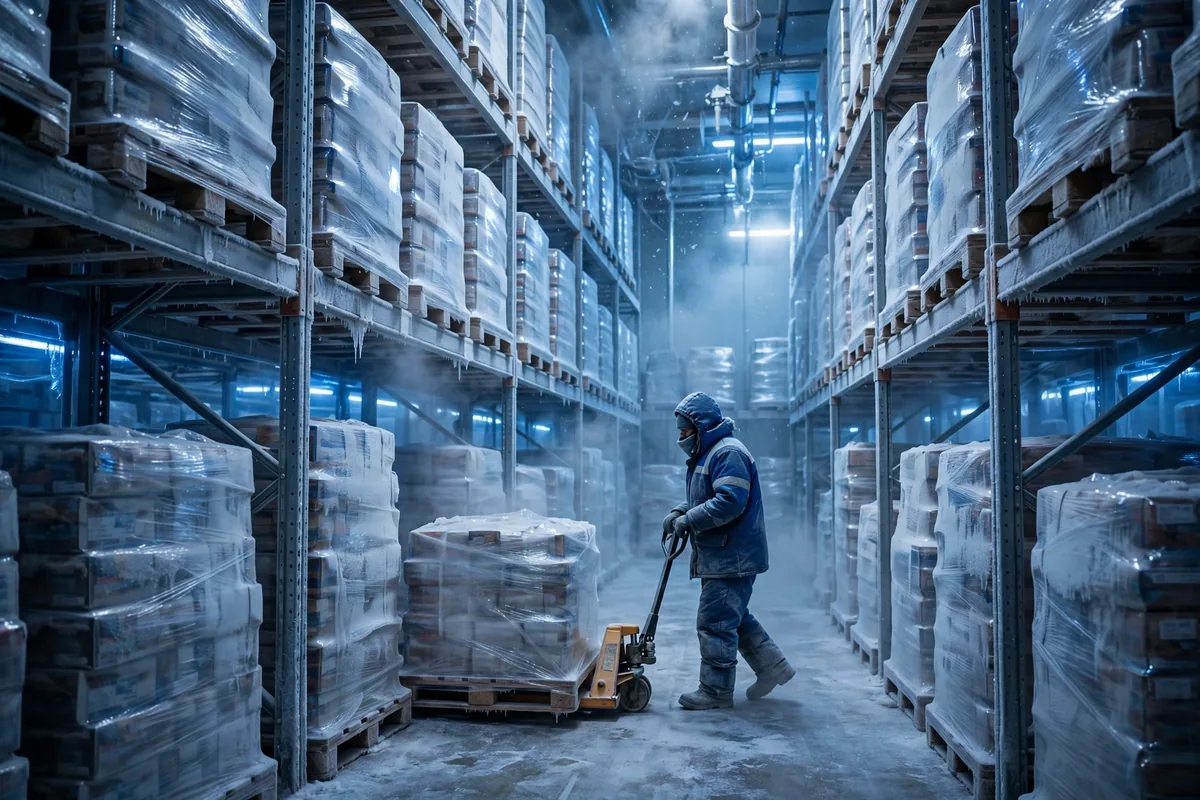
First is the dock handover. Goods come off the reefer truck and into the cold store, and those ten or twenty minutes in between are the most dangerous part of the whole journey. On a summer day the dock runs 35°C, and every extra minute the goods sit there pushes the temperature up. The fix is embarrassingly simple: schedule the truck arrival, pre-cool the dock door, have the unloading crew waiting at the door, and move goods straight inside. No staging on the dock. The cost is close to zero. It runs on scheduling and discipline.
Second is the reefer truck waiting. The truck arrives, there's no slot free, or the paperwork doesn't match, and the truck sits in the sun. That wait is often one to two hours. The fix is appointment slots plus a buffer cold room: thirty minutes before arrival, the slot and the paperwork must be ready; if it can't be, move the goods into the buffer room first instead of leaving them on the truck. A buffer room costs real money to build, but next to one claim, it's cheap.
Third is the cold store door. In a busy store the door opens a hundred times a day, cold air pours out, and the racks nearest the door lose temperature first. The fix is an air curtain plus a door curtain, and one hard rule: the door stays open no more than three minutes, with an alarm past that. An air curtain costs a few thousand yuan and holds the temperature near the door steady by 2–3°C.
Three weak points: the dock runs on management, the wait runs on process, the door runs on equipment. Management is the cheapest — and the easiest to let slide.
Logger Selection and Placement: Small Money Against a Big Claim
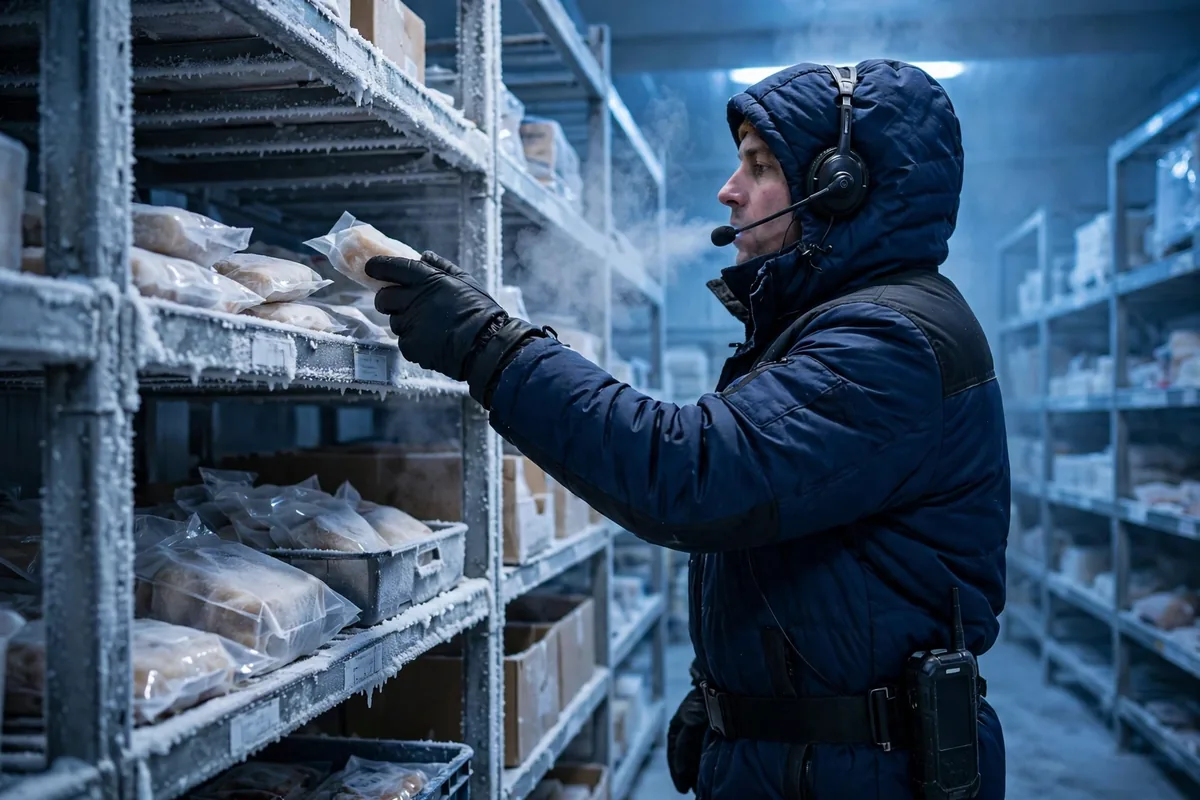
How do I pick a logger? Three checks only: accuracy within ±0.5°C, a calibration certificate included, and data that uploads automatically with local storage as backup when the network drops. Cheap single-use units aren't unusable, but betting high-value goods on them is gambling. Placement matters too: the door, the air outlet, the highest rack and the lowest rack — four points minimum, and in a large store one point per 100 square meters. One logger in the middle of the room tells you nothing about the goods by the door going out of range.
The payback math, again as an illustrative example: fitting out a mid-sized cold store with loggers and air curtains runs roughly 30,000–50,000 yuan up front, plus a few thousand a year for calibration and maintenance. One prevented claim saves hundreds of thousands, sometimes over a million. You don't need an ROI model for this. One calculation is enough.
Whether that money was wasted depends on which side of the incident you're standing on. Before anything goes wrong, a logger looks like a cost. After it goes wrong, the logger is the only thing that can keep your payout down. So here is a conclusion you can calculate: add up what you paid out of pocket on cold chain claims over the last three years, divide by three, and you have your average annual self-borne loss. Then work out the annual cost of loggers plus air curtains. If the first number is more than five times the second, spend the money — and spend it now. In our warehouse the ratio came out at 11 to 1. That's why every cold store door now carries a sign: door open more than three minutes, alarm sounds.
By Lao Zhou, Logistics Cost Analyst