
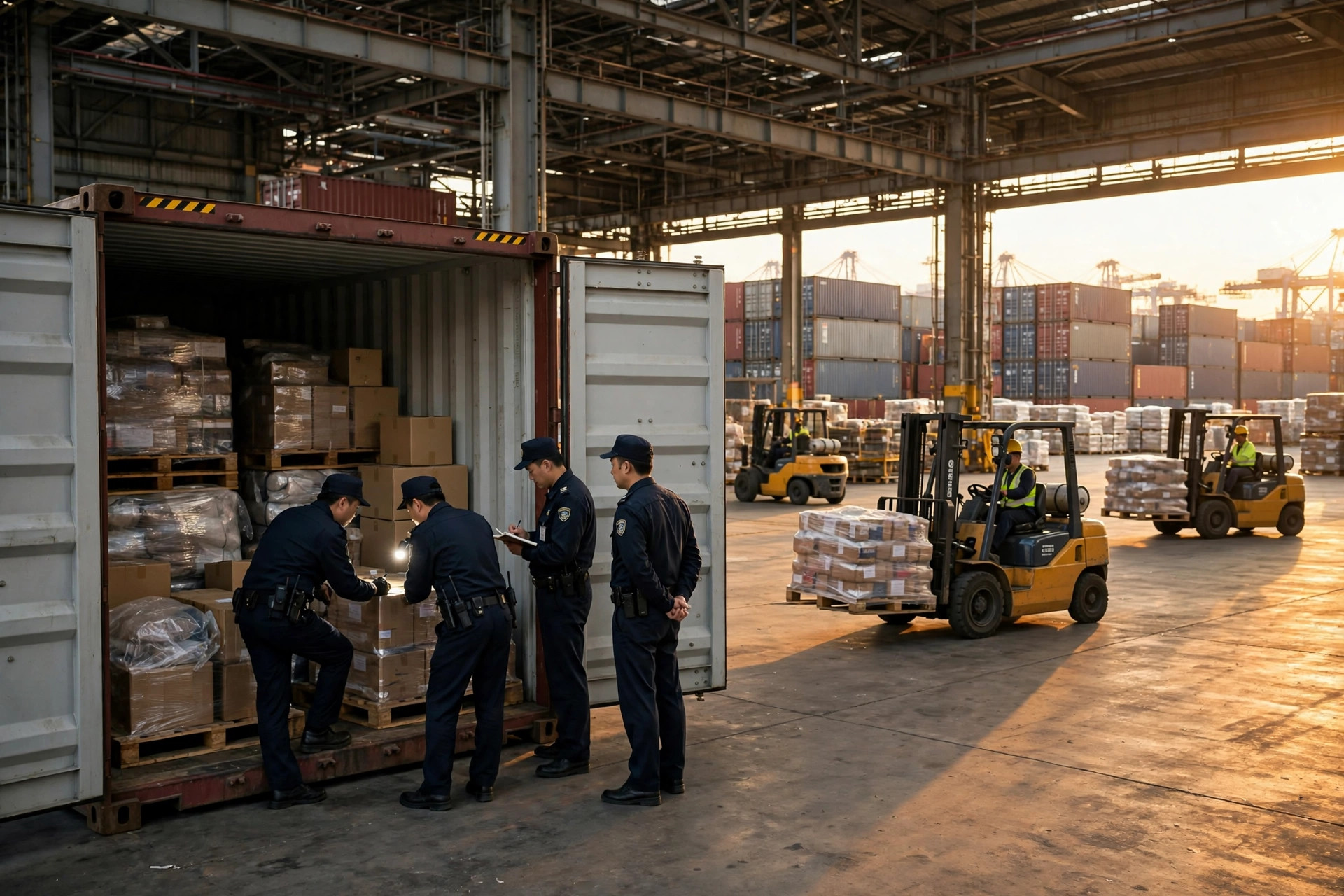
My phone rang at 2:30 in the morning.
It was our customs broker. "Chen, that shipment next week — customs flagged it for inspection. Get the paperwork ready."
I was staring at the peak-season night-shift roster, and my stomach dropped. That order had a hard deadline. One inspection delay of two or three days, and the customer would blow up. Everyone on the floor knows: getting pulled for inspection in peak season wrecks the whole schedule.
That was August 2024, at our company's warehouse near Waigaoqiao. It was also the week I finally got serious about three letters: AEO.
Real talk: before that, I always thought AEO — Authorized Economic Operator — was the customs team's project. A fancy plaque for the office wall. Nothing to do with those of us on the warehouse floor.
Then the boss decided we were going for China's AEO advanced certification. Our customs specialist dropped the certification standard on my desk. I read it, and it hit me: this isn't a customs project. It's an exam — and the warehouse floor is the exam room.
What AEO advanced certification actually buys you at customs
People call AEO a "VIP pass" for clearance. Here's what the VIP pass actually says, straight from GACC Decree No. 237, the Measures for the Administration of Customs Certified Enterprises, Articles 23 and 24:
Generally certified enterprises: average inspection rate for import and export goods cut to below 50% of general-credit enterprises; priority clearance processing; reduced customs guarantee amounts.
Advanced certified enterprises: all of the above, plus the average inspection rate drops to 20% of general-credit enterprises; you can apply for guarantee exemption; and customs audits and inspections become less frequent.
Put it on a wall chart and it gets very clear:
| Benefit | General-credit enterprise | Generally certified | Advanced certified |
|---|---|---|---|
| Average inspection rate | Baseline | Below 50% of baseline | 20% of baseline |
| Priority clearance | No | Yes | Yes |
| Customs guarantee | Full amount | Reduced | Exemption possible |
| Audit and inspection frequency | Standard | Standard | Reduced |
| International mutual recognition | No | No | Yes |
That last row is the big one. The AEO system comes from the World Customs Organization, and the mutual recognition deals China signs with other countries recognize advanced certified enterprises. As of September 2026, China had AEO mutual recognition agreements with 34 economies covering 60 countries and regions, with 54 already implementing them. The China–Cambodia AEO mutual recognition took effect on September 15, 2026. So the pass works overseas too: lower inspection rates and priority inspection for your goods when they arrive in partner countries. (Check the GACC website for the latest list.)
What the auditors actually look at when they walk into your warehouse
The certification standard has four pillars: internal control, financial standing, compliance record, and trade security.
The first three belong to finance and the customs team. The fourth — trade security — lands mostly on the warehouse. When the customs auditors came to our site, they spent two full days on the floor, and they looked at everything:
Perimeter and access control. Cameras — any blind spots. The visitor log — was anyone actually filling it in. The isolation area: where it was, and whether customs-supervised or held goods were physically separated from regular stock. Seal management: who holds the seals, who signs them out, who logs them. Whether loading and unloading had supervision. Whether people had proper job authorizations, and whether access cards got collected when someone quit.
Real talk: we failed on a corner of the warehouse.
The auditor pointed at a pile of unmarked cartons in a corner. "Whose shipment is this? Where's the inbound and outbound record?" We looked at each other. It was defective product pulled the week before, dumped there temporarily, never logged. He wrote it down on the spot: goods stored without matching records. Corrective action required.
That's when it really clicked for me. AEO advanced certification doesn't test whether you have procedures. It tests whether the floor actually runs on them. The prettiest procedure binder in the world means nothing next to an unlogged pile of cartons in the corner.
What our warehouse does now — the fixed routine
After the corrective action, we broke the AEO routine into a fixed checklist. Daily, weekly, monthly. No exceptions:
| Item | What we do now |
|---|---|
| Isolation area | Fixed zone, yellow floor lines plus barriers; every entry logged with shipment number and time |
| Access control | Badge entry at the warehouse gate; all visitors and drivers registered; departing staff deactivated the same day |
| CCTV | Full coverage inside and out; recordings retained per certification requirements |
| Cargo identification | Every shipment labeled at putaway; system records match physical stock; count discrepancies resolved same-day |
| Seal management | Seals kept by a designated person in a locked cabinet; sign-out log; photos taken after container sealing |
| Staff training | Trade security briefing mandatory for new hires; annual refresher for veterans; sign-in sheets kept |
| Incident reporting | Damaged goods, broken seals, strangers in the storage area — reported within two hours |
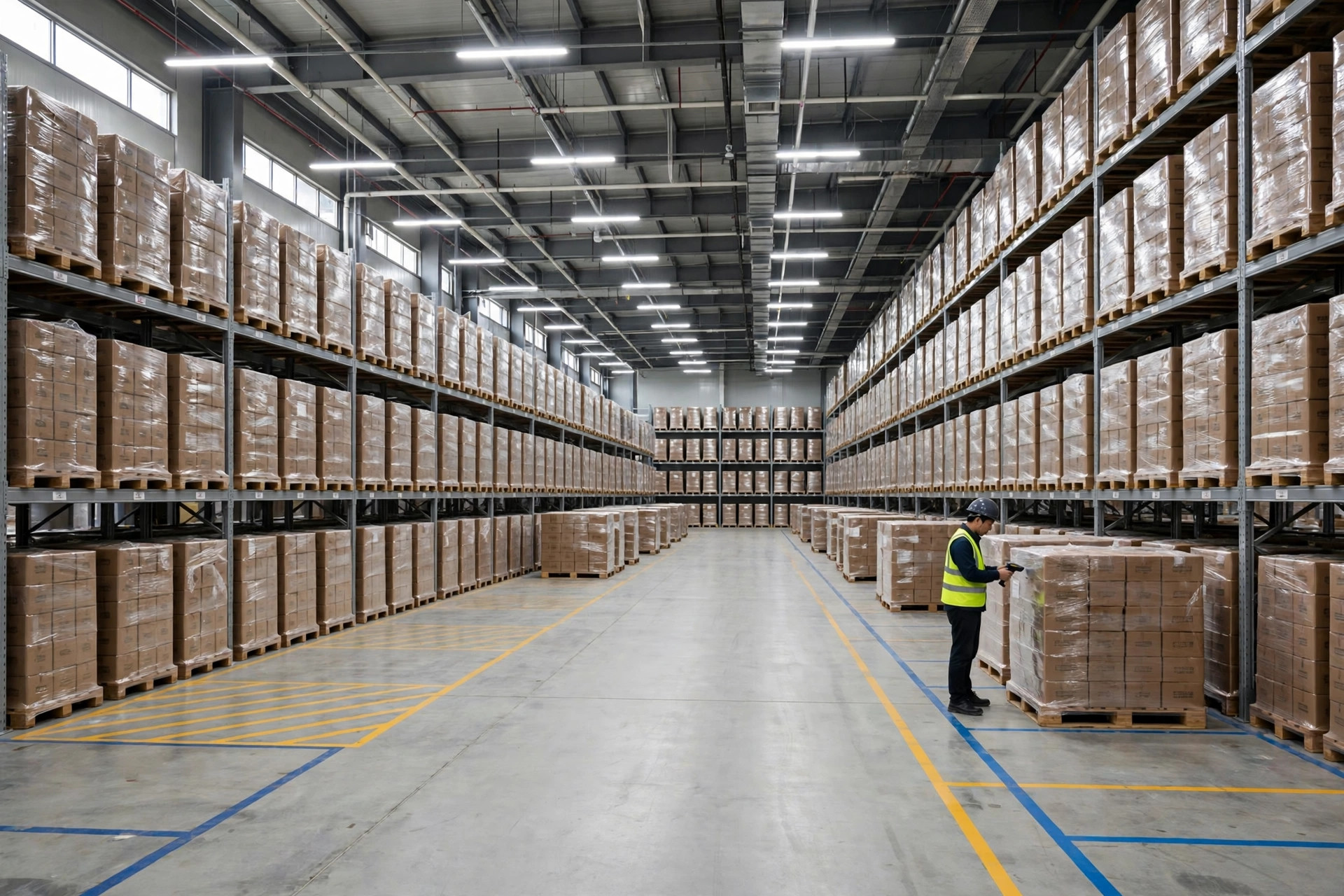
It looks simple. The hard part is "no exceptions." We run about 200 people. Night shifts, peak season — someone always wants to cut corners: the visitor log goes blank for two days, isolation-area goods "temporarily" spill outside. My solution is crude but effective: every Monday morning meeting, I spot-check last week's logs. Missed entries, and the shift supervisor buys bubble tea for the whole team. Three months in, missed entries basically vanished. Real talk: on the floor, crude beats clever.
A counterintuitive take
By now you might think: AEO advanced certification is worth it. Inspection rates down from baseline to 20%, guarantee exemptions, recognition overseas. Go get it.
Here's the cold water. Real talk: the biggest cost of this certification is not the application fee.
Customs doesn't charge a cent for the certification application itself — our customs specialist's exact words. You might pay a consulting firm for coaching, but that's a one-time cost. The real cost is reshaping warehouse habits. The isolation area can't be decoration. The gate can't stay propped open for convenience. Every shipment's records have to add up. And not once — every day, every month.
And getting certified isn't the finish line. Customs conducts re-certification and unscheduled checks. Let the habits slip, and the benefits can slip away too. So this "VIP pass" is really a forcing function: it makes you run a warehouse that can survive an inspection at any moment. The lower inspection rate isn't bought by the plaque on the wall. It's earned by what you do on the floor every day.
Think through that trade-off before you go for it. If your warehouse can't even keep book stock matching physical stock, don't talk about AEO yet. Get your cycle-count accuracy up first. Otherwise the auditors spend two days on your floor and you spend three months on corrective actions. Not worth it.
One reminder for my fellow warehouse managers
If you're a warehouse manager and the customs team tells you the company is going for AEO advanced certification, don't treat it as their project. Six months ahead, do three things:
First, mark out an isolation area — and actually use it. Don't let it become decoration.
Second, write down the access, visitor, and driver procedures on paper, post them at the gate, and enforce them.
Third, make sure your CCTV and records go back far enough. Don't discover the day the auditors arrive that you only kept two weeks of footage.
The auditors don't read your slide decks. They read your floor. Get these three right and the site visit stops being scary. The rest is just running the warehouse the way you always should have — only now, with a little more discipline.
By Chen Feng, Warehouse Operations Manager


