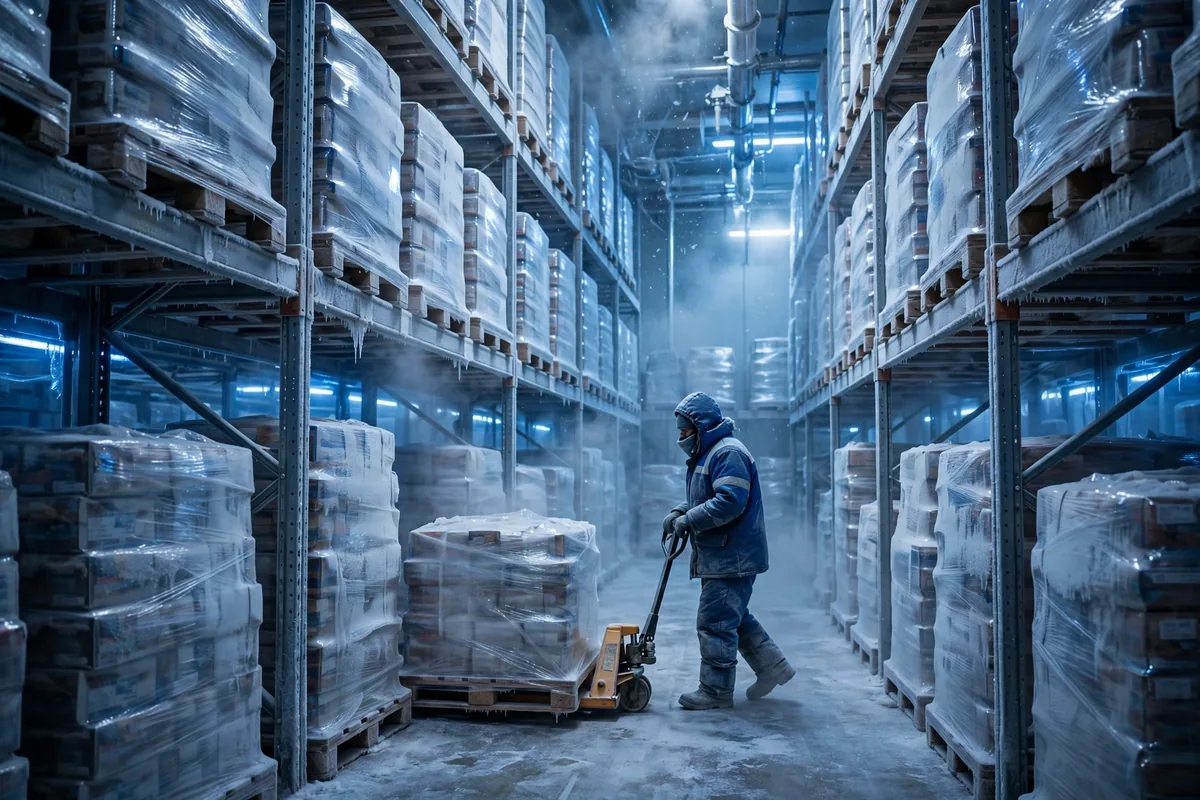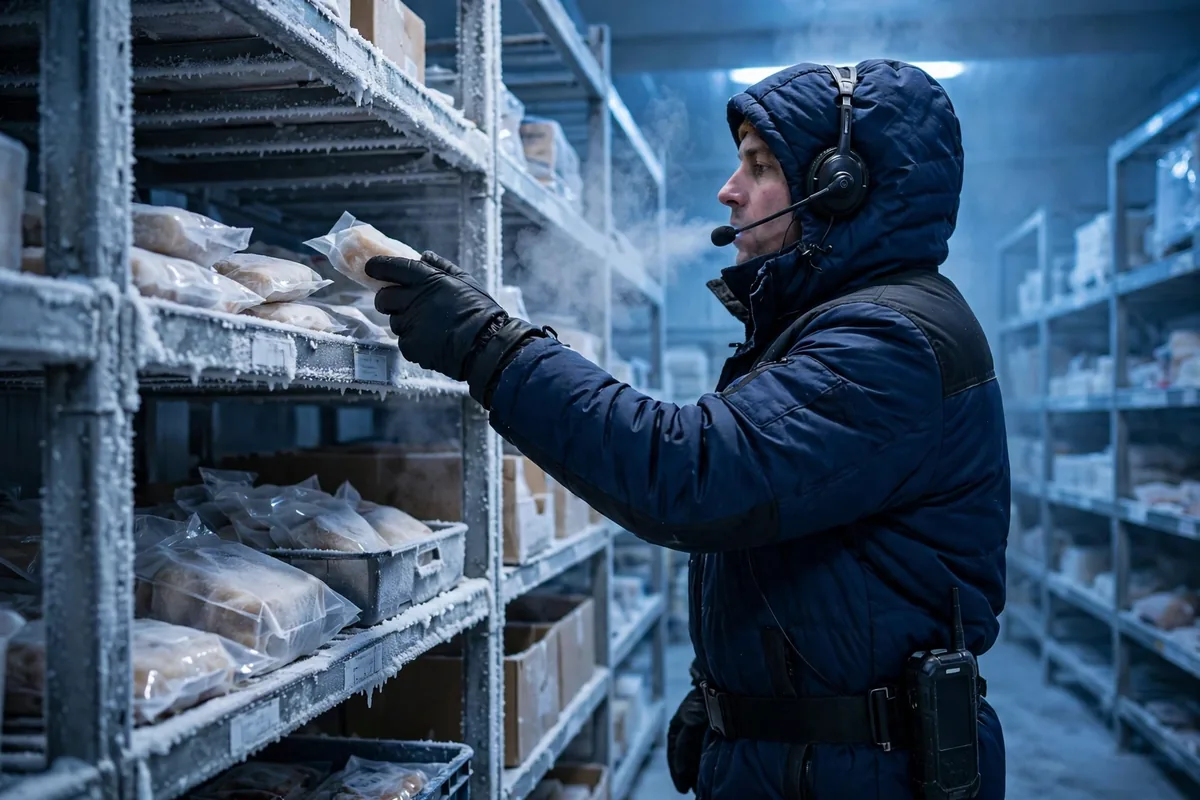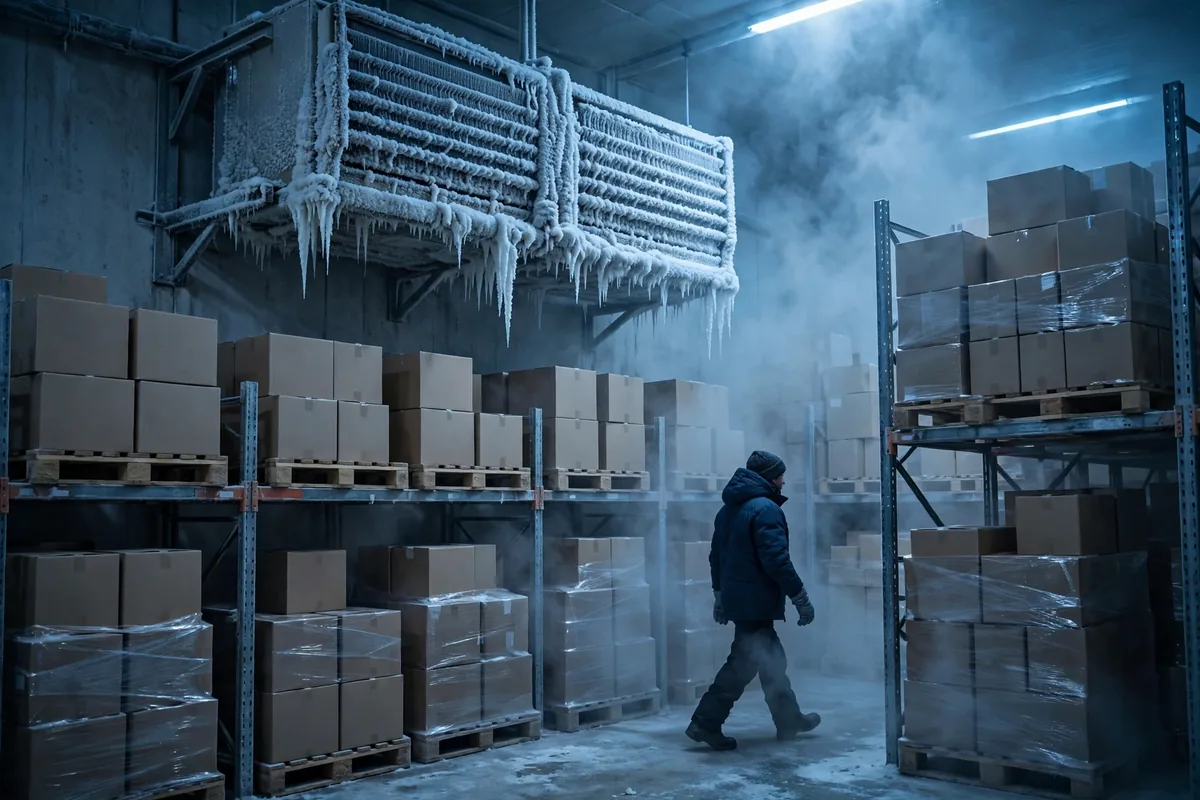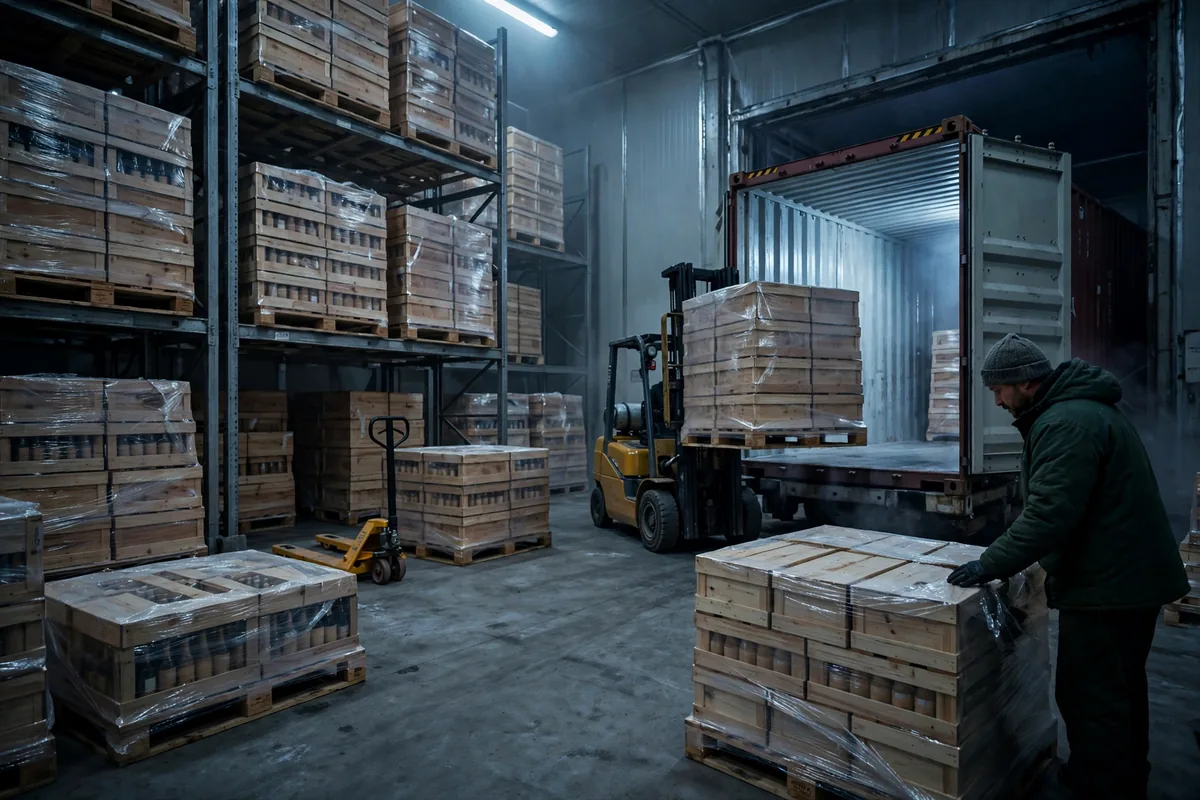
Let me open with a calculation, because in Chile wine export warehouse cold chain logistics every decision should start with the numbers. The figures below are a hypothetical worked example, clearly labelled as such. Take one 40-foot reefer container holding 10,000 bottles of Chilean wine at 10 dollars a bottle. That is 100,000 dollars of cargo. If the cold chain breaks once and the buyer knocks 10% off for quality concerns, you have lost 10,000 dollars. Now compare that with what two weeks in a temperature-controlled warehouse costs: a few hundred dollars. Every dollar you save by cutting the cold chain can come back ten times over on a claim form. Once you see the arithmetic, this stops being a technical discussion and becomes a financial one.
Now the big picture. The International Organisation of Vine and Wine puts Chile's 2025 production at about 8.4 million hectolitres, against 9.3 million in 2024, with 2025 exports of about 7.1 million hectolitres worth roughly 1.4 billion euros. That makes Chile the world's fourth-largest wine exporter by volume. Over 85% of the country's wine comes from the Central Valley, running south from the Maipo Valley near Santiago through the Rapel Valley's Colchagua and Cachapoal, the Curico Valley, and down to Maule. Most of it leaves through the port of San Antonio, which handled 23 million tonnes of cargo, 1.8 million TEU, and 1,024 vessels in 2024, making it Chile's busiest port, about 110 kilometres from Santiago. Valparaiso is the second option on the same central coastline. The chain is short. The wine is fragile. When temperature control slips, the whole container's value wobbles with it.
Chile Wine Export Warehouse Cold Chain Logistics: Where the Money Actually Goes
The industry consensus on wine storage is clear: keep it at 13 to 18 degrees Celsius, with humidity around 60 to 70%, and above all keep it stable. A warehouse that holds a steady 16 degrees is far kinder to wine than one swinging between 8 degrees at night and 22 degrees in the afternoon. When wine warms and cools, it expands and contracts, pumping air past the cork, and oxidation starts from that moment.
The cold chain bill breaks into four blocks. The table below is a hypothetical worked example for one container, from winery to vessel, with illustrative proportions only. Get real quotes before you commit.
| Cost item | Share of cold chain cost | How to save | Why you cannot cut it | | Winery cold storage | About 30% | Stock up in the low season, stagger intake | Every extra day in the winery is one less day in the sun | | Temperature-controlled trucking | About 25% | Consolidate loads, fixed schedules, fewer transfers | An open truck hauling wine is a bet on the weather | | Port reefer plugs and waiting time | About 25% | Deliver only once the sailing is firm, minimise port dwell | One hour without power and the container temperature climbs | | Reefer ocean leg | About 20% | Book early, choose direct sailings with fewer transshipments | Nobody watches your container baking at a transshipment port |
Read the table sideways. Cutting any one item to zero saves less than a third of the total cold chain cost, while risking the full value of the container. Cold chain arithmetic is never about which item is cheapest. It is about which link never breaks.
Two Ways a Container Dies: Chile Wine Export Warehouse Cold Chain Logistics in Practice
The first way is temperature. During the 2025 harvest, a winery in the Curico Valley sent a container of red wine through San Antonio. The sailing slipped by two days. The container sat plugged in at the port, and on the third morning a yard power cut pushed the inside temperature from 15 degrees to above 26 degrees. The data logger recorded every minute of it. At destination, the buyer opened the container to find several corks already pushing up, and the whole load was renegotiated as defective. The lesson is not about the power cut. It is about delivering too early. Sending cargo to the port before the sailing is firm means betting the cargo's value on the port's power supply. My rule: wine stays in the winery's controlled warehouse until the sailing is confirmed, then the truck goes straight to the port and straight onto the vessel. Port dwell is measured in hours, not days.
The second way is breakage. Take a container from a Maipo Valley winery to Valparaiso port. Road vibration and handling look like small things until you run the numbers. In this hypothetical example, one container holds 10,000 bottles, and a 1% breakage rate means 100 bottles. At 10 dollars a bottle, that is 1,000 dollars of direct loss, before cleanup, claims, and replacement labour. The source of breakage is usually not the road. It is stacking: cartons piled too high, the bottom layer crushed, bottles pressing against each other until they crack. My rule costs nothing: never stack bottled wine cartons more than five layers high, photograph the pallet before wrapping, keep bottle necks facing the same way, and add dividers. Every one of those steps is free labour, and every dollar saved is real.
Where the Real Savings Are
By now the savings levers are obvious, and there are three of them. First, cut port dwell time. Every extra day in the port adds plug fees, power charges, and risk, while better sailing planning costs nothing but discipline. Second, cut one transfer. Ship direct from winery to port instead of routing through an extra warehouse to consolidate a load. Every extra loading is another shock, another breakage chance, and another opportunity for the temperature to slip. Third, buy the right insurance. A cold chain policy looks like pure cost until a power cut, a delay, or breakage hits, and then it is the only thing that pulls the loss back from cargo value to premium level. Make sure the policy accepts temperature logger data as claims evidence, or you will discover the gap when it is too late.
Here is the contrarian point: the most expensive cold store is not the best cold store. Some wineries rent the priciest facility they can find, controlling temperature to a decimal point, and the spreadsheet looks wonderful. It is unnecessary. Wine needs stability, not precision. An ordinary controlled warehouse holding a steady 15 to 16 degrees beats a premium facility swinging five degrees in a day. Spend money on keeping the chain unbroken, not on making the numbers look pretty.
So here is the calculable conclusion. Using the hypothetical example above, a container of 10,000 bottles worth 100,000 dollars can have its full cold chain run for 2% to 3% of cargo value, about 2,000 to 3,000 dollars, and that keeps temperature, breakage, and delay risks under control. Cut 1,000 dollars from the cold chain and you invite a 10% price cut on the container, about 10,000 dollars. You can do that arithmetic yourself. In Chile wine export warehouse cold chain logistics, the question is never where to save money. It is where the chain must never break.
By Lao Zhou, Logistics Cost Analyst