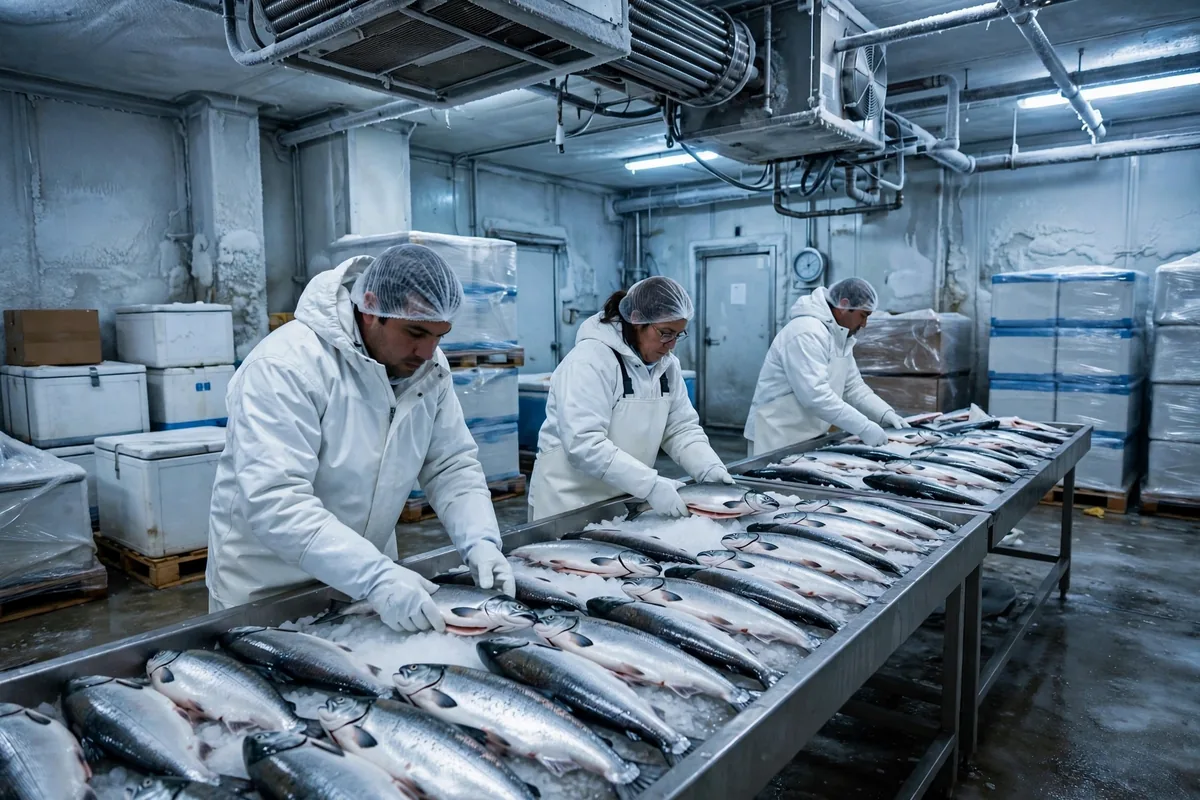
We had a client in the Chile salmon export cold chain business. Last year, a shipment of chilled Atlantic salmon left a processing plant near Puerto Montt, flew to São Paulo, and the buyer opened the boxes and rejected the price. The gills were dark, the skin was sticky, and the whole container took a 30% discount. My client was furious. He went to the airline, and the airline produced a clean temperature log: the hold stayed steady the entire flight, nothing out of range. He went to the processor, and the processor said the fish left the plant in perfect condition, with the lab reports to prove it. In the end, the problem was four hours in the middle: the cargo sat at the airport freight terminal waiting to be loaded, queued outside the cold store, and the temperature logger had no data for that stretch at all.
That is the brutal truth of the Chile salmon export cold chain: the fish does not spoil on the road. It spoils in the hours when nobody owns it. (Client story in this paragraph is an illustrative scenario.)
Start with the size of the business. Chile is the world's second-largest salmon producer, behind only Norway, with Atlantic salmon output of about 769,000 tonnes in 2023. In 2024, fresh and chilled Atlantic salmon exports ran to about 148,000 tonnes, worth roughly $1.14 billion, while frozen salmon fillet exports reached about $1.417 billion, roughly 31% of the global total, making Chile number one in the world. Brazil takes about 72.8% of Chile's fresh whole salmon exports, so the biggest buyer of Chilean chilled fish is right next door. Export health certification is handled by Chile's National Fisheries Service, SERNAPESCA, and production is concentrated in the far south: Los Lagos, Aysén, and Magallanes. The further the farm is from the market, the less room there is for a break in the chain. One break, and the losses are counted by the hour.
Where the Chile Salmon Export Cold Chain Actually Breaks: the Handoffs
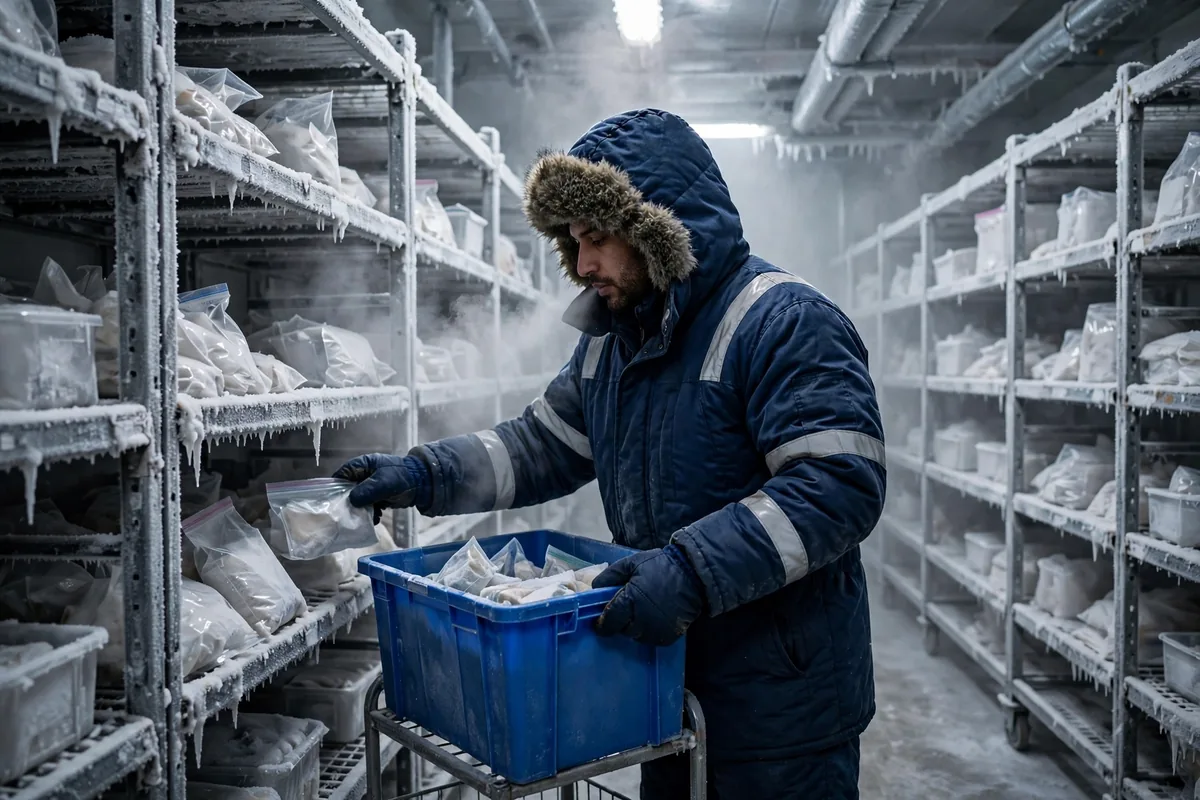
Follow one chilled fish. It comes out of the water at the farm, goes to the processing plant for gutting and packing, into a cold store, then onto a plane or a ship, through the destination port, into a distribution cold store, and finally onto a table. Chilled fish stays close to 0°C the whole way. The moment the temperature creeps up, bacteria start counting down the clock.
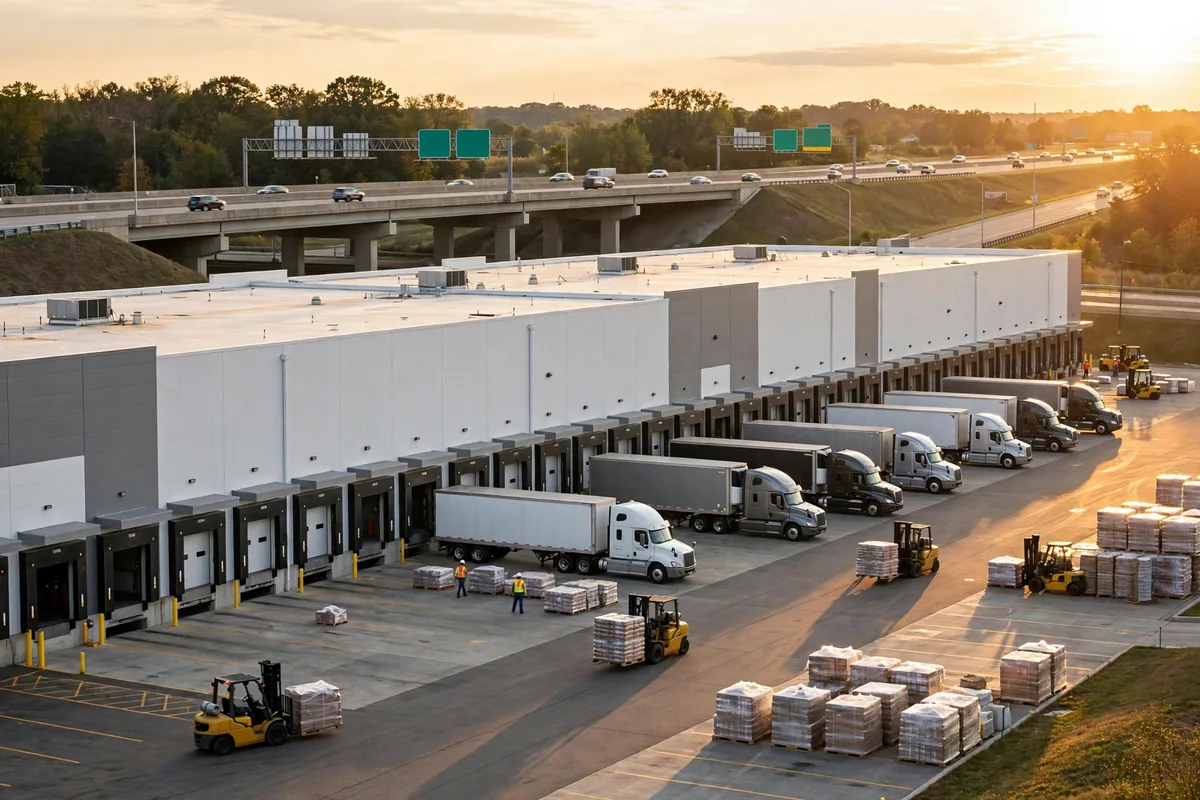
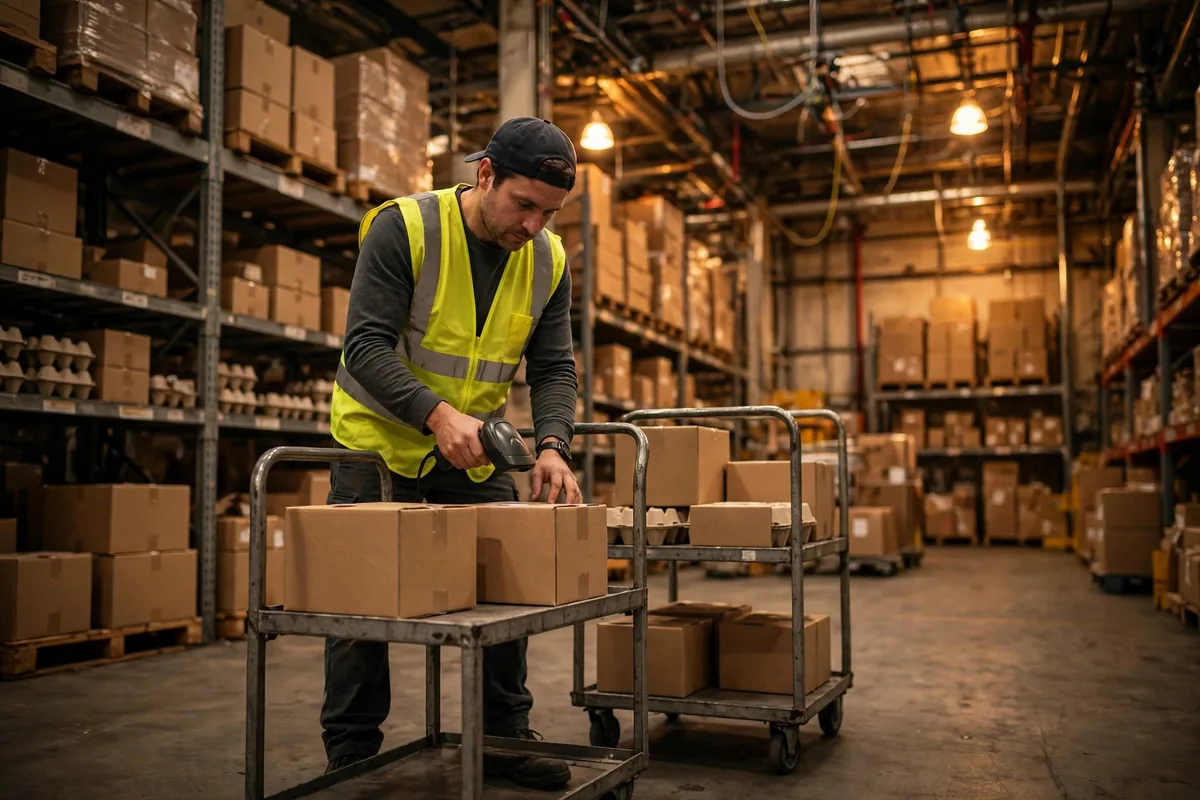
Every handoff on that route is a risk. Processor to cold store, cold store to truck, truck to airport cargo terminal, terminal to airline: each time the goods change hands, responsibility changes hands, and the temperature record can go dark for a stretch. The airline vouches for its own leg. The terminal vouches for its own leg. The hours spent queuing for loading in between often belong to nobody.
The worst case I heard about came from a distributor in São Paulo. Same batch, same flight, two pallets, different quality on arrival. One pallet sat in the middle of the hold; the other sat against the cargo door and spent an extra 40 minutes on the tarmac during loading. Forty minutes sounds like nothing. For chilled fish, shelf life is eaten away one minute at a time, exactly like that. (Illustrative scenario.)
So when a client talks to me about the Chile salmon export cold chain, my first question is never about freight rates. It is: is your temperature record continuous? From the moment the goods leave the processor to the moment the box is opened at destination, is there a single gap? Plenty of 3PL quotations promise "full cold chain." Ask one follow-up, "who provides the logger data, and how often," and the answer starts getting vague.
What the Chile Salmon Export Cold Chain Really Costs
Here is the counterintuitive part: the most expensive part of the cold chain is not the freight. It is the waiting, and the rework. Air freight looks terrifying per kilo, but it squeezes transit to about a day, and the fish still commands a premium price on arrival. Sea freight is cheap, but chilled fish spends ten days or more at sea, and once the freshness window closes, the whole container drops to the frozen channel at a discount that dwarfs whatever the freight saved.
A quick illustrative calculation makes it obvious:
| Option | Transit time | Freight (illustrative) | Quality risk on arrival |
|---|---|---|---|
| Air, chilled | About 1 day | About $3 per kg | Low, comfortable window |
| Sea, chilled | 10+ days | About $0.5 per kg | High, depends on tight control |
| Sea, frozen fillet | 10+ days | About $0.5 per kg | Low, frozen product is forgiving |
The figures are illustrative assumptions, but the logic is real: chilled fish sells on the word "fresh." Lose the freshness, and every cent saved on freight comes straight back out, plus the client's trust. Frozen salmon fillet holding about 31% of the world market is no accident: frozen product survives the voyage, and the supply chain can afford a mistake. If you sell chilled, you have to pay chilled prices.
There is another cost people forget to budget: the cold store at the destination port. When the fish lands in São Paulo, if the distributor's cold store is full or customs holds the shipment for two days, the fish waits in the port cold store. Port cold storage is charged by the day, and in peak season there is a queue. That money never appears on the quotation, yet it is often where the margin on the whole order disappears. Before signing anything, ask whose cold store it is at the destination port, who pays, and what happens when there is a queue.
The Three Questions Worth More Than the Contract
After years of selling 3PL services, I have noticed that buyers negotiating the Chile salmon export cold chain love to haggle over the freight rate per kilo and hate talking about liability clauses. But when something goes wrong, what saves you is never the two cents you shaved off the freight. It is three sentences in the contract.
Next time you negotiate a contract, ask these three questions: first, who provides the temperature records, how often, and how long a gap counts as a breach; second, how is liability split when the chain breaks, at what temperature, for how long, and who pays how much; third, how many hours after arrival must the handoff be completed, and who pays when it runs over. Get those three into the contract and the whole cold chain is locked down. Leave them out, and when something goes wrong everyone tells a different story, and the argument drags on for a month.
Our client put those three questions into his contract. The following year, his São Paulo shipments carried a continuous temperature record from end to end, and the price disputes never came back. In the cold chain business, the winner is never the one with the biggest cold store. It is the one who worked out, in advance, exactly who owns every handoff.
By Susan, 3PL Sales Director