Let me give you the verdict first: when Chile salmon goes bad on its way from the farms of Chiloé to dinner tables in the United States, Japan, or Brazil, nine times out of ten it does not spoil in the sea or on the farm. It spoils on land, in the stretch between the processing plant and the ship. To put it plainly, this business is not won by whoever farms the best fish. It is won by whoever breaks the cold chain the least.
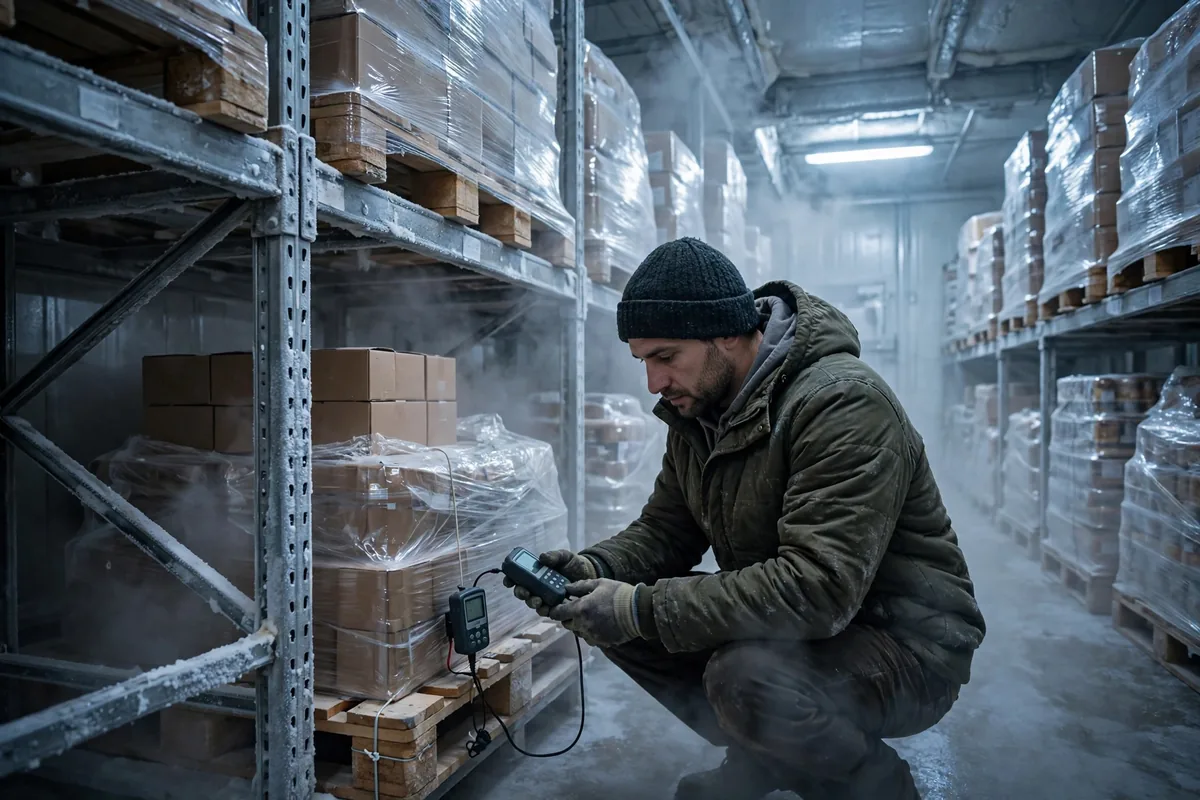
I have seen too many farms and processing plants with brand-new equipment and money spent in all the right places — reefer trucks, cold storage, reefer containers, every link in place. But a cold chain is only as strong as its weakest link. Ninety-nine steps can go right, and one bad step at the end still kills the whole container. A few years ago I watched a container of fresh Chile salmon opened at an importer's cold storage in the US. The cartons looked fine. Then someone pulled the temperature logger, and the curve jumped up and down like a heart monitor. That container never made it to a supermarket. It went to processing instead, and the cargo lost roughly half its value on the spot. The importer spent three days on the phone arguing with the Chilean side, and the argument went nowhere, because nobody could say exactly where the temperature had slipped.
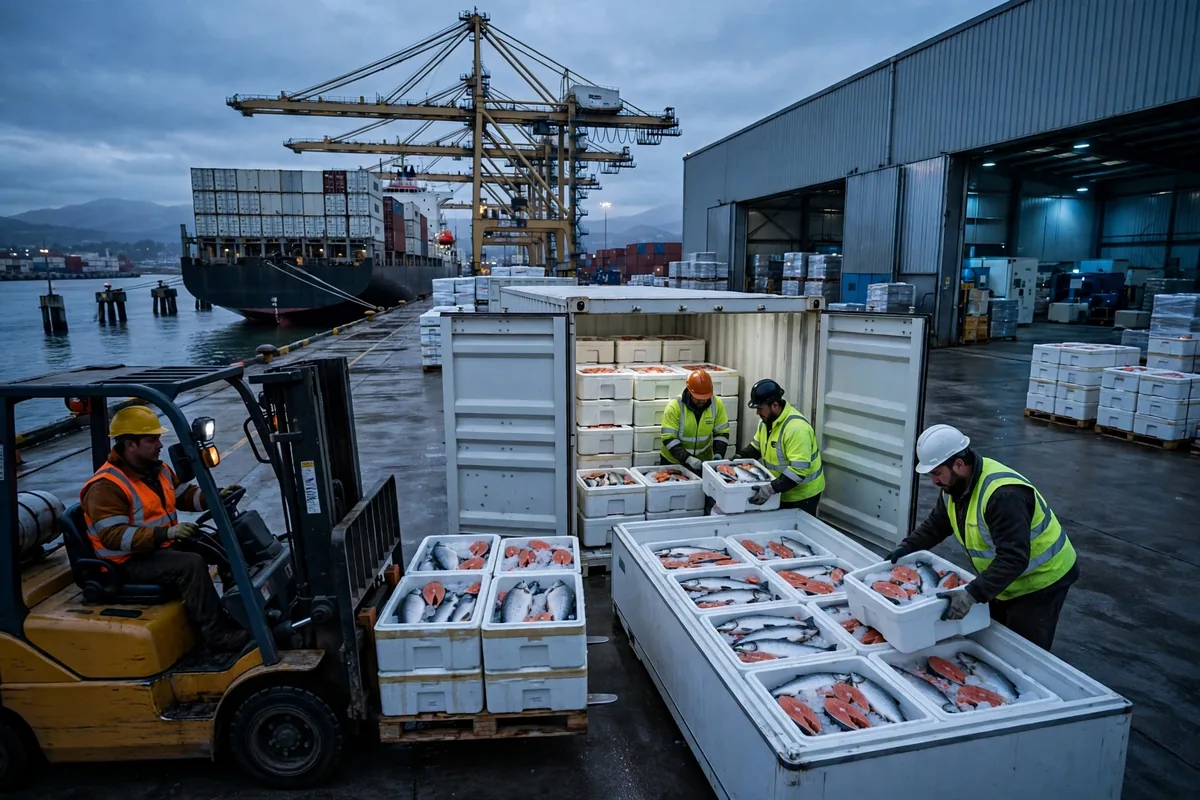
There are two sides to this. On the farm and processing side, the Chileans are professionals. The farms around Chiloé and the plants near Puerto Montt have run their chilling, gutting, and vacuum-packing lines for decades. The hard part starts after the fish leaves the plant gate: hours on a reefer truck to the port, a stop in cold storage, waiting in the container yard, weeks at sea, then customs and drayage at the destination port. Every handoff is a chance for the chain to break, and there are far more handoffs than most people imagine.
Where Chile Salmon Cold Chain Breaks Most Often
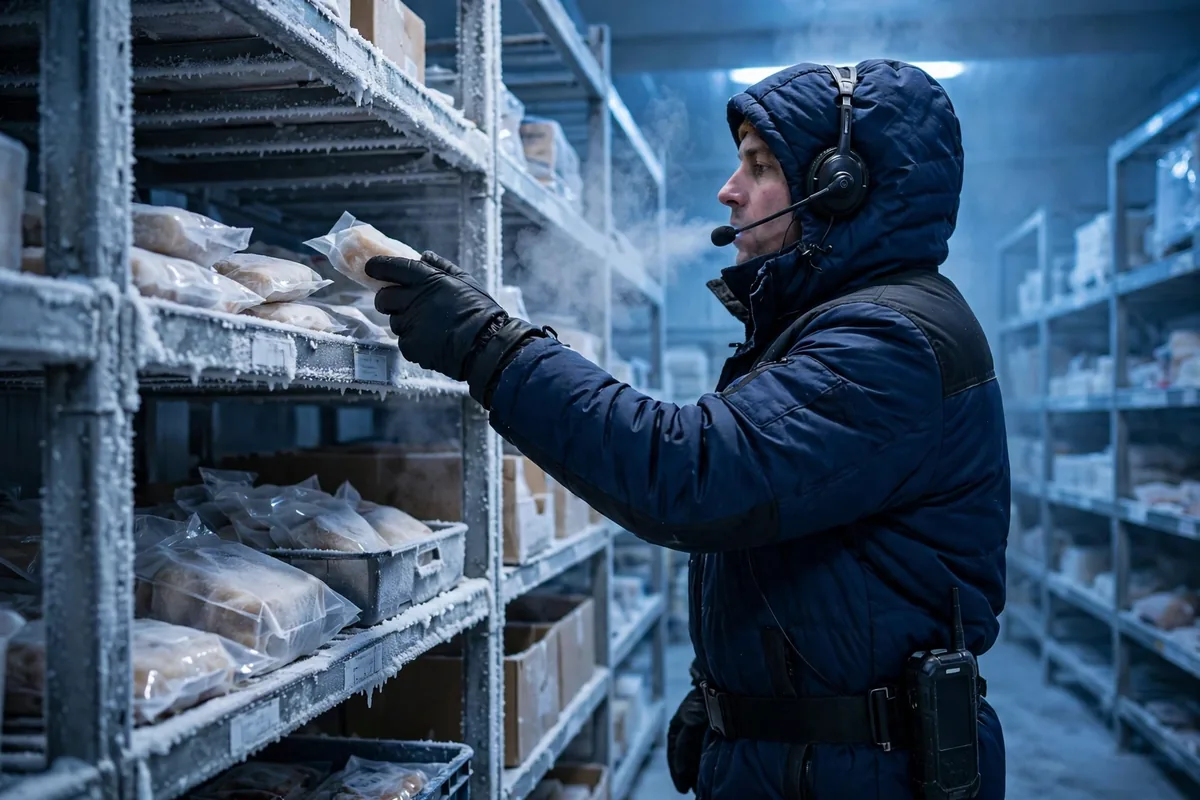
The first break is pre-cooling done halfway. Fish comes off the processing line with a cool surface, but the core temperature has not come down yet, and the cartons get sealed anyway. The heat trapped inside keeps warming the fish for the first few hours on the road. By the time the logger sounds the alarm, the truck is already moving and there is nothing to do. The right way is to pre-cool until the core temperature is on target before sealing the box. Everyone says that. In peak season, with a vessel to catch, the plant is exactly where that rule gets bent.
The second break is the handoff itself. Reefer truck to cold storage, cold storage to the terminal — every door opened, every transfer, every wait for a power plug lets the temperature climb. The classic case I have seen: a reefer container reaches the yard and every plug is taken, so the box sits in the sun for most of a day. The genset is running, everything sounds fine, but on a hot, windy day the inside temperature still drifts up two degrees. Two degrees sounds like nothing. For fresh fish it means two days less shelf life, and one more reason for the buyer to reject the load at inspection.
The third break is a gap in the temperature record. A logger with a dead battery, a probe stuck in the wrong spot, readings taken at the door but not deep inside the container — the fish arrives, and the data either does not exist or cannot prove anything. Without a continuous temperature curve, you cannot even prove the sentence "my fish stayed cold" when a claim comes up. A data logger looks like a decoration on a good day. On a bad day it is your only witness.
Fresh or Frozen: Run the Numbers First
Whether the fish ships fresh or frozen is a choice every shipper has to make, and there is no standard answer, only arithmetic.
| Fresh | Frozen | |
|---|---|---|
| Price | Higher, for premium restaurants and fresh retail cases | A notch lower, for processing and wholesale |
| Shelf life | Short — a delayed sailing is dangerous | Long — schedule slips are survivable |
| Temperature discipline | Demanding, roughly 0 to 4°C, with small swings | More forgiving, hold below minus 18°C |
| Best for | Experienced shippers with reliable sailings and fast clearance | New markets, long routes, shaky schedules |
Here is a hypothetical example: one 40-foot container of fresh salmon, assumed cargo value 80,000 dollars. The temperature slips, the whole container gets downgraded, and the value drops by 30 percent. That is 24,000 dollars gone, before you count the hours spent arguing the claim, demurrage at the destination port, and the next order you lose. Ship the same cargo frozen and you give up some margin up front, but a three-day delay or an extra weekend at the port barely matters. Fresh earns a premium and bets on zero mistakes. Frozen gives up profit and buys room for error. For a shipper new to the Chile lane, I usually suggest starting frozen, then moving to fresh once the sailing schedule, the port, and the clearance routine are all running smoothly.
Here is the counterintuitive part: the cold chain's worst enemy is not heat, it is fluctuation. A container held steady at 3°C will usually arrive fine. A container swinging between 0 and 6°C, even with a lower average, loses quality faster, because the flesh goes through repeated light freeze-thaw cycles and bacteria grow quicker than they do at a stable, slightly warm temperature. So when you read a logger, do not look only at the peak. Look at whether the curve shakes. A shaky curve is more dangerous than a flat curve running one degree warm.
Chile Salmon Claims Are Won on Evidence, Not Volume
On claims, I have seen too many people lose on evidence. The fish is damaged, the shipper's first move is to call and shout, and only afterwards does anyone think about proof — by which time the photos were never taken, the data was never saved, and the yard crew has changed shifts. Claims are not won by the loudest voice. They are won by the most complete chain of evidence.
A claim file that holds up needs at least four things: continuous logger data from the plant gate to the destination port, without a single minute missing; photos and the seal number from loading, proving the fish was in good shape and the box was sealed before it left; a signed handover note at every transfer, with time, temperature, and the name of the person who took it; and the destination inspection report with photos. Miss one, and the insurer or the carrier has one more excuse to push back.
One more thing most people learn too late: the claim window is short. Damage has to be reported in writing to the carrier and the insurer right away, and the exact deadline is whatever your bill of lading and insurance contract say — check the documents, do not guess. My rule is simple: open the container, inspect, and preserve the evidence the moment it lands. Inspect first, argue later. Never the other way around.
There is no magic in the Chile salmon cold chain. You guard every handoff and you keep every temperature curve. Farm, plant, trucking, terminal, carrier, destination clearance — every party has to hand over to the same standard, and one missing party is enough to break it. The next time someone beats their chest and tells you "our cold chain is fine," ask them one question: can you show me the logger data all the way from the plant to the destination port? If they cannot answer, the chain is already broken.
By Lao Mi, Supply Chain Veteran (20 yrs)