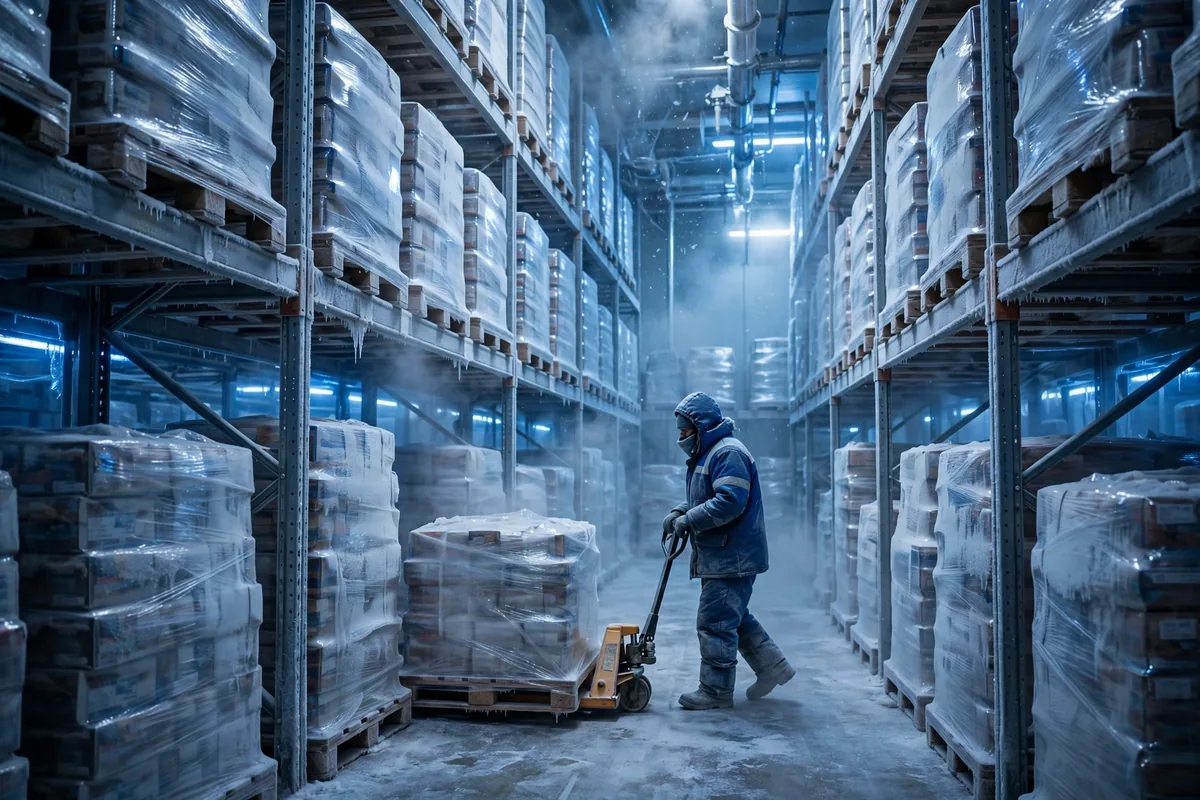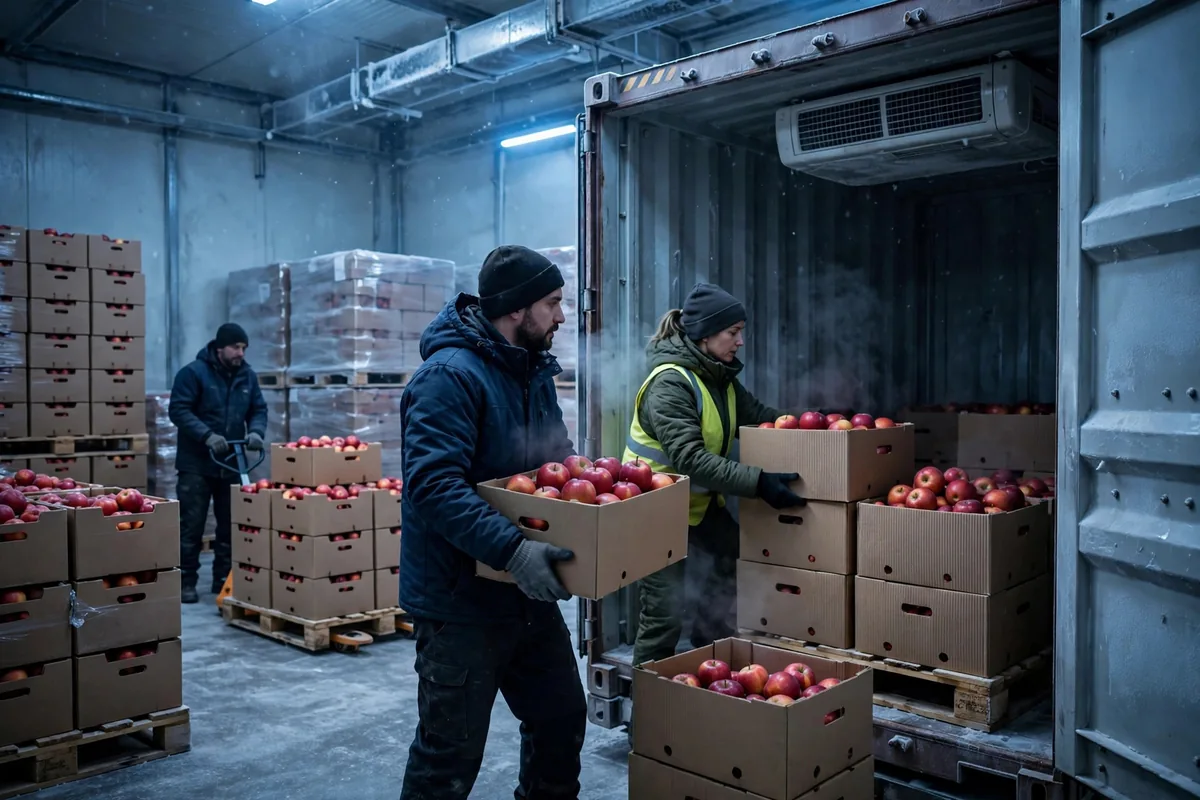
Three in the morning, and the lights outside the cold store were still on. The crew had just pushed the last reefer of apples into the cold room. The forklift cut its engine, the cold store door shut, and the numbers on the temperature display started dropping. It was peak season. I stood by the door, and I was thinking about one thing: when this container reaches Brazil, will the apples still be firm?
Here is the honest truth. The Chile apple business is not won in the orchard. It is won in the cold chain. The fruit can grow perfectly on the tree, but if the cold chain breaks once, the container arrives as soft fruit. The volumes tell you the stakes. In 2024, Chile exported 554,139 tonnes of fresh apples worth about USD 621.8 million. In the 2024-25 season, exports reached 583,209 tonnes, up 13% year on year, with FOB value of about USD 627 million. That much fruit moves on a cold chain where every link holds, or one link fails and a container is lost.
Chile Apple Post-Harvest Starts With Pre-Cooling, and the Clock Is Running
An apple comes off the tree carrying field heat. Until that heat comes down, the fruit keeps respiring, and apples sitting warm in a box soften themselves from the inside. The first job after harvest is pre-cooling, and the faster the better.
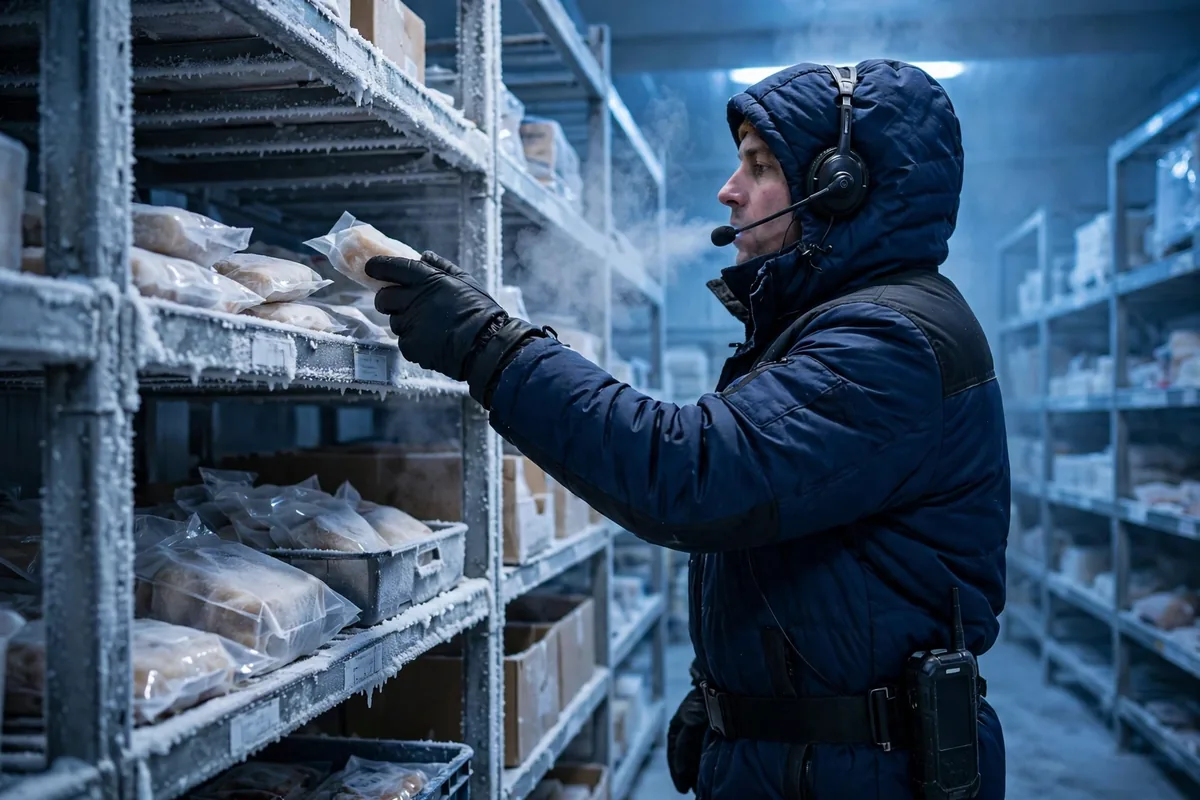
In our warehouse now, fruit goes into the pre-cooling room before it touches the grading line. We used to grade first and pre-cool second, because it saved one round of handling to cool everything at once after grading. Then peak season hit, the grading line backed up, and fruit waited three or four hours at ambient temperature. The soft fruit rate at arrival was clearly higher on that lot. After that we changed the flow: pre-cool on arrival, grade after. Honestly, one extra move of the goods buys apples that still arrive firm. That trade is worth it.
There is one more detail in pre-cooling. The temperature comes down in steps, not all at once. Fruit moved straight from ambient into a deep-cold room sweats on the surface, and condensation invites rot. We paid for that lesson with a full container. Hypothetical example, for illustration only: at arrival inspection, the share of fruit with surface moisture marks was clearly elevated, and the buyer deducted money. Since then, pre-cooling runs in two stages, down to a middle temperature first, held steady, then into the cold store.
Grading and Packing Chile Apples: Looks Are Not the Whole Story
After pre-cooling comes the grading line. Outsiders look at size. People who do this for a living look at destination. Royal Gala and its clones account for about 43% of Chile's apple exports. That is the backbone variety. Its skin is thin and it bruises easily, so the grading line cannot run too fast. Push the speed up and bruising climbs, and by Brazil, every bruise is the first place to rot.
In our warehouse, grading follows the market. Brazil takes about 20% of exports, Colombia about 14%, Ecuador about 8%. Those three markets together are more than 40%. Different markets want different sizes and different packing. Fruit for Brazil needs a sturdy box, because the journey is long and the handling is rough. Fruit for Colombia needs consistent sizing, because those buyers are strict about uniformity. We fix the destination at grading time. We do not dig through boxes again at loading.
One packing detail gets overlooked too often: the padding inside the box. Apples hate vibration. Empty space in a box has to be filled, or the fruit knocks against each other all the way, and arrives with hidden bruising. Hidden bruising is the worst kind. The outside looks fine. Cut it open and the flesh is damaged. Our rule is to drop-test two boxes from every lot. Hypothetical example, for illustration only: free fall from one metre, open the box, check for internal damage. It sounds crude, but it works.
Reefers and Sailing Schedules: Sea Freight Carries About 80%, So the Handover Cannot Break
Sea freight accounts for about 80% of Chile's apple exports, which makes the reefer container the apple's home at sea. A reefer looks like an ordinary steel box. What matters is two things: pre-cooling the container and keeping temperature records.
A reefer that arrives at the warehouse cannot be loaded straight away. It has to be pre-cooled to the set temperature first, empty, and only then loaded. Drivers in a hurry used to push us to load the moment the container arrived, while the box was still warm inside. Fruit loaded into a half-warm box spends its first hours on a broken temperature curve. Now we have a hard rule: if the container has not reached the set temperature, the forklifts do not move. Drivers can be in a hurry all they want. That rule was written after we paid for the mistake.
Temperature loggers travel with the cargo, two of them, one by the door and one in the middle of the container. Door and middle temperatures are not the same. The door is affected every time it opens, while the middle shows what the whole container really experienced. If there is a dispute at arrival, the temperature record is the evidence. Without a record, soft fruit is our fault. With a record, responsibility can be fairly shared.
Sailing schedules are the other trap. The Maule region accounts for about 64% of Chile's apple exports. Production is concentrated, so peak-season shipments concentrate too. Everything rushes to the same port, a sailing gets delayed, and the cold store overflows. Our approach is to lock the sailing schedule two weeks ahead in peak season, then work harvest and intake backwards from the sailing dates. Fruit does not all flood into the cold store at once. A cold store is for turnover, not for storage. Fill it up and you are stuck waiting.
Here is the counterintuitive part: colder is not better in a cold chain. Plenty of people think the lower the temperature, the longer apples keep. Frost damage is worse than soft fruit. A frost-damaged apple can look fine on the surface, but once it thaws the flesh is all water, and the whole container is a write-off. Temperature has to sit in the right band for the variety. If anything, half a degree high beats half a degree low. That "better high than low" judgment came from a frost-damaged load we had to absorb.
Soft Fruit, Frost Damage and Water Loss: Three Problems, Three Defenses
Soft fruit, frost damage and water loss are the three most common problems in the Chile apple export cold chain, and each needs a different defense.
| Problem | Defense |
|---|---|
| Soft fruit | Cap waiting time at every stage |
| Frost damage | Lock the temperature floor; leave a gap at the air outlet |
| Water loss | Log humidity per lot; humidify when it runs low |
Soft fruit is a fight against time. Harvest to pre-cooling, pre-cooling to loading, loading to sailing: the shorter each gap, the better. We set a maximum waiting time for each stage, and if it is exceeded, the flag goes up. When peak-season labor runs short, we would rather take one order less than let fruit sit at ambient temperature.
Frost damage is a fight against the temperature floor. The lower limit in the cold store and in the reefer has to be locked in, not adjusted by feel. Fruit stacked near the refrigeration unit's air outlet freezes first, so at loading we leave a gap at the outlet instead of pushing boxes right up against it. That detail is drawn on our warehouse loading diagram. New staff load by the diagram and do not get it wrong.
Water loss is a fight over humidity. If the cold store air is too dry, apple skins lose water, wrinkle, and the fruit looks old. Humidity has to be watched. Too low and you add moisture, too high and mold follows. There is no single number that fits every case. Different varieties and different harvest windows need different levels, and the only way is to build records lot by lot. Our warehouse now logs a humidity curve for every lot. Three years of that, and we know which variety needs what humidity in which month.
One reminder for colleagues in the trade. In the Chile apple business, the orchard sets the ceiling and the cold chain sets the floor. No matter how high the ceiling, if the floor does not hold, the arrival inspection shows a container of soft fruit. Work the cold chain ledger line by line: pre-cooling, grading, loading, sailing. Do not try to save effort at any stage. The effort you save shows up later on the arrival inspection sheet.
By Chen Feng, Warehouse Operations Manager