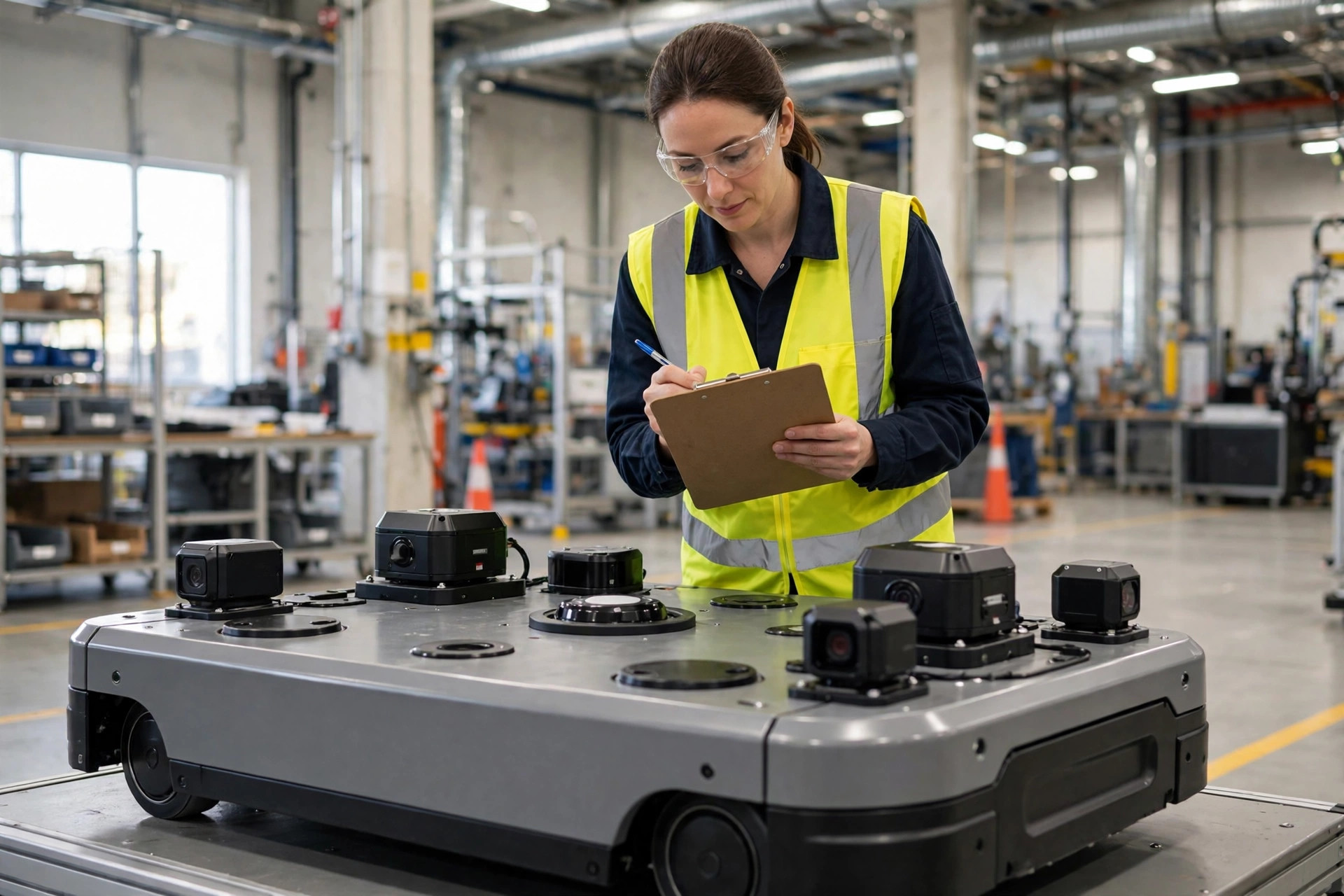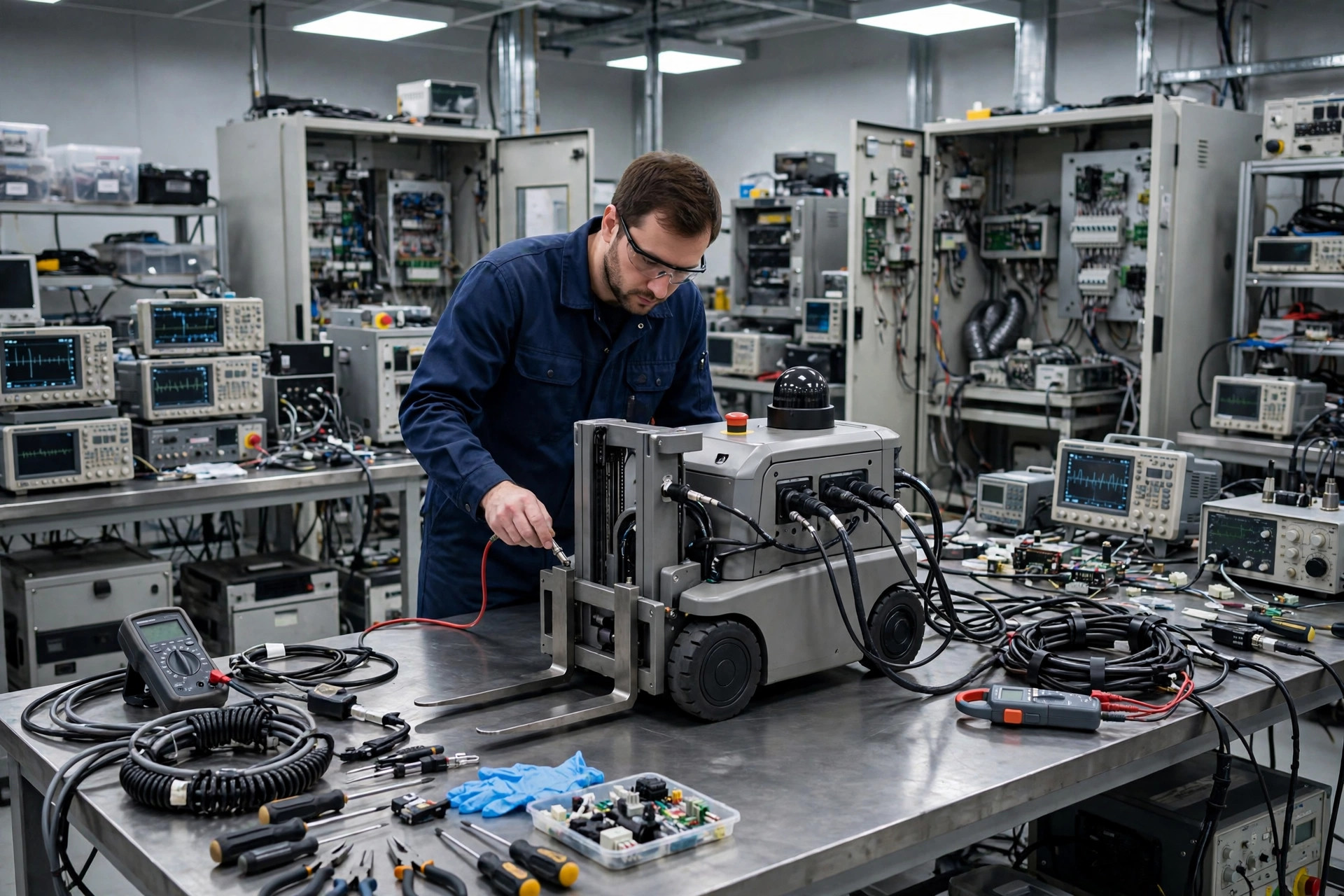
Over the past two years, nearly every Chinese automation equipment maker I have spoken with — builders of latent AGVs, four-way shuttles, stacker cranes — has stumbled at the same point on the way into the U.S. market: the prototype runs reliably, the American customer is nearly signed, and then everything stalls on a single line in the purchase contract stating that the equipment must carry NRTL certification, with the certificate number attached as an exhibit.
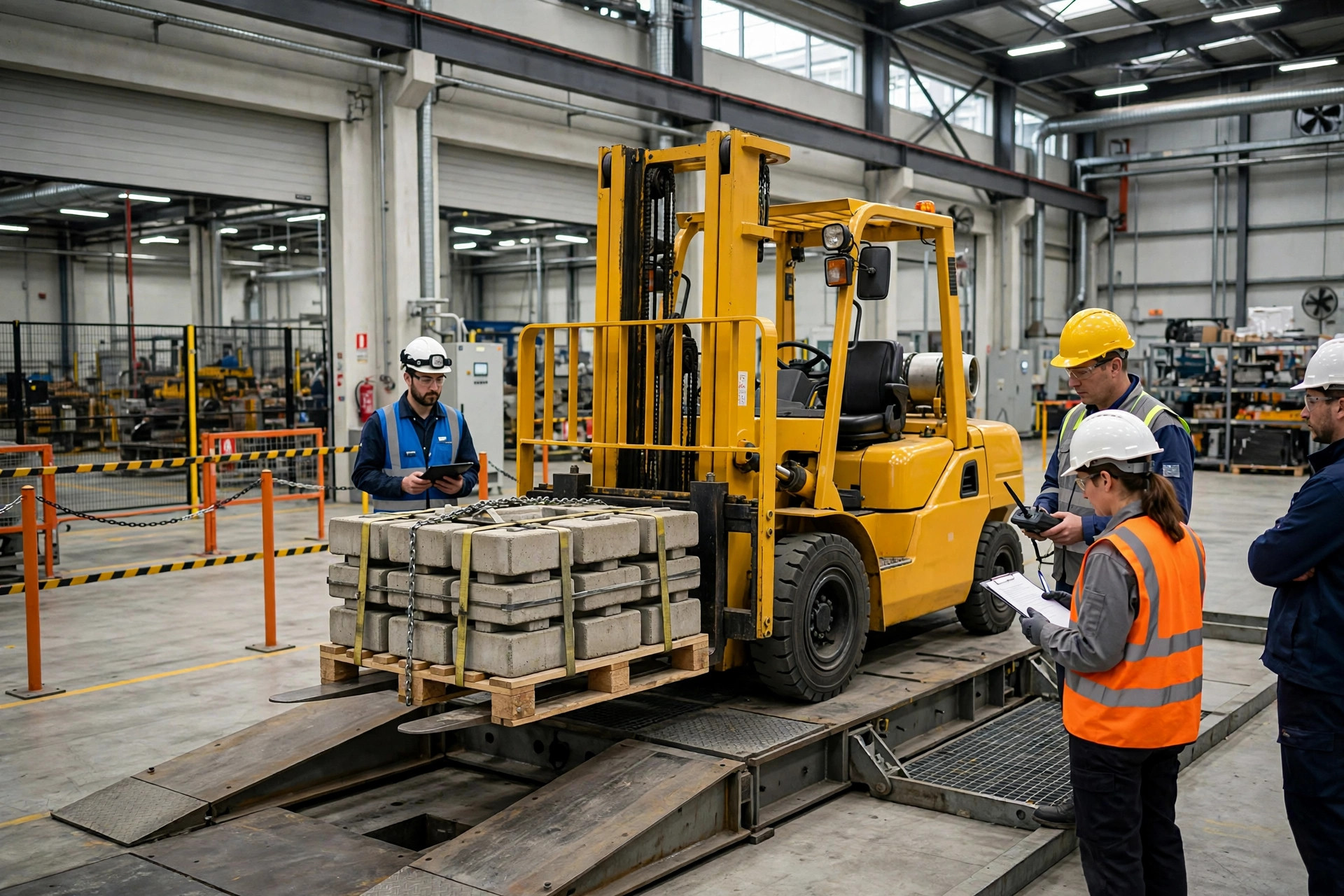
Under OSHA's current framework, electrical equipment used in U.S. workplaces must be certified by a Nationally Recognized Testing Laboratory. This is not a nice-to-have; it is a compliance threshold. AGVs and AMRs fall under UL 3100, industrial control panels under UL 508A, and mobile robot systems are further governed by the ANSI/RIA R15.08 series — designations that an American customer's EHS team will verify item by item during a factory audit. Without the certificate, the equipment does not even qualify to enter the site for installation.
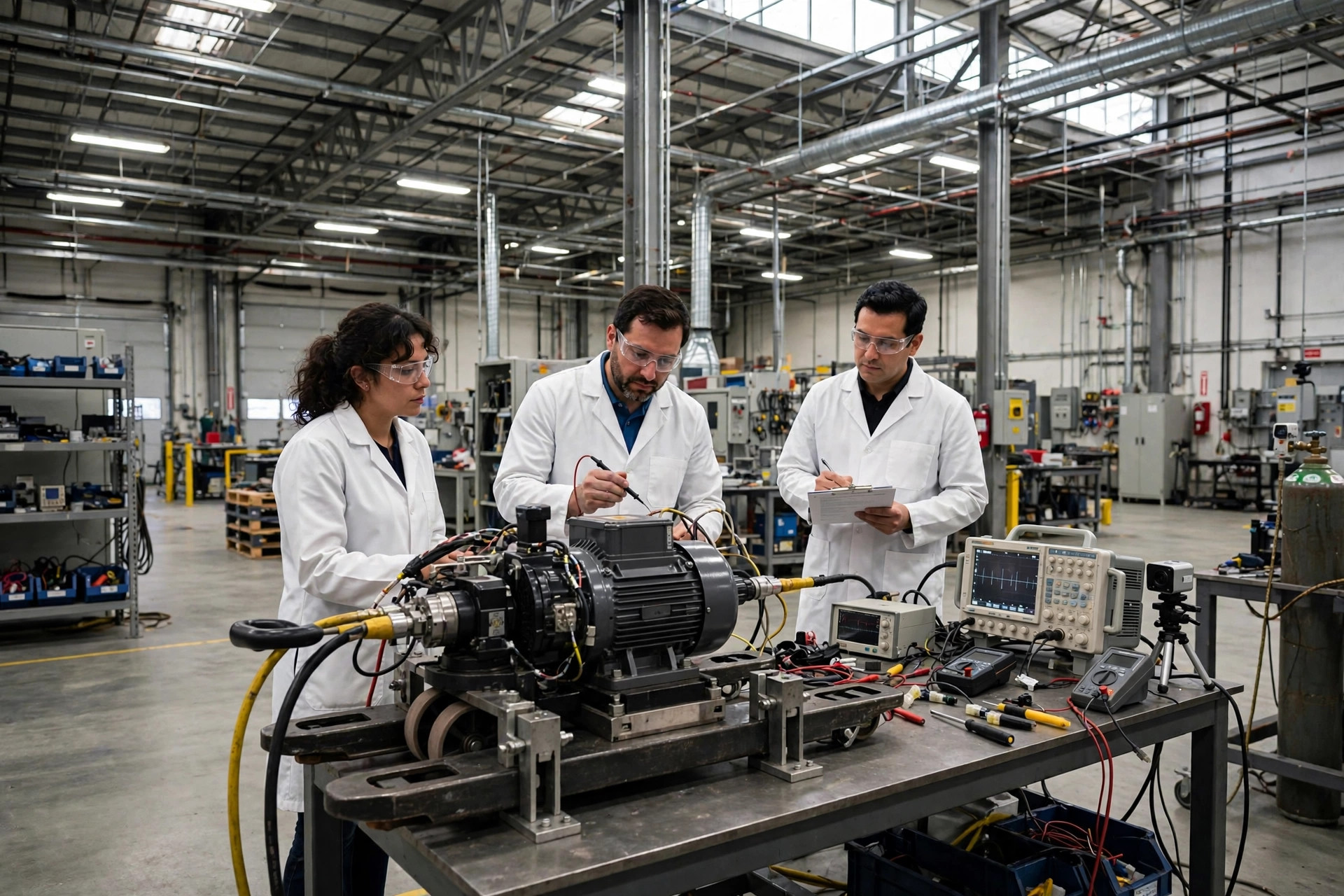
The question, then, is who should do the certifying. In practice, the industry walks two paths. Path A: run the full test program at a domestic lab in China (typically a CNAS-accredited third-party lab) against the UL standards, then transfer the test data to an NRTL through its data acceptance program; the NRTL reviews the data, closes the gaps with supplementary testing, and issues the certificate. Path B: engage a U.S.-based NRTL directly and let it handle testing through certification end to end. Both paths reach the destination, but the economics are entirely different.
Breaking down the cost structures side by side (order-of-magnitude estimates; confirm against each body's current published fee schedule):
| Cost item | Path A: domestic test + transfer | Path B: U.S. NRTL direct |
|---|---|---|
| Initial testing fee | Roughly one-third to one-half of Path B | Baseline (1x) |
| NRTL data review fee | Separate, frequently underestimated | Bundled |
| Witnessed-testing travel | U.S. engineer flies to China, billed separately | None |
| Supplementary testing and rework | Higher probability, billed separately | Lower probability |
| Initial factory inspection | Required | Required |
| Annual follow-up inspections and certificate maintenance | Required | Required |
| Typical total timeline | 6–10 months (including rework loops) | 4–7 months |
Consider a Path A case first. In 2024, a Suzhou-based builder of latent AGVs, shipping several hundred units a year, completed electrical safety and EMC testing at a domestic lab against the relevant UL standards and submitted the reports to an NRTL for transfer. The review flagged three gaps: software-related functional safety assessment items the domestic lab had not covered; several test clauses executed against older IEC editions while the NRTL reviewed against the latest UL editions; and two suppliers on the critical-components list lacking UL recognition, requiring substitution or separate evaluation. The supplementary testing and document exchanges consumed more than three months. Worse was the window that closed in the meantime: a U.S. retail distribution center project could not wait, and the order went to a European competitor that already held certification. Measured against the lost order, the testing fees saved were trivial.
Now a Path B case. In late 2023, a Shenzhen maker of four-way shuttles shipped its prototype directly to a U.S.-based NRTL. The testing fee was indeed more than double the domestic quote, but the certificate arrived in five months and the initial factory inspection passed on the first attempt. The interesting part came afterward: that NRTL's certificate carried strong recognition among U.S. 3PL customers, and the sales team later reported that the certification had become a differentiator in bids — customers reasoned that a vendor clearing certification on the first pass probably had its engineering in order.
Why does Path A so often break down at the last mile? I attribute it to three structural causes. First, the standards-version gap. Domestic labs frequently work from UL editions one or two revisions behind; the NRTL reviews against the current edition, and every delta means supplementary testing — which is not free. Second, the scheduling power for witnessed testing sits with the other side. Having an NRTL engineer fly to China to witness tests routinely takes two to three months to schedule, with travel billed on top, and the project sits idle in the meantime. Third, and most easily overlooked, certification is only the beginning. An NRTL certificate brings annual factory inspections, and any design change must be reported and evaluated — follow-up services a domestic lab simply cannot provide. Working with a U.S. body carries time-zone and language friction, but at least the chain is unbroken.
Here is the counterintuitive read: the testing fees saved on Path A are, in substance, money moved from the "testing fee" ledger into the "time, rework, and missed orders" ledgers. For vendors with modest annual volumes, Path B is not necessarily more expensive on an amortized basis — because Path A's rework is a probabilistic event, and when it materializes, the cost is certain and the time is irreversible. On an expected-value basis, Path A's "cheapness" is often an illusion.
So how should a vendor choose? A decision framework, matched to the vendor's actual situation: if annual volume is under a hundred units, or this is the first U.S. customer, go directly with a U.S. NRTL and skip the transfer gymnastics — the time saved is worth more than the fee difference. If the product already carries CB-scheme reports and the delta to U.S. standards is small, a transfer can work, but pay for a gap analysis from the NRTL first to surface the differences early; that money is well spent. And if a major customer has named its preferred certification body, do not improvise — follow the customer, because a certificate's recognition value outweighs its testing cost.
Looking at the trend: per OSHA's published NRTL directory and the public project information from bodies such as UL, the ANSI/RIA R15.08 series continues to evolve, and requirements for mobile robots will only get more granular. Meanwhile, demand for field evaluations of already-installed equipment in the U.S. is rising — which means that even after the factory certificate is issued, the compliance story at the installation site is not over. Certification is shifting from a one-time cost to an ongoing compliance capability.
Perhaps the math should be inverted: when certification changes from a "cost item" into the ticket for getting onto a U.S. customer's approved-vendor list, the selection logic is no longer "which path is cheaper" but "which path makes this certificate worth the most in the customer's eyes." As for which path fits your product, the answer is not in the quotation — it is in your shipment volume, your customer mix, and your time window.
By Dr. Chen, Supply Chain Researcher