$600,000.
That was the value of the freight destroyed in a Boston public warehouse in 1999, when a sprinkler system — triggered by maintenance work the landlord was doing in the building — dumped water through the loading dock doors. The customer demanded the warehouse pay. The warehouse's insurer refused. The reason was brutally simple: the accident had nothing to do with any negligence by the warehouse, and the warehouse's policy only covered losses caused by its own fault.
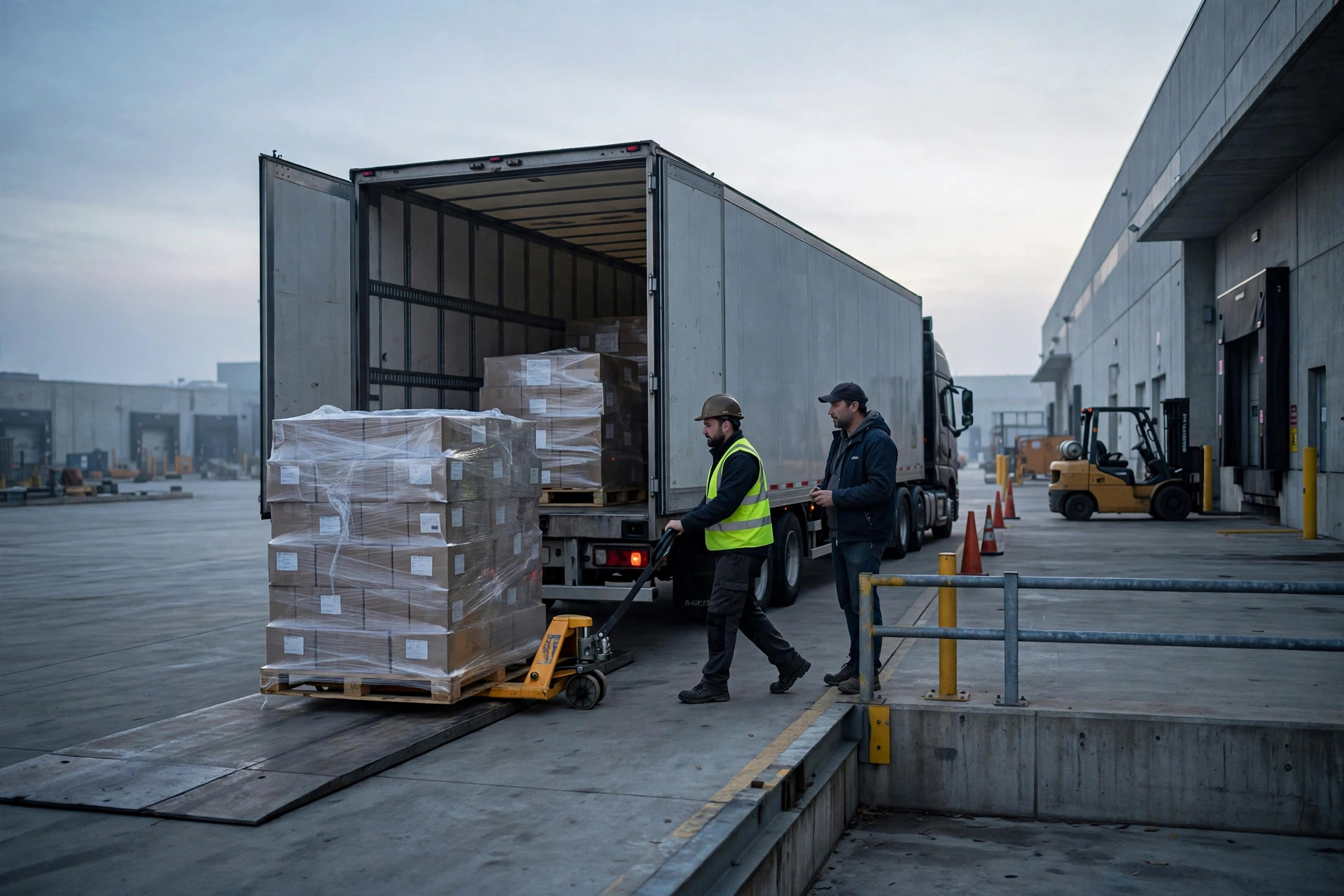
I've spent 20 years in American warehousing, and I keep meeting this story's sequels: freight goes wrong on the dock — half-unloaded pallets, cartons staged overnight, the shipment the forklift hasn't pulled into the building yet. The shipper calls the cargo insurer, who says "that's not our segment anymore." The shipper turns to the warehouse, who says "our policy doesn't cover your goods." Both are right. Nobody pays.
The loading dock is a no-man's-land on the insurance map. Let's walk it.
Cargo insurance ends on your dock steps
Most people assume cargo insurance is "door to door." Technically it's "warehouse to warehouse" — and that second warehouse has an expiration date.
The Institute Cargo Clauses spell out the Transit Clause plainly: coverage attaches when the goods leave the origin warehouse, continues during the ordinary course of transit, and ends at the earliest of three events — delivery to the final warehouse named in the policy; delivery into any other warehouse for storage "other than in the ordinary course of transit"; or 60 days after the goods are discharged overside from the ocean vessel at the final port of discharge.
Read that second trigger again. Your freight arrives, half of it is unloaded, a few pallets sit on the dock overnight to be put away in the morning — in the insurer's eyes, that is no longer "in transit." It is storage. The transit clause terminates. Cargo insurance clocks out. Even with "warehouse-to-warehouse" wording, that warehouse means the destination facility, not the dock apron.
A detail most people miss: insured value under these clauses is typically set at 110% of CIF, and premiums for general cargo run roughly 0.10% to 0.60% of insured value. A $15,000 shipment at a 0.5% rate costs about $75 to insure. Cheap — but it only covers the journey. The moment the freight becomes inventory, the contract flips the page.
So "cargo insurance covers everything" is an illusion. Its endpoint is precisely where unloading ends and storage begins. Those overnight pallets on the dock sit exactly on that line.
The warehouse's policy doesn't insure your freight
Here's the other half of the gap. Many shippers assume that if goods sit in a warehouse, the warehouse's insurance covers them. It doesn't.
Warehouse legal liability insurance covers losses caused by the warehouse's own negligence — and nothing else. The landlord's contractor trips the sprinklers, the warehouse did nothing wrong, no coverage. A forklift driver smashes your pallet because he was careless, warehouse is at fault, coverage responds. But even then, it only pays direct loss.
Consequential damages are out, every time: the missed delivery window, the chargeback from your downstream customer, the emergency air freight to replenish, the lost market opportunity. One US 3PL puts it in plain language on its own site: warehouse legal liability does not cover products in storage; it only responds when the 3PL is found negligent in handling or storing them.
Then there's Section 11 of the Standard Contract Terms and Conditions for Merchandise Warehousemen, which nearly every American 3PL uses. It says, in so many words: the warehouseman does not insure stored goods against loss or injury, however caused; the depositor's damages are capped at the declared value written into the contract, which can be increased by written request for an additional monthly charge. In other words, the payout ceiling is a number you filled in when you signed. Leave it blank, and you get the warehouse's default low limit.
Shippers carry two misunderstandings. One: that the warehouse's insurance protects their goods — no, that's the warehouse's negligence policy, not your property policy. Two: that "the warehouse is responsible for the goods" in the contract means full reimbursement — no, it means reimbursement up to the value you declared at signing.
The overnight shift on the dock is the riskiest 24 hours of the year
Put the two halves together and the gap opens up: cargo insurance terminates the moment the freight becomes "storage"; the warehouse's liability policy only fires when the warehouse was negligent. So a shipment staged overnight on the dock lives in a double vacuum — the cargo insurer says "you're no longer in transit," and the warehouse's insurer says "it's not in the building; that's your own property policy's problem."
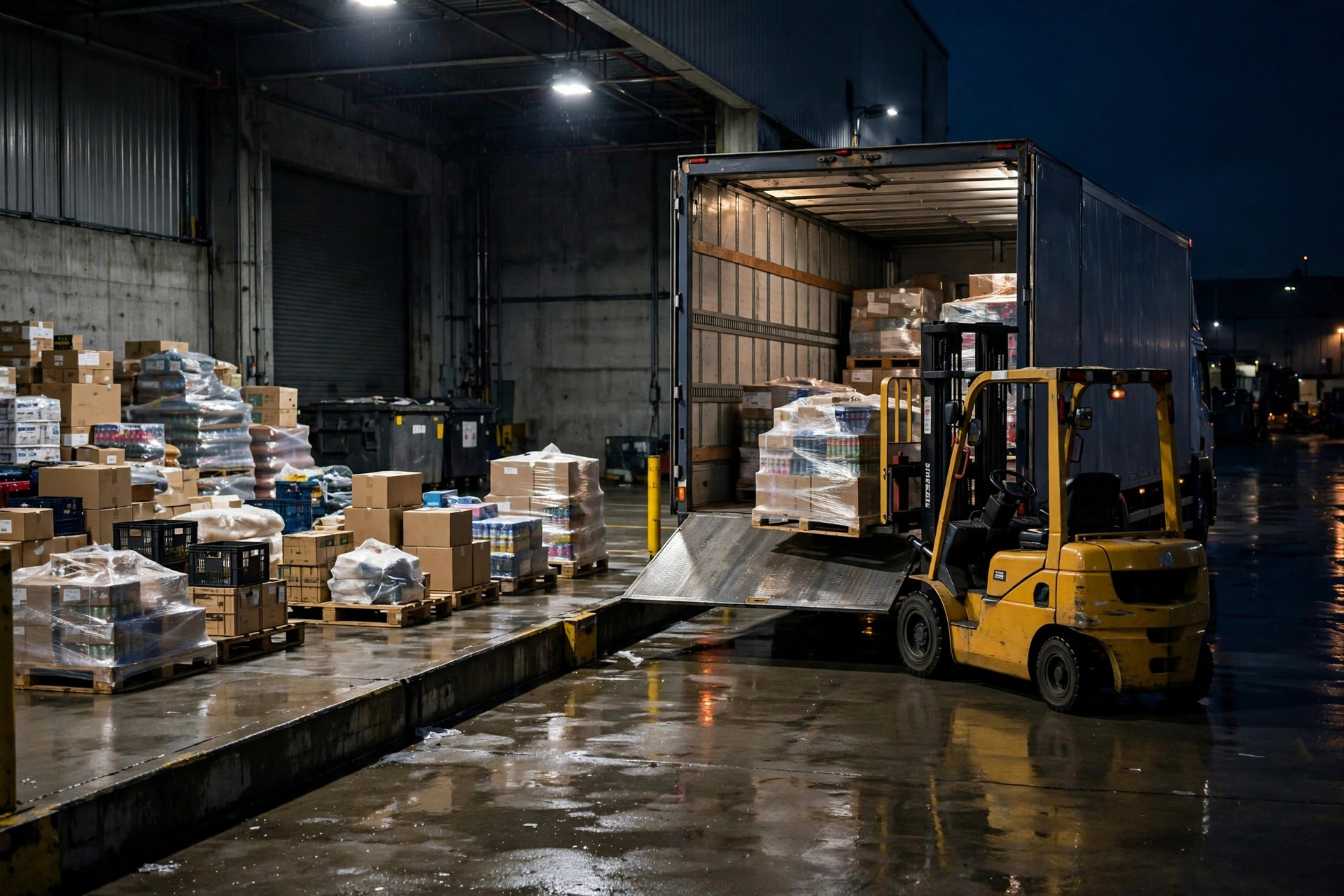
And the dock is exactly where accidents cluster. Half the trailer is unloaded, the driver leaves, pallets sit out overnight; next morning a carton is missing, or rain got in, or a forklift clipped a corner backing up. Now the shipper, the warehouse, and the carrier start pointing: the carrier says "handoff complete"; the warehouse says "not received into inventory, not ours"; both insurers decline.
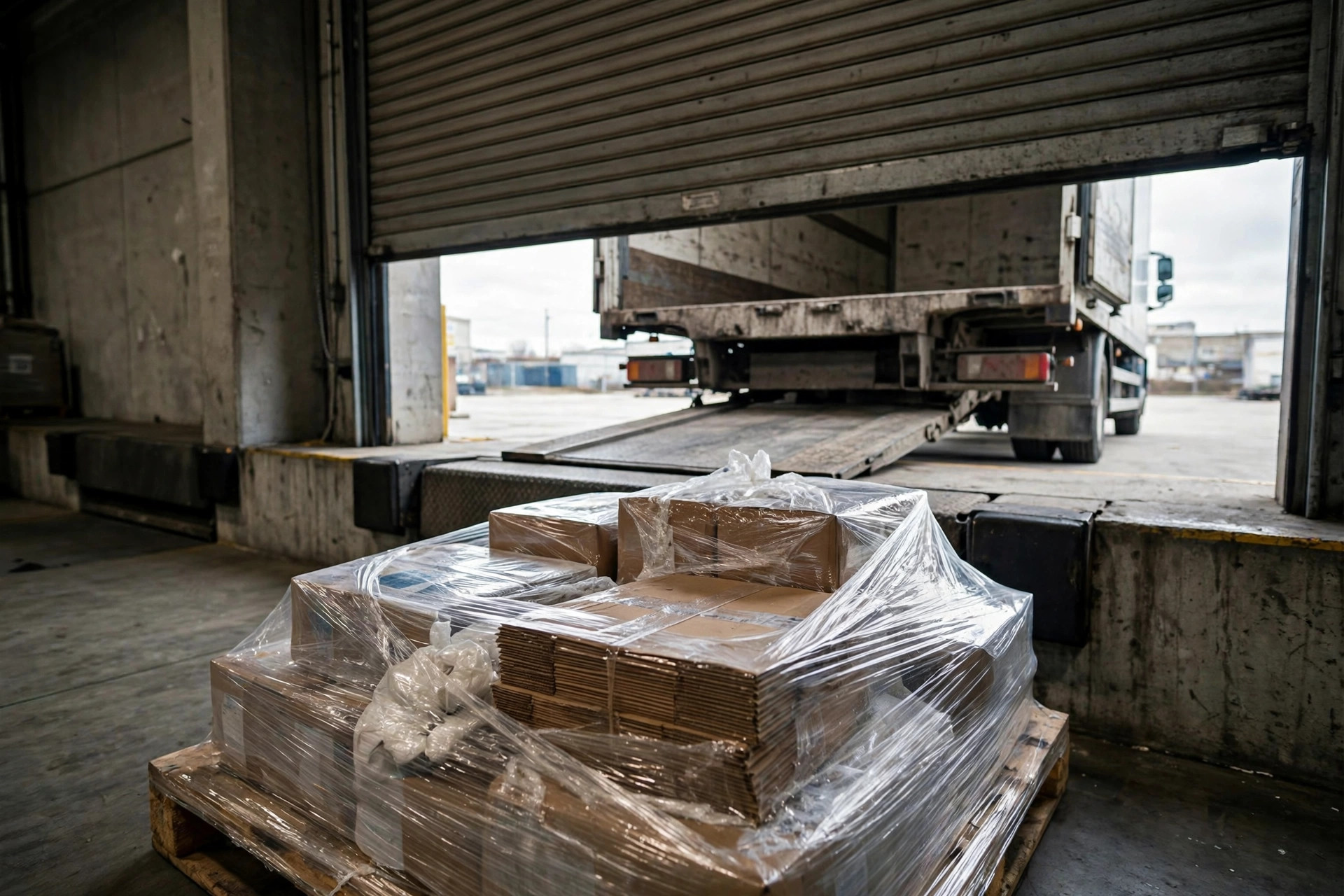
I've watched these disputes drag on for months. Win or lose, a mid-size shipper burns through legal fees and calendar time it can't afford. And some shippers never bought property coverage for the goods at all — "they're sitting in a warehouse, right?"
There's a trade-off here worth stating plainly. Premium, coverage limit, and deductible sit on a seesaw: lower your premium with a high deductible and you self-insure the small stuff; want the small stuff covered and the premium climbs. A $75 premium on a $15,000 shipment sounds like a bargain until you realize the $1,000 deductible means two rain-damaged cartons worth $800 get you exactly zero. The numbers all add up, and the coverage is decorative. Insurance isn't about having a policy; it's about having one that pays when it matters.
Two checklists to close the gap
Enough theory. Two checklists — one for operators, one that doubles as a shipper's review — you can use tonight.
Checklist one: dock handoff responsibility
- Define the handoff point in writing: is it "signed receipt plus system putaway," or "freight on the dock"? Put it in the contract, not in someone's memory.
- Overnight staging rules: is dock staging allowed at all? Maximum hours? Who locks up, who watches the cameras?
- High-value, temperature-controlled, and hazardous freight get their own rule: no overnight dock staging, straight to the assigned slot.
- Driver departure: once the driver unloads and leaves, whose clock is running? Write it down.
- Exception window: damage or shortage must be reported and photographed within how many hours? After that, it's deemed clean.
Checklist two: the clauses that actually matter in your policies
- Cargo policy: does it carry a storage/dock-staging endorsement? The standard transit clause ends when storage begins — if you want the dock covered, that's a separate endorsement, and exact terms depend on your policy and your insurer's current wording.
- Warehouse legal liability limits and deductible: does the limit cover your single largest customer's inventory?
- The declared value in Section 11 of your warehousing contract: what number is on file? Has it been updated as inventory values grew?
- Consequential loss exclusions: know in your gut that chargebacks, penalties, and emergency replenishment freight aren't covered — plan for that risk yourself.
- The shipper's own property policy: whose property insurance covers the goods while they sit in the building? Many shippers think the warehouse has it. Often nobody does.
One thing you can do tomorrow: tonight, pull out your cargo policy and your warehousing contract, find the pages headed "termination of coverage" and "exclusions," and circle three words — "storage," "negligence," and "consequential loss." If the circling shows that overnight dock freight is covered by no one, call your broker in the morning. An endorsement costs far less than a coverage fight. And when the legal reading gets murky, don't guess — talk to your insurance broker or your attorney.
The gap has always been there. The only question is whether you see it before it costs you.