Canada taught me a lesson before I ever set up a Canada overseas warehouse.
In September 2024, one of my outdoor storage boxes took off on Amazon.ca. Average ticket 49.99 Canadian dollars, ad ACoS around 22%, conversion 11%. Every unit shipped from my California warehouse straight into Canada. A Toronto buyer waited almost two weeks, got hit with duties at the door, and refused the package. Return shipping cost more than the product itself. Within a month, ACoS hit 35% and conversion dropped to 7%.
So I changed the play: small batch in a Canadian warehouse, US warehouse as backup. Same storage box to Ontario orders: delivery in about 1 to 3 days, ACoS back under 25%. This post is what I learned after paying for those mistakes.
What a Canada Overseas Warehouse Actually Fixes
A Canada warehouse fixes three headaches: slow clearance, messy tax, and returns with nowhere to go. Bulk replenishment is a formal import: declare it, pay what is owed, done. Stocking locally moves clearance up front, so customer orders become domestic deliveries. Tax gets calculated at checkout by buyer province. Returns get received, inspected, and graded on the spot, Grade A stock straight back on the shelf.
USMCA Is Not a Free Pass, Origin Is the Real Test
Sellers hear USMCA and think everything between the US and Canada is duty-free. That is the most expensive misunderstanding I have seen.
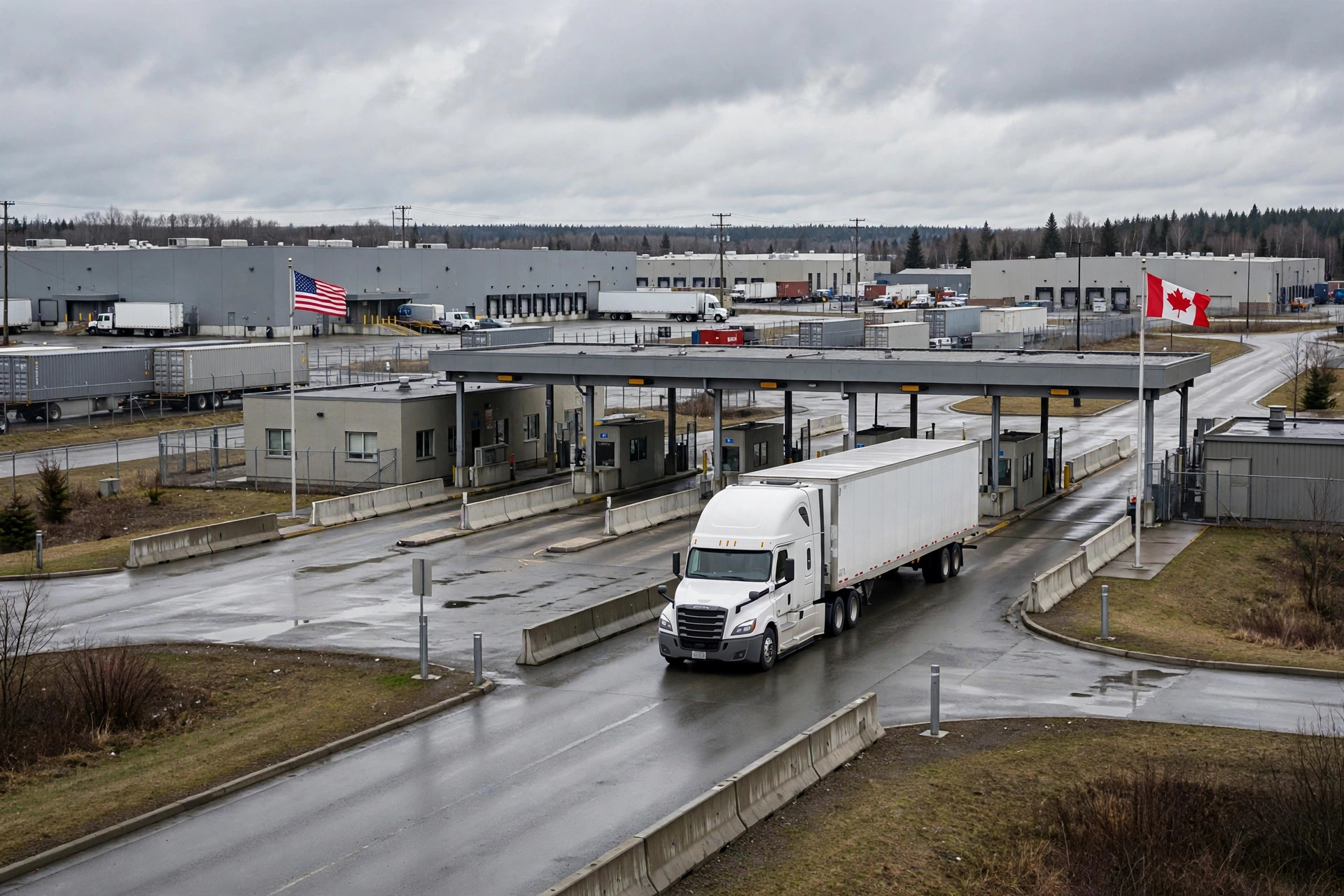
In Canada the deal is called CUSMA. Same agreement. It gives preferential treatment to goods that meet the rules of origin, not to anything that ships out of a US warehouse. Goods made in China, moved to a US warehouse, then re-exported to Canada do not automatically qualify. Origin rules look at where goods were produced and how much value was added, not which warehouse they shipped from. Claim a preferential rate and get it wrong, and CBSA can come back for back duties plus penalties. Check the CBSA site for the latest policy. A legitimate claim: goods genuinely meet the origin rules, and the importer, exporter, or producer certifies origin on the invoice. No fixed form, and one blanket certification can cover identical shipments for up to 12 months.
People also mix up the de minimis thresholds. Under CUSMA, courier parcels from the US or Mexico into Canada are duty-free and tax-free under 40 Canadian dollars, duty-free but taxable from 40 to 150, and fully dutiable and taxable above 150. Postal shipments: duties and taxes kick in above 20 Canadian dollars. Those thresholds apply to direct small-parcel shipping, not bulk replenishment. My rule: pay what is owed, claim preferential treatment only when goods truly qualify, keep the certification on file.
French Labels: Quebec Is the Gatekeeper
French labeling was my second expensive lesson in Canada.
In early 2025, I sent a batch to Quebec with English-only packaging and manuals. Stock got held, customers complained, and the platform started asking compliance questions. I paid locals to stick on French labels and add French inserts. Labeling fees plus delay costs wiped out that batch's profit. Since then, every shipment I send to Canada is planned to Quebec standards.
Rulebook: products sold anywhere in Canada need English and French on the label. Quebec is stricter. Under Bill 96, in force from June 1, 2025, text on products, packaging, and instructions needs a French version at least as prominent as any other language. Generic or descriptive words inside a trademark cannot hide behind the trademark exemption either. Goods made before June 1, 2025 got a transition window; check the Quebec language office site for the latest policy.
Three options, cheapest first. Sticker fix: French stickers plus a French insert, good for testing. Bilingual packaging: English and French together, French at least as prominent — what I do for main SKUs. Split packaging: Quebec gets its own French-packaged batch, other provinces the standard version. Works with many SKUs but complicates inventory. Bottom line: French labeling is a market-entry requirement, not a translation task.
GST/HST: The Warehouse Does Not Pay Your Tax for You
Sellers assume the warehouse handles tax. It does not. Tax is your bill.
Federal GST is 5%. Provinces stack on top: Ontario HST 13%; Quebec GST 5% plus QST 9.975% for 14.975% combined; British Columbia GST 5% plus PST 7% for 12%; Alberta just the 5% GST; Atlantic provinces mostly HST 15%, Nova Scotia 14% since April 1, 2025. Confirm rates on the Canada Revenue Agency site before pricing. Tax follows the buyer's province, not the warehouse location. Marketplaces collect tax at checkout; on your own site, you calculate and report it. My pricing sheet has a separate tax column by buyer province.
Canada Overseas Warehouse vs. Shipping from a US Warehouse
My own comparison. Confirm latest quotes with your carrier:
| Factor | Canada warehouse shipping to Canada orders | US warehouse shipping direct to Canada orders | | Delivery time | Ontario orders, about 1 to 3 days | Cross-border plus clearance, 4 to 8 days | | Duties | Bulk import cleared up front, no surprise bill | De minimis break for low-value parcels, over-threshold buyers may pay on delivery | | Returns | Local receiving, inspection, restocking | US returns pricey, China returns rarely pay off | | French labels | Done to Quebec standard before inbound | Direct parcels need same compliance | | Inventory risk | Wrong stock cleared locally | No stock commitment, slow replenishment on spikes | | Best stage | Steady volume, proven best sellers | Testing phase, low Canada share |
The message: a Canada warehouse does not replace the US warehouse. They split the job. Test with the US warehouse. Scale with the Canada warehouse.
How I Split Inventory Between US and Canada Warehouses
Three tiers, cut by Canada's share of total orders. Below 15% Canada share, do not rent a Canadian warehouse. Ship direct from the US and spend energy on testing products and ads. Warehouse rent and tied-up stock will eat your margin.
At 15% to 40%, stock a small batch in Canada, best sellers only. Plan 30 to 45 days of cover, keep safety stock in the US warehouse, replenish in bulk. 45 days is a comfortable ceiling; past that, you sit on stock.
Above 40%, the Canada warehouse is your main warehouse: best sellers get 45 to 60 days of cover, French packaging done properly, returns local. The US warehouse drops back to replenishment and backup.
Counterintuitive part: stocking less is not always safer. Go out of stock once and your listing rank drops; the ad spend to climb back costs more than two extra weeks of stock. I review Canada stock monthly, top up weekly, and stock 6 to 8 weeks ahead for peak season.
Canada Returns: Never Send Them Back to China
One rule: if it can be solved locally, never move it across a border.
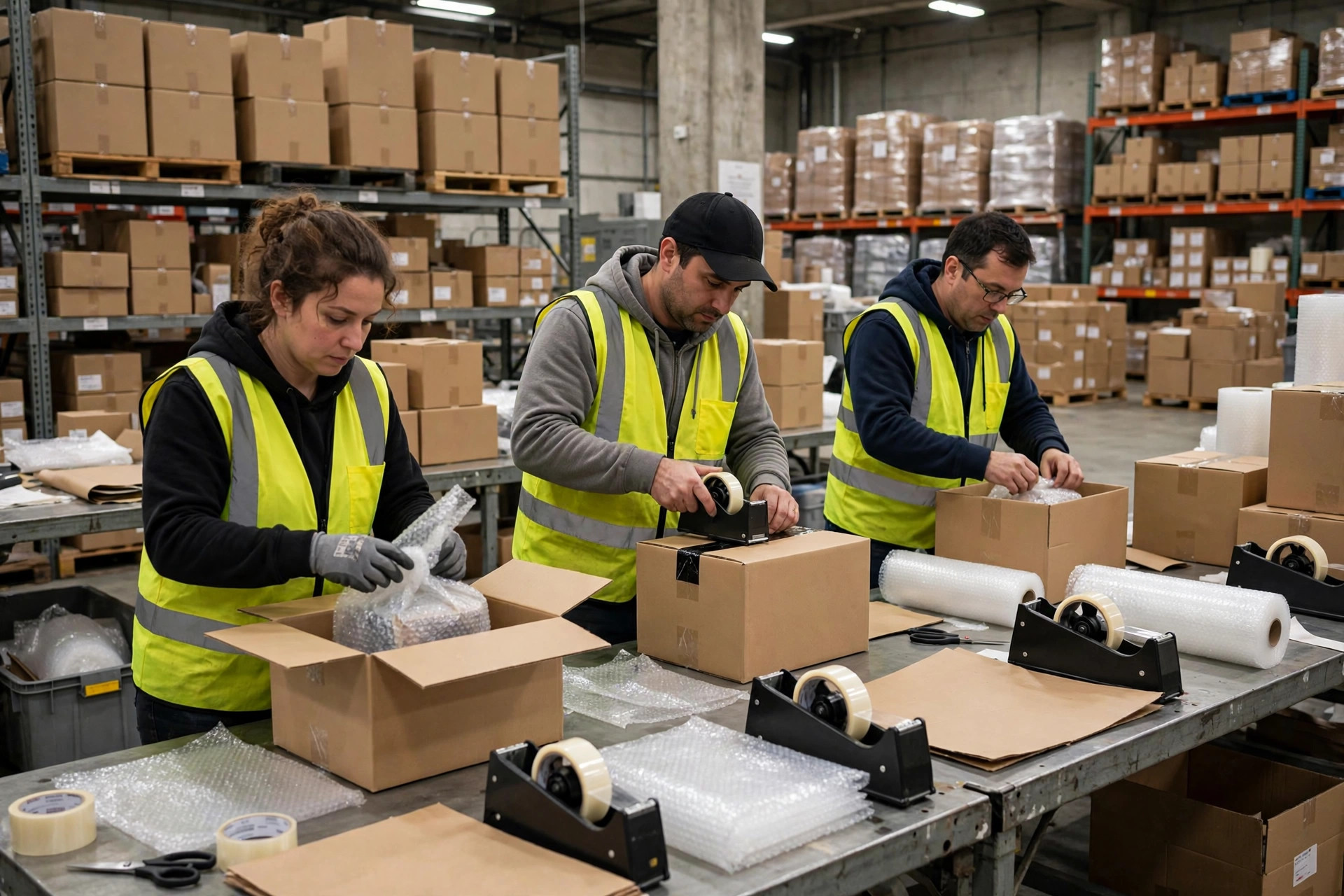
After a return lands, I grade it. Grade A: packaging intact, product fine, straight back on the shelf. Grade B: packaging damaged, product fine, rebox and clear at a discount. Grade C: damaged or missing parts, scrap or dispose of under local rules. Grading happens in the warehouse.
The return address must be the Canada warehouse, not the US one. Amazon.ca returns follow platform rules; check the latest policy. On your own site, spell out the return policy: return address, who pays return freight, whether customized products can be returned.
Amazon.ca and Walmart Canada Fulfillment Choices
On Amazon.ca, two routes: FBA in Canada, or self-fulfillment backed by a Canada warehouse. FBA gives Prime badging and speed, under Amazon's latest rules. Self-fulfillment keeps control and fits bulky, slow-turning SKUs. I do both: fast-turning products go FBA, bulky thin-margin ones go self-fulfilled.
Walmart Canada's WFS follows similar logic. Do not park everything in one platform's warehouse. Both platforms share one more trap: French content in listings. A Quebec buyer who opens an all-English listing converts at a visibly lower rate. Titles, bullet points, and manuals need a French version at minimum. Machine-translated French that reads like a joke is worse than none at all.
Pitfalls to Avoid
Keep clearance paperwork on file: origin certifications, invoices, packing lists.
Set the French packaging plan before ordering packaging. One revised print run beats a sticker rescue.
Calculate tax by buyer province. Keep tax as its own column, never buried in the selling price.
Put the Canada warehouse on the return label.
Stock up for peak season 6 to 8 weeks ahead. Customs and freight both slow down.
Canada is not hard to sell into. The mistake is treating it as an extension of the US market. This one worked for me, tested it myself.
By Ah K, E-commerce Seller (5 yrs)