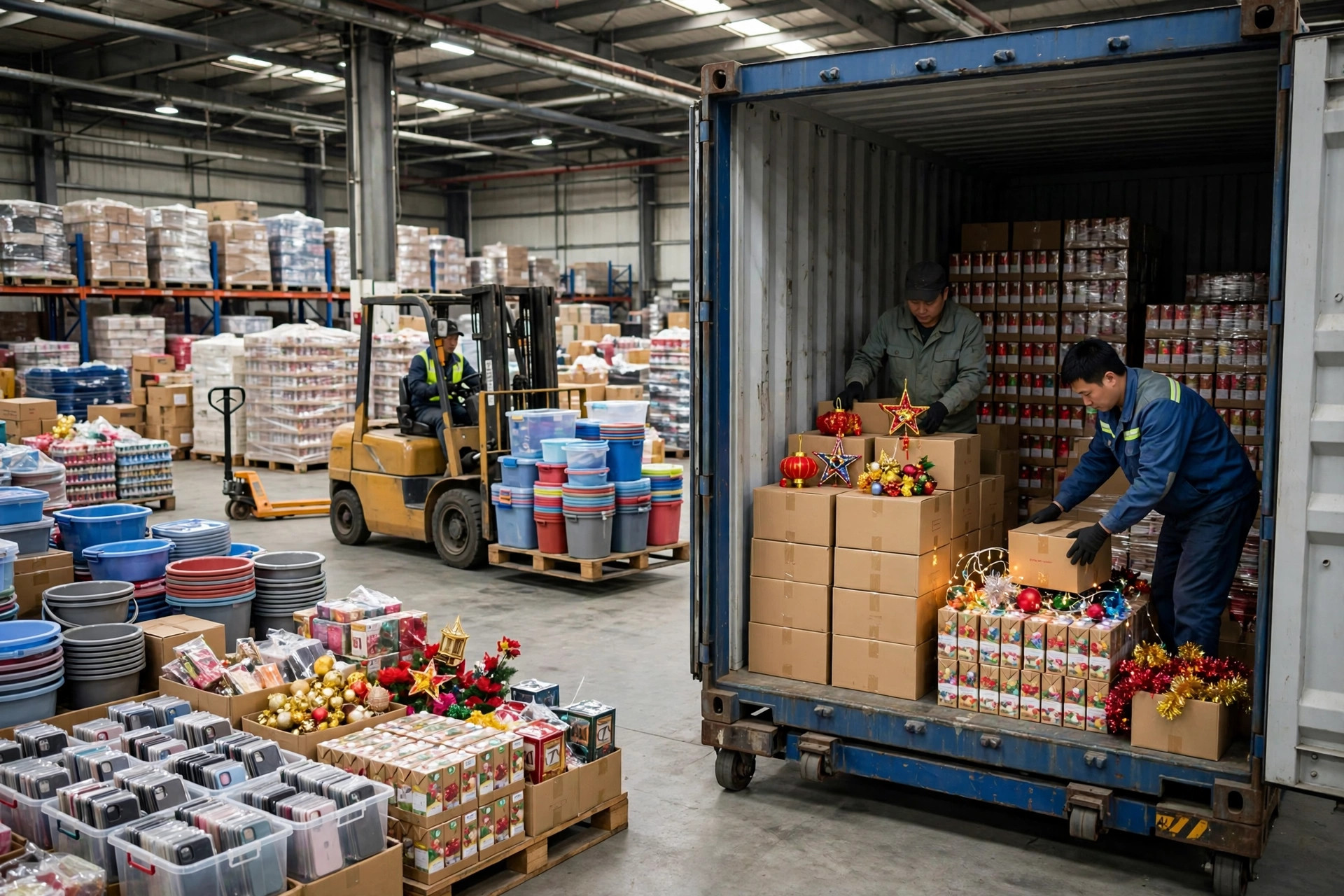
We have a client in building materials. Late 2024, their first-ever import shipment to the Port of Douala, Cameroon — one 40-footer of panels. Modest cargo value, but it mattered: their first move into Central Africa. And they tripped over the last thing they should have tripped over: the BESC — the electronic cargo tracking note — wasn't issued before the vessel sailed. The ship arrived, the paperwork wasn't ready, and the container sat in the port for an extra week while demurrage ticked away. The client called me and asked, "Susan, whose fault is this one?" I said: mine. I didn't explain that piece of paper clearly enough in advance.
Clearance on the Africa trade isn't about who you know. It's about whether you did your homework before the vessel sailed. This piece walks the full chain at Douala: the GUCE single window, the BESC, SGS pre-shipment inspection, the green-yellow-red selectivity channels, how the duties stack up, and what a stuck container costs per day.
First, the Skeleton: What GUCE Actually Is
Back in 2000, Cameroon set up GUCE — the single window for foreign trade operations — at the Port of Douala, pulling banks, the port authority, Customs, SGS, the Treasury, exchange offices, the National Cocoa and Coffee Board, and phytosanitary services into one system. The official target sounds great: import procedures down to seven days, exports to two (sources: U.S. Commerce Department's export.gov "Cameroon Customs Regulations"; same figure in trade.gov's country commercial guide).
Cold water first: that's the target. In practice, industry country guides advise planning for at least two weeks of clearance. The gap between target and reality is the tuition you pay at Douala. My rule: quote the official seven days externally, but plan vessel schedules and inventory on a two-week buffer internally.
GUCE has since gone digital, with dozens of procedures now filed online by the clearing agent. But systems are systems and people are people — Douala's congestion is legendary, and in rainy season a 48-hour berth delay is normal. The container always arrives on a different schedule than your plan.
The Counter-Intuitive Rule: At Douala, Clearance Starts Before Loading
First-timers on the Africa trade assume clearance is something you do "after the cargo arrives." At Douala, starting your paperwork when the vessel berths means you've already lost half the battle. Three things must be done before sailing:
One: the BESC (Bordereau Electronique de Suivi des Cargaisons, also called the ECTN) must be issued before loading. This is a hard Cameroonian requirement — one certificate per bill of lading, validated by the Cameroon National Shippers' Council (CNSC) or its authorized agent, attached to the export customs documents. Forget it and you can still get it within five days after the vessel sails — with a penalty of up to 50% of the BESC cost (source: export.gov). Miss that window and Customs holds the cargo on arrival while fines, storage, and demurrage pile up. The BESC fee itself follows whatever CNSC publishes latest — don't trust a forwarder's verbal quote.
Two: SGS pre-shipment inspection (PSI). Cameroon requires PSI for all imports, performed by SGS at the port of loading. Per industry country-guide figures, cargo valued above XAF 2 million (about USD 3,100) needs the inspection. On currency: the Central African CFA franc is pegged to the euro at XAF 655.957 = EUR 1 — a peg that hasn't moved in decades, so you can cost it straight.
Three: get the document pack right the first time. Commercial invoice, packing list, original bill of lading (note: no express release — originals only), local insurance certificate. The invoice must state currency, unit values, and quantities; adding HS codes helps Customs classify. Documents must reach your clearing agent before the cargo does — "the documents are on their way" is not an accepted excuse at Douala.
After Arrival at Douala: How the Green-Yellow-Red Customs Channels Work
Once the vessel berths, your agent declares in the ASYCUDA system, which routes each declaration into one of three selectivity channels:
Green: straight release. Complete documents and a clean declaration record get automatic release — you can pick up the container within hours. That's why seasoned importers guard their compliance record jealously: green is the cheapest, fastest path through the port.
Yellow: document check. Customs reviews the paperwork in detail, typically one to two working days. Doubts over HS classification, fuzzy declaration data, or a random hit will land you here. Yellow isn't scary — just supply what's asked.
Red: inspection. Documents plus physical examination. Cameroon positioned mobile scanners upstream of the clearance process back in 2006, and red-channel — plus some yellow-channel — containers go through scanning (source: World Customs Organization magazine's analysis of Cameroon's inspection setup). Declaration mismatches, tax arrears, frequent amendments, or sensitive goods all invite red. Once you're in red, time burns by the day.
See the pattern? The channel color isn't luck. It's the report card on the homework you did before sailing.
Doing the Math: How Cameroon Import Duties Stack Up
This is the question clients ask most. Cameroon uses the CEMAC common external tariff in four bands (rates per industry country-guide figures; actual assessment is up to Customs):
| Band | Rate | Examples |
|---|---|---|
| Category I (essential goods) | 0% | Some foods, medicines |
| Category II (raw materials & equipment) | 10% | Production equipment, inputs |
| Category III (intermediate goods) | 20% | Semi-finished goods |
| Category IV (consumer goods) | 30% | Building materials, appliances, daily goods |
On top of duty come three more: VAT at 19.25% (surcharges included), the African Integration Contribution at 0.2% (on goods from non-AU countries), and a computer fee at 0.45%.
Take our building-materials client: consumer goods (Category IV, 30% duty) with a CIF value of XAF 100,000. The duties stack like this:
- Duty: 100,000 × 30% = 30,000
- Integration contribution: 100,000 × 0.2% = 200
- Computer fee: 100,000 × 0.45% = 450
- VAT base: 100,000 + 30,000 + 200 + 450 = 130,650
- VAT: 130,650 × 19.25% ≈ 25,150
- Total duties ≈ XAF 55,800 — about 55.8% of cargo value
Note the kicker: VAT is charged on cargo value plus duty and the other levies — tax on tax. When quoting for Africa, the duty rate is only the starting point; estimate total duty burden at 1.5x and up. Get this math wrong and your quote loses money.
The Stuck Container: What Demurrage Costs Per Day
For dry containers at Douala, carriers typically grant 11 days of free time (per a published 2024 Douala tariff from one carrier). After that, the meter runs: roughly XAF 7,400 per day for a 20-footer and XAF 15,000 per day for a 40-footer in excess container-use charges (source: EAGLE's Douala demurrage tariff; each carrier's schedule differs — confirm the latest quote).
Our building-materials client sat an extra 7 days on a 40-footer — about XAF 105,000 on that line item alone, plus storage and the late-BESC penalty. The first shipment's margin was basically gone. That's why I make every Africa-trade client negotiate free days into the contract — three extra free days can be a lifesaver when it matters.
Worth Knowing: The Bonded-Warehouse Play for Chad and CAR Transit
Douala is also the gateway for landlocked neighbors — cargo bound for Chad, the Central African Republic, and the Republic of Congo often transits through Douala. The play: goods sit in a forwarder's bonded warehouse while Cameroonian Customs holds a guarantee equal to the assessed import tax; the guarantee releases once the goods exit Cameroon, with Customs and SGS tracking transit cargo by GPS (source: export.gov).
We have a household-goods client transiting to Chad through Douala. Their guarantee was held for three months until the cargo arrived and the paperwork closed. For a company with thin cash flow, that guarantee can choke you. So on transit business: first, confirm whether the guarantee ratio is negotiable; second, build the holding period into your cost of capital.
Next Time You Negotiate an Africa Lane, Ask These Three Questions
One: who handles the BESC, and when? — Before sailing, and the responsibility goes in the contract.
Two: is the SGS inspection done, and does the report match the invoice? — If not, red channel is waiting.
Three: how many free days did you negotiate, and is the demurrage rate confirmed? — Don't ask the price after the container is stuck.
Africa is a good market, and Cameroon is Central Africa's gateway — Douala's volumes keep growing. But this market has one rule: a document error costs more than a cargo error, and the fastest clearer is the one who started clearing before the vessel sailed.
By Susan, 3PL Sales Director