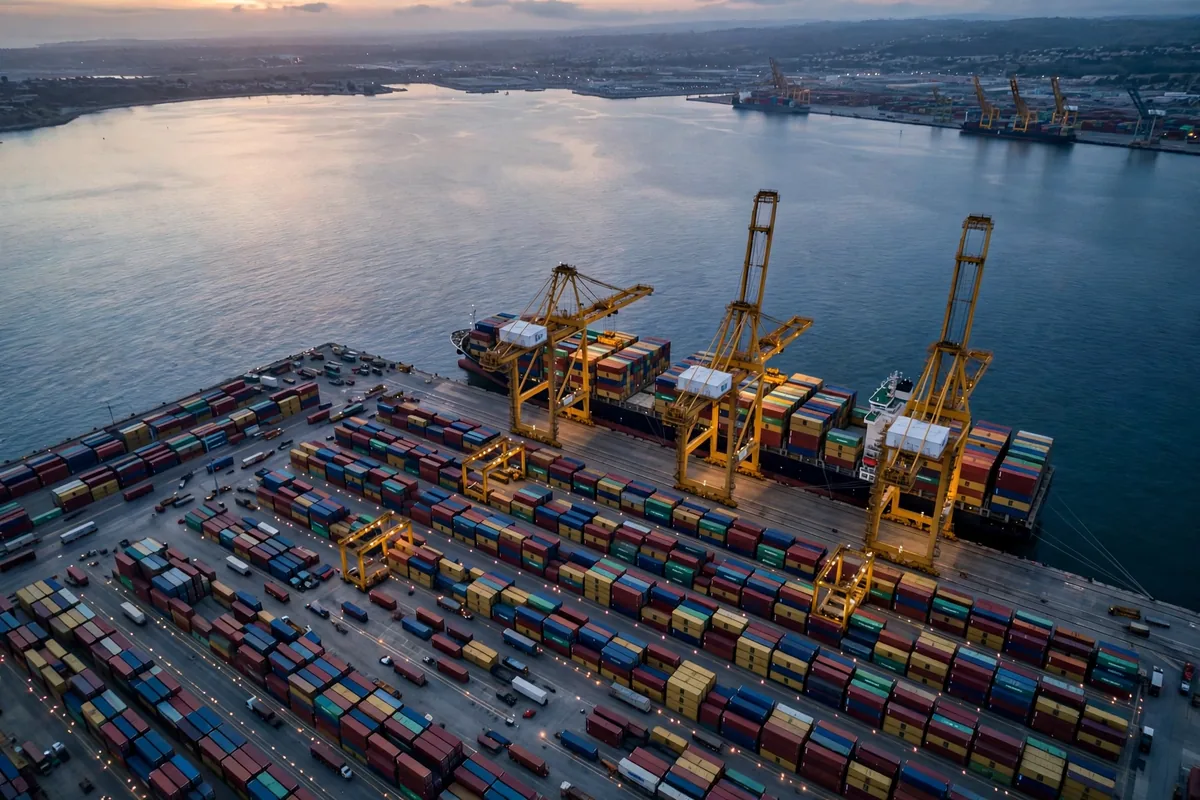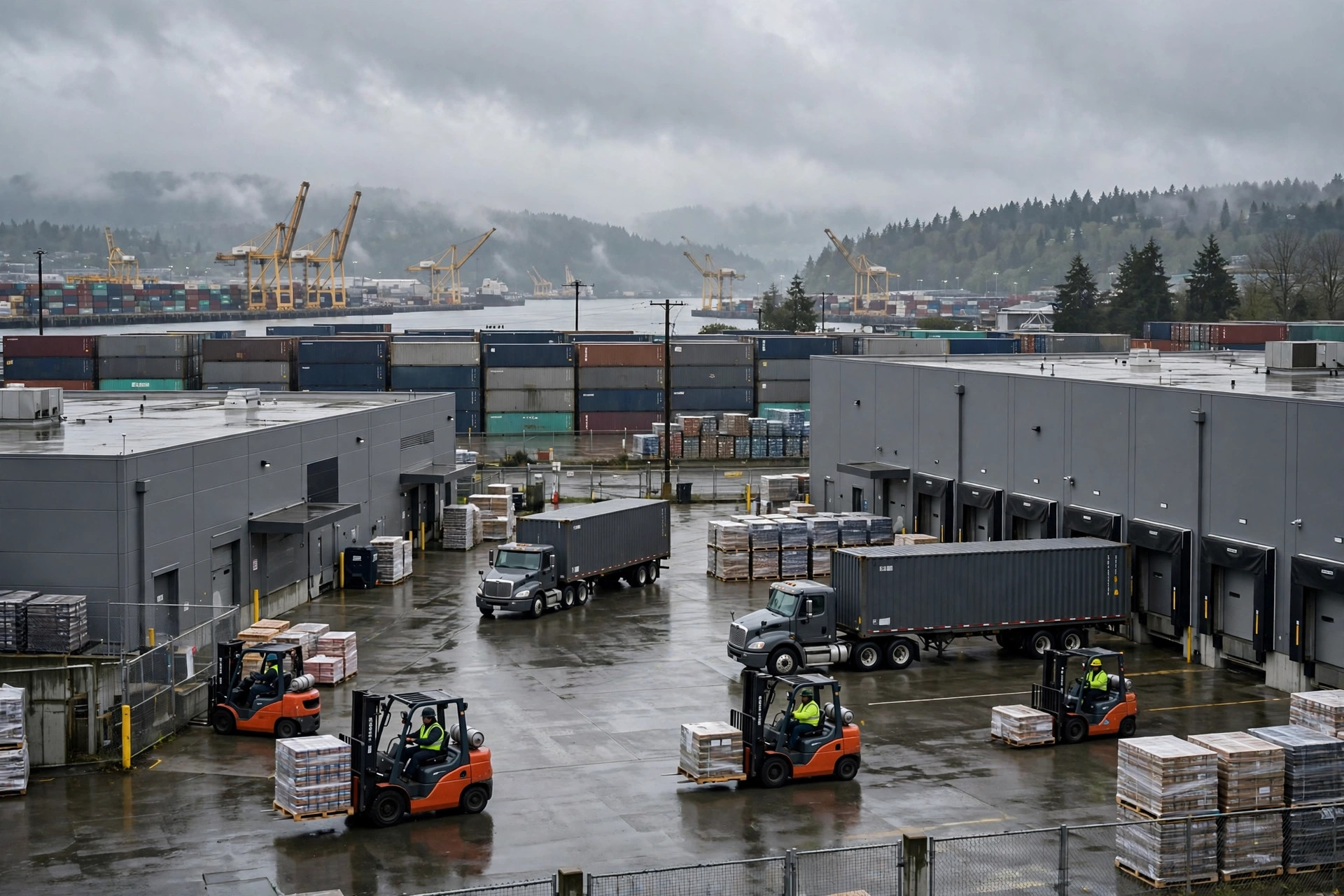
Cameroon cocoa occupies a durable place in the world cocoa map. Public industry sources consistently rank Cameroon among the world's leading cocoa producers, and much of that output leaves through the port of Douala, making the farm-to-port chain one of Central Africa's important agricultural export corridors. Yet the fragile part of this chain is not the ocean leg. It is the land leg: from the moment farmers deliver wet beans, through cooperative drying and grading, regional storage, and finally pre-shipment warehousing near the port, the beans travel hundreds of kilometres through heat and humidity, and any warehousing failure along the way shows up later in the destination port's quality inspection.
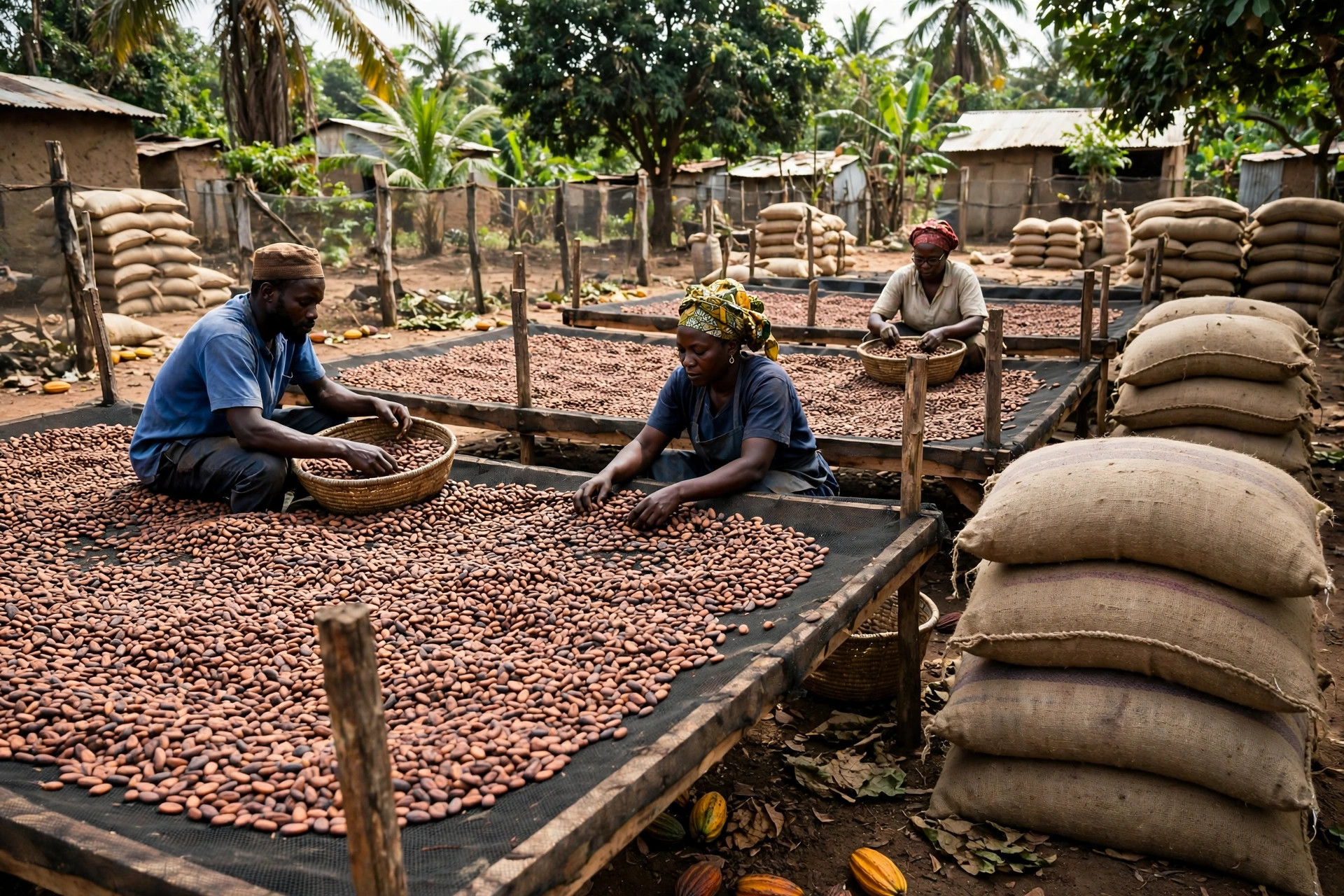
Two field observations from my research illustrate the pattern. The first comes from a cooperative drying yard in the Southwest producing region, toward the end of the rainy season in 2023. About two hundred bags were spread for drying at one time under a simple corrugated roof, with no raised flooring. After several consecutive rains, beans at the bottom of the piles reabsorbed moisture, and the cooperative had to downgrade part of the lot, losing a full price grade. The second comes from an exporter's warehouse near Douala in the dry season of 2024. A lot that had passed drying checks developed a problem in the week before stuffing: not rain leaking in, but condensation forming on the metal roof as day-night temperature swings widened, dripping onto the top of the bag stacks, with mould discovered only when the container was opened. The two sites sit at opposite ends of the chain, but the losses share one root cause: humidity was not managed as a continuous variable across the whole journey.
Cameroon Cocoa's First Ledger Entry: Drying and Grading Happen at Origin, Not at the Port
A common misconception is that grade is settled at the port. In practice, grade is largely settled during the few days of drying and grading at origin. Uneven drying leaves beans with inconsistent internal moisture, and no amount of good downstream warehousing can undo that; careless grading that mixes good and defective beans drags the whole lot's price down to its weakest part.
From a research standpoint, the placement of drying and grading involves a clear trade-off. Cooperative-level drying yards have limited facilities, but they are closest to the beans, so intervention is cheapest there. Postponing drying and grading entirely to a regional centre allows better equipment, but by then the beans have already endured several humidity cycles in transit, and the quality loss is irreversible. My assessment is that drying and grading must be anchored at origin, with regional warehouses doing verification and consolidation, not first grading. The basis for this is not a single report but a recurring pattern across multiple origin cases: lots graded at origin show up with noticeably fewer grade disputes at destination.
Cameroon Cocoa Warehousing: The Enemy Is Stagnation, Not Just Rain
When people hear moisture control, they think of rain: roofs that do not leak, floors that do not flood. In Cameroon cocoa warehousing, the subtler enemy is stagnation. Bagged cocoa in a sealed, hot warehouse develops temperature and humidity gradients between the inside and outside of the bags, and condensation forms on bag walls and inside the stack core. Mould often starts in the core, and by the time it is visible from outside, it is already too late.
This leads to a counterintuitive finding: the most dangerous period for a cocoa warehouse is not necessarily the peak of the rainy season, but the weeks when the rains give way to the dry season and day-night temperature gaps widen. During the rains, everyone is on guard; condensation during the transition is quiet, and a warehouse team that only reads wall-mounted thermometers, without probing stack cores, will miss it entirely. The core disciplines, therefore, are not an extra tarpaulin but three habits: stacks raised off floor and wall, ventilation channels between stacks, and routine core sampling rather than reliance on ambient readings. Specific moisture thresholds and testing methods vary by destination market and purchase contract, so I deliberately do not fix a single number here — the applicable official standards and contract terms govern.
Three Nodes from Origin to Douala: Where the Trade-offs Sit
Breaking the chain into three nodes makes the trade-offs legible:
| Node | Core job | Investment you cannot skip | Common false economy |
|---|---|---|---|
| Origin cooperative | Drying, grading, first bagging | Raised drying beds, ventilated shelter, grading screens | Mixed-grade bagging: saves grading, loses the lot price |
| Regional centre | Verification, consolidation, holding | Core moisture sampling, ventilation channels, lot separation | Packing the warehouse full, blocking airflow, breeding mould |
| Pre-shipment warehouse | Pre-stuffing recheck, container loading | Open-bag sampling before stuffing, in-container moisture protection | Skipping rechecks to catch a vessel, paying more in destination disputes |
One key trade-off sits in how long goods dwell in the port warehouse. In theory, the closer goods move to the vessel schedule, the lower the storage cost. But vessel schedules slip, and goods that arrive early must wait in port warehousing whose humidity conditions are not necessarily better than the regional centre's. The rational approach is to schedule backwards from the vessel window and treat the port warehouse as a transit node, not a stockholding node, letting the regional centre absorb timing buffers. There is no universal answer here; it depends on how stable vessel schedules are in a given season and on measured conditions at both sites.
A further institutional variable deserves attention: documentation, inspection, and compliance steps for cocoa export are governed by the latest requirements of Cameroonian authorities and destination markets. Warehousing plans must leave time slack for paperwork and re-inspection. A stuffing schedule cut too tight means that a single failed recheck cascades into missed vessel windows and compounding storage costs.
A Decision Framework: What Deserves Port Warehouse Space
Finally, a framework for exporters and warehouse operators. Before any lot enters port warehousing, four questions should have answers: first, was grading completed at origin and documented; second, did the latest core moisture sample fall within the contract range; third, is the vessel window firm within about three days; fourth, is there slack for re-inspection and documentation? If any question cannot be answered, the lot stays at the regional centre. The four questions look conservative, but they map to the most common causes of destination disputes.
The warehousing ledger for Cameroon cocoa is, at bottom, a ledger of time: the time for drying and grading cannot be skipped, the time for ventilation checks cannot be skipped, the time for pre-stuffing re-inspection cannot be skipped. Every hour saved in those steps tends to be repaid several times over in grade, price, or dispute. As for where the chain goes next — whether regional centres evolve into true grading hubs, whether pre-shipment inspection moves earlier — those trends are still unfolding and are worth watching rather than settling today.
By Dr. Chen, Supply Chain Researcher