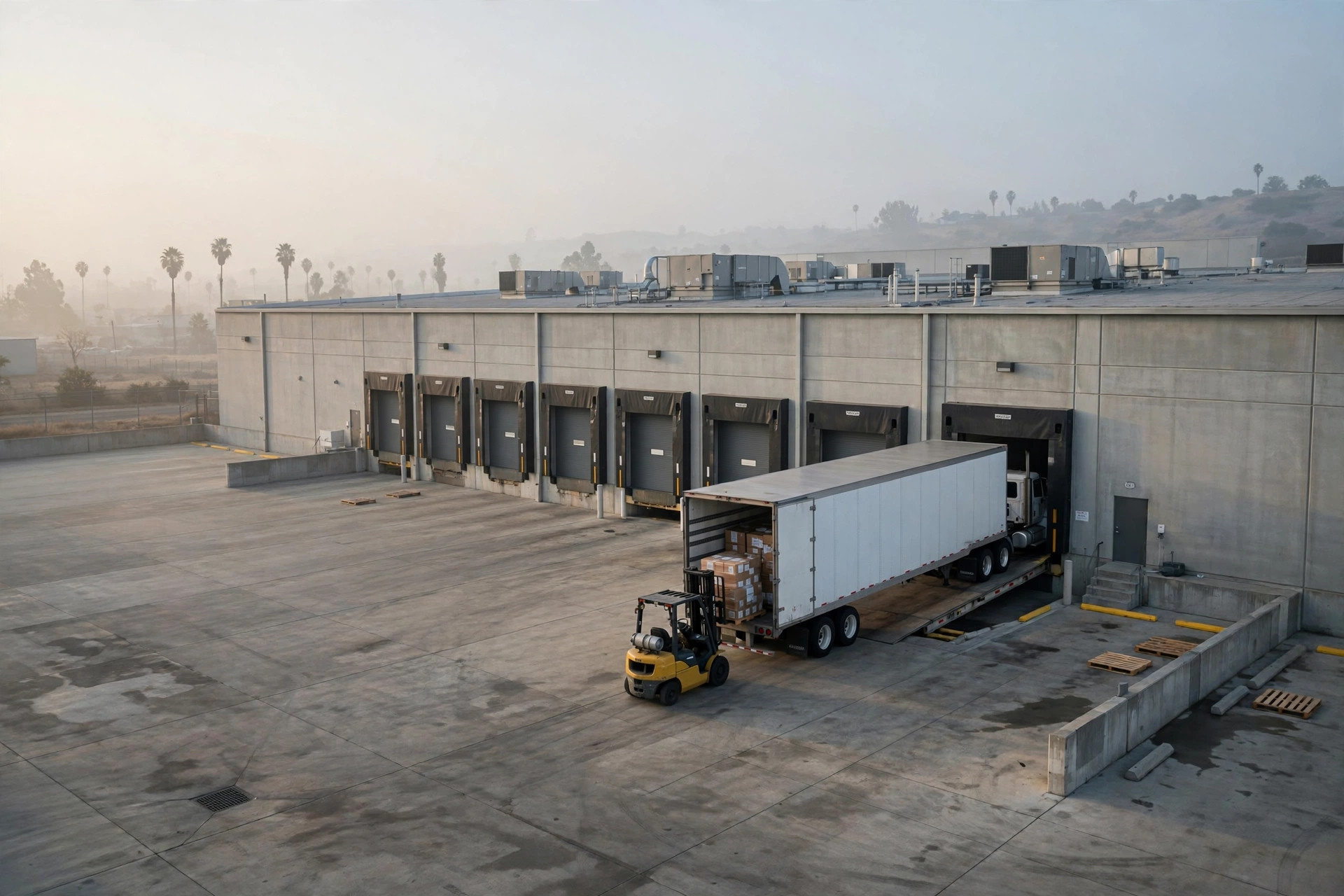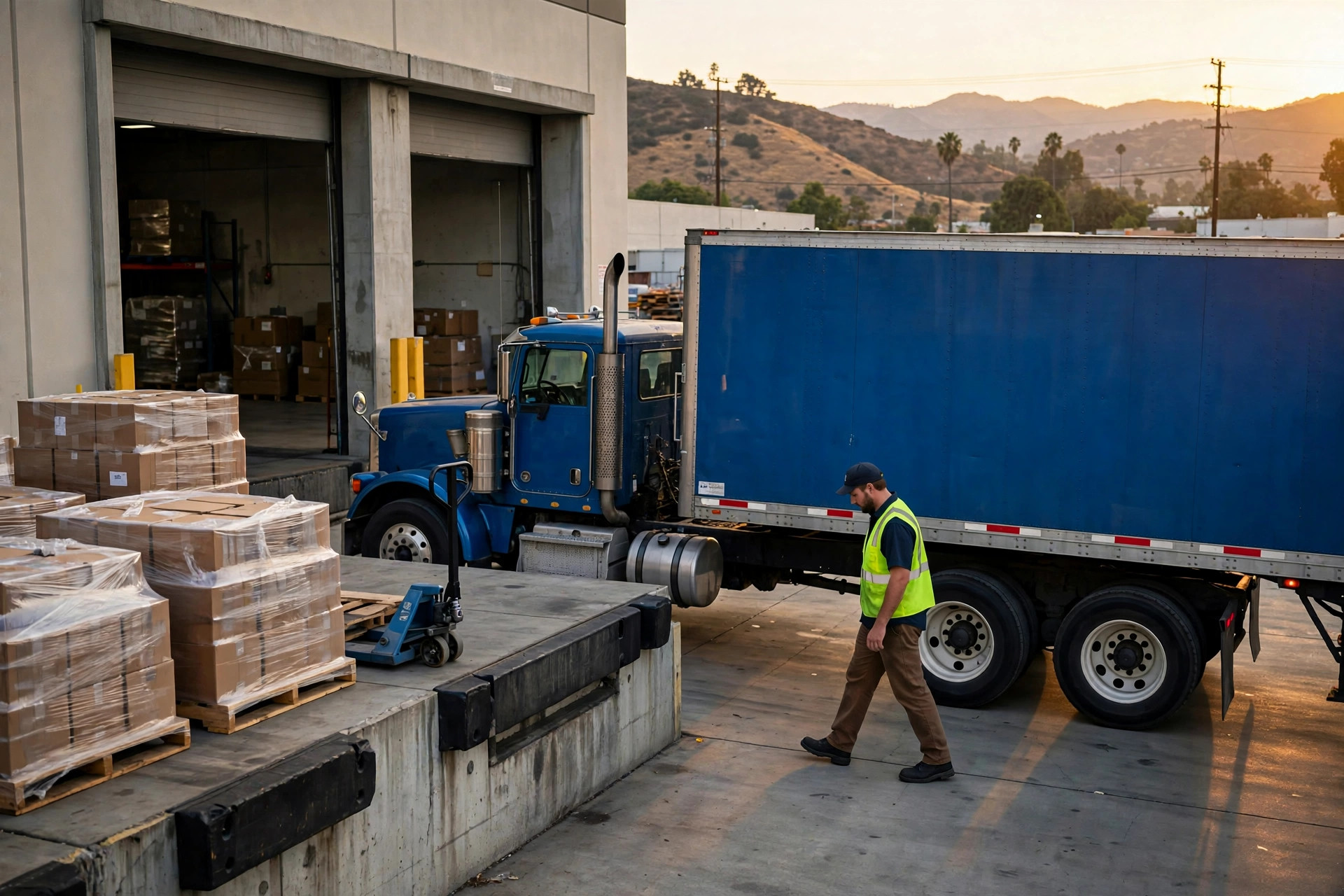
I got the call on a Tuesday afternoon in the fall of 2023. A friend who runs a 3PL in Ontario, California — 120,000 square feet, pushing 3,000-plus orders a day in peak — had just finished a three-month audit by the California Employment Development Department. Twenty "independent contractor" drivers, the guys running drayage between the ports of LA and Long Beach and his building, plus a handful of day-rate lumpers. His defense was the one I have heard a dozen times: "They signed contracts. They own their trucks. This has been fine for years."
The EDD's answer was one sentence: they are all employees. Back payroll taxes, back overtime, meal-and-rest premiums, and then the penalties — a bill that, by his math, came out to more than a year of profit.
I am not a lawyer, and this is not legal advice. But I have watched several warehouse operators walk into this exact wall, and the lessons are worth telling straight — especially if you run warehousing or trucking labor in California. AB5 is not something you can wait out.
The ABC test in plain English
California passed AB5 in 2019, effective January 1, 2020. Its core is the ABC test: anyone doing work for you is presumed to be an employee, and the burden is on you to prove otherwise. You have to clear all three prongs —
A: You do not control how the work gets done. Not in the contract, not in practice. When they show up, which route they take, what they wear — none of your business.
B: The work they do falls outside your company's usual course of business.
C: They are genuinely in business for themselves — licensed, with other clients, not surviving on your work alone.
For warehouses and fleets, prong B is close to a death sentence. If you are in the warehousing and logistics business, the drivers and lumpers you outsource are doing exactly your core business: moving and storing freight. The trucking industry fought AB5's application to motor carriers for years — the Ninth Circuit ruled in 2022 that it applies to trucking, and the industry's rehearing request was denied in 2024. That road is closed. The California Trucking Association estimates roughly 70,000 independent truck drivers in the state are affected — and every warehouse and shipper that hires them is in the blast radius too.
AB5 did not come out of nowhere, by the way. The California Supreme Court's 2018 Dynamex decision created the ABC test; AB5 codified it into statute. A lot of operators assumed it was a gig-economy law. It is not. It covers every industry. I have seen a Moreno Valley e-commerce warehouse try to run 15 pickers as "labor outsourcing" — the staffing agency cut the checks, but the warehouse set the schedules, the stations, and the rate requirements. The EDD's reading was simple: the agency is a payroll pass-through; you are the real employer.
The penalty math nobody does until the audit
Here is where the wishful thinking dies: "I didn't mean to, I just didn't know." Under California Labor Code §226.8, willful misclassification carries civil penalties of $5,000 to $15,000 per violation. If the state finds a pattern or practice — meaning you did it systematically, not once — that becomes $10,000 to $25,000 per violation.
Read that again: per violation, not per case. Twenty drivers is twenty violations. You are in six figures before you even get to the back taxes, back overtime, and meal-break premiums, which are calculated separately. And the ground keeps shifting: SB 1444, signed August 27, 2026 and effective January 1, 2027, lets workers seek that misclassification penalty for themselves as damages in a wage claim before the Labor Commissioner. No more waiting for the state to act — your own former drivers can come after it. An angry ex-contractor is now your biggest compliance risk.
One more clause people miss: once a misclassification finding is issued, the company must post a notice on its own website for a full year — a signed statement by a corporate officer admitting a serious violation, describing the corrective steps, and inviting misclassified workers to contact the labor agency. The money hurts. The public confession hurts more, because your customers will see it.
How does the EDD usually find you? Three patterns I keep seeing: a departing worker files a wage claim and reports misclassification on the way out; your 1099 volume doesn't match your company size and an algorithm flags you; or a competitor gets audited and the auditor walks up and down the supply chain. The first one is the most common. Pay your contractors on time and don't burn bridges — every burned bridge is a potential complainant.
Three doors out
Door one: the business-to-business exemption. Labor Code §2776 lets genuine company-to-company relationships skip the ABC test and be judged under the more forgiving Borello standard. But the bar is all twelve criteria, every single one: the provider is a registered business with its own license and tax registration, maintains a separate business location, brings its own vehicles and equipment, sets its own rates and hours, has other clients, and advertises to the public. Miss one and the door closes. The most common way I see it fail: the "independent" driver has exactly one customer — you — and his "separate business location" is his garage. The auditor sees through that in about ten seconds.
Door two: rewrite the contracts. Even under the exemption, the contract has to track the twelve criteria line by line: paid by the load or the trip, never by the hour; no fixed start times; the provider carries its own insurance and pays its own maintenance; an explicit right to serve other clients. The contract is written for the auditor, not for your peace of mind. I have read "contractor agreements" that require the driver to "report to the warehouse at 8 a.m. daily" and "wear the company vest." That is not a contractor agreement. That is evidence.
The auditors have a checklist of red flags: hourly pay, fixed schedules, you covering fuel and repairs, exclusivity clauses. Flip it around — if your agreement says "late arrivals will be docked" or "attendance at the weekly meeting is mandatory," delete those lines today. That is employee-handbook language.
One detail most people get wrong: the B2B exemption covers company-to-company relationships. If you hire a legitimate trucking company and it sends its own employee drivers, that relationship is fine — the drivers work for the carrier, not for you. The problem is when you sign a "contractor agreement" directly with an individual driver who has no business entity at all. Same work, different counterparty, completely different legal outcome. That is why my friend replaced eight of his drivers with a real carrier — 30-plus trucks, dozens of clients. An auditor can look at that all day and find nothing.
Door three: convert to employees, and do the math honestly. A direct-hire driver costs meaningfully more than a contractor quote — payroll taxes, workers' comp, paid sick leave, benefits. The exact uplift depends on your workers' comp rate and local rules, so check your current policy and ask your insurance broker rather than trusting a number off the internet. But compare it against the other side of the ledger: one misclassification audit costs more than carrying that crew as employees for years. My friend ended up converting twelve of the twenty to direct hires. The rest went to the legitimate carrier.

Something you can do tomorrow: pull every contract you currently pay on a 1099 — every driver, every lumper — and score each one against the ABC test. Anything that fails prong B, stop hoping. Either rebuild it to satisfy all twelve B2B criteria, or convert the role to direct employment. You are going to spend this money either way. Spending it on your own terms is cheaper than spending it as a penalty.