Here's the call I make most often in small-parts storage, and the one warehouse owners hate hearing: don't rack everything. I don't care how good the racking quote looks. If your SKU profile doesn't justify it, those shiny orange beams become the most expensive decoration in your building.
Twenty years of walking small-parts areas across the US has taught me that the floor-stack-versus-racking debate is framed wrong. People treat it as a choice. It's a zoning problem.
What floor stacking actually buys you
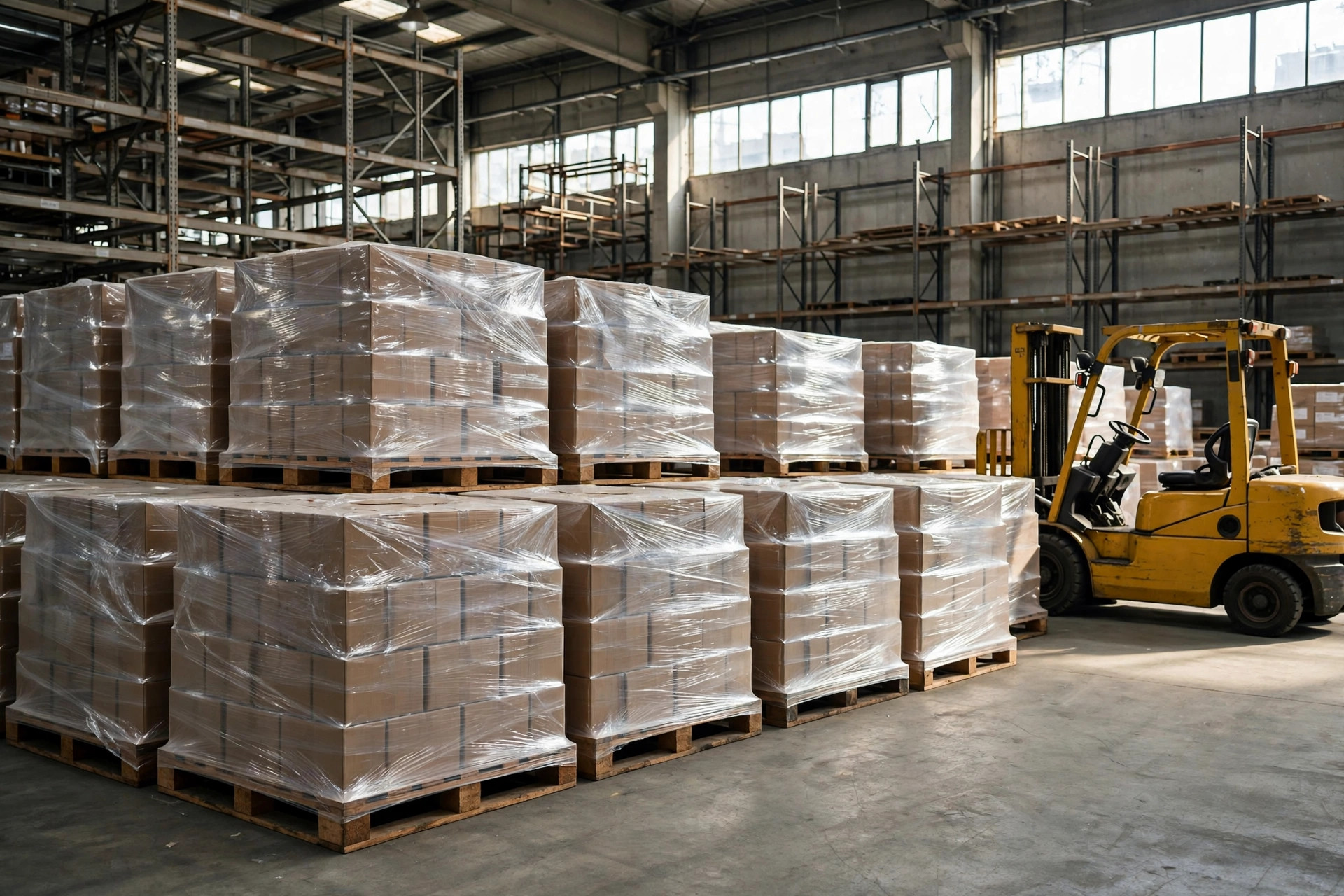
Bulk floor stacking is brutally simple: pallets on the floor, three or four high, no racking to buy, no racking to inspect. The real advantage isn't cost, though — it's flexibility. Today it's brake pads, tomorrow it's air filters, and a forklift moves the whole zone in an afternoon.
The bill comes due in three places. First, cube utilization. You're capped by product crush strength and safety at roughly a third of your clear height. Second, location control. Floor-stack zones run on loose area-and-row addressing, which works fine at 500 SKUs and falls apart at 5,000. Cycle counting a floor-stack zone with mixed SKUs is the kind of job that makes auditors cry. Third, aisle space. Forklifts need room to maneuver between stacks, so your floor plan quietly surrenders square footage to turning radius.
My rule of thumb: floor stacking wins when you have a few hundred SKUs, move mostly full pallets, and the product can take the weight. Hit all three and nothing beats it on cost.
What racking actually buys you
Racking buys two things: vertical space and location precision.
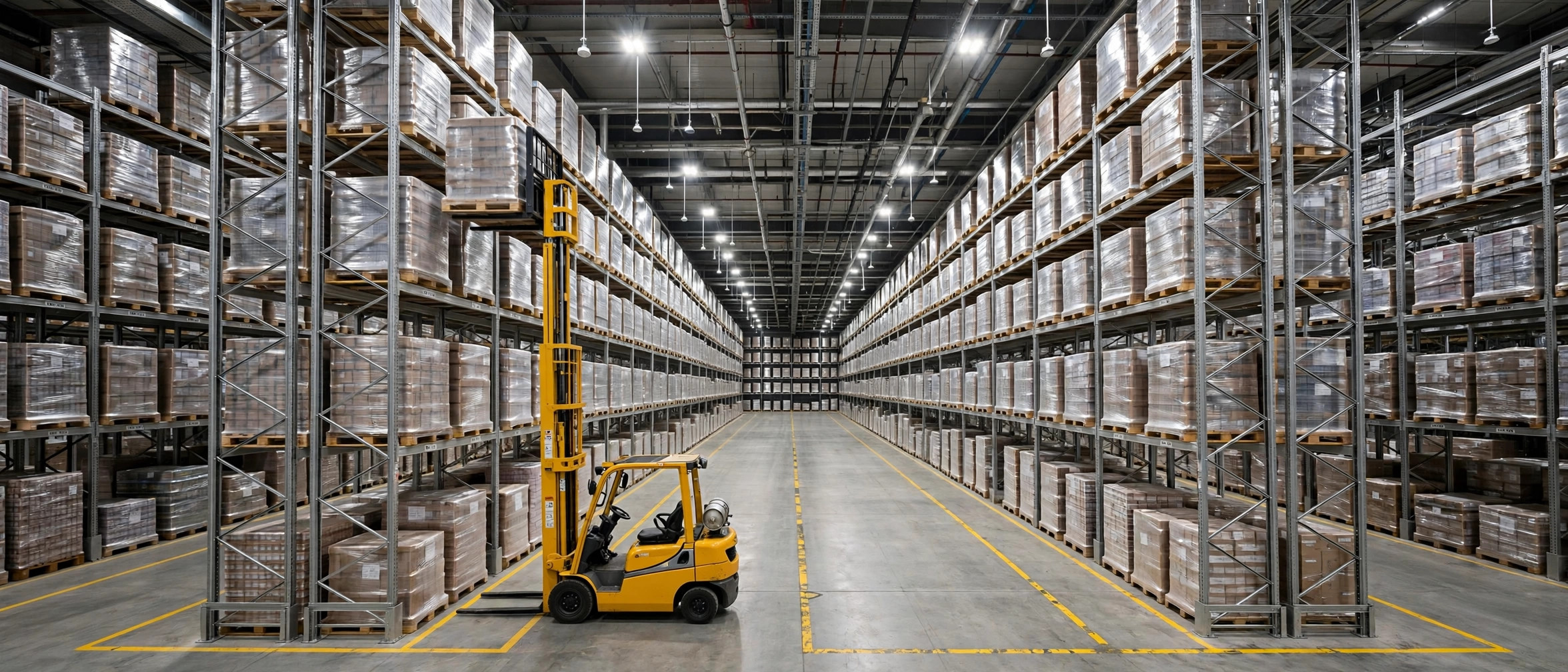
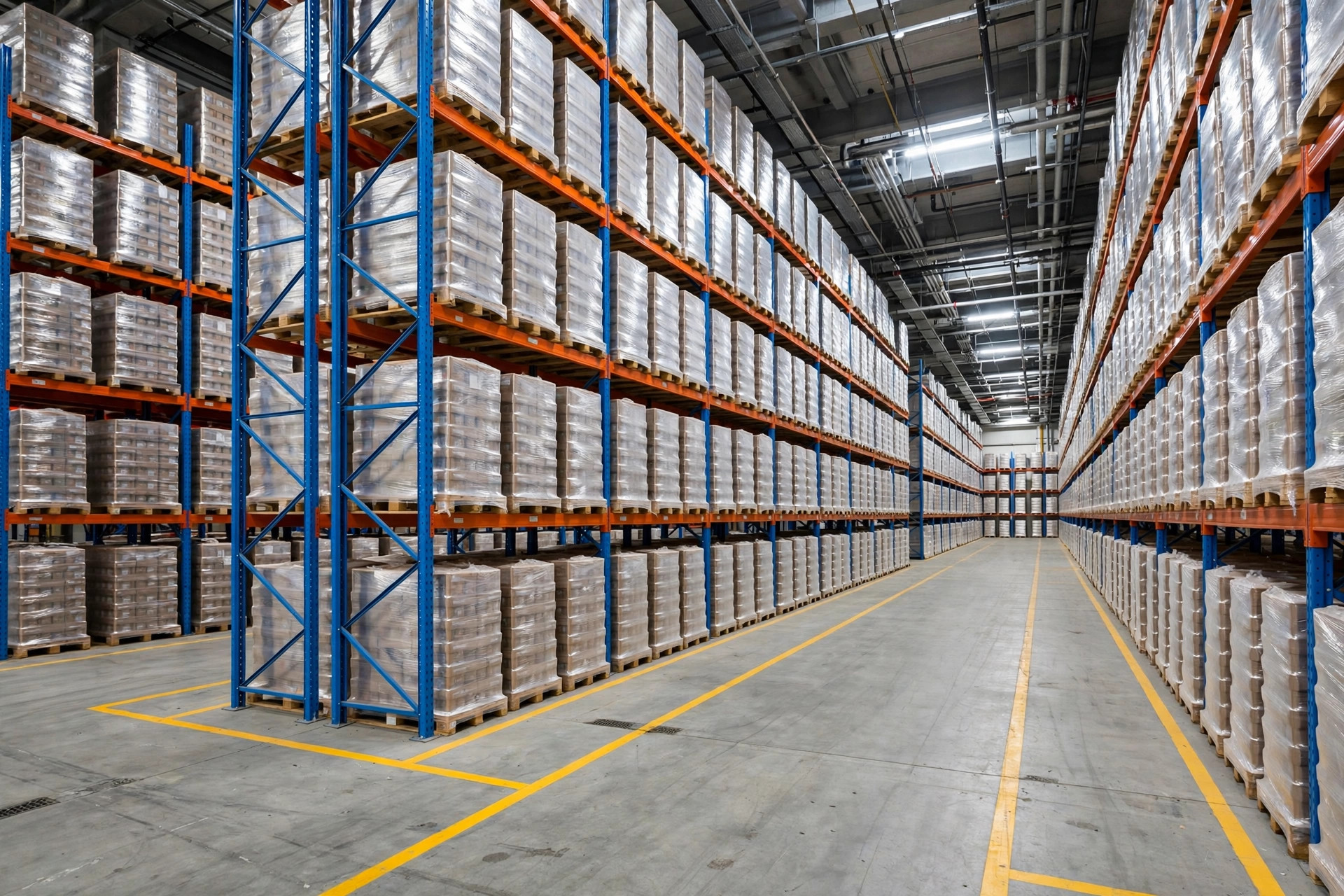
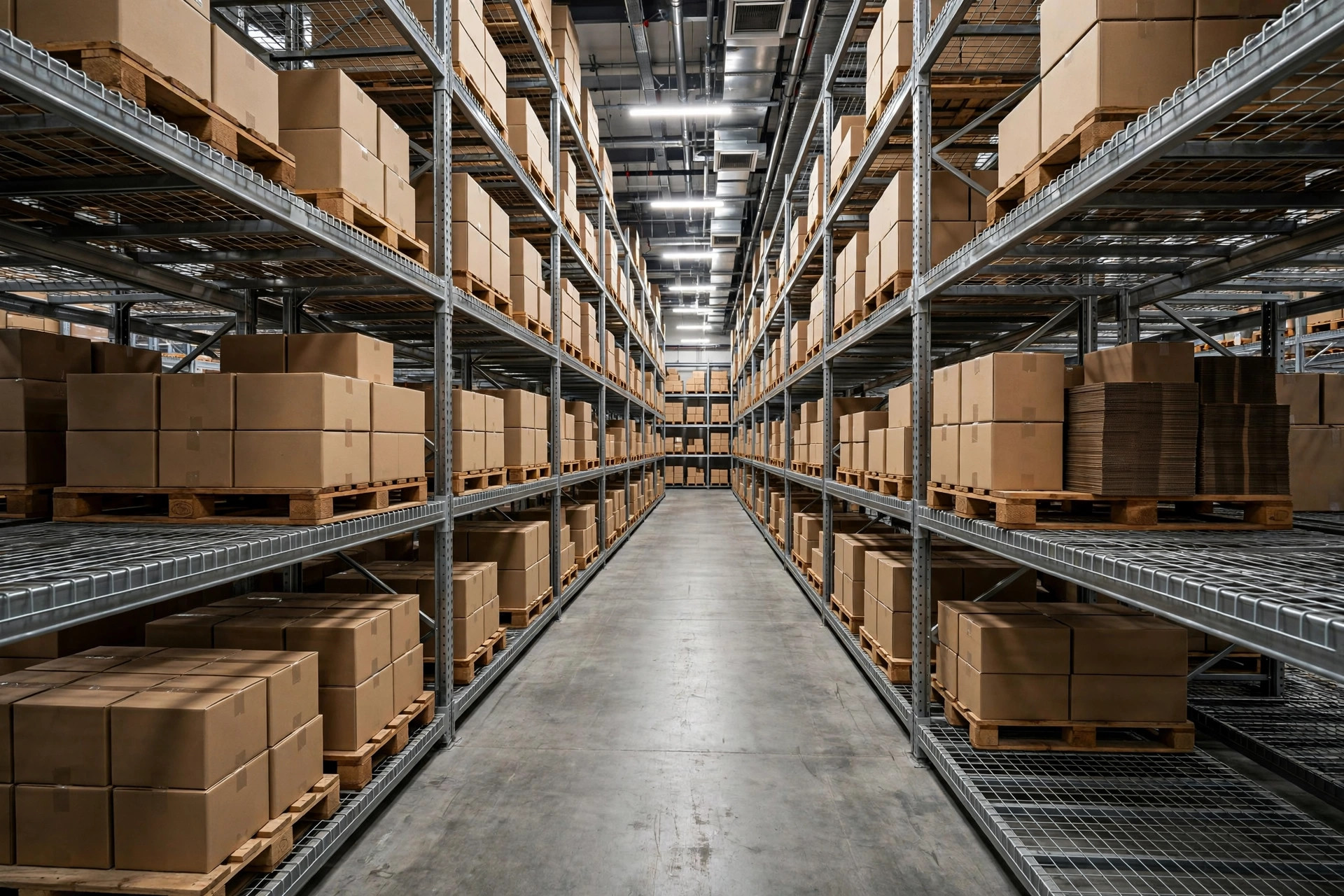
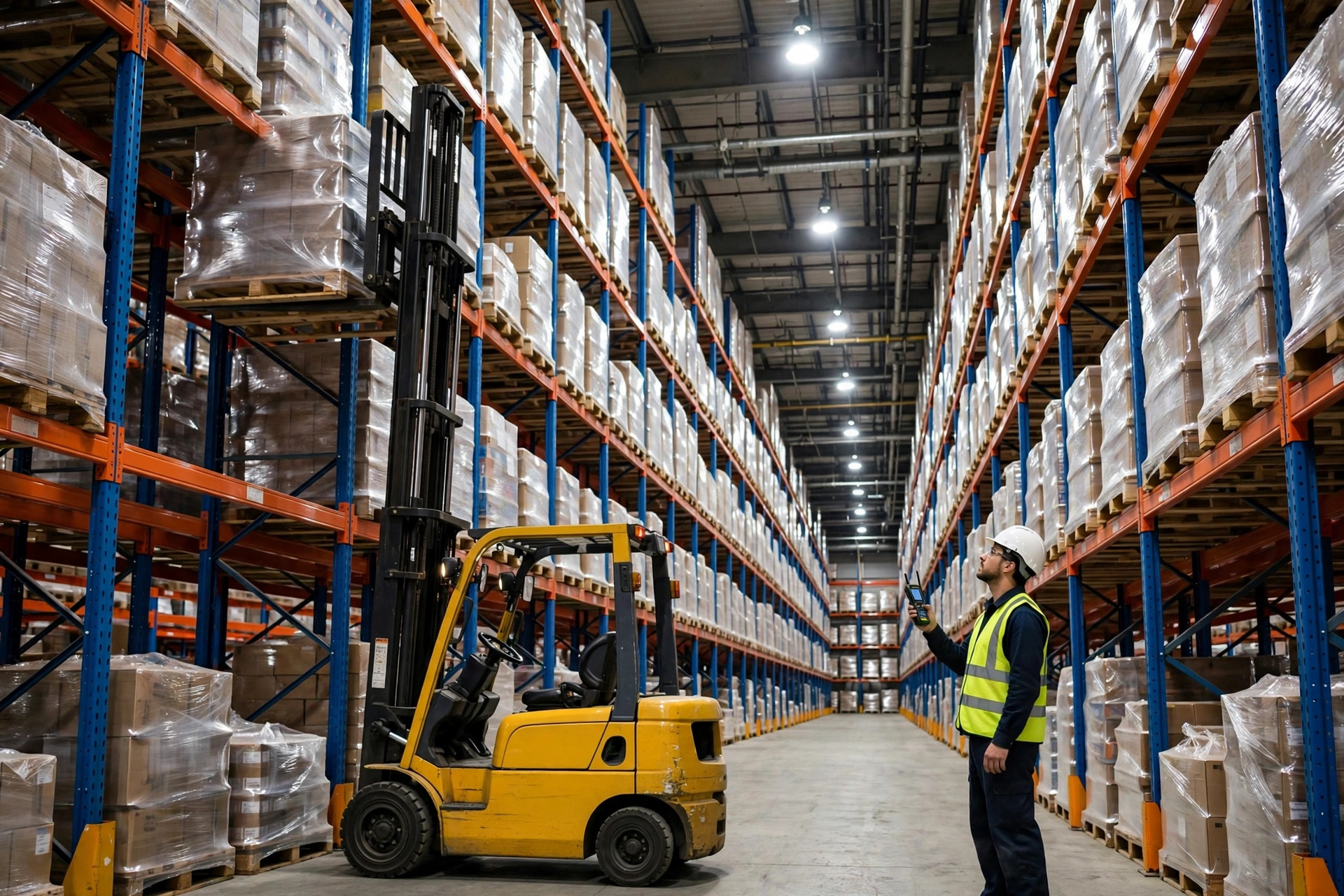
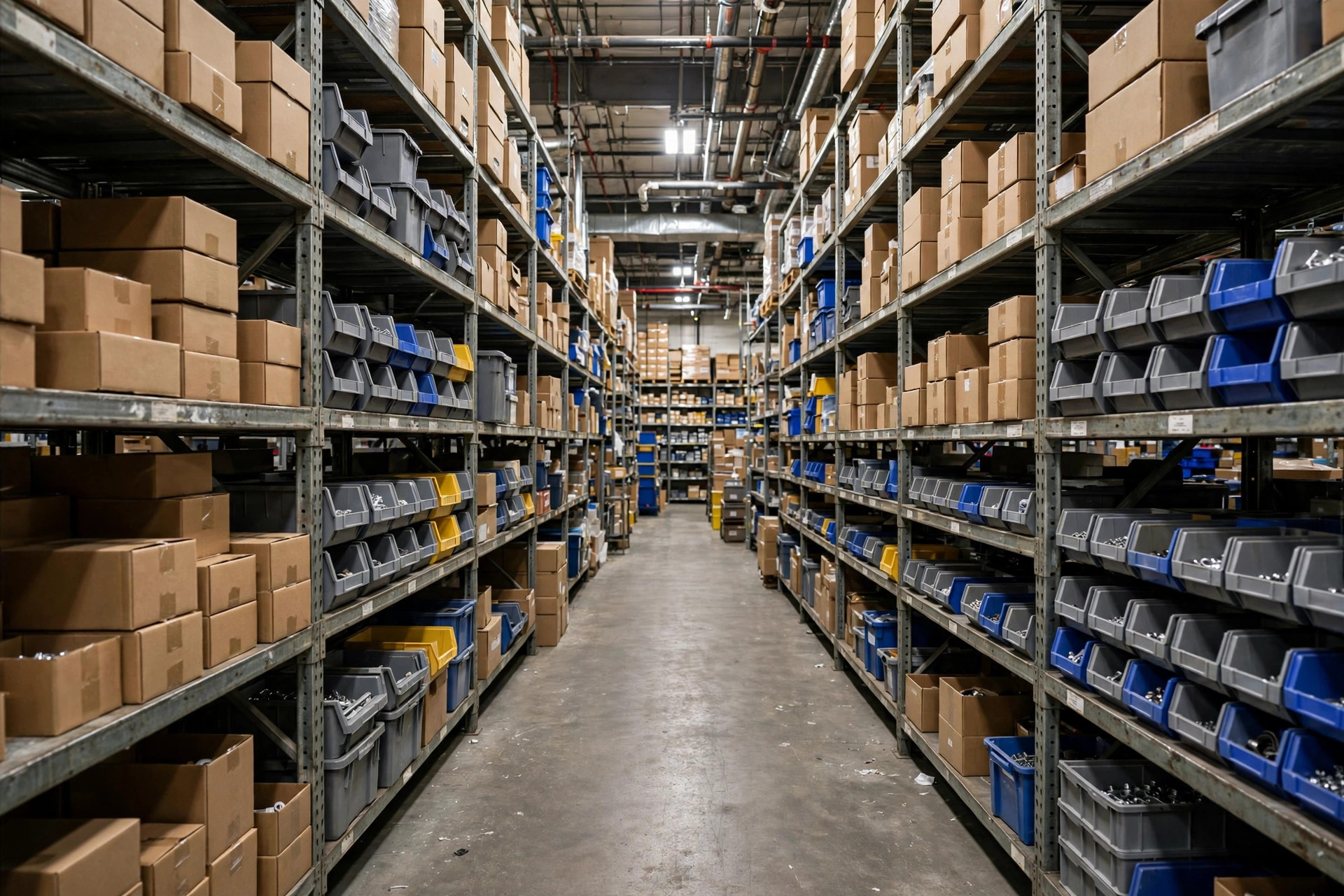
Selective pallet rack unlocks 32 to 36 feet of clear height, storing two to three times the pallets in the same footprint. Every position gets a fixed address, so the WMS can manage down to the slot — cycle counts, FIFO, lot traceability all get dramatically easier. For piece picking, carton flow and shelving concentrate the pick face so operators stop hiking across the building.
But racking has its own invoice. The steel is only part of it — installation, sprinkler upgrades for high-pile storage, and floor load requirements add up fast. Then there's rigidity: once the beams are set, your slot dimensions are frozen, and the next packaging change turns your racking into a constraint. And don't forget pick height — anything above the golden zone means ladders or lifts, which costs you both speed and safety.
Racking earns its keep when you're past a couple thousand SKUs, picking mostly broken cases, and you need real location control. Two out of three is enough to take it seriously.
The line I actually draw
The most stable small-parts areas I've seen are hybrids: ABC-classified zones, with fast-moving A SKUs on flow rack or shelving and slow C SKUs staying on the floor. B SKUs go wherever the math says.
Here's the decision boundary I hand to clients:
- A SKU turns in under 7 days and generates heavy pick lines: put it on carton flow, in the golden zone (waist height, closest to pack-out).
- Total SKUs above 2,000 with more than 60% broken-case picking: a racking system starts to pay. Below that, floor stacking plus disciplined zoning usually wins.
- Heavy, crushable, or odd-shaped product: keep it on the floor or in specialty rack. Don't force it into standard pallet positions.
- SKU churn above 30% a year: stay flexible with floor stacking. Racking becomes a sunk cost when the assortment keeps changing.
I've watched both mistakes play out. The "racking worship" version: 800 SKUs, full racking install, upper levels sitting empty for years, payback stretching past five. That money would have done more in a WMS upgrade. The "floor stack forever" version: 5,000 SKUs on the floor, locations in chaos, mis-ship rates climbing, then a forced two-week shutdown to install racking mid-peak — the lost orders cost more than the steel ever would.
Two costs people always forget. Pick travel: in a scattered floor-stack zone, a 10-line order can mean 300 to 400 meters of walking versus under 100 meters in a concentrated flow-rack zone. At three kilometers an hour, that gap adds up to real labor dollars over a year. And fire protection: sprinkler and fire-separation upgrades for high-pile racking routinely run to a third of the project budget. Talk to a fire protection consultant before you sign the racking quote, not after the beams are up.
One more thing that rarely makes the spreadsheet: replenishment labor. Carton flow looks brilliant on a layout drawing, but somebody has to keep those lanes full. If your A SKUs turn fast, you're dedicating a forklift or a pallet jack to restocking flow lanes all shift. Budget that headcount honestly — I've seen flow-rack projects where the replenishment labor quietly ate half the picking savings. A good rule is one dedicated replenishment operator per 150 to 200 flow lanes in a high-velocity zone, though your mileage will vary with carton size and turn rate.
And keep 15 to 20 percent of the small-parts area as flexible floor space, permanently. Every operation has misfit product — oversized, fragile, odd-shaped, or just new SKUs that haven't earned a fixed slot yet. Filling the building wall-to-wall with racking looks efficient on paper and becomes a daily headache on the floor.
What to do this week
If you're floor stacking today, don't rush to rack. Pull six months of outbound data and ABC-classify your SKUs. If 20% of SKUs drive 80% of pick lines, you only need racking for that 20%. Ask your racking vendor for a phased proposal — convert the A zone first, run it for a quarter, then decide on B.
Already racked and it feels wrong? Check your upper-level vacancy. Over 40% empty means you bought racking for maximum SKU count instead of actual velocity — consider converting slow zones back to floor or dropping to shelving. If pickers complain about climbing, your golden zone is undersized; concentrate A SKUs at waist height and redraw the travel paths.
Floor stacking and racking aren't rivals. They're tools for different SKU profiles. Zone first, decide second — that's the one rule from twenty years that has never embarrassed me.