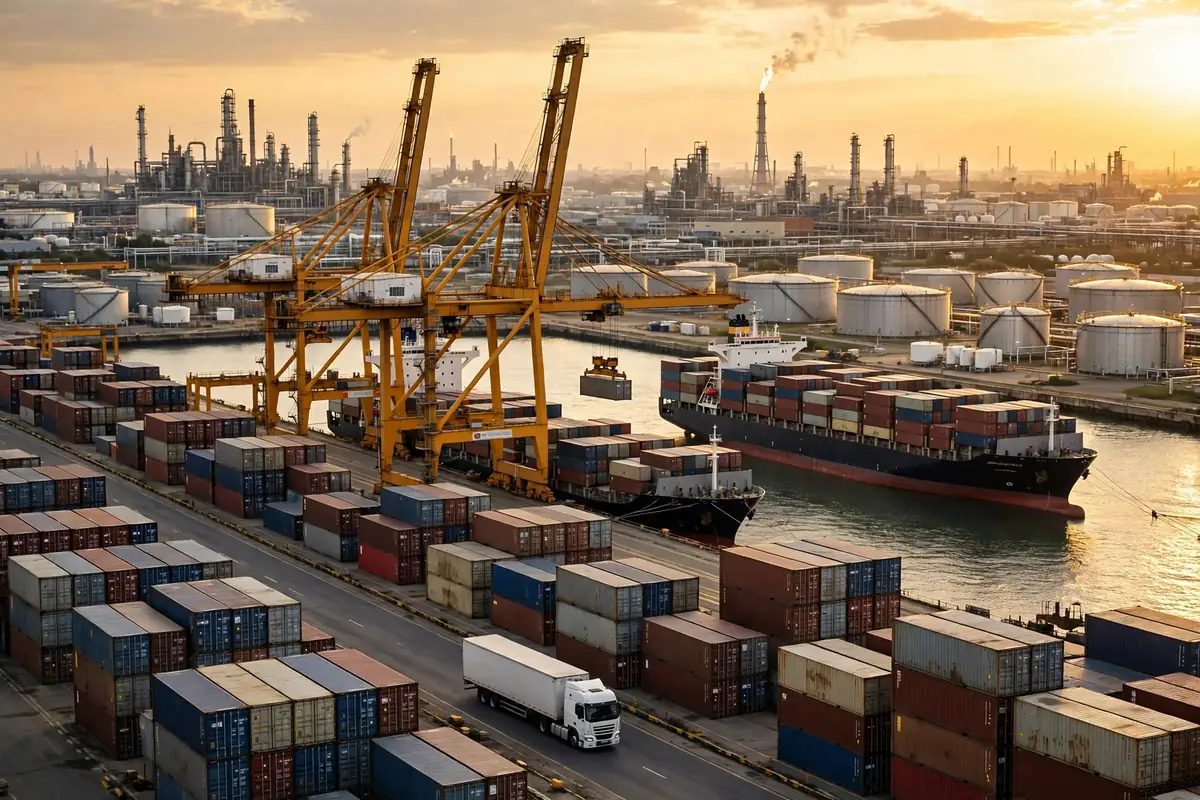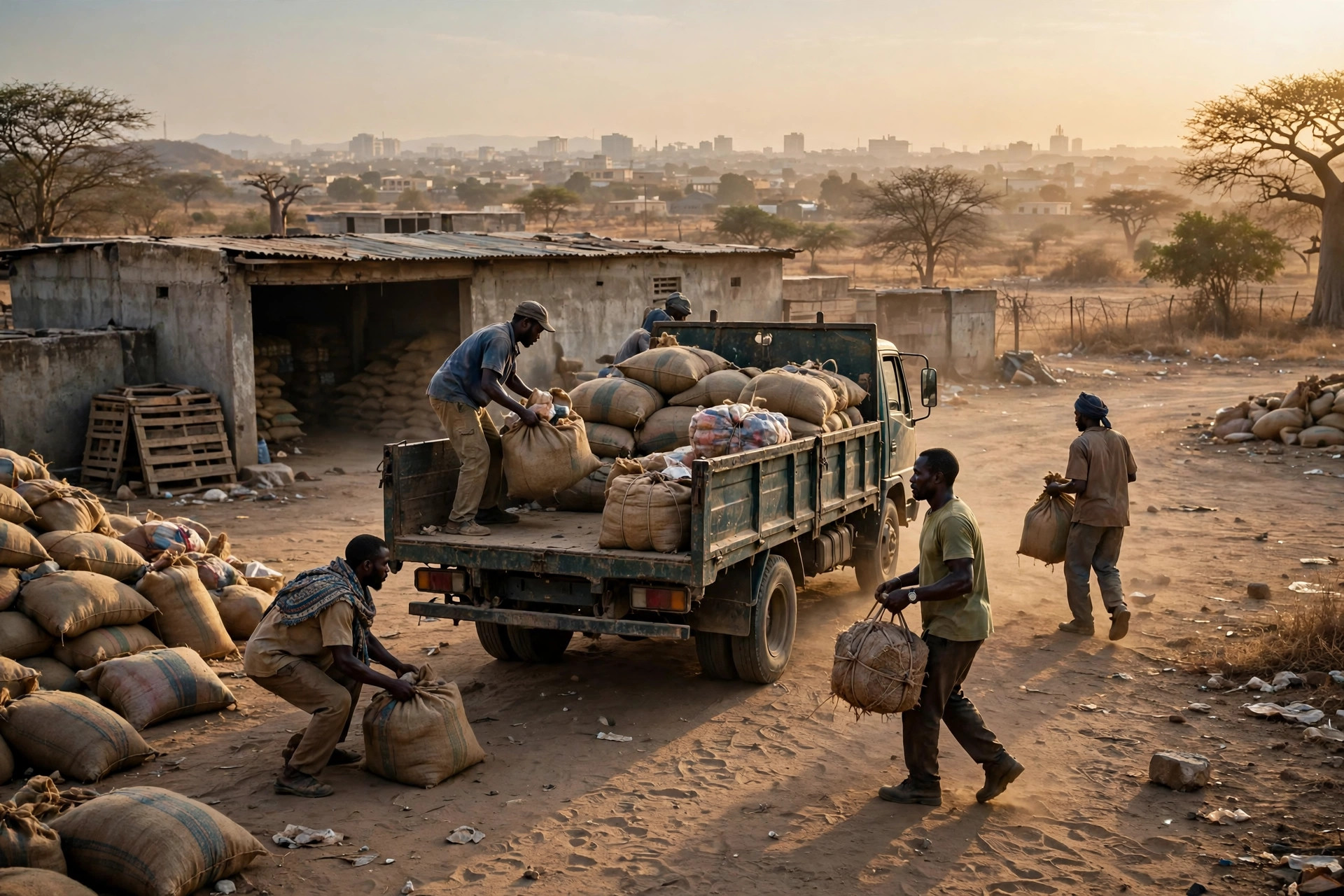
Let me tell you how I first got to know the Bamako Mali warehouse market. I rode along with a container truck out of the port of Dakar, bound for the Malian capital. The convoy sat at the Kidira border crossing for a full day while the drivers smoked by the roadside. One of them told me he had run that road for over a decade — every year somebody promises repairs, every year it stays the same. The consignee was waiting in Bamako, the suburban warehouse was unlocked and ready, and the goods simply could not get there. That trip taught me the first rule of the Bamako Mali warehouse market: do not start with the rent. Start with which port the goods come through, which road they take, and how many days that takes.
Bamako is Mali's capital and its largest city, spread along the Niger River, home to a couple of million people in the metro area. Mali is landlocked — no coastline at all — and its population of roughly 25 million depends on neighbouring countries' ports for everything that comes in or goes out. Gold dominates exports, cotton grows down south around Sikasso. But to reach the sea, all of it has to go on a truck, over a thousand kilometres of road, to Dakar in Senegal or Abidjan in Côte d'Ivoire.
Bamako Mali Warehouse Market: The Goods Choose the City First
Dakar to Bamako is about 1,366 kilometres by road. A truck driving without stopping needs nearly 22 hours; in real life, with the border and the road as they are, two to three days is honest. On the Senegalese side, the RN1 national road runs 642 kilometres east from Dakar to Kidira on the Malian border, crossing the Falémé River into Mali. The border is where the time goes: paperwork, inspection, queues — half a day if you are lucky, a full day when it is busy. There is also a railway, the Dakar–Niger line, 1,287 kilometres end to end with 649 kilometres inside Mali, metre gauge. But freight traffic on that line stopped completely in 2018, and only a passenger service between Kayes and Bamako restarted in 2023. Planning your freight around the railway today is wishful thinking. The work is done by trucks.
So the first question I ask any shipper is: Dakar or Abidjan? Dakar is the historic main route, a big port with plenty of sailings, but the road is long and the border alone can eat a day. Abidjan sits to the south, closer to the cotton country around Sikasso — but when regional politics turned sour a few years back, that border closed and everything piled onto Dakar. In May 2026, Senegal's truck drivers' union told its members to stop running into Mali altogether, after a string of armed attacks on convoys. That 1,200-kilometre lifeline between Dakar and Bamako went quiet. Within days, fuel and cement prices in Bamako were climbing. The warehouses that held stock were smiling; the ones that did not were in trouble.
That is the counter-intuitive truth about warehousing in Bamako: the further you are from the sea, the thicker your safety stock has to be. A coastal warehouse can replenish weekly. Bamako cannot. One corridor goes down and the other may not be able to take the load straight away, so counting replenishment in days is already optimistic. I watched a building-materials trader who kept two weeks of stock in a suburban Bamako warehouse lose his customers when the border jammed and his site deliveries stopped. He learned the lesson and now holds a month of his fast movers, keeping only the slow lines on order-based stock. The extra rent costs less than losing a customer to a stockout.
Port Corridors, Suburban Sheds and Regional Distribution in the Bamako Mali Warehouse Market
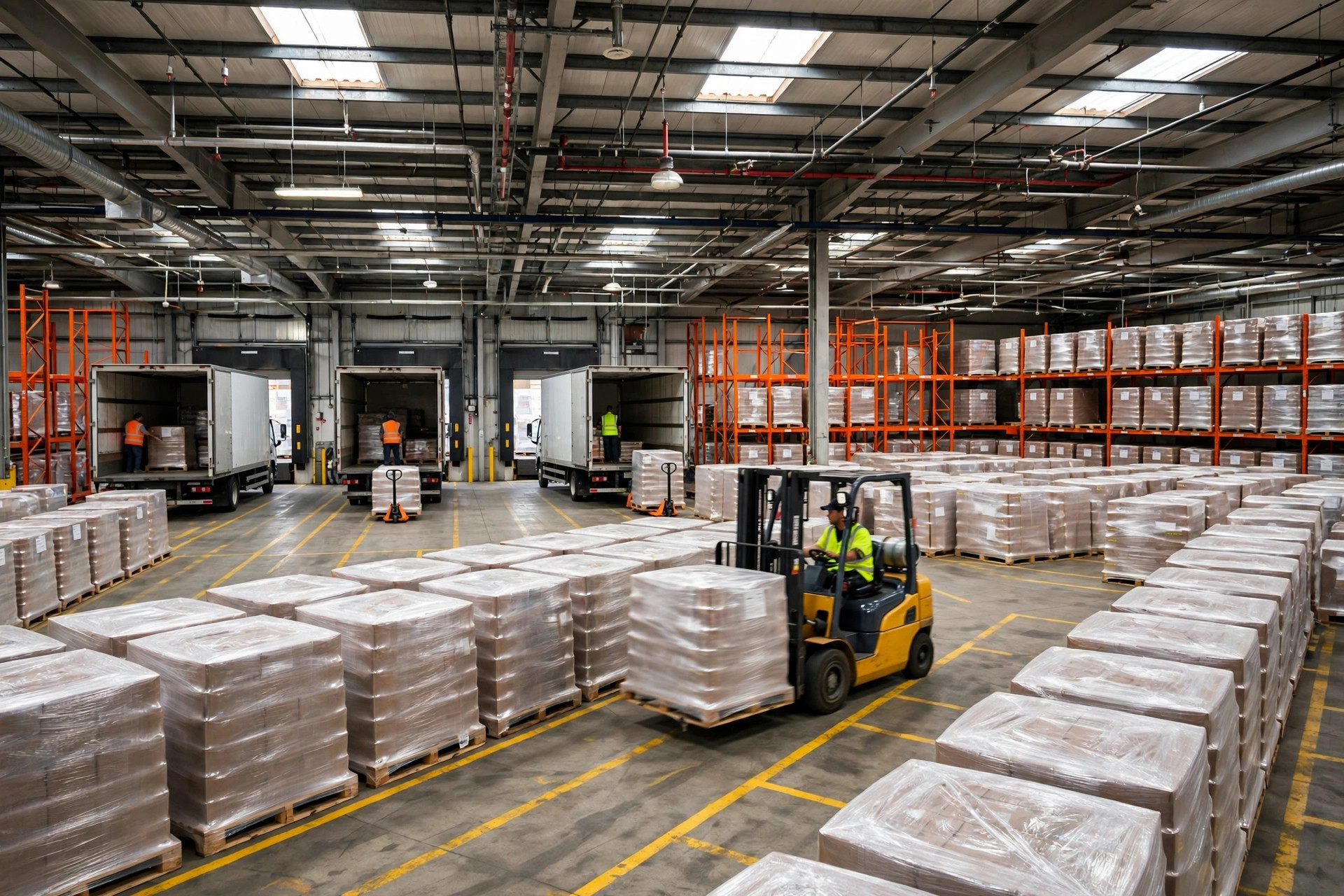
Bamako's warehouses fall into roughly three places. The old city warehouses sit close to the big markets, good for fast urban distribution, but the streets are narrow, big trucks struggle to get in, rents are high, and there is no room to expand. The suburban sheds have space, easy truck access, and room to hold the safety stock a landlocked capital needs — but they sit a drive away from city customers, so the last mile costs extra. Then there are the corridor nodes, near the main road toward Dakar, where goods can be unloaded the moment they arrive from the port without going into the city first. Those are built for transit and cross-docking.
In 2018, DP World signed a deal to build the Mali Logistics Hub outside Bamako: 1,000 hectares, a 20-year concession with an automatic 20-year extension, designed for 300,000 TEU and four million tonnes of bulk and general cargo, with 50 million dollars for the first phase. The site sits on the main Dakar–Bamako road corridor, close to the railway line. The project has not fully materialised, but the choice of location says everything: even a global port operator understands that a Bamako warehouse cannot serve just one city.
After all these years on the road, I boil the choice down to one table. Match your goods to it and the answer is usually obvious:
| Warehouse location | Suits | Advantage | Price you pay |
|---|---|---|---|
| Old city warehouse, Bamako | Fast-moving consumer goods, daily urban delivery | Close to the market, fast distribution, walk-in customers | Narrow streets, hard for big trucks, high rent, no expansion |
| Suburban large shed | Building materials, cotton, mining supplies, bulk stock | Space, easy truck access, room for a month of safety stock | Far from city customers, last-mile cost on top |
| Corridor node, toward Dakar | Transit cargo, regional freight to Sikasso and Kayes | Port arrivals unload directly, no detour through the city | Depends on the corridor staying open — a closure strands it |
| Pre-positioning at the port (Dakar / Abidjan) | High-frequency replenishment, consolidated loads | Sort the moment the vessel berths, dispatch full trucks | Two countries' paperwork, two rents, higher management cost |
The mistake is borrowing one playbook for another job — renting a suburban shed with a city-delivery mindset, or squeezing bulk stock into a small city warehouse. Get the positioning wrong and whatever you saved on rent goes straight back out on transport and stockouts.
One more sum that shippers keep forgetting: Mali left ECOWAS with effect from 29 January 2025. Procedures that used to flow under regional arrangements now have to be checked shipment by shipment — cross-border documents, origin papers, transit guarantees, none of it can be assumed. A Bamako warehouse contract has to state plainly: how many days of border delay count as force majeure, who carries the rent and demurrage during the delay, and who decides to switch corridors. Without that in writing, you have nothing to argue from when the argument comes. Draw your outbound map before you sign, too: how much stays in the city, how much goes on to Ségou, Sikasso and Kayes.
An Old Saying: A Warehouse Is Only Worth What the Road Is Worth
One more story, from early 2026, because I watched it happen. A household-goods shipper had rented 2,000 square metres in the suburbs, goods coming from Dakar in consolidated loads, normally four days door to door. One load hit a hard inspection at Kidira, the trucks sat for two days, and the receiving window at the warehouse slipped. The shipper paid for a night shift to unload. That one shipment cost him an extra half-month of rent. He told me it was worth it, because his competitor was out of stock that week and he was not, and the customers stayed with him. In the Bamako market, the contest is not about who pays the lowest rent. It is about whose goods never run out.
So here is my advice, usable tomorrow. First, size your stock for a corridor failure, not for a good week — hold at least a month of your fast movers, and forget the coastal habit of weekly replenishment. Second, let the flow of the goods choose the site: city delivery, regional distribution and transit are three different jobs, not one warehouse wearing three hats. Third, keep a backup corridor agreed in advance — if Dakar jams, can you switch to Abidjan, how many extra days, how much extra money — and get it written into the carrier contract before the jam, not after.
Fifteen years on the road has left me with one belief: where the truck cannot reach, a warehouse is just an empty shell. A road that stays open is what makes a warehouse worth anything. In Bamako, do not judge a warehouse by its rent or its size. Judge it by the corridor behind it.
By Shifu Zhao, Trucking Veteran (15 yrs)