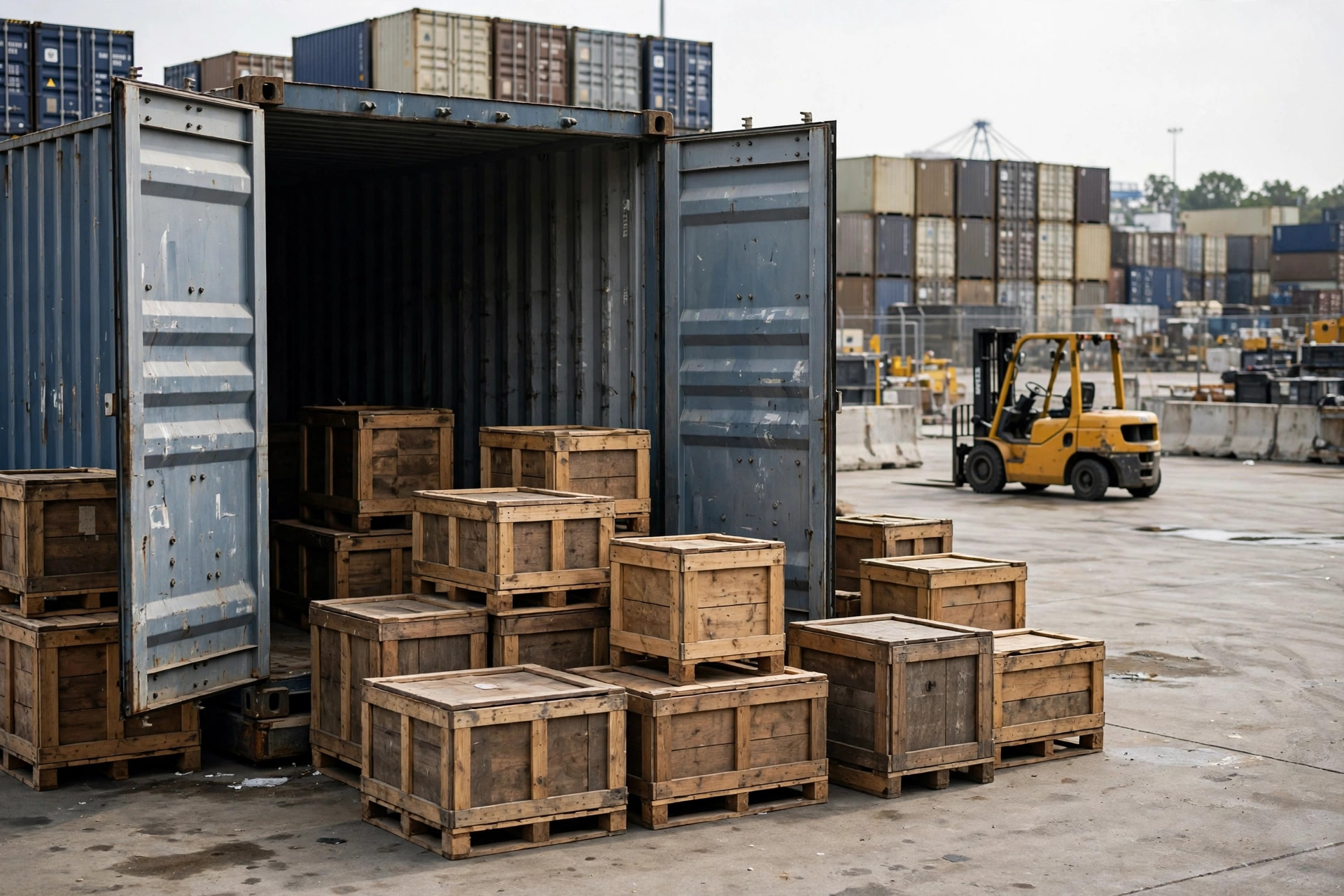
A couple of summers back, I was sitting in the pickup queue outside the Port of Long Beach when a cargo owner next to me started pacing. His shipment, four robot arms from Germany, had been pulled for a customs exam. His broker called and said, "The box is at the exam yard. You'd better get someone over there to watch." The guy couldn't make it from Irvine in time, so he asked me to swing by. When I got there, my stomach dropped: the wooden crate had already been pried open on one side, and a forklift driver was lining up to shove his forks straight under the base pallet. I waved him off and got the yard crew to switch to lifting straps from underneath. The owner later told me that on a previous shipment, a servo motor shaft had been bent exactly that way, by a fork. That arm went back to the factory for two months while his production line sat waiting.
I've been running freight for fifteen years, and here's what I keep telling people: precision equipment doesn't die at sea. Good crating survives the ocean just fine. It dies at the exam yard. A customs exam cracks the box open, the crane gets rough, the crate sits out in the rain, and delicate parts take a beating. Robot arms, AMRs, stacker crane components: every one of them is expensive, and one good knock can cost tens of thousands of dollars. Here's the whole playbook, all of it clean and by the book.
A Customs Exam Will Find You Sooner or Later
First, the straight answer: automation equipment gets flagged for customs exams at a pretty high rate. High declared value, complicated product descriptions, sensitive countries of origin, the system flags what it flags. An exam is normal enforcement. If your declaration is honest and your paperwork is complete, you get cleared and move on.
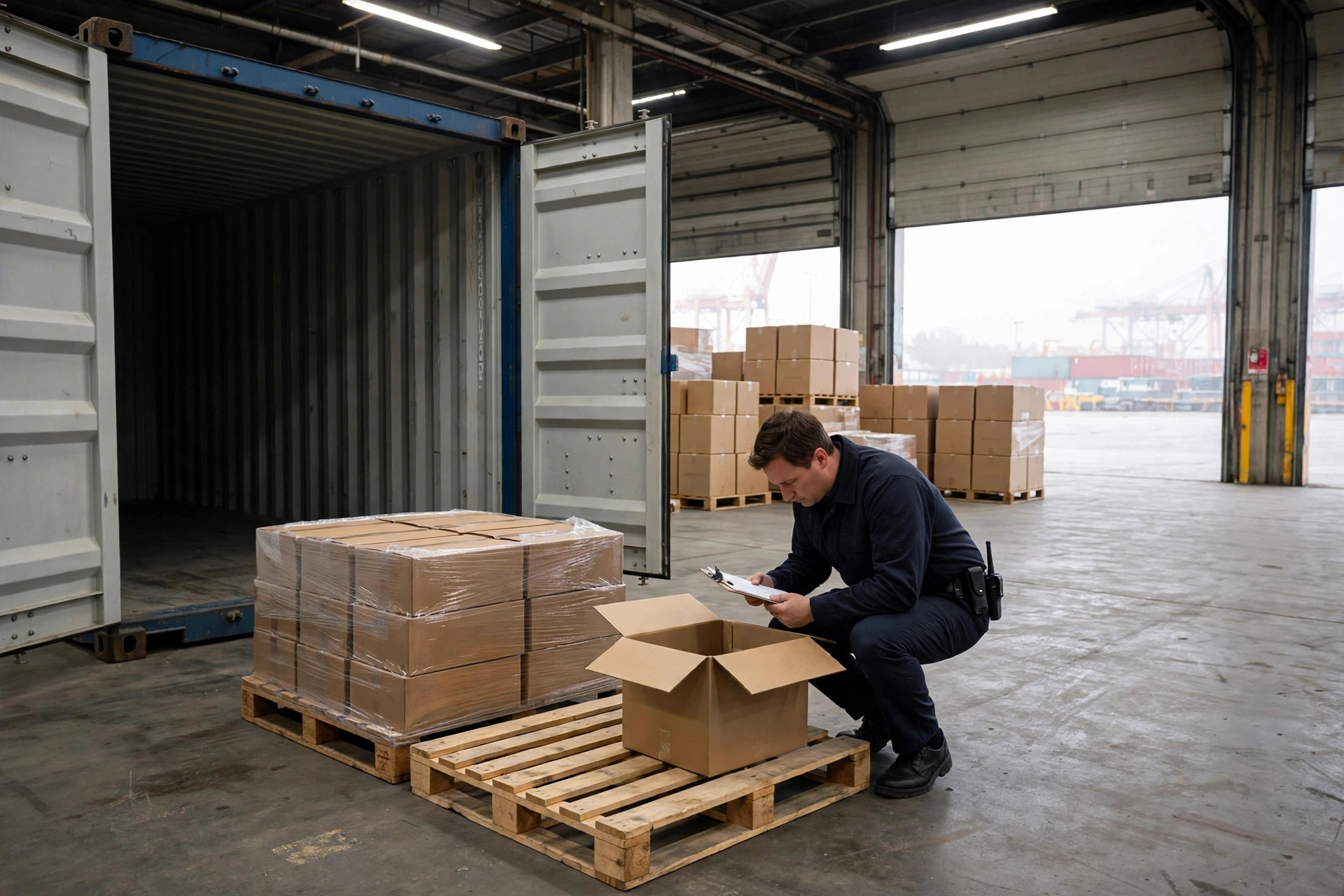
Now here's the part most people get backwards: the exam itself isn't the problem. The problem is nobody watching the box get opened. The exam yard crew opens dozens of containers a day. They don't know whether your wooden crate holds scrap iron or a precision instrument. The forklift goes whichever way is fastest, the straps go wherever is quickest. The classic mistake owners make is thinking "the exam is the government's business, I'll just wait for the call." Nobody shows up, and how your crate gets opened is left entirely to luck. A friend of mine who integrates systems in Ontario told me about a shipment of stacker crane rails from Italy. The crate sat out in the open at the exam yard, it rained, the tarp wasn't secured properly, and the rails came out with a layer of surface rust. They could never get the alignment precision back during installation. The exam wasn't the issue. The issue was nobody watching, and the freight sitting outside for a day and a night.
The Moment That Box Opens, Eyes Stay On It
Before the exam, the cargo owner and the broker need to get a few things straight. Don't skip this because it feels like a hassle:
First, give your broker a written "unboxing note" ahead of time. Spell out what's in the crate, which side can't take load, where the center of gravity is, and that it must be lifted with straps, never forked directly. Attach a photo of the packing from the factory if you have one. The broker hands it to the exam yard, and that piece of paper can save your equipment when it counts.
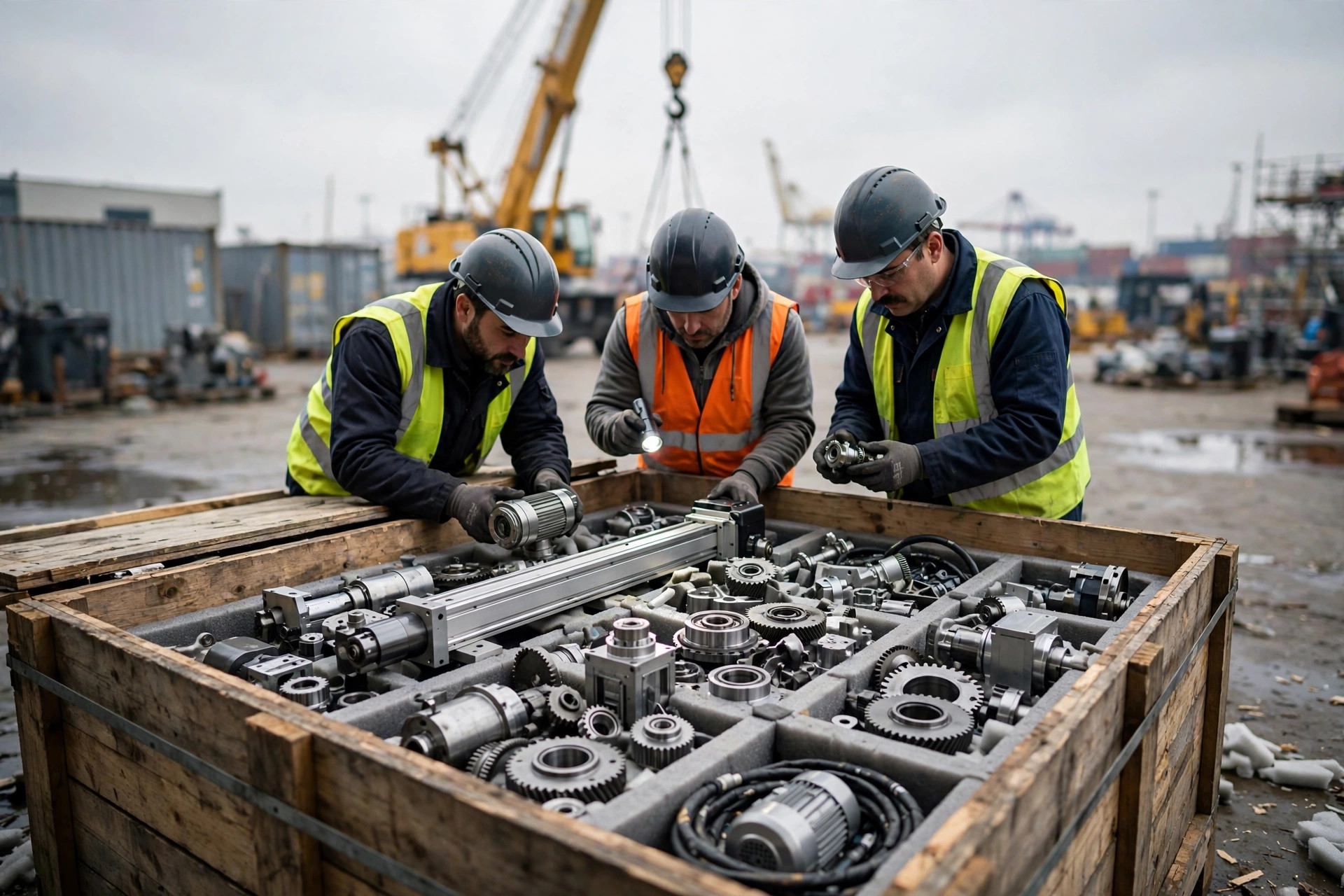
Second, have someone on site when the crate opens. Can't go yourself? Pay your broker or a third-party surveyor to be there. That money looks like an extra cost until you compare it to rebuilding one servo motor. That day at Long Beach, if I hadn't stopped that forklift, the forks would have gone straight in.
Third, photograph everything. The crate exterior and seals before opening, the equipment condition after opening, and the repacked crate before it leaves. Timestamped photos, stored safely. If something goes wrong, those photos are the backbone of your claim.
Fourth, ask about the yard's repacking standard in advance. Once the equipment is pulled out for inspection, who's responsible for re-securing it and resealing the crate? Some yards stuff things back in however they fit, and the second round of damage on the road can be worse than the exam itself. Agree on this upfront and put it in writing with whoever you hire.
When a Customs Exam Breaks Your Cargo, Here's the Playbook
Cold water first: cargo damage claims tied to a customs exam are among the hardest fights in the whole logistics chain. Normal wear from a lawful exam, nobody pays for that. But extra damage from rough handling is absolutely something you can chase. It all comes down to whether your evidence chain is complete.
Here's an honest breakdown of where the money goes in an exam, so nothing surprises you:
| Cost item | How it arises | Who pays |
|---|---|---|
| Exam handling fee | Yard labor and equipment for opening, devanning, repacking | The cargo owner, no way around it |
| Drayage to the exam site | Trucking the container to the exam yard and back | The cargo owner |
| Storage and demurrage | Yard storage while the exam queues up | The cargo owner, for every day it sits |
| Repair or depreciation | Damage from improper unboxing | Claim against the responsible party with evidence |
| Schedule losses | Project delays from late equipment | Usually absorbed by the owner |
Rates change constantly, so check the latest published schedules from the port, the steamship line, and the exam yard. I'm not quoting numbers here because a wrong number is worse than no number.
Work the claim in this order: first, take your before-and-after photos and the exam record to the exam yard operator and talk. When rough handling is documented, they're usually willing to discuss it. Second, if the damage happened during the dray from the terminal to the exam yard, go after the drayage carrier. Third, file with your cargo insurer. Don't shuffle the order. The paper trail from each step becomes ammunition for the next. And one more thing: notify everyone in writing the moment you find damage. Wait a few days and you'll hear "it was fine when it left here," and that'll be the end of it.
Here's a detail most people miss: the strongest document in your claim file is often the official exam record from that day. Your broker can get the exam report, which notes how the box was opened and whether anything looked off. Have your person on site make sure key actions like "forklift handling" or "outdoor storage" get written into the remarks. Once it's in the official record, the other side can't wriggle out of it.
Insurance: Don't Save Money in the Wrong Place
A lot of cargo owners buy the cheapest policy they can find and call it done. I'm telling you, for high-precision automation gear, a bargain policy usually falls apart exactly when you need it. Three rules when you insure this stuff:
One, insure for full replacement cost, not a discounted invoice value. When a robot arm goes down, repair or replacement often costs more than what you originally paid. Underinsure, and the payout gets prorated down. You eat the difference.
Two, read the precision-instrument exclusions. Some cheap policies exclude vibration and impact damage to precision parts entirely. Something breaks, they pay zero. Read that section line by line before you sign.
Three, get the exam leg covered explicitly. Tell your insurance broker straight up that this shipment has a high chance of a US customs exam, and get the unboxing and drayage-to-exam-yard risk written into the coverage. A little extra premium buys you someone in your corner when things go sideways.
One last thing, and I mean it: keep everything above board. Declare the product and the value honestly, get your documents in order, pay every dollar of duty you owe. I've watched plenty of people try to dodge exams with under-declared values, and they ended up losing the cargo and paying fines on top. The system is sharper than you think, and high-value automation equipment is already on the watch list. Honest paperwork gets examined faster and released faster.
There's an old saying back home: plan for the worst, because the worst plans for you. A customs exam with someone watching is just a formality. Without someone watching, it's an accident waiting to happen. Next time your equipment is coming in and the exam notice lands, your first question shouldn't be "when does it clear." It should be: who's standing there when they open my box?
By Shifu Zhao, Trucking Veteran (15 yrs)