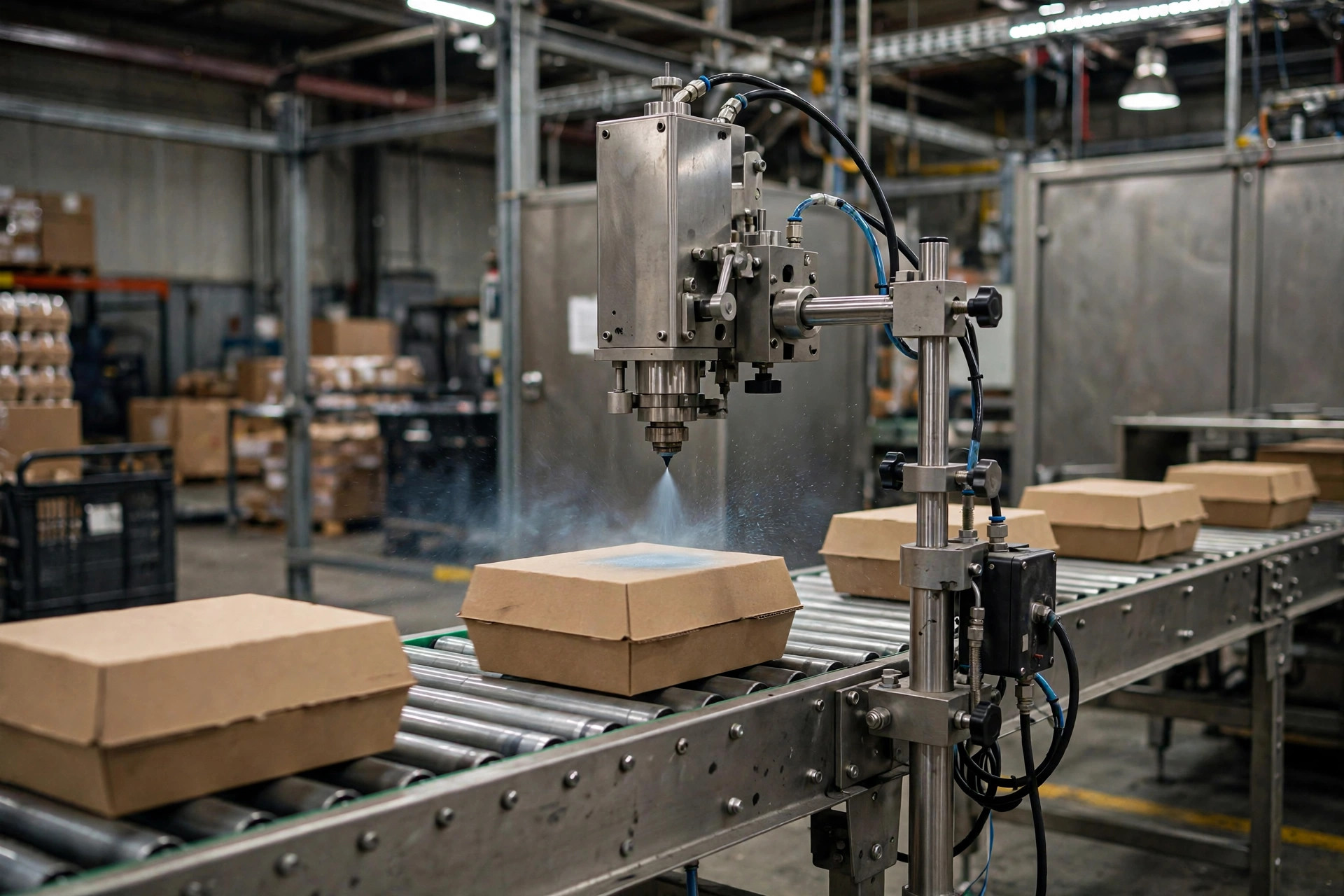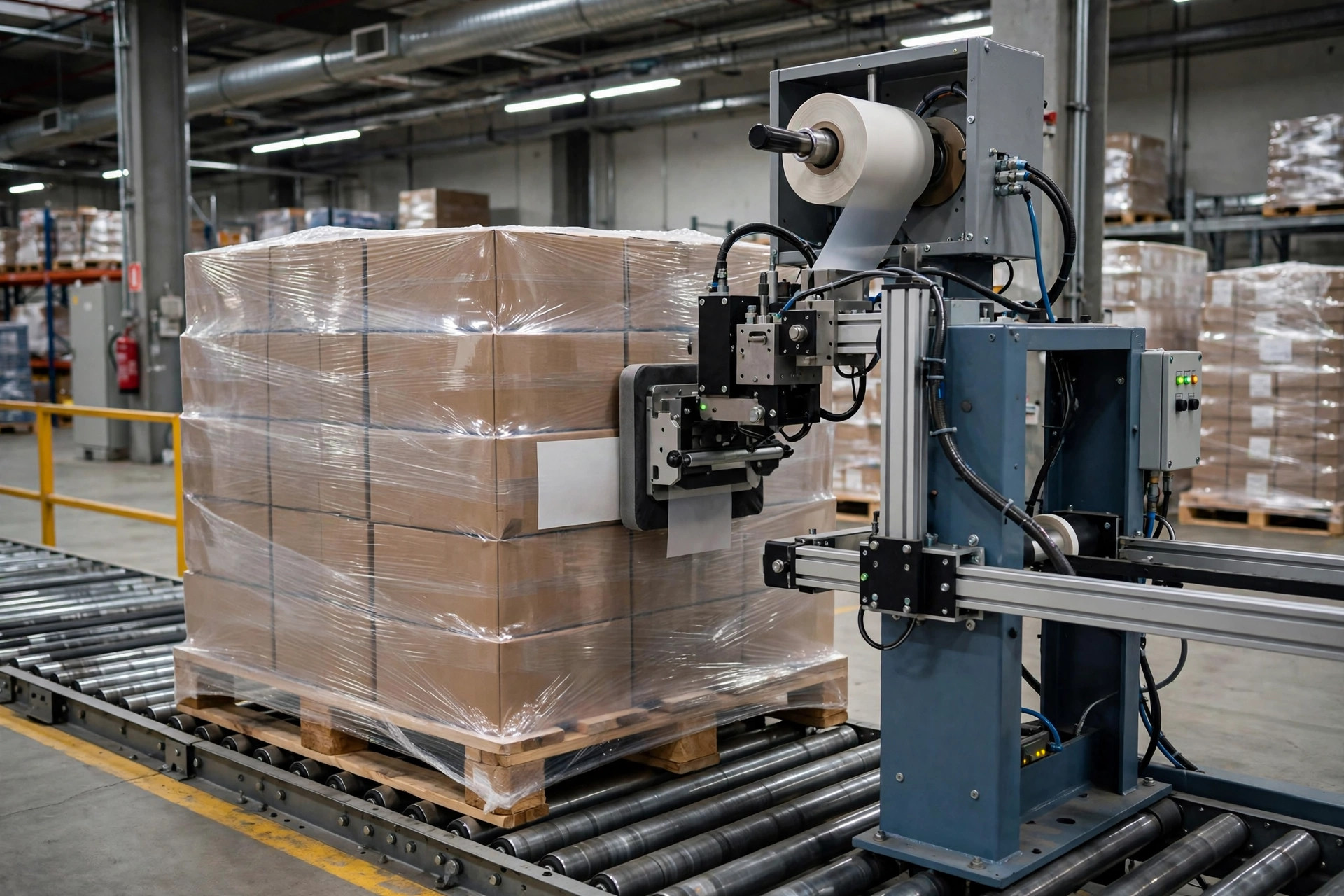
How much does an automatic case erector machine cost? That is the wrong first question. The right first question is: what is manual case erecting costing you right now?
A skilled worker tops out at roughly 300 cases an hour — that is the ceiling, not the average. At a fully loaded labor cost of about $24 an hour in California, every hand-erected case costs you 8 cents. A mid-range automatic case erector running at 12 cases a minute pushes that below 2 cents a case at 3,000 cases a day.
Once that math lands, only two questions remain: what does the machine cost, and how many months until it pays for itself. Let us work through both, with real numbers.
How Much Does an Automatic Case Erector Cost? The Three Price Tiers
The US market in 2026 breaks into three tiers. A 10x spread in installed price between tiers is completely normal — the money goes to four things: erecting speed, box-size range, bottom-sealing method, and the brand's service network.
| Tier | Installed price range (USD) | Speed | Box sizes | Fits daily volume |
|---|---|---|---|---|
| Imported economy | ~$10,000–$25,000 | 6–10 cases/min | Mostly single size; 20–30 min changeover | 800–2,000 cases |
| US-built mid-range | ~$30,000–$60,000 | 10–15 cases/min | Multi-size, ~5 min quick change | 2,000–6,000 cases |
| High-speed / integrated line | ~$80,000–$200,000 | 20–30+ cases/min | Full range + inline print-and-apply | 8,000+ cases |
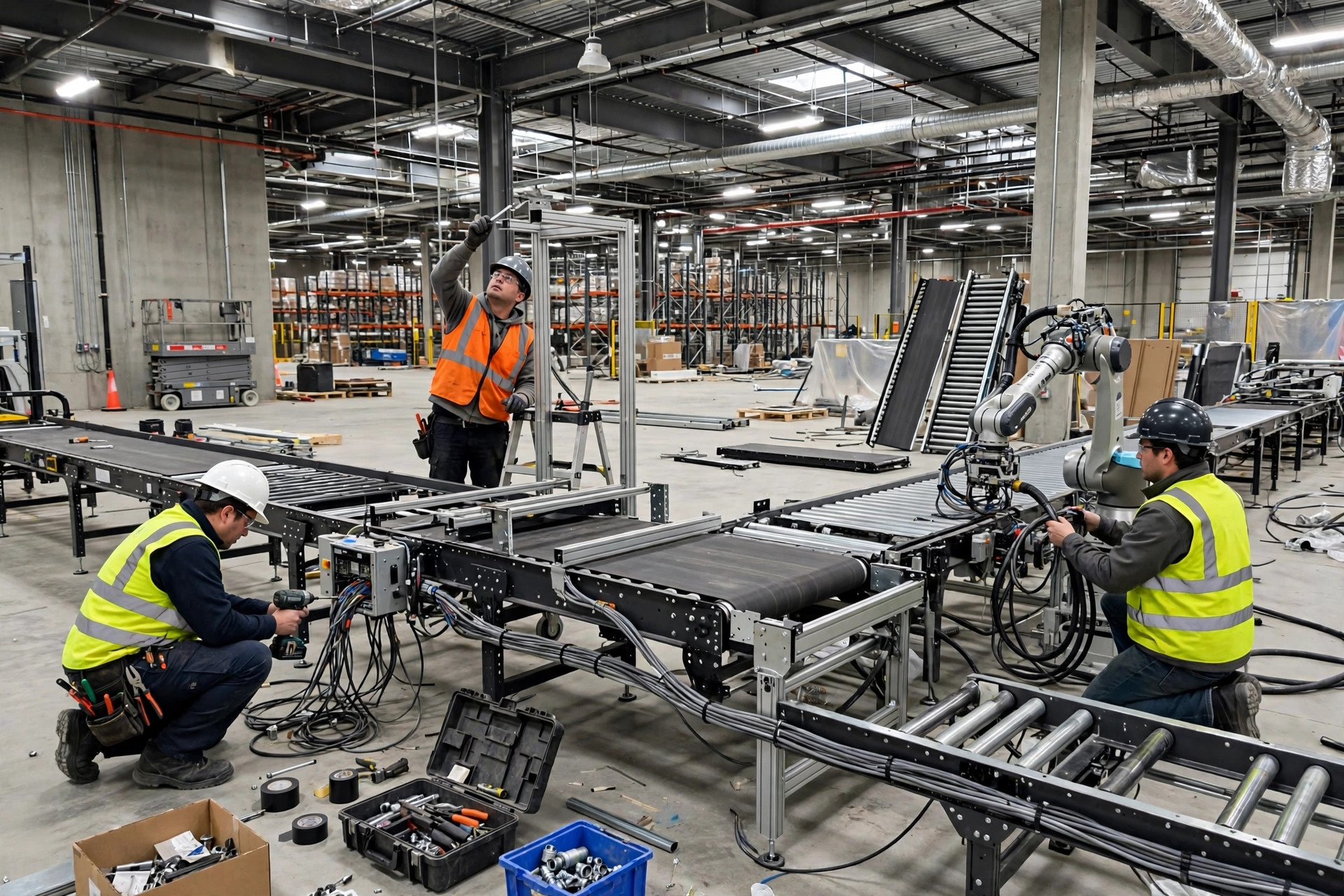
Three notes before you take this table into a negotiation. First, these are installed-price ranges — check the manufacturer's latest quote, because bigger boxes and faster speeds push you toward the top of each band. Second, economy machines are typically imports: 8–12 week ocean lead times, service through a distributor, and 3–6 weeks for parts is normal. US-built brands have local service networks and parts in days. Third, the sealing method moves the price: tape sealing is cheapest upfront, hot-melt glue sealing costs roughly 20–30% more, but glue costs less per case in consumables — we will get to that math.
The sticker price is only the first line item. The honest accounting adds: installation and commissioning (roughly 5–10% of the machine price), consumables (tape runs about half a cent to a cent per case; hot-melt glue about 0.3–0.6 cents per case), an annual service contract (roughly 5–8% of the machine price per year), and compressed air plus power (a few hundred dollars a year — negligible). Add it all up and a mid-range machine's true first-year all-in cost is roughly $52,000–$55,000. Use that number in the payback math if you want an honest answer.
Case Erector Payback Math: One Formula, Two Real-World Scenarios
Here is the formula. A calculator is all you need:
Manual cost per case = fully loaded hourly wage ÷ cases erected per hour by hand Machine cost per case = (annual depreciation + annual maintenance + annual consumables + minder labor) ÷ annual case volume Annual savings = (manual cost per case − machine cost per case) × annual volume Payback in months = total machine investment ÷ monthly savings
Scenario one: a 3PL in California's Inland Empire, 2024. About 3,500 cases a day, spiking to 6,000 in peak season. Four case-erecting workers across two shifts at a fully loaded $23 an hour. In September 2024 they installed a US-built mid-range machine for $46,000 installed. On a 300-day year:
| Manual | Case erector | |
|---|---|---|
| Daily direct labor | 4 × $23 × 8h = $736 | 0.5 minder ≈ $92 |
| Depreciation (7 years) | — | ≈ $22/day |
| Maintenance + consumables | — | ≈ $30/day |
| Daily total | $736 | ≈ $144 |
| Annual total | ≈ $221,000 | ≈ $43,000 |
Annual savings of roughly $178,000 put payback at 46,000 ÷ (178,000/12) ≈ 3.1 months. The unlisted bonus: no more scrambling for temp erecting labor in peak season — in 2024, pre-Thanksgiving temp rates in the Inland Empire hit $28 an hour, and bodies still were not available. That risk premium never makes it into the spreadsheet, but the owner feels it.
Scenario two: early 2025, a small 3PL in Dallas running about 900 cases a day. The owner bought an imported economy machine for $12,000 — "good enough for now." Reality: slightly damp boxes jammed it, the erect-failure rate ran 3–5%, and one person every day was permanently assigned to clearing jams and hand-erecting the rejects. Fourteen months in: roughly $27,000 in extra minder labor, plus tape waste and line stoppages. Most of the $30,000 saved on the purchase price got eaten by the hassle. Which brings us to the uncomfortable conclusion.
Why the Cheapest Machine Is Rarely the Cheapest
Here is the counterintuitive part: the purchase price is only 30–40% of a case erector's five-year total cost of ownership. The other 60% hides in three places.
First, the jam rate. Every extra percentage point of erect failure means 30 cases a day handled manually on a 3,000-case line — about an hour of labor. Over 300 days, that is $7,200 a year, gone.
Second, changeover time. An economy machine takes 20–30 minutes to change box sizes; three size changes a day eats 1.5 hours of capacity. A mid-range machine does it in five minutes. And if you run 3PL, multiple sizes are the norm, not the exception.
Third, service response. Waiting 3–6 weeks for imported parts means downtime measured how? At 4,000 cases a day and $1.50 margin per case, one dark day costs $6,000 in margin. A single parts delay can wipe out the entire price gap between the economy and mid-range tiers.
My read is blunt: above 2,000 cases a day, buy the US-built mid-range machine — its total cost of ownership is actually the lowest. At 800–2,000 cases, the economy tier works, but budget a minder in the plan — do not expect it to run unattended.
Three Levers That Beat Haggling on Price
Instead of grinding $5,000 off the machine price, pull these three levers. Each one is worth more than a discount:
First, standardize your box sizes. Cutting 12 sizes down to 4 reduces changeover time by roughly 70% — and that saves real daily capacity. Bloated size assortments are usually legacy baggage; cutting them costs nothing and works immediately.
Second, consider used or demo machines. A 3–5-year-old US-built machine sells for roughly 40–60% of new price with about 80% of its performance life left. If your budget is tight but you value reliability, this beats buying a brand-new economy machine.
Third, lease instead of buy. Turning a $45,000 lump sum into monthly payments — machine in before peak season, returned after (some vendors offer seasonal terms) — is the smarter path for a small 3PL watching cash flow.
The verdict: back to the opening question — when does the automatic case erector machine cost justify itself? Memorize this formula:
Break-even daily volume = machine investment ÷ (target payback months × 30 × per-case labor savings)
Plug in a $45,000 mid-range machine, a 12-month payback target, and 6 cents of per-case savings: 45,000 ÷ (12 × 30 × 0.06) ≈ 2,083 cases/day.
One line to take away: if your daily volume is steadily above 2,000 cases, a mid-range automatic case erector pays for itself within 12 months — buy it. At 800–2,000 cases, the economy tier is fine but staff the minder. Below 800 cases, manual erecting is cheaper — spending the money would be a waste.
By Lao Zhou, Logistics Cost Analyst