It was a Tuesday morning last fall, 7:30, and I had barely walked into the warehouse when Lily from the returns desk waved a box at me. "Feng, you need to see this."
The box was brand new. An alternator, SKU printed clear as day. Customer said "ordered the wrong one, never installed." Lily opened it, and the alternator inside had a shaft worn smooth and grease caked on thick enough to scrape off — the customer had stuffed their old unit into the new box and sent it back. We came within an inch of putting it back on the shelf as "new."
Folks, I'm Chen Feng, and I run an auto parts warehouse. Before this I did stints in apparel and consumer electronics warehouses. Let me be honest: auto parts is the most punishing of the three. Too many SKUs, heavy freight, and half the parts look like twins. Here's how this business schooled us.
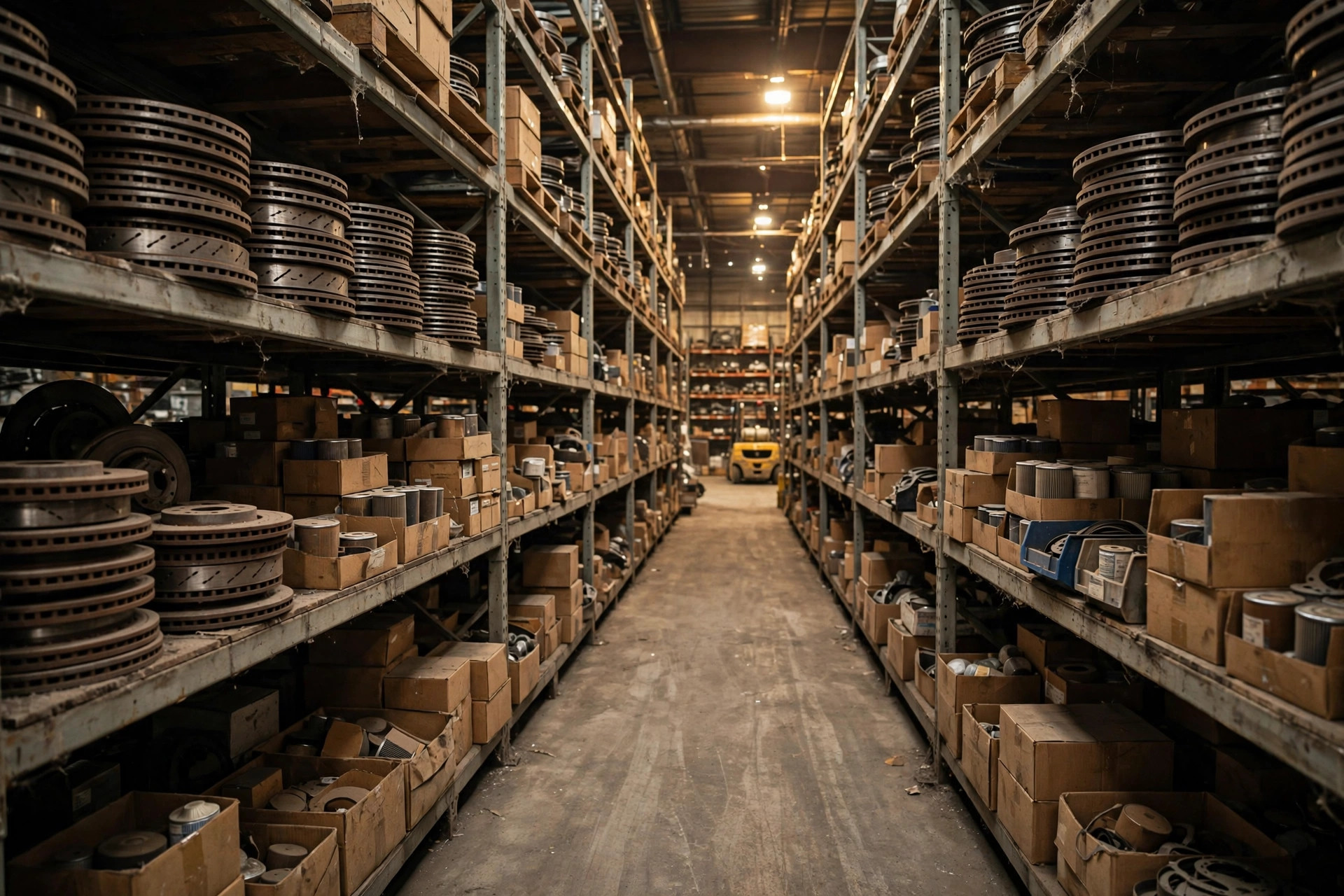
Heavy freight taught us our first lesson the hard way. Two summers ago, our forklift driver Lao Zhao was putting a pallet of brake rotors onto the second beam level — four hundred kilos, give or take. The beams held. The decking in the middle sagged like a hammock, because the load was sitting lopsided on the pallet, all the weight on one side. Zhao has driven forklifts for over a decade, and his face went white.
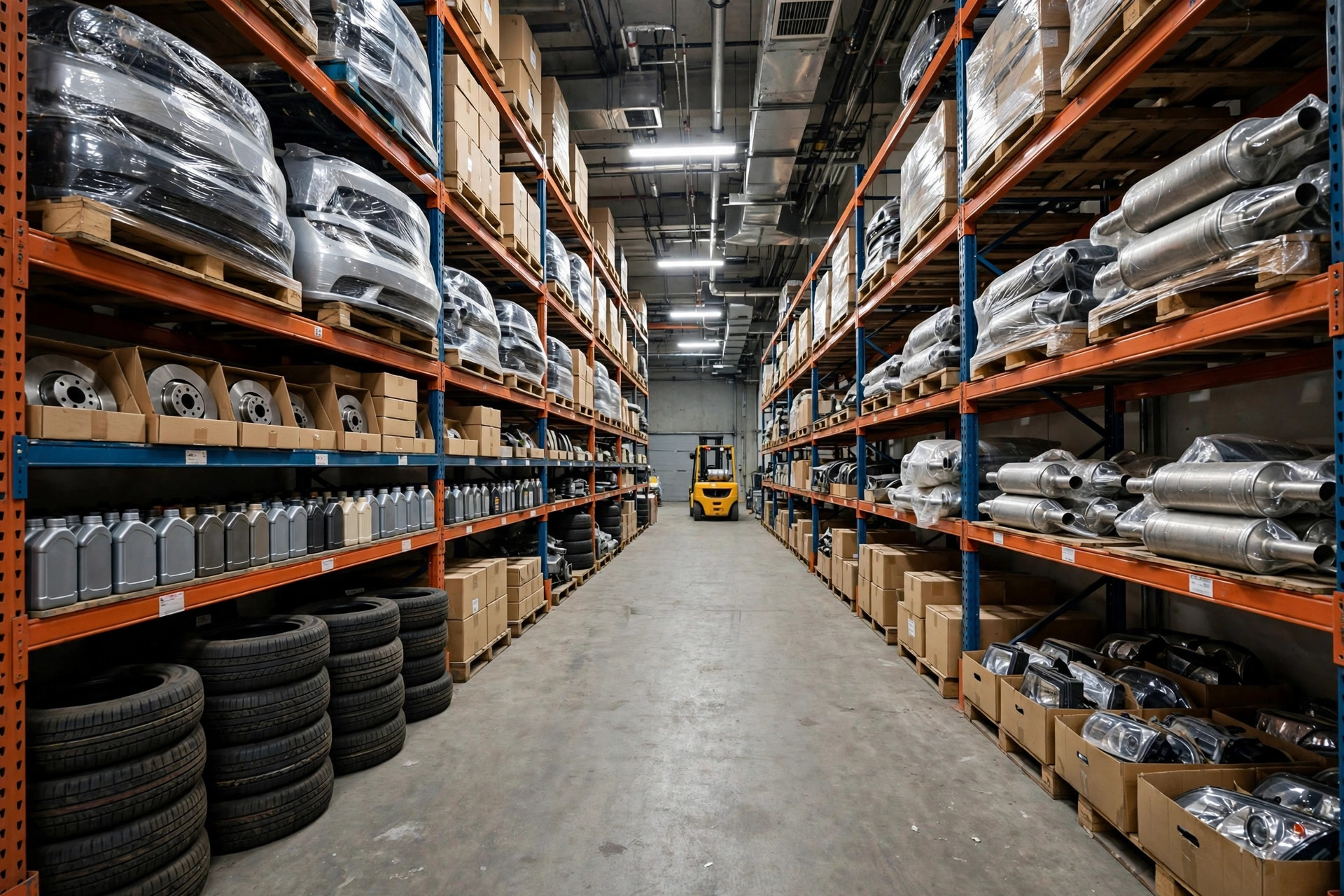
Since that day we've had an iron rule for putting heavy goods away. Three checks: check the load rating on the deck label, check the pallet is loaded evenly, check the driver centers it on the beams. Engines and transmissions never go up — floor stack only. Motor oil is its own headache: a full pallet of oil jugs, one leaks and you've got a skating rink. Liquids get their own zone, spill mats under every pallet, bottom level only, no stacking high. The honest truth about motor oil: it's not whether it leaks, it's when.
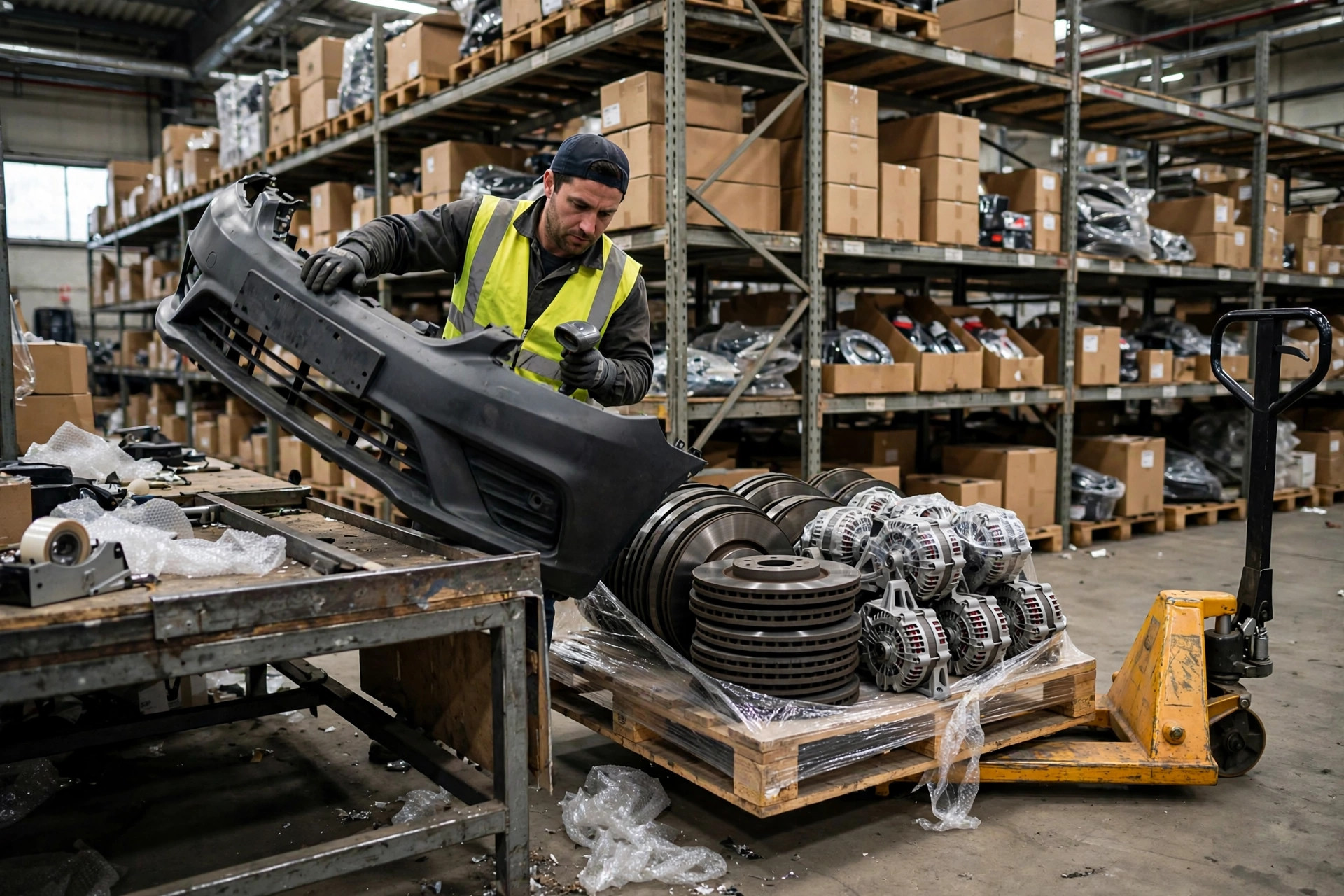
Then there are the oddballs. Bumpers, exhaust pipes, doors — they don't fit standard cartons and you can't hang them either. We tried standing bumpers upright once. One tipped over, smashed a headlight, cost us nearly two grand. Lesson learned: everything oversized goes on cantilever racks or custom wood cradles, with its own pick zone. It eats floor space. Still cheaper than paying for damaged goods.
The truly evil part of auto parts is left-right pairs. A left headlight and a right headlight sitting side by side — I've done this fourteen years and I still need three seconds to tell them apart. The SKUs differ by one trailing letter.
In the spring of 2024 we shipped the wrong side mirror three times in a row — right instead of left, every time. The customer can't install it, sends it back, and each round trip burns close to a hundred bucks in freight and labor. Three orders in, the boss invited me in for "tea."
I came back and changed three things. Left and right parts never sit next to each other — at least one aisle apart, no exceptions. Bin labels: blue for left, red for right, and pickers check color before SKU. And high-risk categories — headlights, mirrors, tail lights — every pick gets a photo, filed with the order. Wrong-side shipments went from three or four a month to one in six months.
Multi-SKU picking is where we burned the most shoe leather early on. We started by brand zone: BMW in one zone, Toyota in another. Sounds scientific. In practice, one order with three brands meant a marathon across the building, and pickers ended the day with their legs gone. We switched to velocity slotting: brake pads and oil filters that move every day sit at waist height near the door; the oddball stuff that moves twice a year lives at the back, top level. That one change cut two to three kilometers of walking per picker per day, and pick times dropped on the order of 20 to 30 percent.
Now let's talk money, because a mispick in auto parts is not a five-dollar problem:
| Cost item | Rough amount |
|---|---|
| Return freight (customer ships back) | Tens of dollars |
| Reship freight | Tens of dollars |
| Customer service time plus returns inspection labor | 30–60 minutes |
| Bad review and refund fallout | Hard to quantify, hurts the most |
One wrong shipment, all in, costs the better part of a hundred dollars. We ship three to four thousand orders a month. Taking our error rate from 1% down to 0.3% saves several thousand dollars a month. The label paper and photo-taking time we spend on prevention? Pocket change by comparison.
Back to that alternator. Auto parts returns have their own character: the return rate runs higher than consumer electronics, because wrong model year and wrong engine size are everyday mistakes. And then there's the "swap" — an old part returned inside the new box. Our fixed routine at the returns desk is three steps: photo, weigh, inspect. The system holds a reference weight for every new alternator; anything off by more than about 100 grams gets flagged. Core parts — alternators, starters — get their serial numbers logged at receiving, and a return with a mismatched serial gets refused on the spot. Lily can now tell at a glance whether a shaft shows installation wear.
Here's the counterintuitive part: most people assume strict returns inspection angers customers and kills repeat business. Our numbers say the opposite — bad reviews went down after we tightened inspection. Why? Because before, a few swapped old parts slipped through and got reshipped, and the customer who received somebody else's used part left a one-star review on the spot. Honest truth: customers don't mind strict inspection. They mind receiving somebody else's junk.
Our current fixed playbook — steal it if you want:
- Heavy parts never go above ground level; engines and transmissions floor-stack. Liquids get their own zone with spill mats, bottom level only, no stacking high.
- Oversized parts go on cantilever racks or custom cradles. Never freestanding, never leaned against a wall.
- Left and right parts live in separate aisles, blue-left red-right labels, photo on every pick for high-risk categories.
- Slot by velocity: fast movers at waist height near the door.
- Returns routine: photo, weigh, serial check. Flag anything off by about 100 grams.
One reminder for fellow operators: don't race an apparel warehouse on pick speed. They mispick a shirt, they swap it, done. We mispick a part, the customer's car is already on the lift when they discover it doesn't fit, and they'll curse your whole family. Speed can be ten percent slower. Accuracy has to sit above 99.5%. Get that math straight before you write the schedule.
By Chen Feng, Warehouse Operations Manager