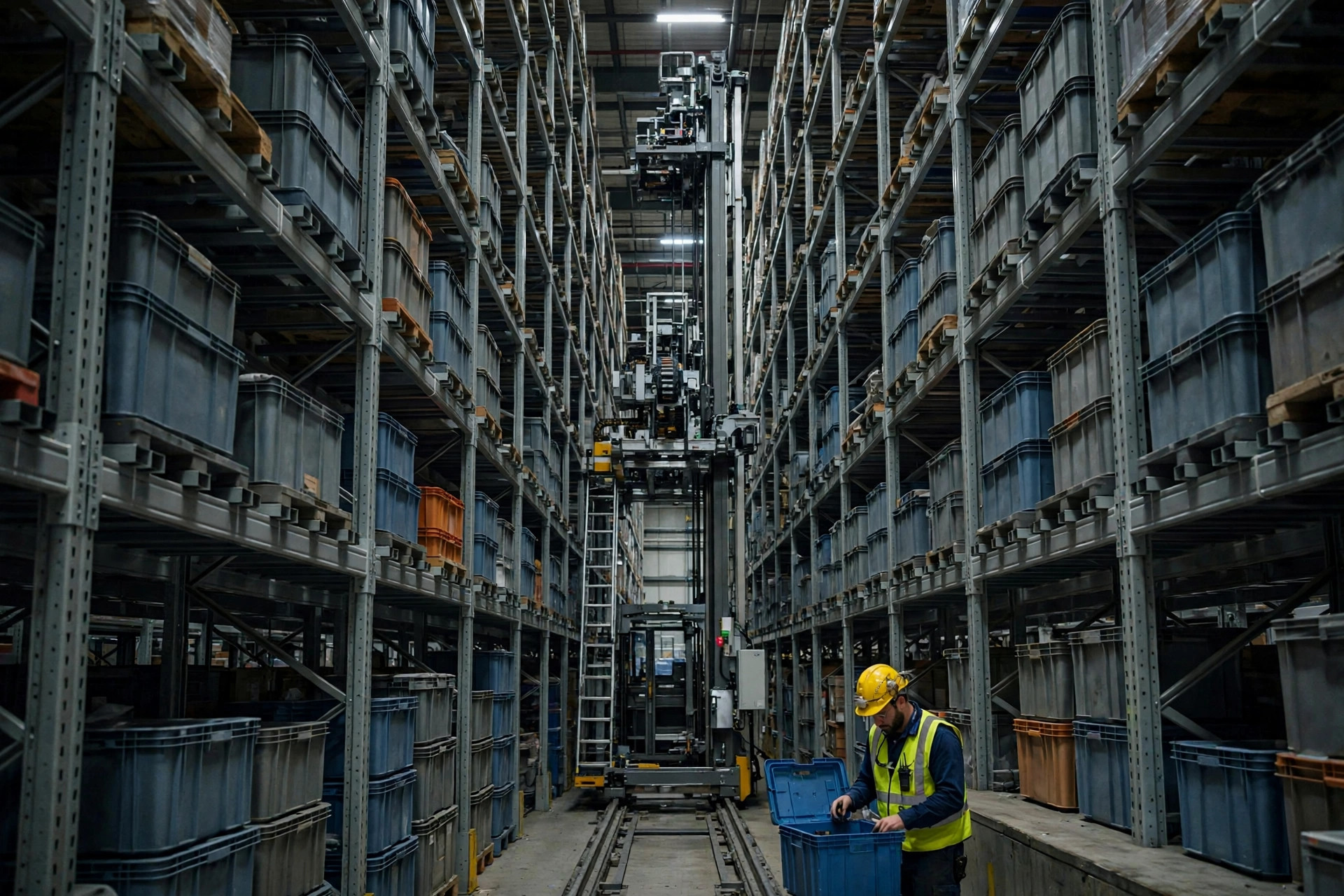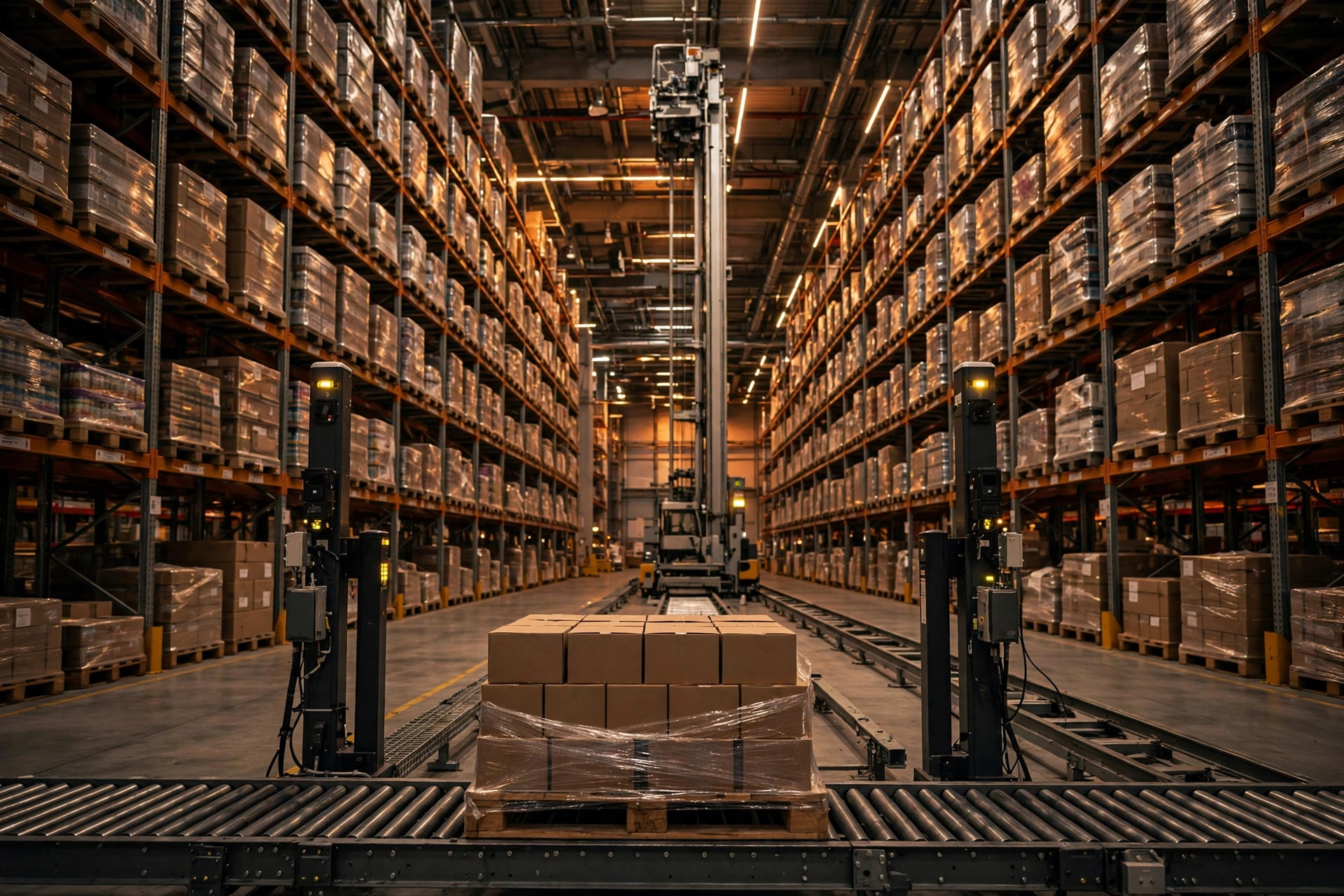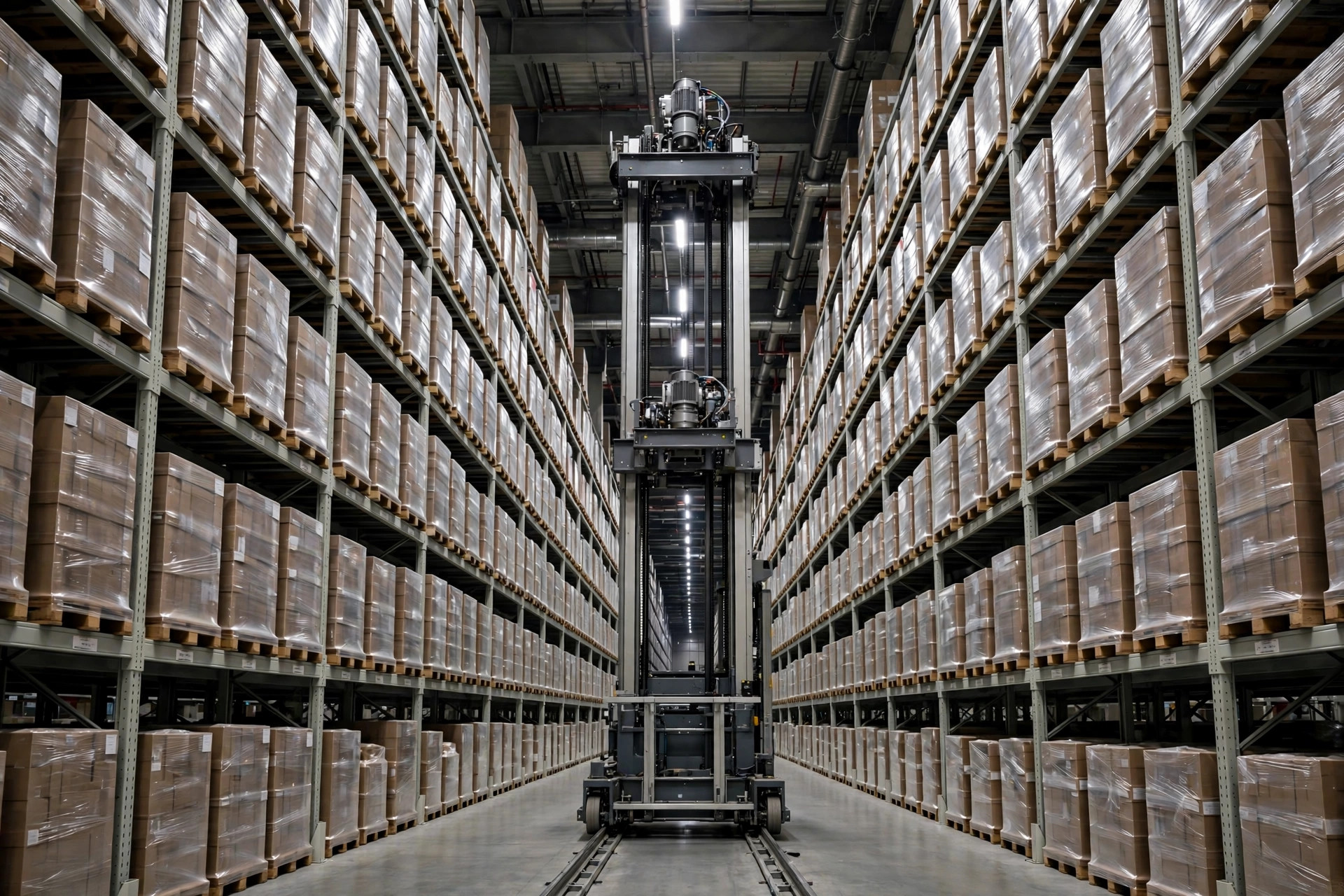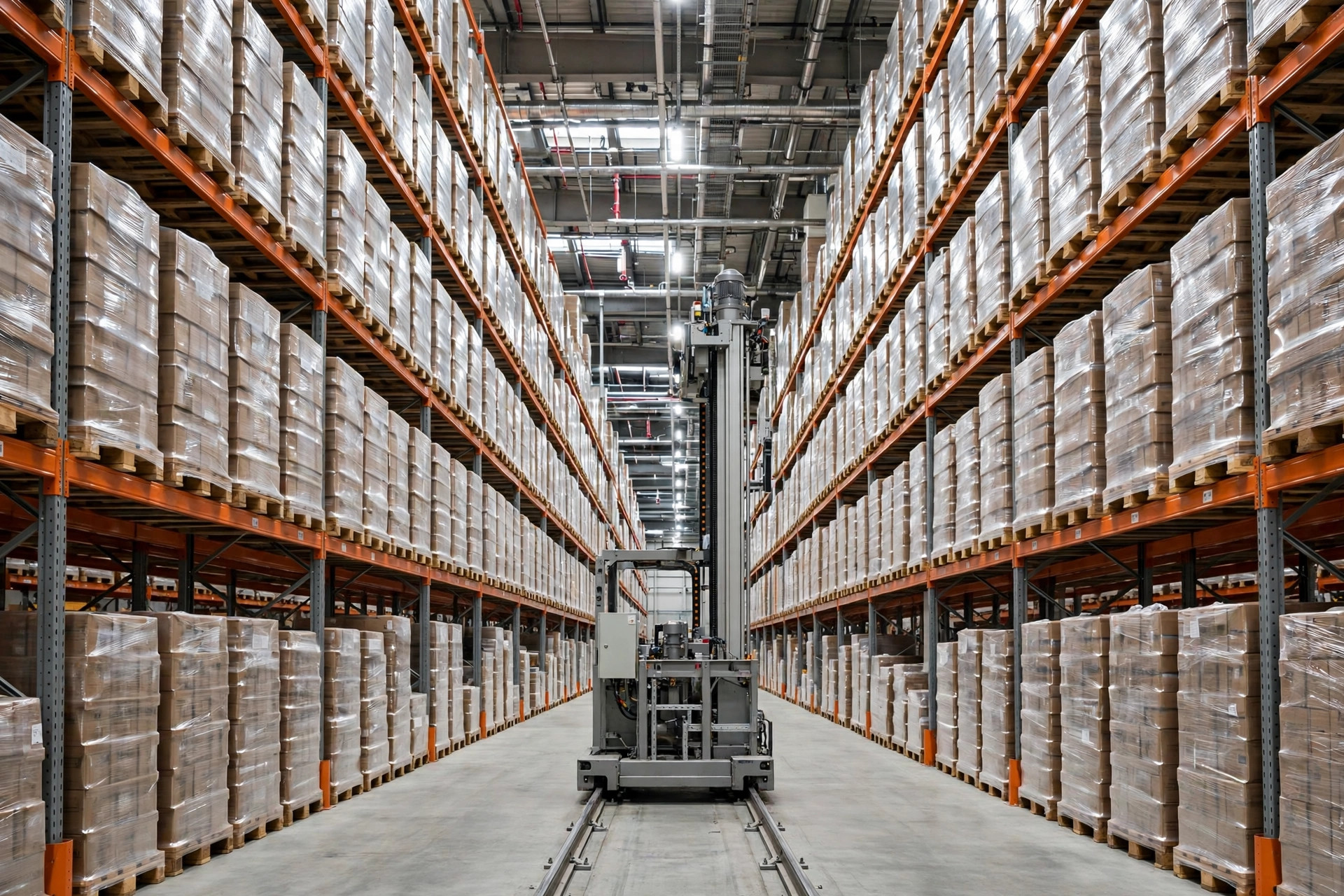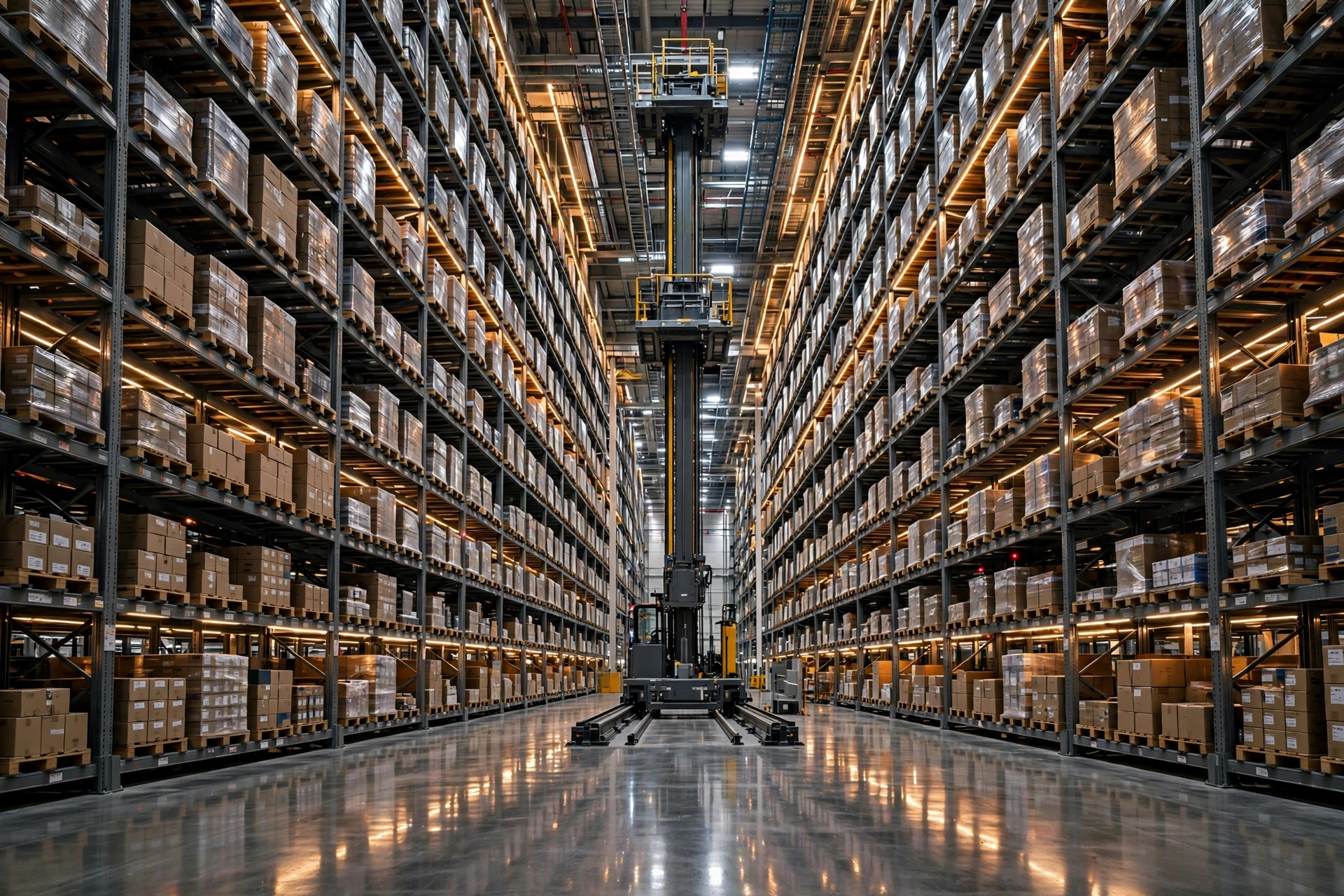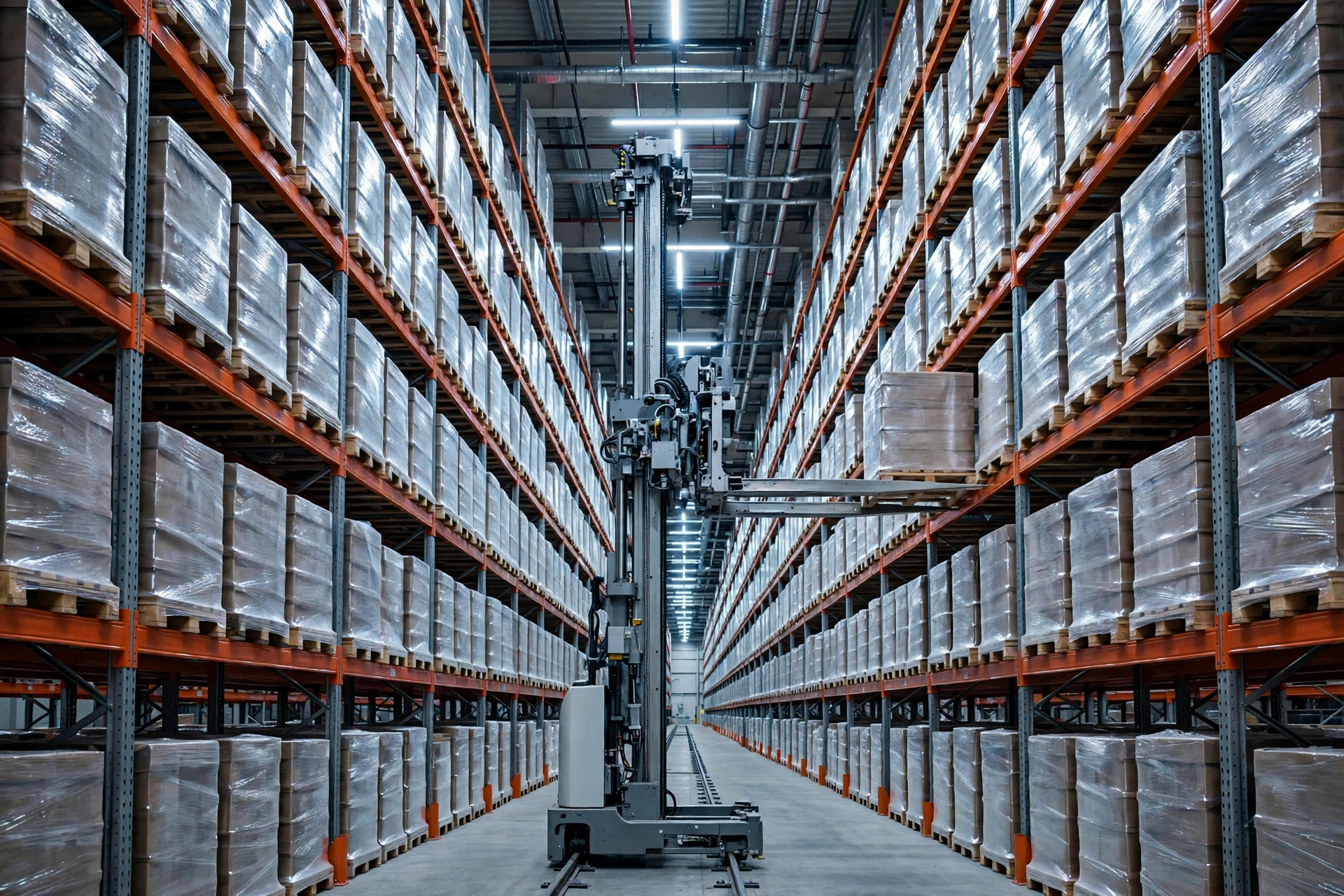
Summer 2021. A paper products distributor in Dongguan just commissioned their new ASRS, and the owner walks me down the aisle: "Da Liu, did we pick the right thing going double-deep?" I told him: 180 SKUs, 12 pallets per SKU on average — not going double-deep would have been the dumb move.
That same year, a cold-chain food client in Foshan with over 3,000 SKUs also wanted double-deep. I told him to switch back to single-deep. He thought I was being difficult. Three months after go-live, outbound moves were crawling. He spent over ¥400,000 converting half the aisles back to single-deep.
Same double-deep rack. One saved thousands of square meters. The other paid a small fortune to undo it. The difference isn't the technology — it's the math. Today I'm going to do the math out loud.
What "Deep" Actually Means
Think of parking spots. Single-deep is curbside parking: one car per spot, pull in, pull out, no drama. Double-deep is tandem parking — two cars nose to tail. Want the one in the back? Move the front car first.
Technically, the difference lives in the stacker crane's fork. A single-deep fork telescopes about 1.2 to 1.4 meters (typical), just enough to reach one pallet position. A double-deep fork is a two-stage telescopic unit reaching 2.6 to 2.8 meters to grab the second pallet buried in the rack. Think of it as the difference between your arm and a long grabber tool — the longer the reach, the more it flexes, and the tighter your precision budget gets.
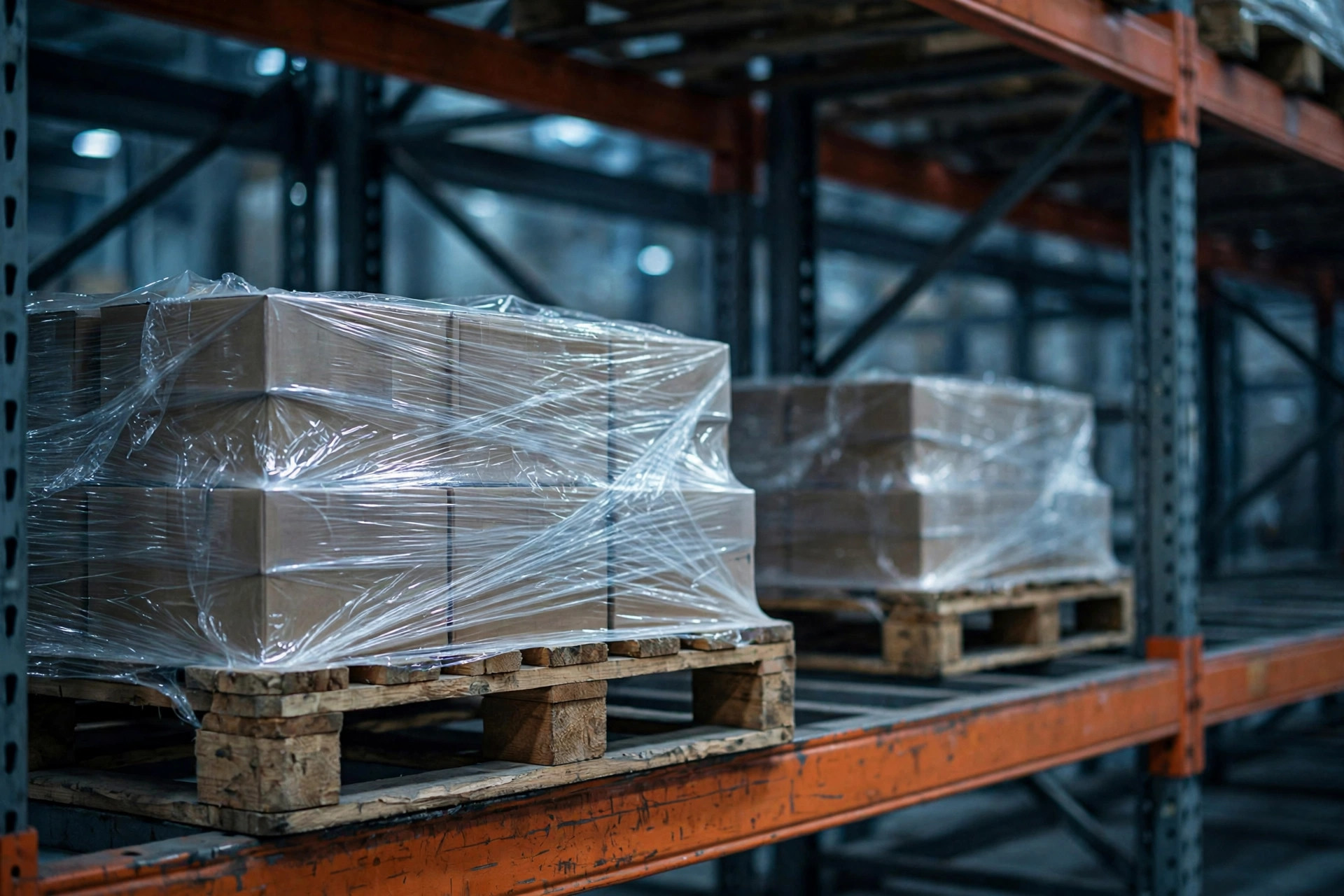
With single-deep, every pallet position is directly accessible. FIFO or LIFO, your call. With double-deep, the rear pallet is blocked by the front one, so in practice you're running last-in-first-out. In theory, double-deep cuts your aisle count nearly in half and lifts pallet positions per square meter by 30 to 40 percent (typical, depending on aisle width and rack height).
The Selection Boundary: Do the Counterintuitive Math First
Here's the counterintuitive part: double-deep saves floor space, but it doesn't necessarily save money. The space saves you rent. The throughput loss and the equipment premium cost you capital. You have to put both on the same spreadsheet.
| Dimension | Single-deep | Double-deep (typical) |
|---|---|---|
| Pallet positions per sqm | Baseline | 30–40% higher |
| Dual-cycle throughput per crane | 60–70 pallets/hr | 40–55 pallets/hr, a 20–30% drop |
| Accessibility | 100%, any pallet directly | Rear pallet blocked, effectively LIFO |
| SKU suitability | Handles high SKU counts fine | Only pays off with few SKUs, full-pallet moves |
| Fork complexity | Single-stage, simple | Two-stage telescopic, roughly double the failure points |
| Equipment investment | Baseline | 15–25% more for crane plus rack |
Why does throughput fall off? Because of re-handling. To reach the rear pallet you pull the front pallet out and put it back — pure overhead moves. The more SKUs you have and the fewer pallets per SKU, the higher your re-handling ratio climbs.
The decision framework comes down to three hard gates.
First: pallets per SKU. This is the boundary that matters most. My rule of thumb from the field: at 6 or more pallets per SKU, double-deep usually pays. Below 6, stay single-deep. Why 6? Because the front and rear positions of a pair should hold the same SKU, ideally the same lot. With too few pallets per SKU, the rear positions sit empty most of the time and the density advantage evaporates.
Second: do you need strict FIFO? Food, pharma, chemicals — anything with a shelf life hanging over it. Double-deep is a LIFO creature by nature. Don't argue with physics; go single-deep.
Third: what's your peak rate? If one aisle needs to sustain 60 or more pallet moves per hour at peak, double-deep ties your own hands. One more crane at roughly ¥1.5 million a pop (order of magnitude) wipes out years of rent savings. That's the "saves space, not money" trap, live and in person.
A quick worked example: a 10,000-pallet-position facility, rent at roughly ¥1.5 per sqm per day — double-deep saves on the order of ¥600,000 a year in rent. But if the throughput shortfall forces you to buy an extra crane, there's ¥1.5 million gone, and the payback stretches past three years.
Two real projects make the point better than any spreadsheet. The 2018 Dongguan paper job I mentioned: 180 SKUs, 12 pallets per SKU, full pallets in and out. Double-deep cut the aisle count from 10 to 6, freed up 3,200 square meters, and the cranes have held uptime above 99% year after year. The owner still brags about it.
The 2021 Foshan cold-chain project: 3,000+ SKUs, 2.3 pallets per SKU, and they insisted on double-deep. After go-live, re-handling moves hit 35% of all crane cycles. Dual-cycle throughput collapsed to 38 pallets an hour, and outbound queues stretched past two hours at peak. The ¥400,000-plus conversion back to single-deep was pure tuition for a decision made on vibes.
The Maintenance Traps: It's Always the Fork
The weakest link in a double-deep system is that two-stage telescopic fork. Chains, guide rollers, alignment sensors — any slack in that chain and the deep position becomes a guessing game. In my experience, a double-deep fork fails at more than twice the rate of a single-deep unit. Maintenance manuals typically call for checking telescopic chain tension every six months. Let it go slack and you get nuisance alarms at best, a fork driving into the rack at worst.
And here's where I stop being polite: some integrators market double-deep as the "premium upgrade," charge you 20% more, and never mention that your WMS needs front/rear position management logic. Without a slot-management strategy, the rear pallets go into a black hole — cycle counts don't reconcile, FIFO rotation never happens, and you've paid extra to build yourself a very expensive problem. That's a manufactured need. You didn't need double-deep; they needed to sell double-deep.
Three more practical traps to close before go-live:
One, pallet uniformity is non-negotiable. A warped or out-of-spec pallet wedged in the rear position can't be fished out by the fork. Someone ends up climbing in by hand. Dangerous and humiliating.
Two, rear pallets go stale. You need a forced-rotation strategy in the WMS that periodically cycles rear stock forward. If that logic isn't configured, a double-deep aisle turns into chaos within six months.
Three, don't believe the word "maintenance-free." The fork's guide rollers are consumables. Plan on replacing them every couple of years and keep spares on the shelf. Order them after a failure and you're looking at a six-to-eight-week lead time with half an aisle down.
So — worth it or not? It comes down to one number: average pallets per SKU. Six or above, double-deep is probably your friend. Below six, don't hesitate — go single-deep. There's no superior or inferior equipment choice. There's only the math.
By Da Liu, Automation Engineer