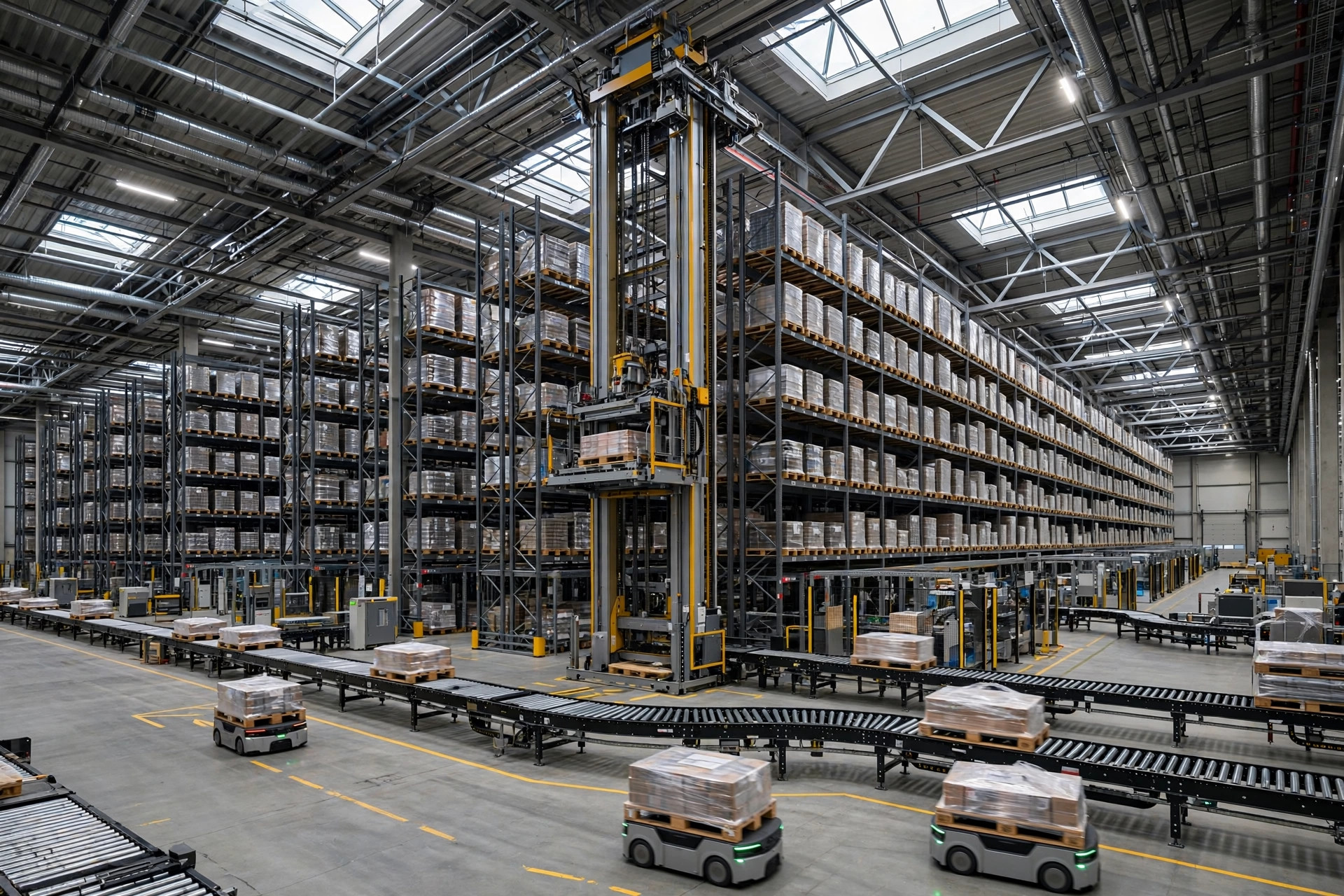
Here's my verdict up front: when you integrate an automated storage and retrieval system with AMRs — classic ASRS AMR integration — 90% of the pain sits in the seam between them — where tasks change hands, who learns about the task first, and who waits when the takt rates don't line up. Get those three wrong and it doesn't matter how fast your cranes are or how many robots you bought: the inbound dock will still back up. There's two sides to this. One is physical — where the handover point goes, how big the buffer is. The other is informational — who commands whom between the WCS and the AMR dispatcher. Physical mistakes are cheap to fix. Information mistakes cost you months of rework.
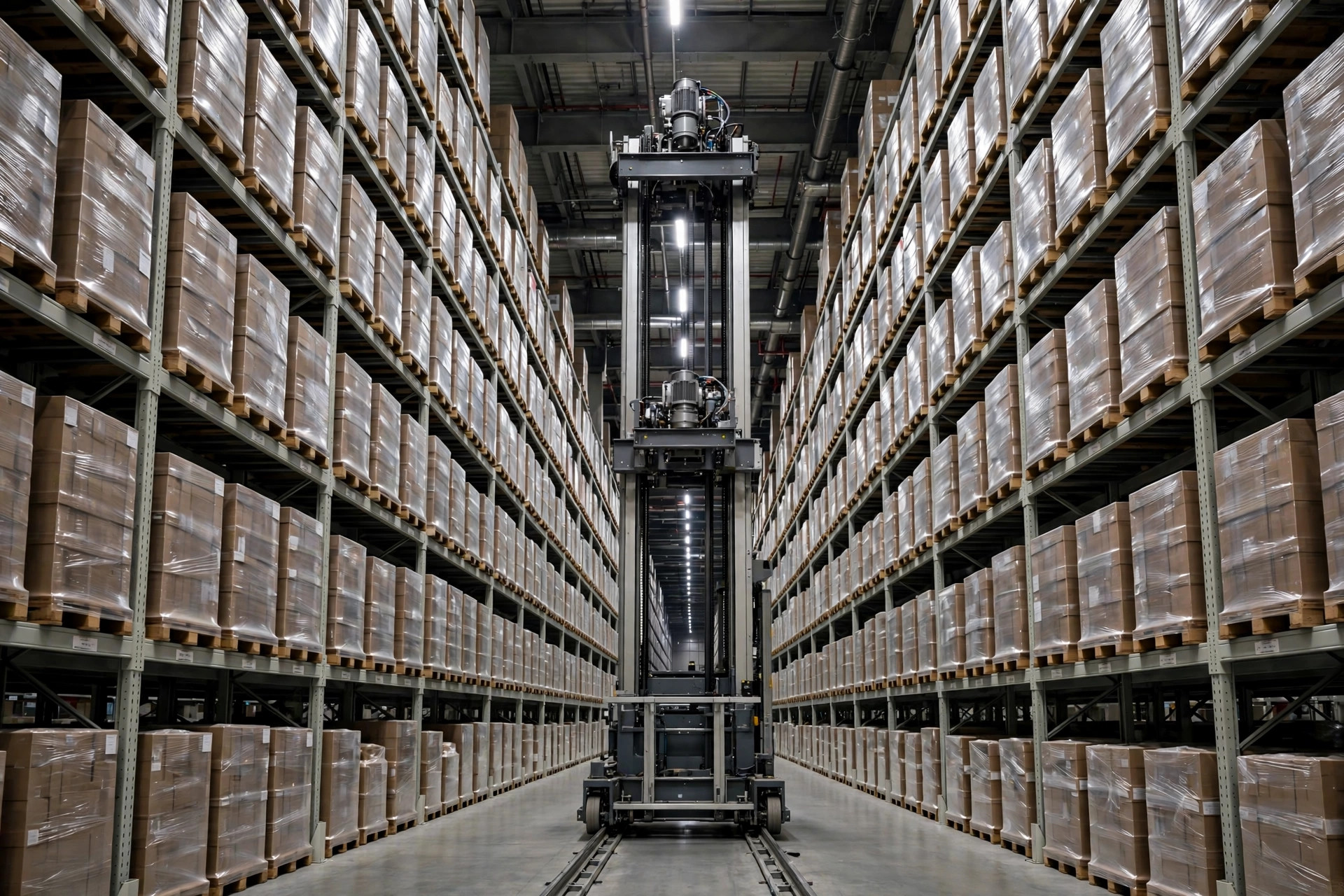
Put simply, an ASRS and an AMR fleet have opposite temperaments. The ASRS is stubborn — cranes run fixed aisles on a metronome takt, so many pallets per minute, not one more. AMRs are free spirits — they roam, dodge, and queue, but their takt drifts the moment traffic builds. Marrying a metronome to a free spirit was never about making each one fast. It's about making them meet on the same beat.
The Pit I Lived Through: 40 Meters at the ASRS Inbound Dock
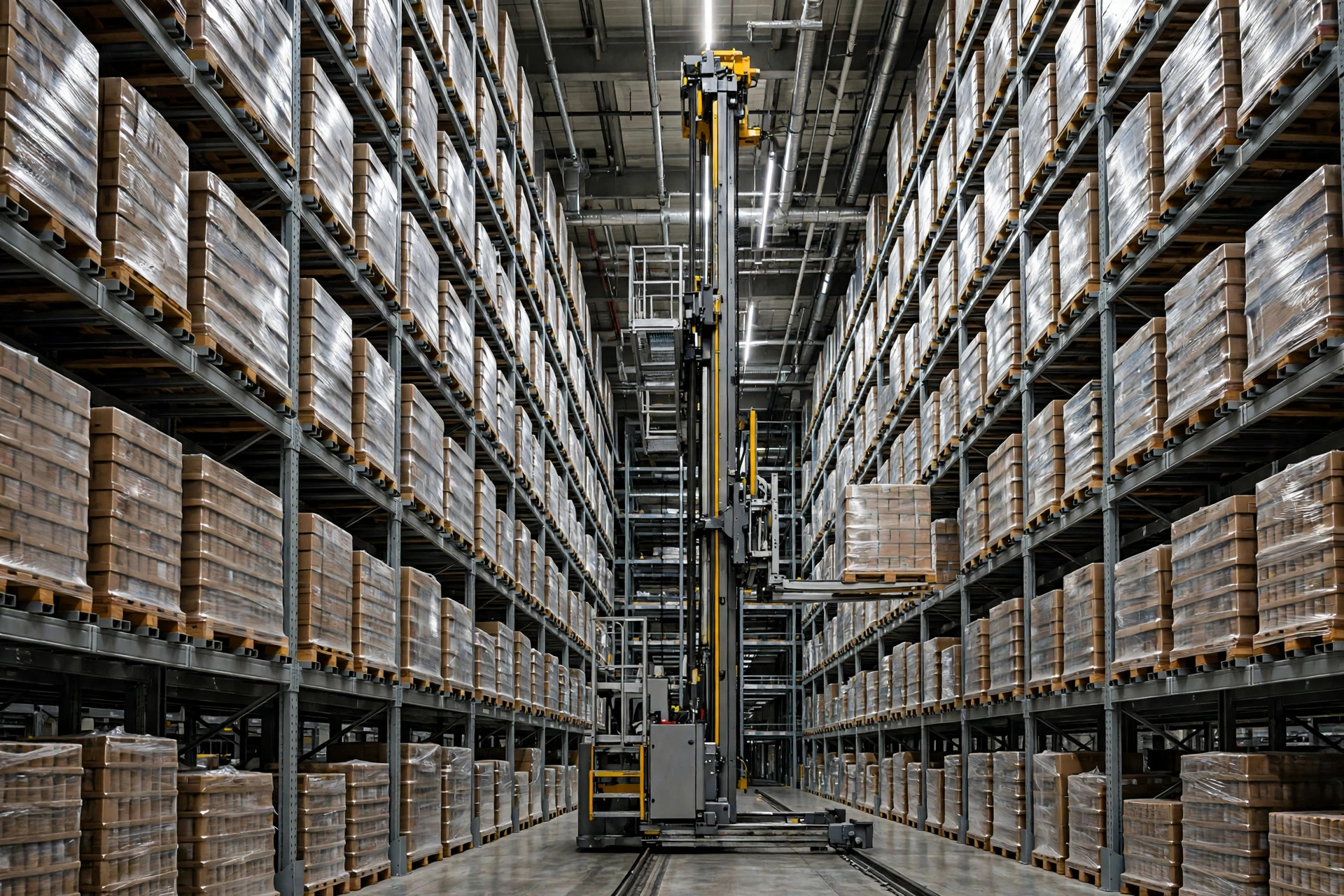
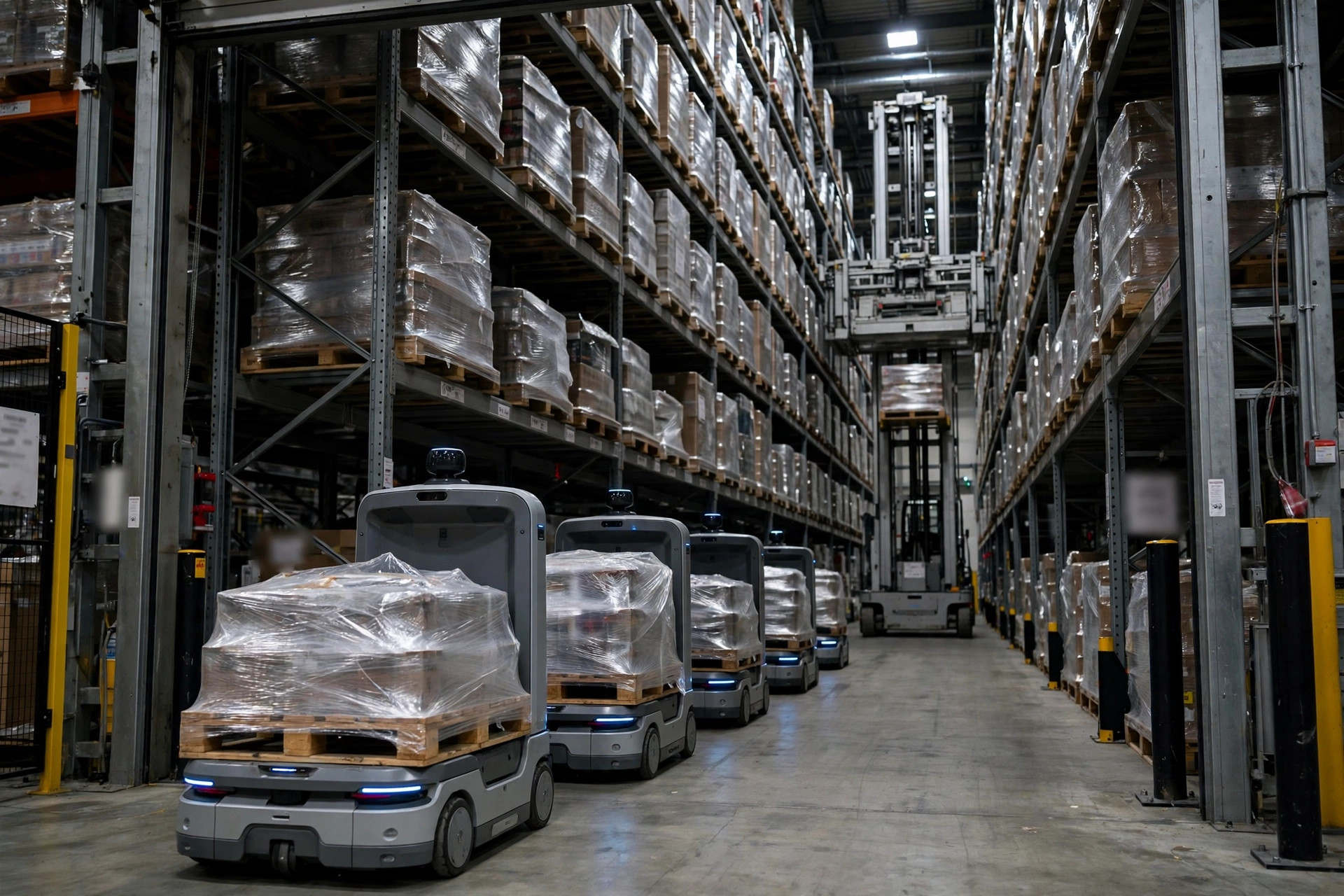
November 2022, an auto-parts warehouse in Suzhou: four-aisle stacker-crane ASRS, 12 AMRs feeding inbound. The acceptance numbers looked great — 90 pallets per hour per crane, AMRs at 1.8 m/s unloaded. First week of go-live, the inbound dock jammed. AMRs queued up at the inbound conveyor — up to 8 robots waiting, the longest stuck 11 minutes. And the cranes? Idle half the time, staring at an empty dock because no pallets had arrived.
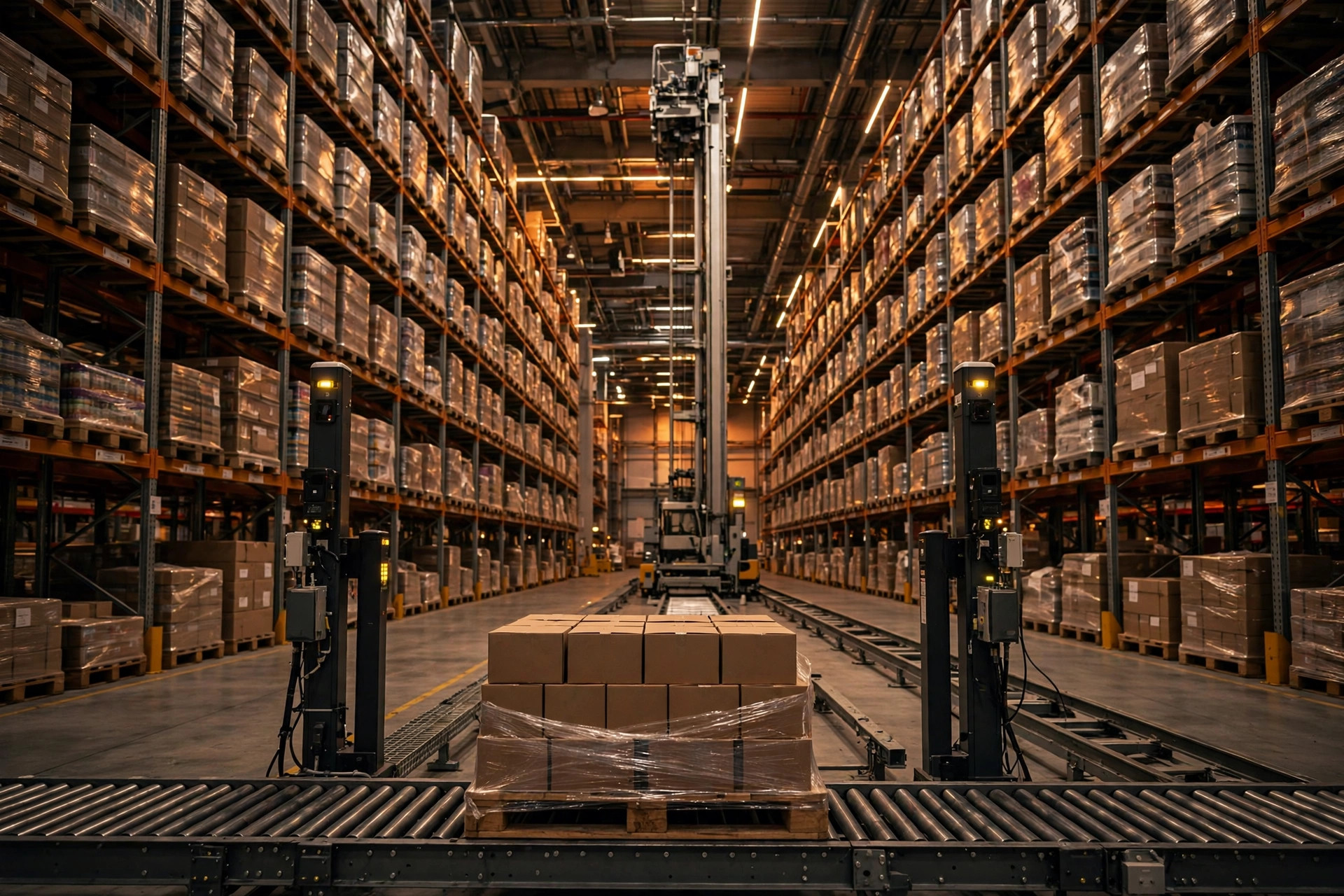
The handover design was the culprit. AMRs dropped pallets onto the inbound conveyor, which only buffered 3 pallets; once it filled, every AMR behind it just sat there. Meanwhile the WCS dispatched inbound tasks with a 2–3 minute lag — the AMR had arrived, but the WCS hadn't yet told a crane to come collect. A physical bottleneck on one end (3 pallets of buffer), an information delay on the other (tasks arriving late), and the 12-AMR fleet delivered about 60% of its real capacity.
The rescue took three moves. First, expand the inbound buffer from 3 to 8 pallets — a buffer isn't waste, it's the translator between two different takt rates. Second, pre-dispatch: when an AMR is 2 minutes from the handover point, the WCS assigns the inbound task to a crane early so it's waiting for the pallet instead of being assigned after it lands. Third, reservation queuing on the AMR side — robots bound for the same dock get sequenced in advance instead of 8 of them swarming one point. AMR wait time dropped from 11 minutes to under 40 seconds, crane utilization climbed from 52% to 88%.
I've watched too many projects spend money in the wrong place: add robots when AMRs fall short, speed up cranes when the ASRS lags. The bottleneck is in the seam, not in the machines.
Two Sides of ASRS AMR Integration: Physical and Informational Handover
The physical side fits in one table — the ASRS AMR integration handover checklist.
| Element | Design point | Common mistake | What I'd spec |
|---|---|---|---|
| Handover location | Dedicated handover stations at inbound/outbound, off the main line | AMRs docking straight onto the main conveyor | Dedicated station + buffer zone, decoupled from main line |
| Buffer depth | Size from takt delta × variability factor | 2–3 pallets "for looks" | 6–10 pallets, covering at least 5 minutes of swing |
| Takt matching | Schedule to the slower side | Schedule to the faster side and tell the slow one to hustle | Slow side sets the takt, fast side keeps 15% headroom |
| Exception handling | Failed handover auto-falls back to a manual station | Deadlock waits for an engineer | Auto-divert to manual + alarm after 3-minute timeout |
| Safety isolation | Hard separation between AMR zone and crane aisle mouths | A painted yellow line | Physical guarding + light curtains, AMRs stay 2 m clear |
The informational side is the WCS vs. AMR dispatcher split — and the part of ASRS AMR integration most likely to need rework. My rule is one sentence: the WCS decides where the freight goes, the AMR dispatcher decides how the vehicle gets there — and the two exchange only task status, never commands. The WCS issues "move pallet A from dock 1 to point B"; the dispatcher picks the robot, the route, and the avoidance on its own. Status callbacks need four states, no fewer: accepted, picked, delivered, exception. The deadliest pattern is both sides thinking they're the boss — the WCS trying to steer every AMR's path while the dispatcher re-prioritizes tasks on its own. They fight, the floor deadlocks.
So who waits when the takt rates don't match? It's a trade-off, and the answer is: the cheap asset waits for the expensive one. A crane costs millions; an AMR costs a fraction of that — so AMRs wait. One exception: if the AMR fleet is the bottleneck (say 6 robots feeding 4 aisles), flip it and slow the cranes down, because an idle million-dollar crane costs more than a queued robot. Do the math: one hour of crane idle time — depreciation, energy, lost throughput — buys about 50 extra AMR trips. Figure out the bottleneck first, then decide who waits. Never decide by gut feel.
The Second Pit: Ghost Tasks at Outbound
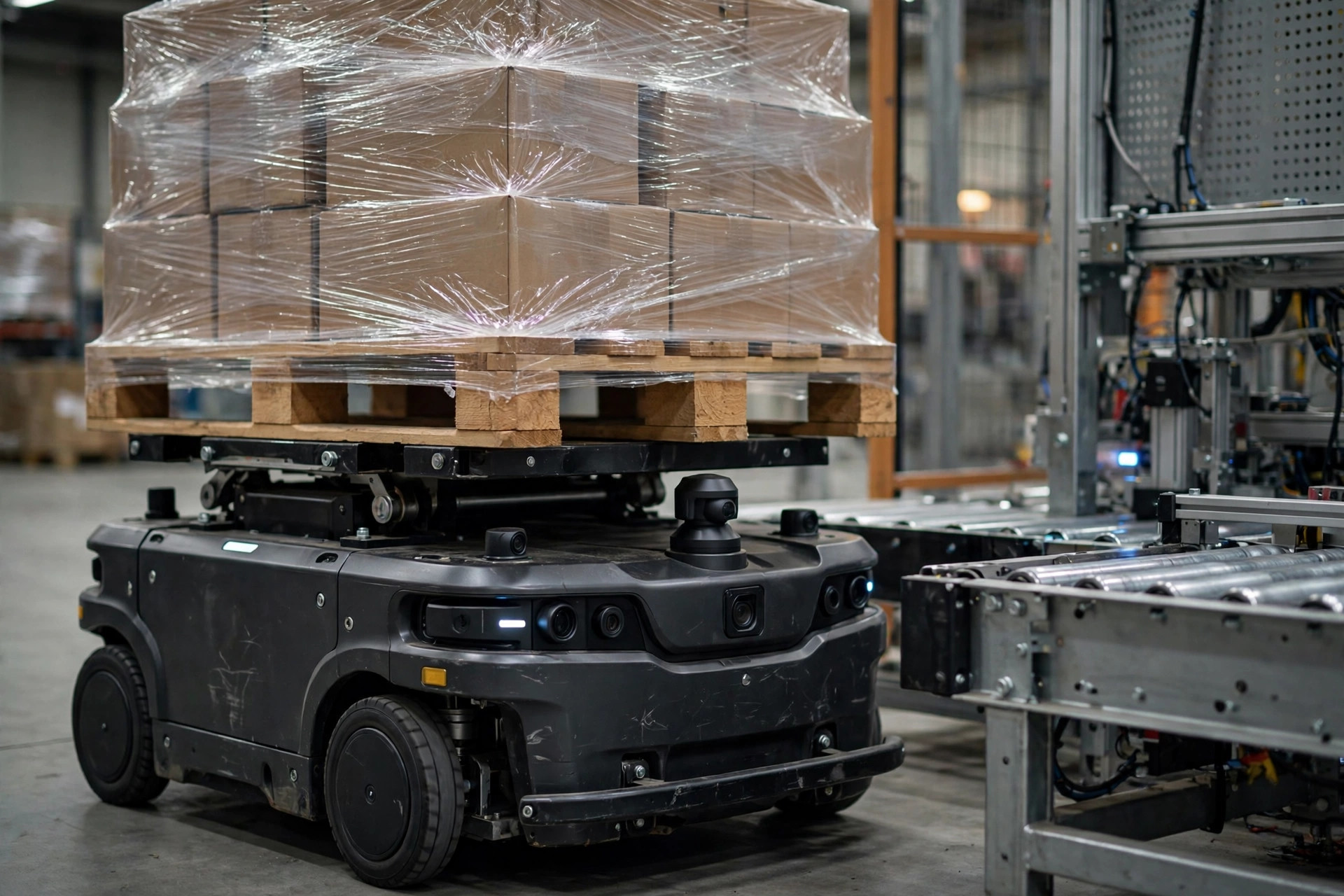
March 2024, a 3PL in the American Midwest: shuttle-based ASRS feeding AMRs for a put-to-wall sortation. Outbound was sneakier than inbound. The WCS had dispatched the retrieval, the AMR was already rolling, and then customer service canceled the order. The shuttle delivered the pallet to the outbound dock, the AMR arrived, and nobody wanted the freight — a ghost task. At peak, 40+ orphaned pallets a day piled up, the outbound buffer filled, and legitimate outbound moves jammed behind them.
Same root cause — the information seam. The cancellation reached the WMS but never propagated to the WCS or the AMR dispatcher. The fix: a task-validity check between the dispatcher and the WCS — 30 seconds before an AMR picks, it confirms the task is still valid; if not, cancel and send the robot back to the staging area empty. The check costs one API call, tens of milliseconds. Skipping it cost 40 orphan pallets plus a half-hour cleanup every day. After go-live, ghost tasks fell from 40+ a day to under 3 (the remainder canceled inside the 30-second window — acceptable losses).
One Line to Close
Here's the counterintuitive truth about marrying an ASRS to AMRs: the bottleneck is never in the wheels or the rails — it's in whether the information arrives early or late. Queued AMRs, idle cranes, ghost tasks — every one of them is really "someone who needed to know didn't know." Draw the information flow of the handover before you talk about adding robots, speeding up cranes, or expanding buffers. Get the order backwards and the money is gone.
By Lao Mi, Supply Chain Veteran (20 yrs)