title: "Chile's Cherry Run to China: Inside the 'Cherry Express' Cold Chain — Air vs. Sea, Told by a Trucker" excerpt: "A 15-year trucking veteran breaks down Chile's cherry export cold chain: the early-season air rush, the 23-day 'Cherry Express' ocean run from San Antonio to Nansha, and why unbroken refrigeration beats speed every time." tags: ['cherry','cold-chain','chile-export','cherry-express','air-freight','reefer-logistics']
Chile's Cherry Run to China: Inside the "Cherry Express" Cold Chain — Air vs. Sea, Told by a Trucker
On October 12, JD Fresh opened pre-sales for Chilean cherries — the first batch flying in by air, with premium 4J fruit going up for auction starting at one yuan. Let me tell you something: in the cherry business, the whole year comes down to three months, November through January. Right now we're in the pre-season warm-up, but the battle has already started. This month, central Chile got hit with ugly storms — wind, hail, the works — and early varieties came out split. First-harvest volumes are going to be tighter than last year.
Fifteen years behind the wheel taught me one thing about the cherry export cold chain: it's not about who's fastest. It's about whose chain never breaks. From the packing houses in Chile's Central Valley to the airport in Santiago and the docks at San Antonio, then 20,000-plus kilometers to China — if any link breaks for even half an hour, the whole container is toast.
The first battle is won by air: the early birds of the cherry export cold chain
Every cherry season opens with air freight. Late November into early December, the early varieties come off the trees — small volumes, beautiful fruit — and exporters don't wait for ships. The fruit goes straight onto planes, and from Santiago to China it's a two-to-three-day trip. The whole play is about being first to market.
Look at this year's JD Fresh pre-sale and you'll see the strategy: they're not selling fruit, they're selling timing. The first air-freighted arrivals go to pre-sales and auctions — 4J fruit, one-yuan opening bids, maximum hype. Importers are betting on that "first water" premium.
But here's what I tell everyone: with air freight, the action isn't in the sky — it's on the ground. The cabin is climate-controlled and steady. The real risk is the waiting: the fruit sits in the airport cold store waiting for cargo space, then waits again for customs clearance and the distribution reefer after landing. Every "wait" is a crack where the chain can break. Cold chain doesn't fear distance. It fears waiting around.
And this year's wait is shakier than usual. The rain split a share of the early crop, so first-harvest volumes are down. Only the big exporters are locking in cargo space right now. If you're a small player, don't force your way into the air-freight scrum this pre-season — space is expensive, supply is uncertain, and watching beats jumping in.
The main force goes by sea: 23 days on the Cherry Express
Let me clear up a name first. "Cherry Express" sounds like a plane. It's not — it's an ocean express service, direct sailings from Chile to China. Last season (2025/26), direct sailings to China doubled to 32, and sixty percent of them sailed out of San Antonio Terminal (STI). From San Antonio straight to Nansha in Guangzhou: 23 days, over 20,000 kilometers. And yes — 23 days, and the cherries still arrive fresh.
The numbers don't lie: roughly ninety percent of Chile's cherry exports travel by sea. Only about one in ten boxes flies. On December 5 last year, the season's first Cherry Express — the MSC Lome V — berthed at Nansha carrying 370 refrigerated containers, around 8,000 metric tons of cherries, averaging 21-plus tons per box. Nansha Port had opened two cherry-only lanes in advance and replanned yard traffic just for this arrival. From unloading to the wholesale markets of Guangzhou: as fast as two hours. Two hours — after a 23-day voyage, the whole game comes down to those two hours with the chain unbroken.
So what keeps the fruit fresh for 23 days? Three things.
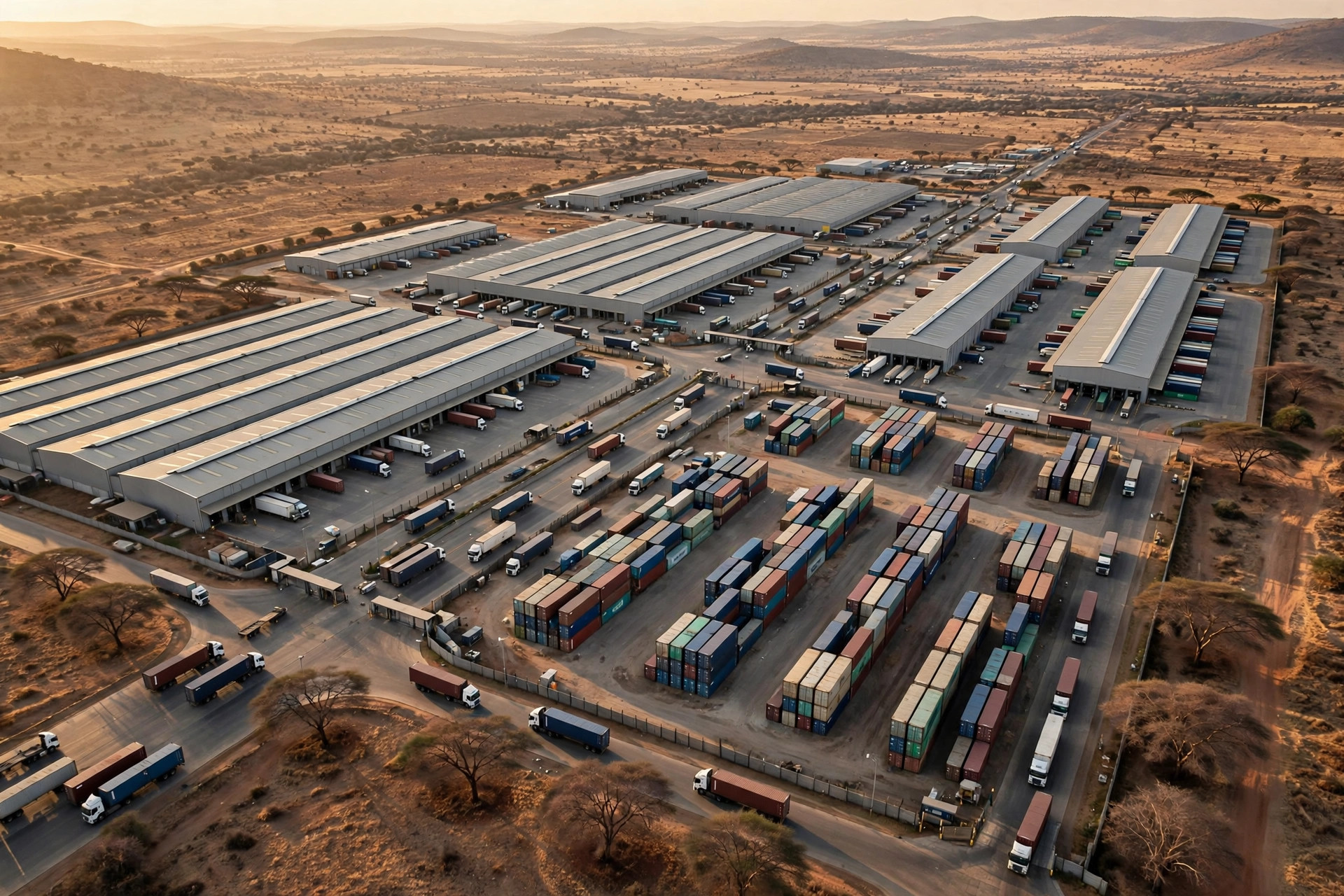
First, the containers stay plugged in. Reefer boxes in the port yard aren't sitting idle — they're wired up, compressors running. STI alone has more than 3,000 reefer plug points, set up specifically for cherry season. Those cables snaking behind the rows of white boxes are the cold chain's lifeline.
Second, near-zero temperatures plus modified atmosphere. Before a cherry ever sees a container, it's pre-cooled to near 0°C at the Central Valley packing house, sorted, boxed, and sealed in modified-atmosphere bags. The bag's gas mix is tuned so the fruit basically naps — 23 days at sea, and firmness and sweetness hold up.
Third, the chain doesn't break at arrival. Right next to Nansha Port sits China's largest single-building port-side cold storage. Unloading, inspection, warehousing, distribution — all of it happens inside a continuous cold-chain environment. The president of Frutas de Chile put it plainly: thanks to efficient logistics plus modern cold chain and atmosphere tech, cherries cross 20,000-plus kilometers and reach China in 23 days "with outstanding quality and freshness." You only say that when the chain genuinely never broke.

Anyone who's worked with the packing houses knows the Central Valley runs around the clock in cherry season: fruit in from the orchards, pre-cooled to pull the field heat, graded by size and color, boxed, palletized, onto reefer trucks — never at ambient temperature a minute longer than necessary. When a driver like me picks up at a packing house, the first thing I check isn't the paperwork — it's the temperature logger. That packing-house-to-port road leg looks boring, but it's where chains break most often: open the reefer doors twice too many, and the temperature starts climbing.
Air or sea? Doing the cold-chain math
Every year somebody asks me: air is fast, sea is slow — so air-freighted fruit must be fresher, right? Let me tell you, it doesn't work that way. Let's put the numbers on the table:
| Air (early harvest) | Sea (Cherry Express) | |
|---|---|---|
| Door-to-door transit | 2–3 days | 23 days |
| Share of volume | ~10% | ~90% |
| Cost level | Priced per kilo — far more expensive (check current-season quotes) | Priced per container — far cheaper once spread across 21+ tons |
| Playbook | Grab the early-market window, sell the "first bite" | Move the real volume; the backbone of the Lunar New Year rush |
| Cold-chain weak point | Waiting at airports, customs clearance after landing | Keeping reefers plugged in at the terminal, holding 0°C, the 2-hour sprint to distribution after arrival |
See the pattern? Faster isn't better. Air freight gets there in two or three days — but if customs holds the shipment half a day or the distribution reefer doesn't show up, the fruit goes soft anyway. Twenty-three days at sea sounds scary, but with the container sealed at 0°C in modified atmosphere and the chain never broken, the fruit that comes out of the box is often in better shape. That's the most counterintuitive lesson in the cherry export cold chain: what decides spoilage isn't the number of days — it's the number of breaks.
Here's a story our industry replays every year. A reefer container reaches the terminal, the sailing gets delayed two days, and the box sits in the yard waiting for a plug point. No power, no compressor, and the temperature inside creeps up degree by degree. The box loads on schedule, paperwork clean — but pull the temperature logger and the curve shows a big ugly hump in the middle. That's why the old hands watch the temperature curve, not the sailing schedule.
So how should you actually run the math? Three sentences:
First, the early window belongs to air — it's the price of admission. Those two weeks in late November and early December, first-harvest air freight sells scarcity, and the premium is real. But with this year's rain damage thinning the early crop, space and supply are both tight. Small players shouldn't force it.
Second, the real season runs on sea — it's the foundation. Mid-December through January, Cherry Express sailings stack up one after another — 32 direct sailings feeding China — and the entire Lunar New Year supply rides on them. Costs spread thin, spoilage under control. That's where the actual money is made.
Third, air or sea, guard the break points. Was the pre-cooling thorough? How many times did the reefer doors open? Did the box get its plug point at the terminal? How many hours from berth to cold storage at arrival? Nail those four, and 23 days is no different from 3.
For the coming 2026/27 season, Frutas de Chile is forecasting 132 million boxes of exports, up 16 percent year on year. The bigger the pie, the more the cold chain gets tested. The longer the chain, the more it rewards whoever never lets it break.
There's an old saying back home: you can't eat hot tofu in a hurry. In the cherry export cold chain, the rush is about those few days at market opening — but the winning is all about the unbroken chain. If you're in this trade, remember one line: good fruit doesn't fear a long road. It fears a broken one.
By Shifu Zhao, Trucking Veteran (15 yrs)