Let me give you the verdict first: in argentina lithium mining warehouse logistics, the biggest line item is not ocean freight. It is the highway through the Andes.
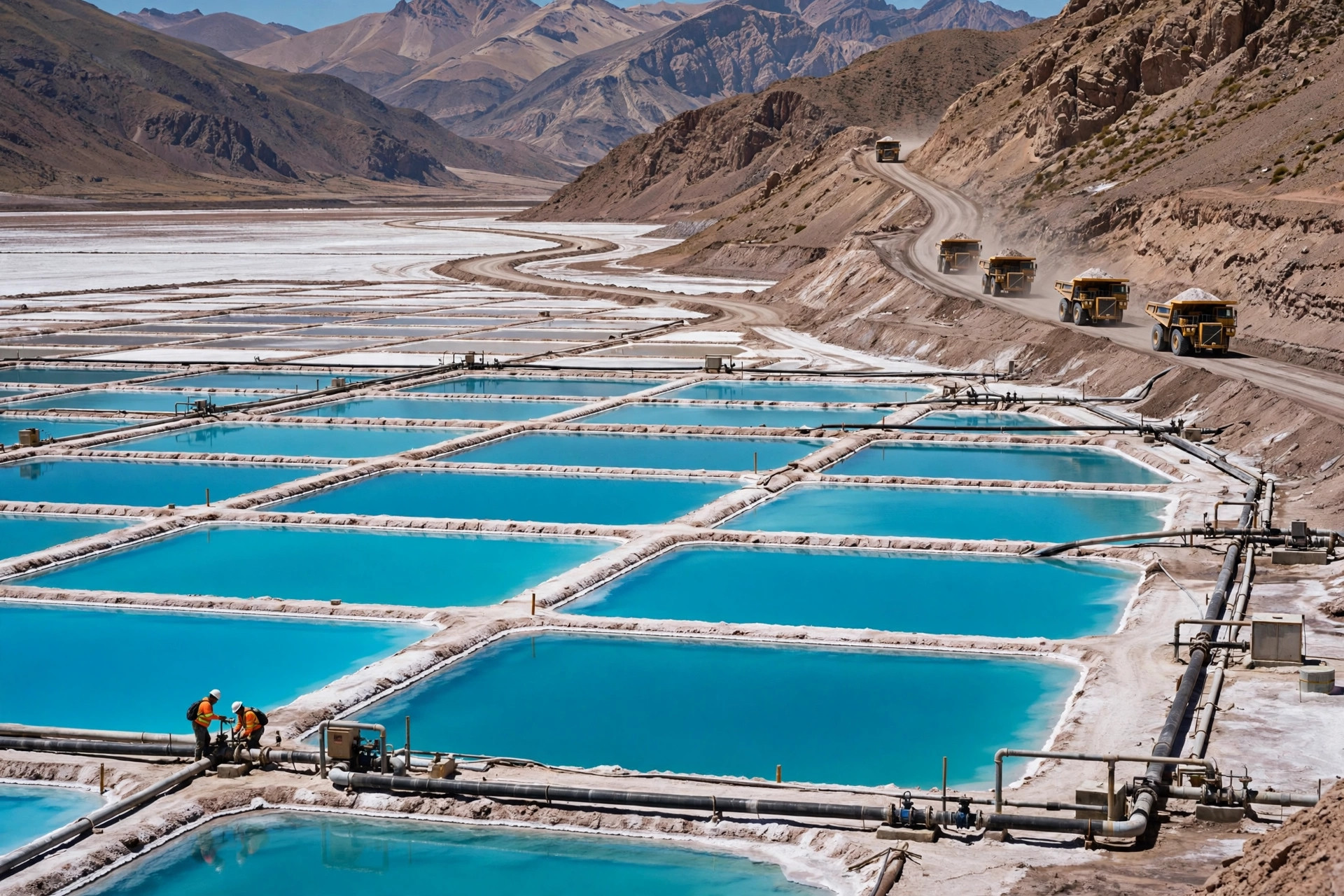
I'll say it plainly. Whether a brine lithium project ramps on schedule is 70% geology and process, 30% trucking. One ton of lithium carbonate needs roughly 4 tons of auxiliaries — soda ash, hydrochloric acid, lime — and one Salta producer I know takes 20 truckloads a day of that stuff, every day, up mountain roads. The plant sits next to a salt flat at three to four thousand meters of elevation; the nearest industrial supplier is hundreds of kilometers downhill. Those chemicals come in by sea or by long-haul truck, and then they climb. Getting product down to the port is hard. Getting auxiliaries up is ten times harder. Too many people watch the lithium price and the product purity, and nobody watches the chemicals.
Getting Reagents Up the Mountain: The First Lesson of Argentina Lithium Mining Warehouse Logistics
Rio Tinto's Olaroz project took a hit this past first quarter — heavy rains plus weak evaporation squeezed production. You cannot control the weather. But an auxiliary outage is entirely your own doing.
Do the math with me. A 4-to-1 auxiliary ratio means a project making tens of thousands of tons of carbonate a year needs well over 100,000 tons of chemicals hauled across the Andes every year. At 20 trips a day, a single supplier in Salta is running its own private highway. One day of interrupted supply and the evaporation ponds start falling behind.
There are two sides to this. The bad side: Argentine lithium producers have long depended on imported auxiliaries. A late vessel or a congested port, and the mountain runs dry. The good side: the turn is already here. Tsingshan's plant in Perico, Jujuy — 30,000 tons a year of soda ash plus hydrochloric acid capacity — is getting ready to come online. Once local soda ash flows, "up the mountain" gets a lot shorter, and vessel risk turns into controllable inland risk. Of all the variables in this chain this year, that plant is the one that matters most.
Moving Customs Into the Factory: The Hard Part of the Downhill Leg
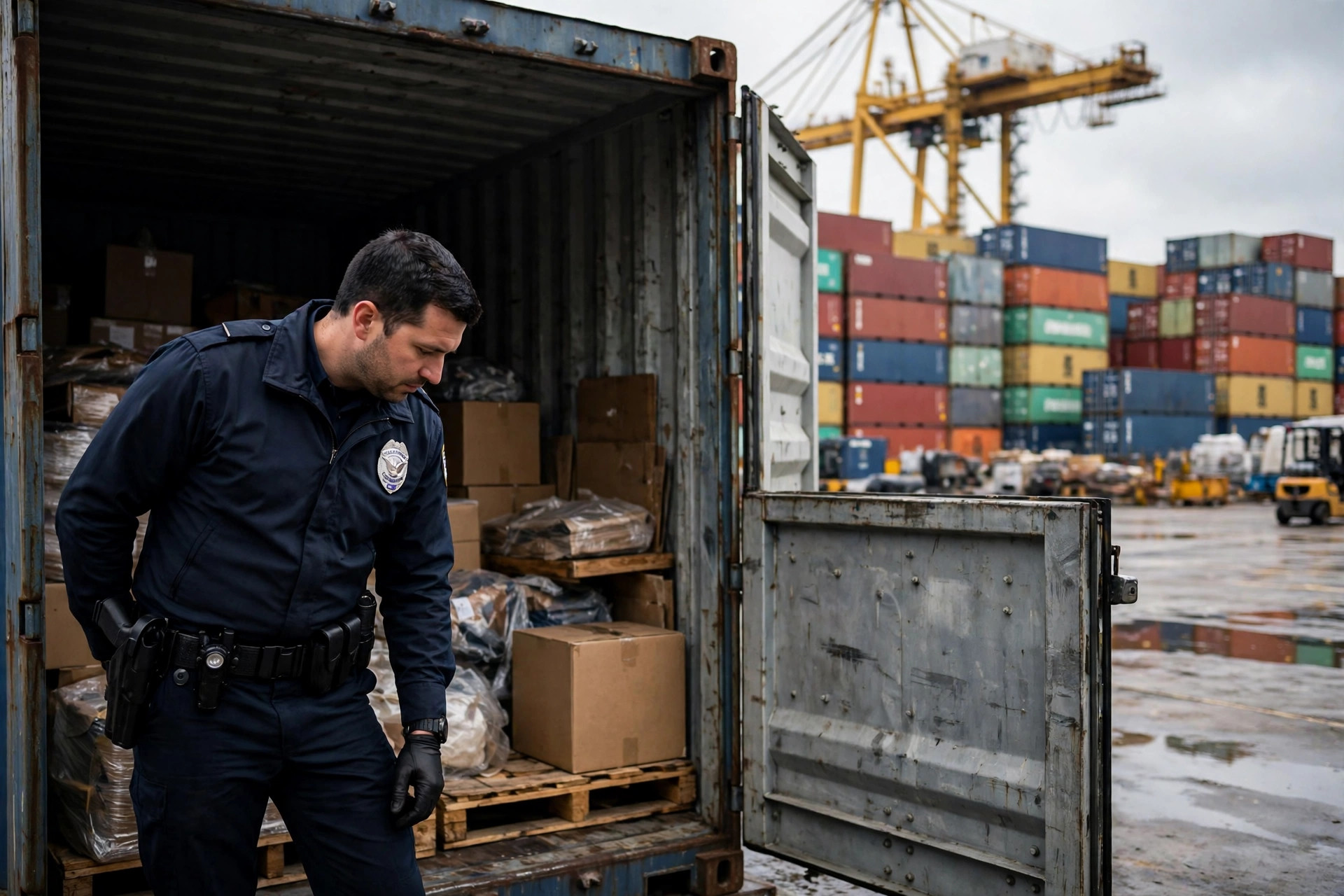
On the way down, there was a milestone worth noting. On September 23, 2026, Ganfeng's Litio Minera Argentina got on-site customs clearance approved by ARCA, Argentina's customs and tax authority, for its plant in General Güemes, Salta — the first lithium company in the country to get it. Plain English: customs accepted the plant's own control processes, so export inspection happens inside the factory instead of hauling the cargo to a port and lining up. It is part of Salta's "Exporta Salta" program, whose goal is to turn Güemes into the mining supply chain hub for the whole northwest.
For those of us who do warehousing, the signal is concrete: the factory warehouse and the customs-bonded warehouse became one. Bagged carbonate comes down from the salar, gets inspected, stuffed, and sealed at Güemes, then goes straight down the highway to the port — one less transload, one less queue, and the inventory books and the customs books become one set.
Think about it from the other direction. I have seen too many projects stack finished product in a temporary yard next to the salt flat, waiting on vessel schedules and paperwork, two weeks at a time. High-altitude day-night temperature swings, packaging sitting in the open getting damp — lithium products are moisture-sensitive, and open storage at altitude is gambling. If a project cannot get on-site customs, it has buried a time bomb in its finished-goods operation.
From the Salar to the Seaport: The Downhill Leg of Argentina Lithium Warehouse Logistics
Once the product is downhill, the chain looks like this: bagged carbonate (25-kg bags or jumbo bags) → trucks down the mountain → low-altitude consolidation warehouse → customs inspection → container stuffing → vessel. The standard routing today is stuffing at Campana and sailing from Terminal Zarate — forwarders running the Yusen line do it exactly this way.
Why not stuff the box at the salt flat? Because there is no container yard up there and no empty boxes to grab — empties have to be trucked in from the Buenos Aires area. So the low-altitude consolidation warehouse is non-negotiable: it consolidates, stores, and waits out vessel schedules and empty-box availability, all at one node.
Two sides again. The upside of the Campana/Zarate routing: dense sailings and plenty of empties. The price: more than a thousand kilometers of inland trucking from Salta to the port, with the freight and the transit time both sitting on the table. Argentina's operating costs run about 20% higher than Chile's, and most of that gap is logistics and infrastructure — Chile's salars are closer to the coast with mature highways; Argentina's are inland plateaus where the roads and infrastructure start a full tier behind.
The Full Bill: What Each Ton of Carbonate Really Costs to Move
For anyone entering Argentina's lithium business — miner or logistics provider — here is how the ledger should be drawn:
| Leg | Key variable | Where the pitfall is |
|---|---|---|
| Auxiliaries uphill | 4-to-1 ratio → back out the annual truck count | Mountain road capacity ceiling, rainy-season road cuts |
| Auxiliary warehousing | Low-altitude consolidation vs. stockpiling at the salar | Highland warehousing costs a fortune to build and maintain |
| Customs node | Can you get on-site clearance | Miss it and you add one transload and two weeks of waiting |
| Product downhill | Vessel and empty-box availability at Campana/Zarate | Empty repositioning, port congestion |
Now zoom out. Four new projects are working their way to production — Eramet's Centenario Ratones, POSCO's Sal de Oro (23,000 tons a year of carbonate; phase two was unveiled on October 6 and ramps from 2027), Zijin's Tres Quebradas, Ganfeng's Mariana. National lithium capacity is set to jump 79% to 202,200 tons of lithium carbonate equivalent a year — while right now only three producing projects are actually exporting. Under the RIGI big-investment incentive regime, six lithium projects are already approved with over 6 billion dollars of investment behind them. Translation: within two years, uphill-and-downhill truck traffic at least doubles, and if the logistics chain is not built out now, it becomes the bottleneck for the entire industry.
Here is the contrarian read: the hardest part of a lithium business is not extracting lithium. It is getting 4 tons of chemicals uphill on time. Whoever controls the uphill trucks and the low-altitude auxiliary warehouses controls the speed of the ramp. Most people treat a lithium project as a mining project. I'm telling you it is really a factory-on-a-plateau glued to a long-haul trucking company. Anyone searching for argentina lithium mining warehouse logistics is really asking for three nodes: where the auxiliaries come from, where customs gets done, where the boxes get stuffed.
So next time someone talks to you about an Argentine lithium project, don't ask about the lithium price. Ask three questions: where does your soda ash come from, how many trucks a day, and where do you clear customs? If they cannot answer those three, the rest of the deck is fiction.
By Lao Mi, Supply Chain Veteran (20 yrs)