Let me start with the bill.
A 40-foot reefer of frozen blueberries, Chile to the Port of Los Angeles/Long Beach, cargo value $60,000. Container discharged October 8; on October 10 the forwarder calls: APHIS hold, full exam. Queuing at the exam site, devanning, sampling, lab report — released October 21. The box sat at the port 13 days. Free time was 5 days, so 8 days over. At LA/LB rates of $160–240 a day for a 40-footer, escalating with time, those 8 days burned roughly $1,900. Dray to the exam site, devan, reload: $780. Reefer plug (about double a dry box): ~$120 a day, $960 for 8 days. Broker's APHIS exam handling fee: $350. Plus 8 days of blown truck appointments and a wrecked warehouse receiving plan — call it another $1,000 in soft costs, conservatively.
Direct damage: $4,990 — about 8% of the cargo's CIF value. And the trigger? Two replacement deck boards on the pallets were missing compliant treatment marks. Strictly speaking, the pallet supplier cut corners with a few untreated boards.
That is the cruelest thing about APHIS exams: the inspection itself costs you nothing. APHIS collects AQI fees (per 7 CFR 354.3, $2,981.17 per vessel arrival, $13.45 per truck — already paid by the carrier), but every day the exam eats is billed to you at commercial port and exam-site rates. APHIS only says "hold" and "release." You pay for everything in between.
Where the money actually goes
Once APHIS holds an agri shipment, the meter starts running from several pockets at once. Here is the full schedule, with who charges and how:
| Cost item | Charged by | Basis | Scale (40-ft reference) |
|---|---|---|---|
| Demurrage | Carrier / terminal | Per day after free time (usually 5–7 days), escalating tiers | $160–240/day, worse the longer it sits |
| Exam site handling | Centralized exam station (CES) | Dray, devan, reload — one shot | $500–1,200 |
| Reefer plug | Terminal | Per day | ~$100–130/day |
| Broker exam handling | Customs broker | Per entry | $200–500 |
| Fumigation/treatment (if ordered) | Treatment provider | Per container | $400–1,000 |
| Cargo & quality loss | You | Cold-chain delay, shelf-life erosion on fresh | % of cargo value; fresh produce bleeds worst |
See the structure: APHIS's own fees are fixed and trivial. The real money is "time × port rates." An APHIS exam typically costs 5–10 days of delay (APHIS itself says busy ports "may require several business days," longer in peak season), and demurrage plus plug fees accrue linearly by the day. In other words, the cost of the exam is not in the exam — it is in the queue for the exam. A pure time-cost structure.
Here is the contrarian read: most importers obsess over "how not to get examined," and that is the wrong budget line. APHIS exams run on random selection plus risk triggers — no amount of compliance zeroes out the random-draw probability. What decides your loss is not whether you get held, but how fast your container moves through the process once held. Same hold: one importer clears in 3 days and burns $800; another takes 13 days and burns $5,000. The $4,200 difference buys "response speed," not "luck."
How APHIS exams get triggered, and how long they take
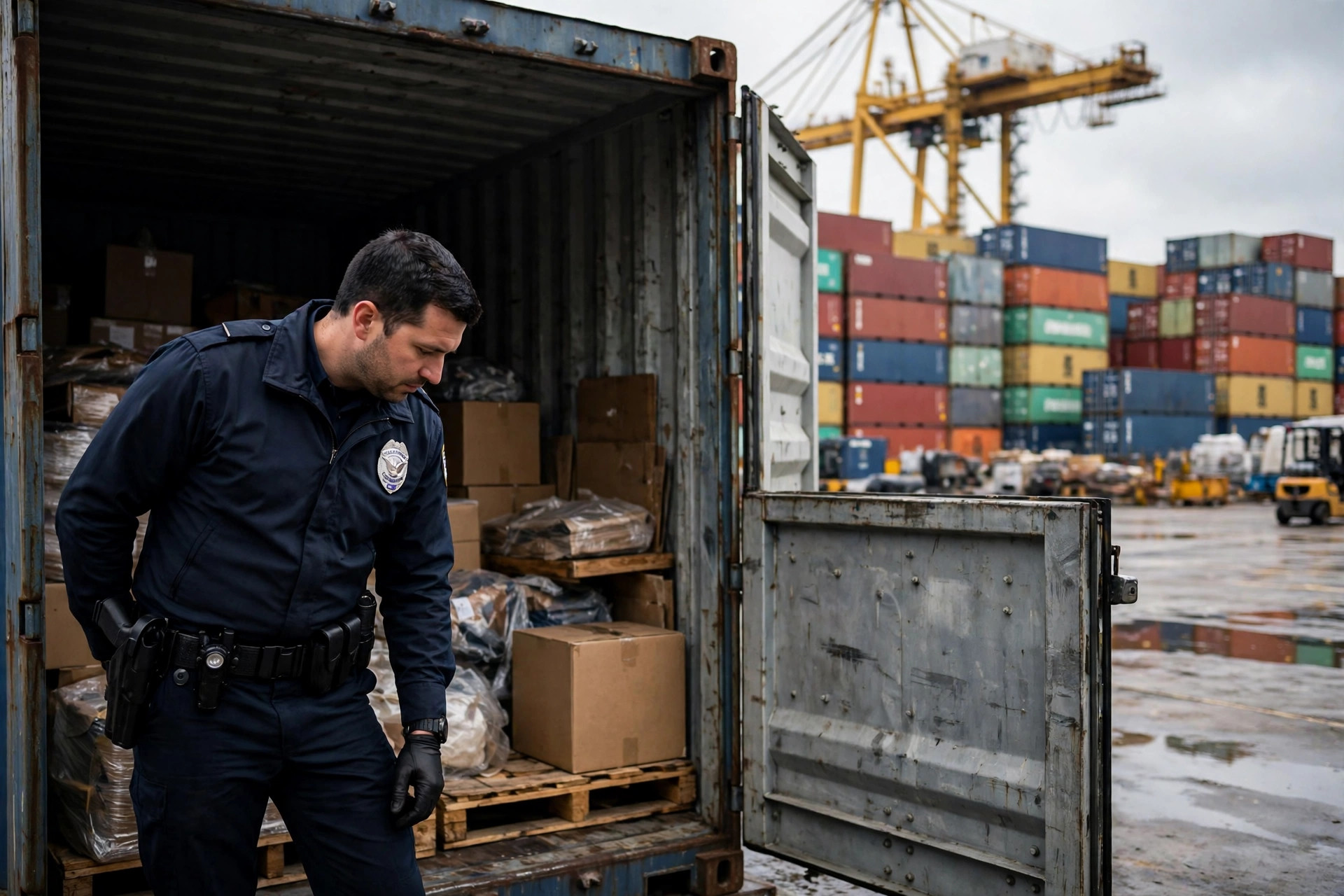
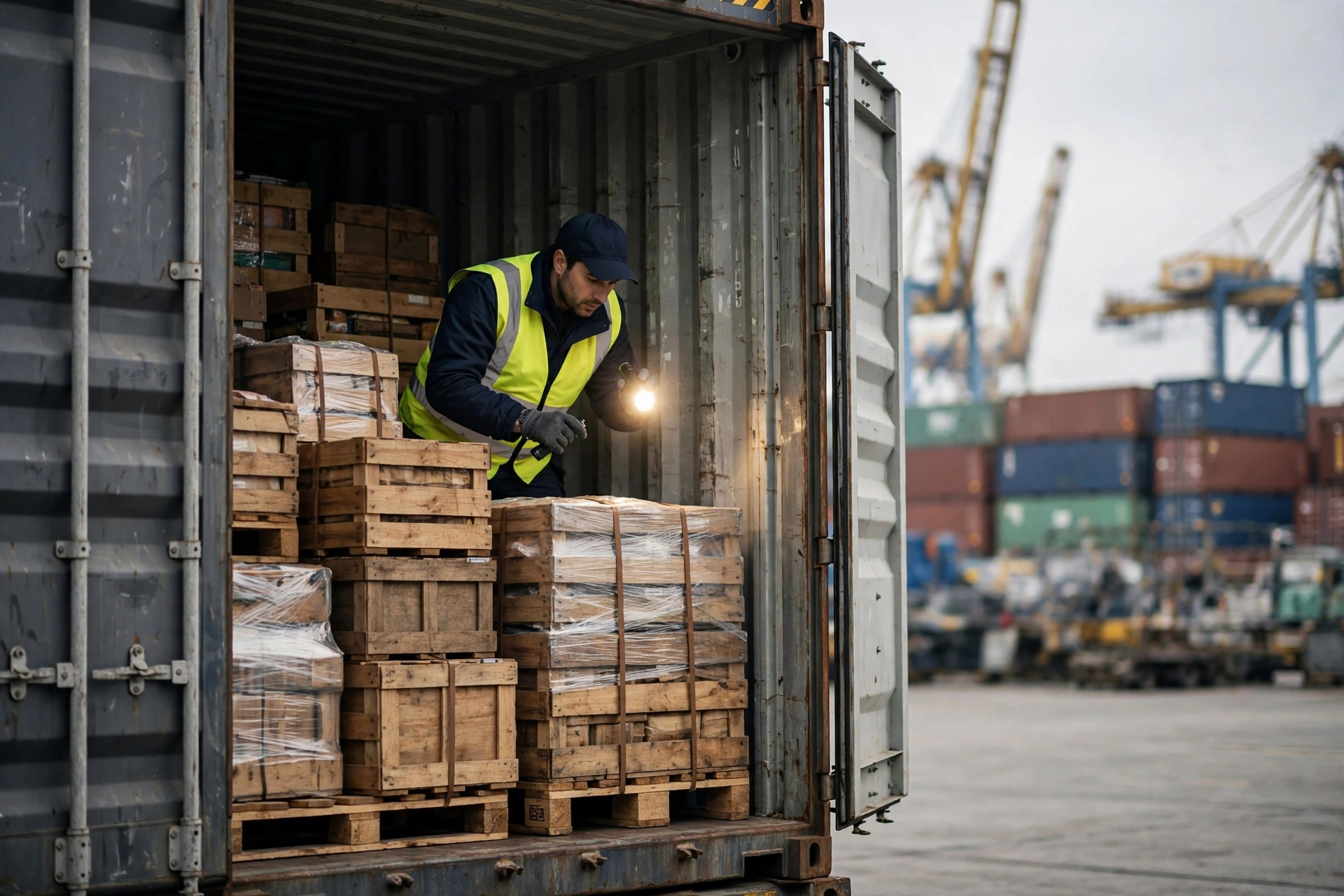
First, a fact most people get wrong: APHIS does not examine containers at the dock. The people who slap the hold on your box are CBP Agriculture Specialists. When paperwork does not line up or there is a plant-pest risk, they hang a USDA hold — APHIS's own site is blunt about it: the notice says USDA, but in practice it is CBP operating. Your broker can see the status in the system.
Triggers fall into four buckets. One, the commodity itself — fruit, vegetables, seeds, plant products are inherently high-risk. Two, paperwork defects: expired phytosanitary certificate, commodity description mismatching the certificate, missing import permit (filed via APHIS eFile). Three, wood packaging problems — the focus of this piece. Four, pure random selection.
The timeline usually runs: hold notice before CBP release (1–2 days after discharge) → dray to the CES (1–2 days) → queue for the agriculture specialist (2–5 days, longer in peak) → exam and sampling (1–3 days) → release, or an Emergency Action Notice if something is found. Smooth cases clear in 5–7 days; peak season or findings stretch it to 10–15. In that blueberry case — discharged October 8, released October 21 — the actual "examining" probably took one day. The other 12 were queueing and shuttling. Ninety percent of an exam's timeline is waiting, and every waiting minute burns demurrage. Which is why the savings lever is not "dodge the exam" but "accelerate the process."
Wood packaging: the tripwire in agri imports
Wood packaging in agri imports carries a double risk. The first layer applies to all imports: pallets, crates, and dunnage must be debarked, heat-treated or fumigated, and stamped with the official mark (IPPC symbol + country code + producer number + treatment code HT/MB). Specialists check every board for marks and live insect bore holes.
The second layer is agri-specific: APHIS scrutinizes wood packaging harder on produce shipments, because the commodity and the packaging can shelter each other's pests — produce paired with wood packaging automatically raises the inspector's alert level. Worse, the dunnage, spacers, and bracing lumber used on produce loads are often scrap wood grabbed at origin with no treatment marks at all. The compliance of an entire container gets dragged down by a few dollars' worth of lumber.
I handled a Mexican avocado case in early 2025. An importer running 3 trucks a week from Michoacán through Nogales had one truck stopped at the border for bracing lumber without treatment marks. Per 7 CFR 354.3 the AQI fee per truck is $13.45 — pocket change. But that truck sat at the border exam area 2 days: reefer idling, driver downtime, the next two trucks' appointments blown, and two days of shelf life gone on fresh avocados — followed by a quality claim at the warehouse. Post-mortem: tens of dollars saved on lumber treatment bought over a thousand dollars of cascading losses. The irony: compliant treated lumber costs $1–2 more per board.
So the wood-packaging math is brutally simple and quantifiable: making every board in the container compliant always costs less than one exam detention's demurrage. The treatment upcharge on a 40-footer's pallets is a few hundred dollars at most; a 10-day APHIS detention starts at $5,000. This trade-off needs no deliberation.
The savings levers, ranked by ROI
Once the cost structure is open, the levers line up by return on effort:
First, front-load wood-packaging compliance. Require suppliers to use only fully marked pallets and dunnage; have the forwarder photograph pallet marks before loading. Cheapest move on the board — a few hundred dollars of upfront control against thousands in detention risk. On produce loads, watch the "last-minute added dunnage" — that is the kill zone.
Second, zero-defect paperwork. Phytosanitary certificate, import permit, and declared commodity must match exactly. File the APHIS eFile permit early, not when the vessel is arriving. Paperwork defects trigger a "must-exam" (100% hit rate); random selection triggers a "maybe-exam" (perhaps 5–10%). Zeroing the must-exams cuts expected loss by a big chunk.
Third, pick the right broker — and give it an exam-response SLA. A good broker books the CES slot the day the hold drops; a bad one takes 3 days to get around to it — 3 days of pure demurrage. When vetting a broker, ask one question: "On your APHIS exams last month, what was the average days to release?" If it cannot answer, find another broker.
Fourth, push the process once held. Get a daily status from the broker: is the box at the CES? What day is the exam? What documents does the specialist want? Nobody in the APHIS process will hurry on your behalf — unasked, it moves at its slowest. In the blueberry case, discovering on day 3 that the queue was 5 days out and demanding expedite or a different exam site would have halved the demurrage.
Fifth, treat fresh and frozen differently. Fresh produce (avocados, berries, leafy greens) loses shelf life by the day — exam detention losses are exponential: demurrage plus quality claims. Fresh importers should write an "exam detention playbook" into the SOP: backup cold storage, expedited clearance lane, 24-hour post-arrival QC. Frozen is more forgiving, but reefer plug at $100-plus a day burns just as steadily.
And here is the calculable bottom line. Before every agri shipment, you can price the exam risk:
Expected exam cost = exam probability × expected detention days × daily demurrage-related cost
Example: clean paperwork, compliant packaging — exam probability ~8% (mostly random draw), expected detention 6 days, ~$300/day in demurrage plus plug. Expected cost = 0.08 × 6 × 300 = $144. That number belongs in the shipment's landed cost. With defective paperwork and unverified packaging, probability jumps to ~40% and expected cost becomes $720. The $576 gap is the budget ceiling for compliance spending — every dollar under it spent on packaging verification, document pre-checks, and a better broker is money earned.
You cannot dodge APHIS exams. But whoever prices the risk correctly always burns less.
By Lao Zhou, Logistics Cost Analyst